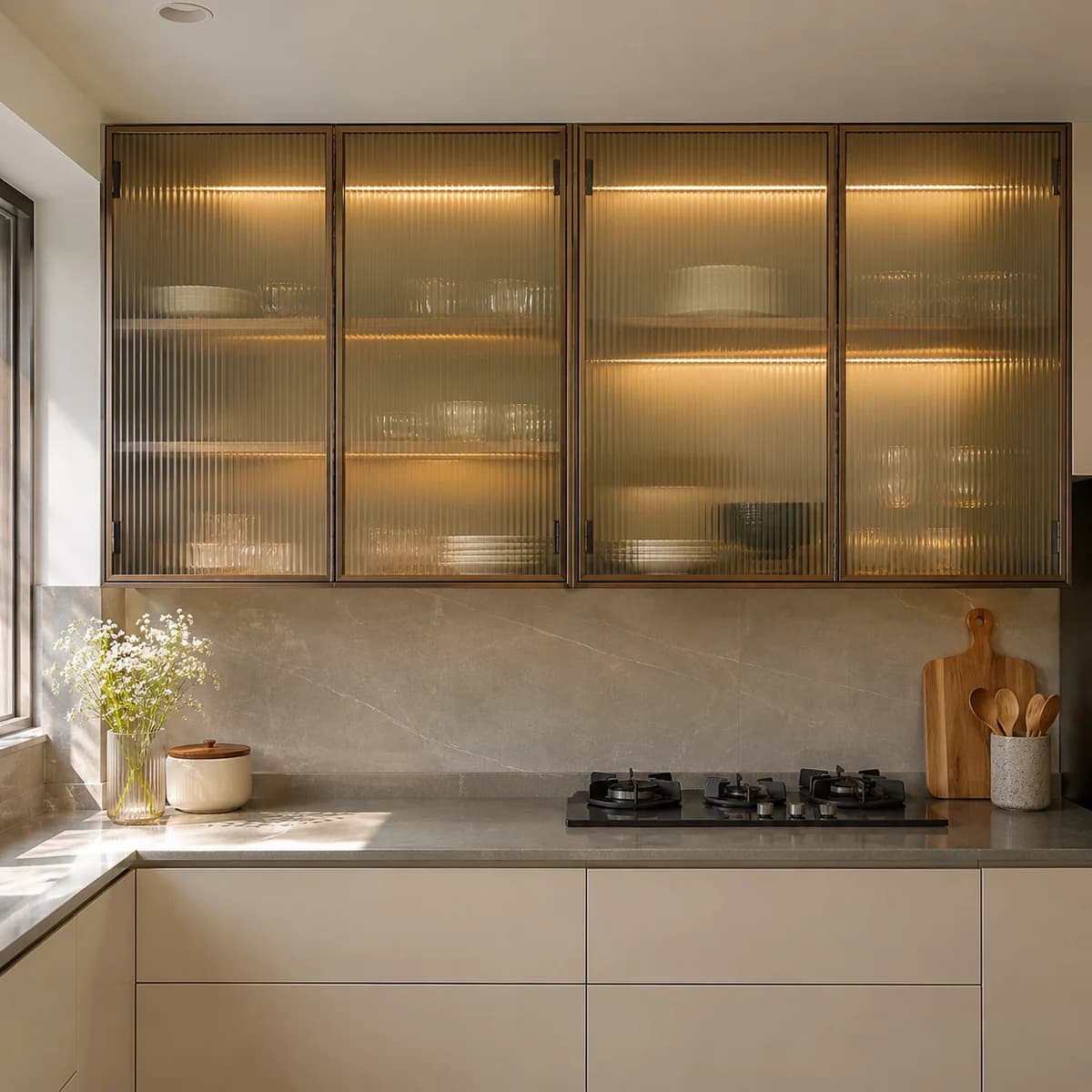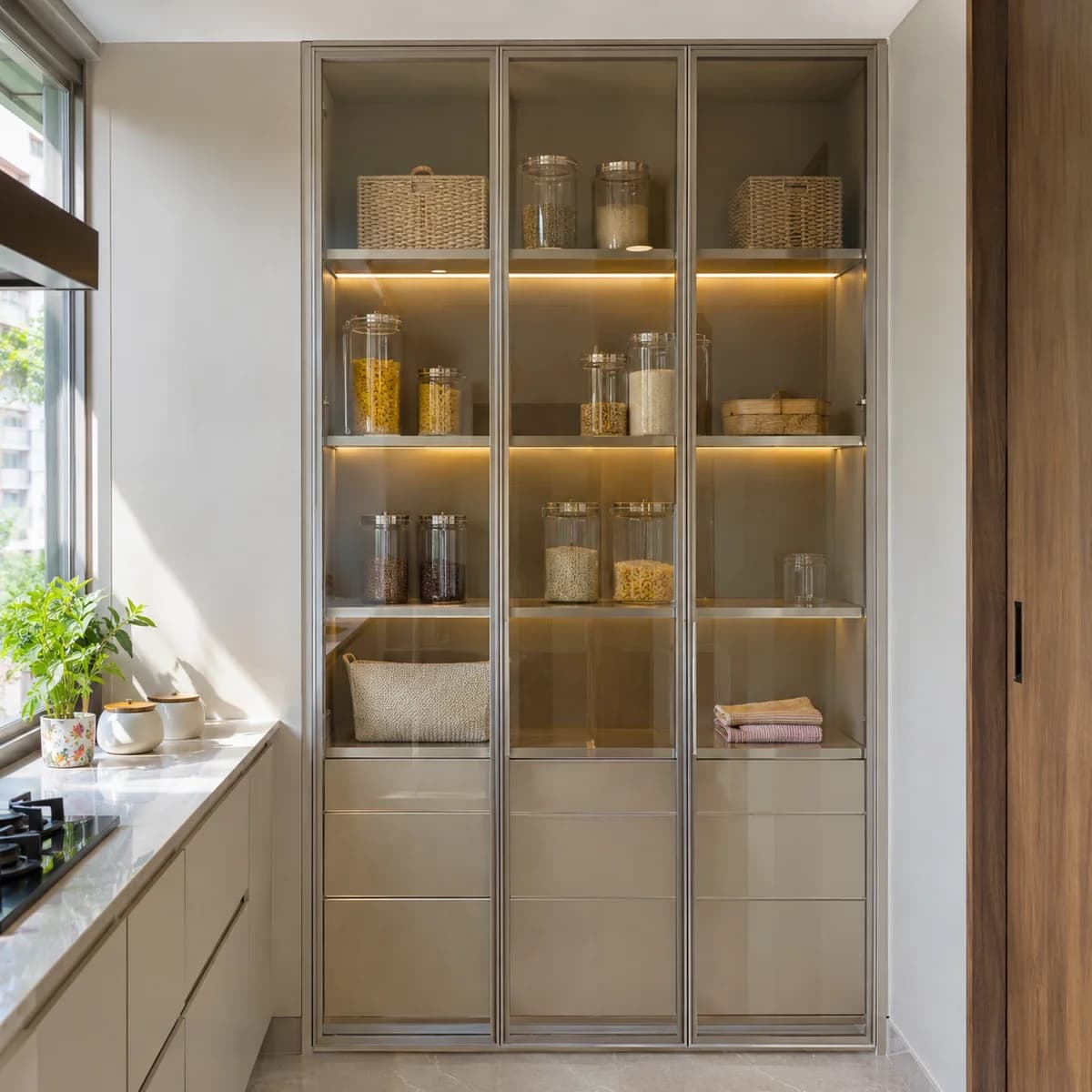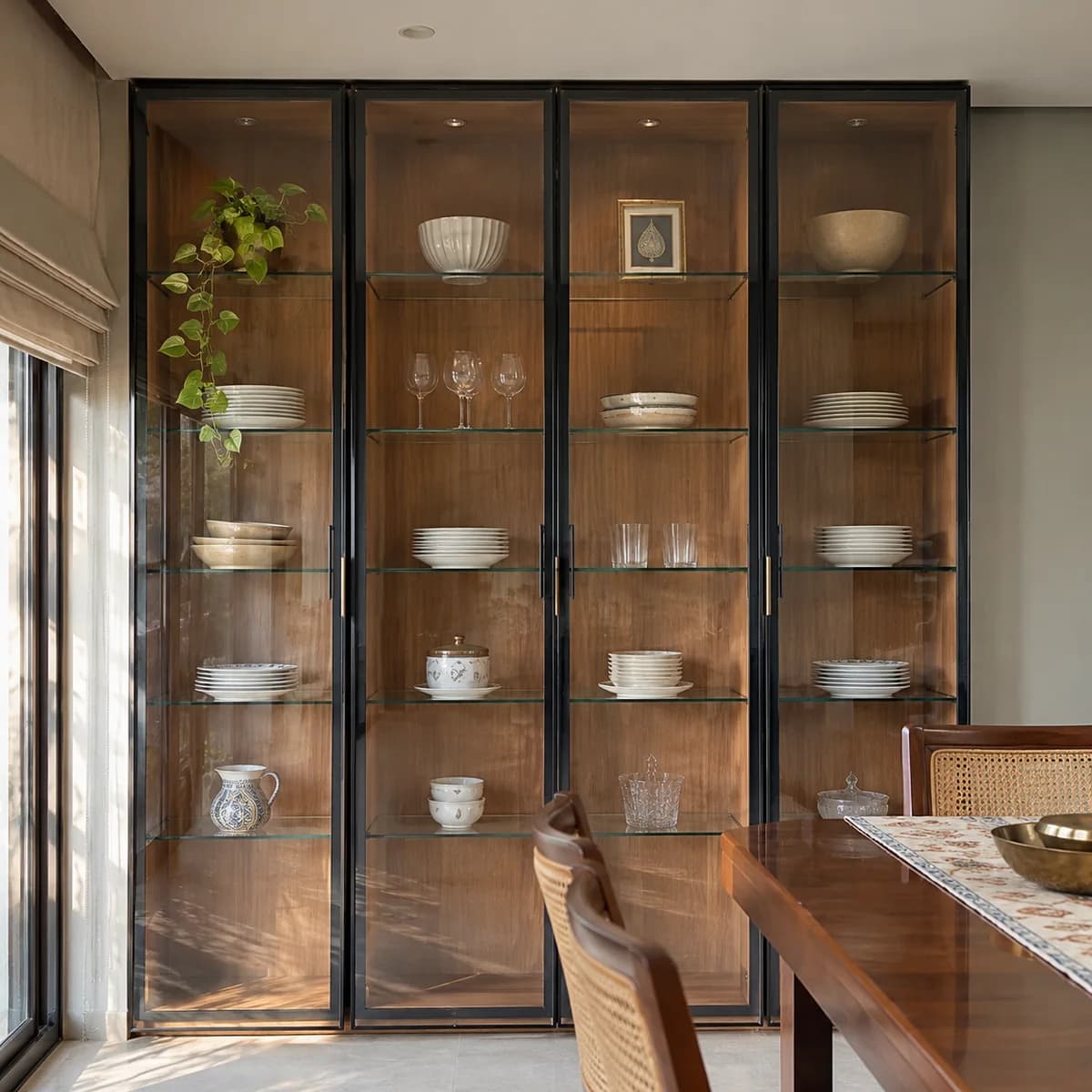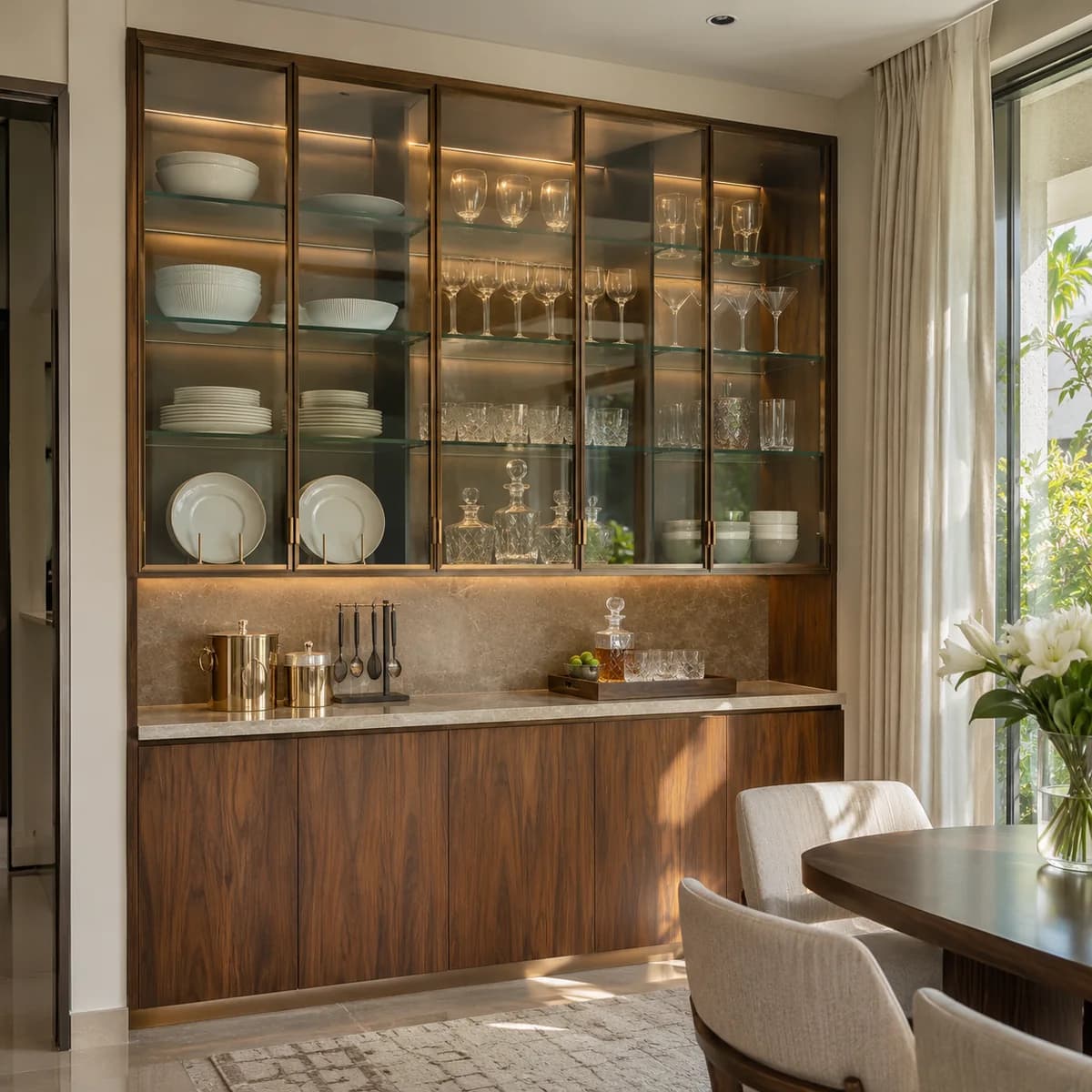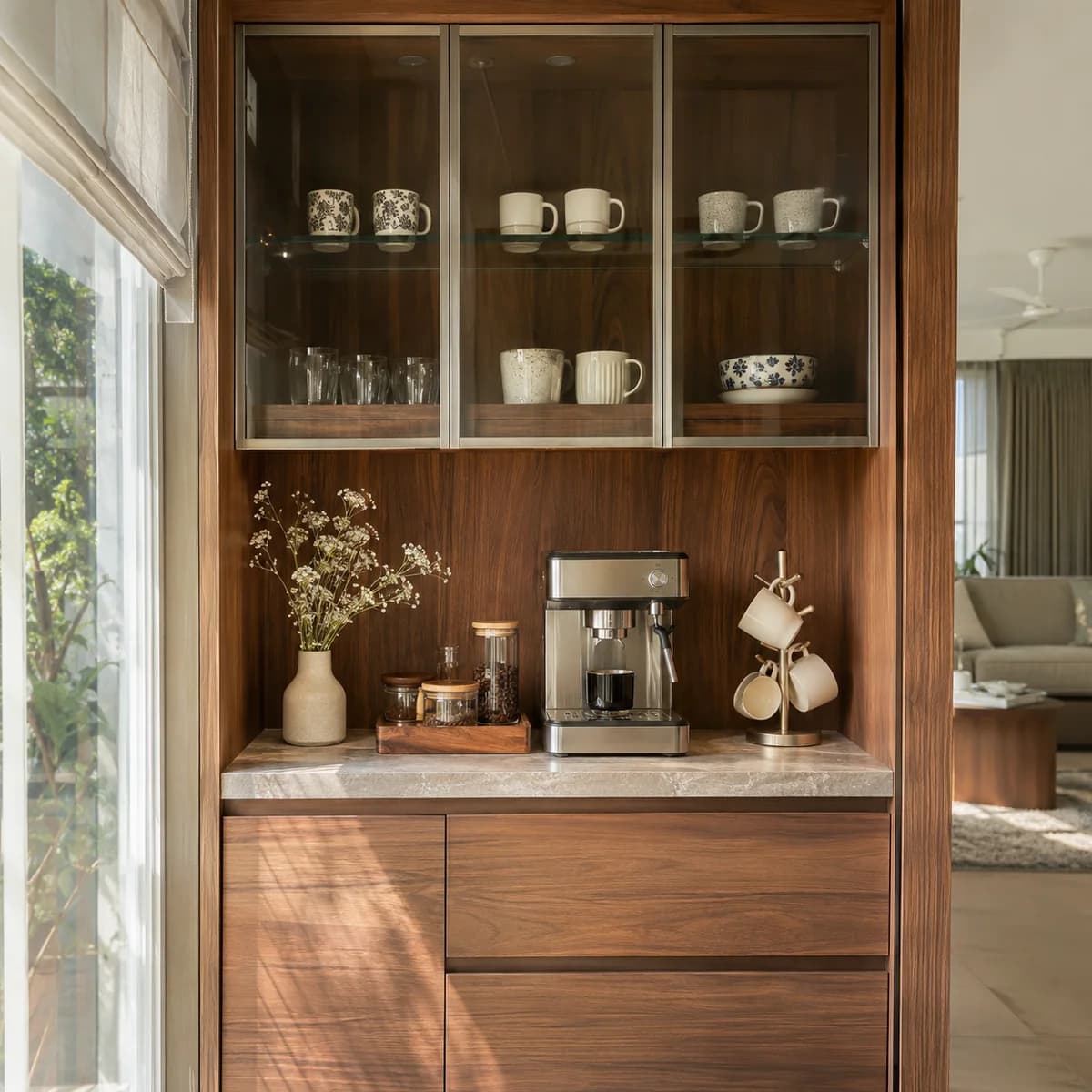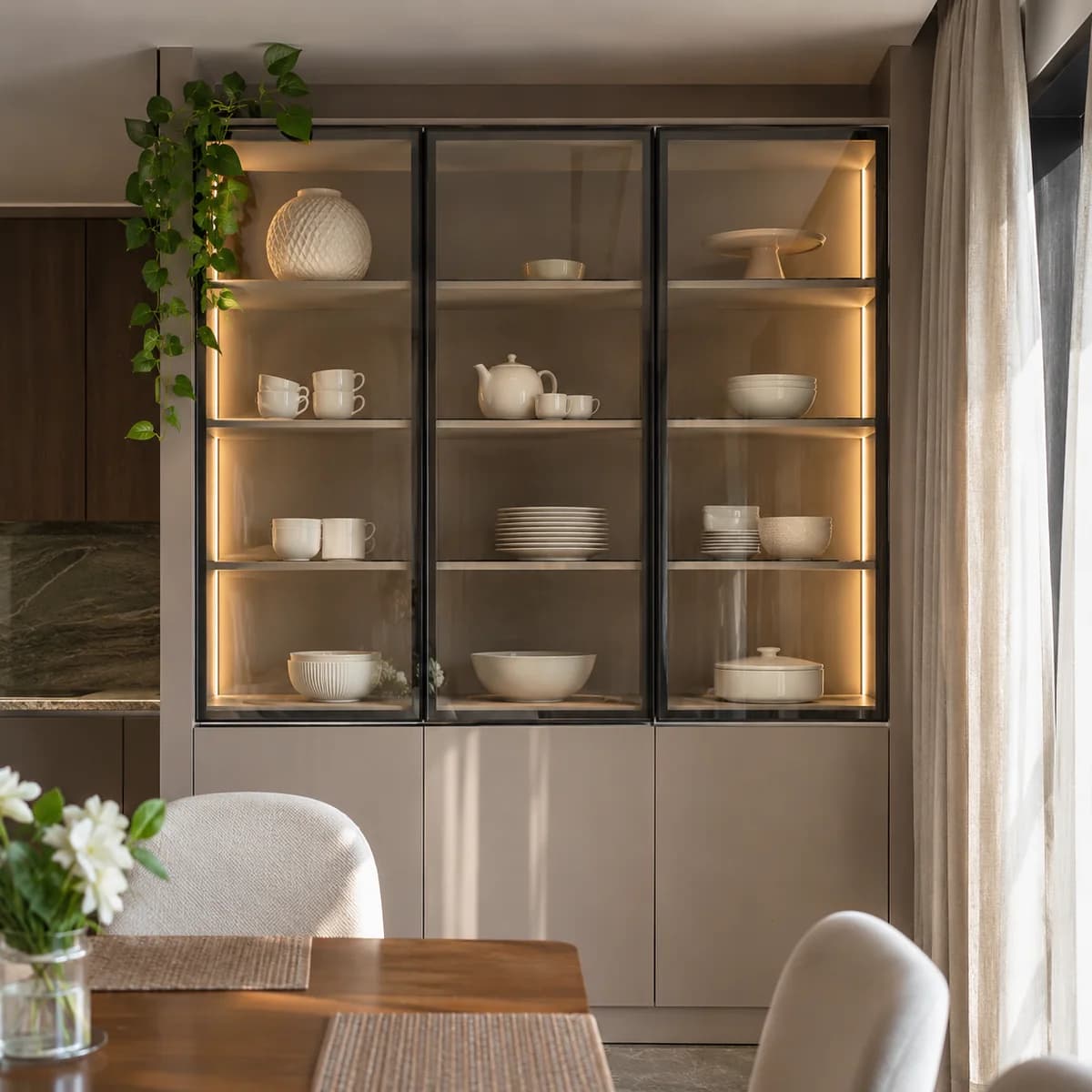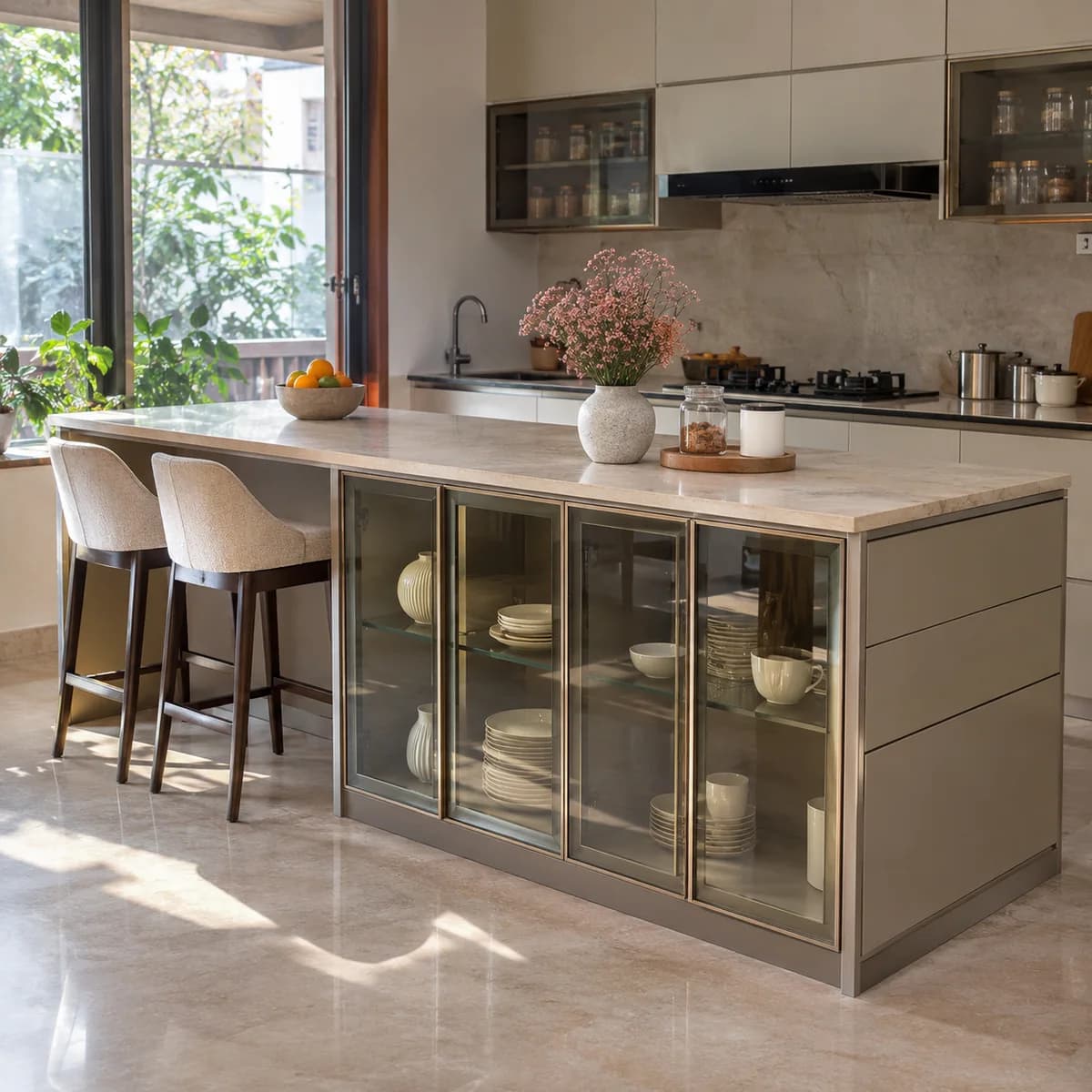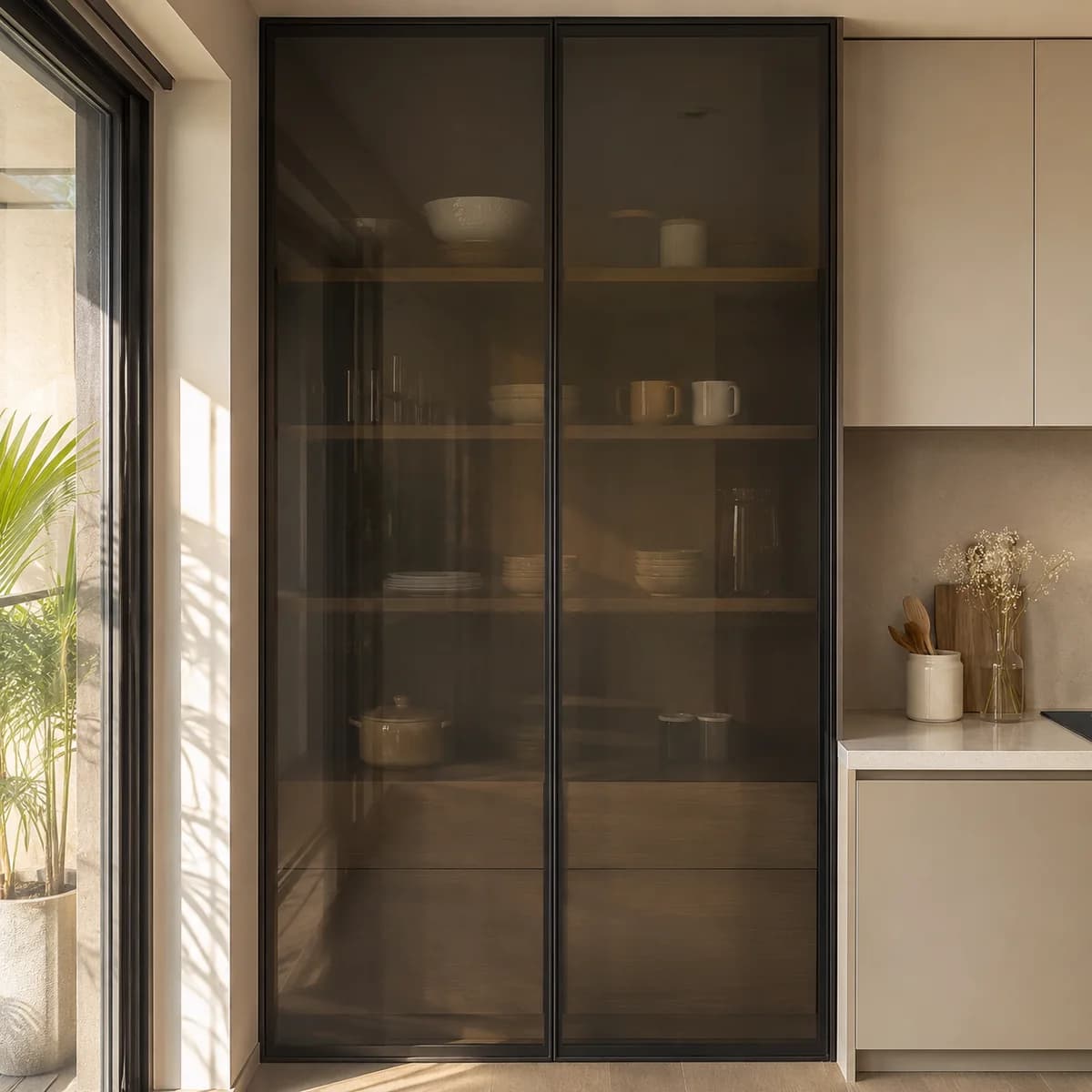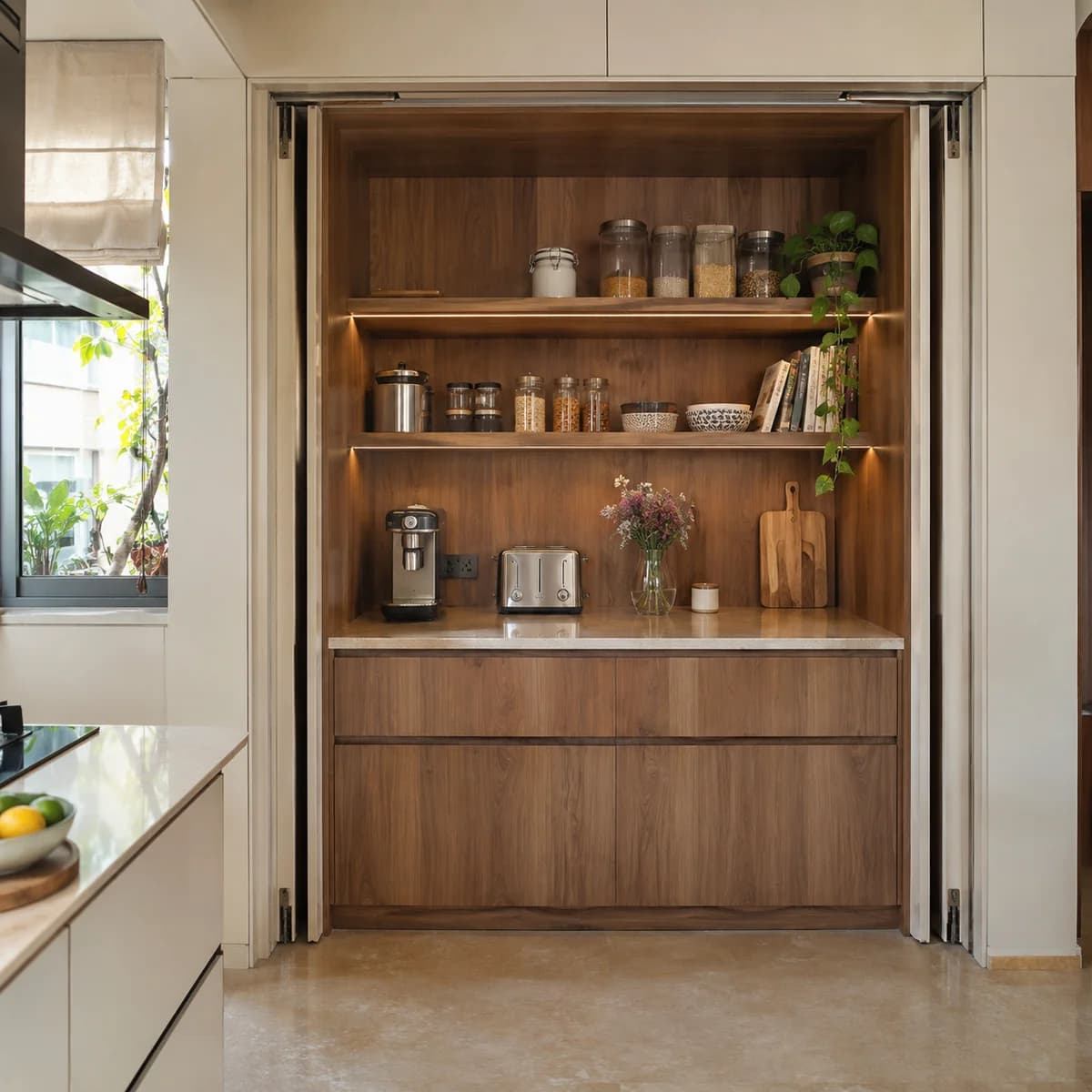
This is a pantry that hides behind doors when you are done. The doors slide aside, or fold back into pockets at the sides. Inside are shelves, a worktop and space for small appliances. Closed, it looks like a calm wall of glass.
The mess has somewhere to go
The mess has somewhere to go. The mixer, toaster and jars stay out, ready to use, but behind doors. You open it to work and close it when guests arrive. The kitchen looks tidy with very little effort.
A clean kitchen, even on a busy day
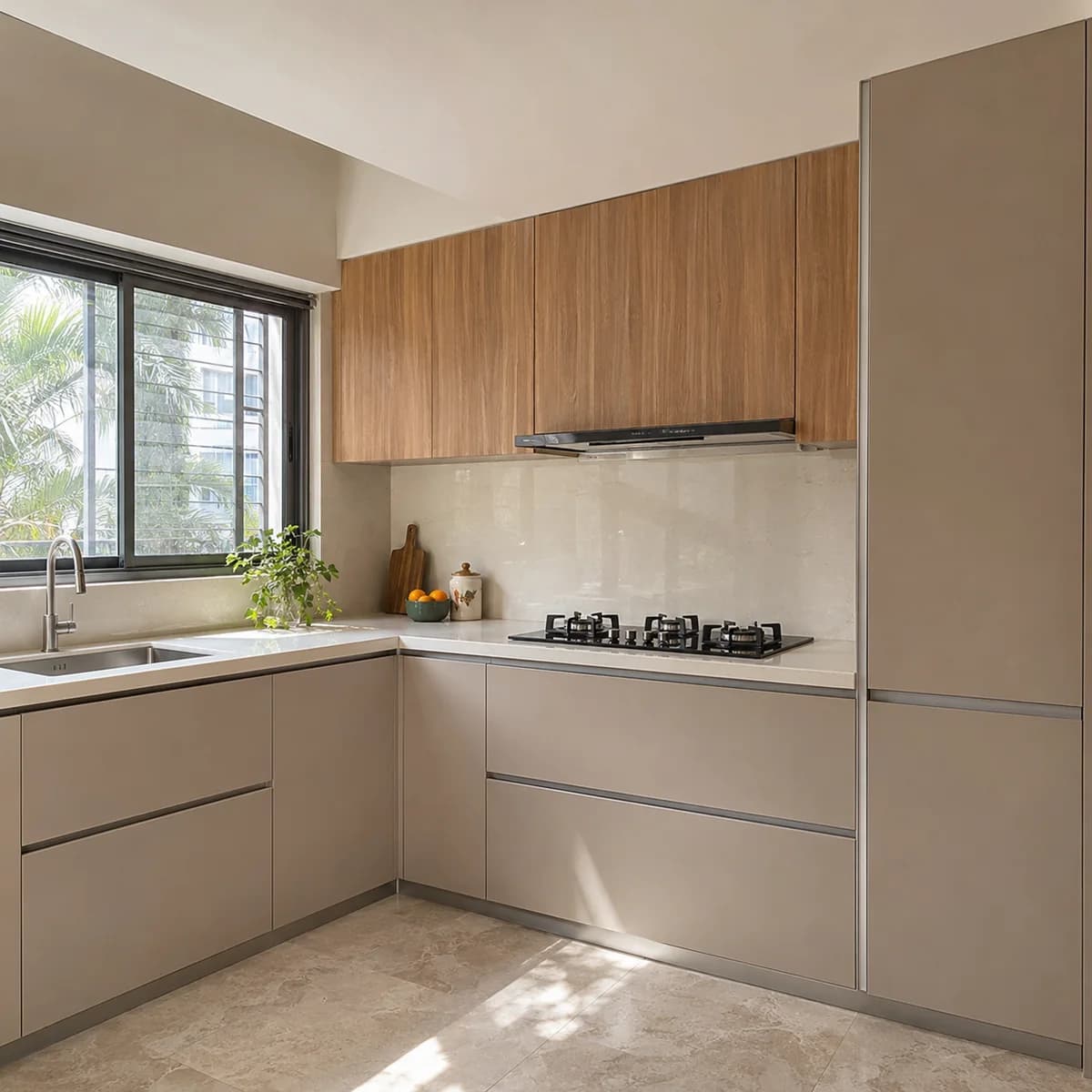
An open kitchen is always on show. A concealed pantry lets it look clean even on a busy day. Storage stays within reach. The kitchen keeps its simple lines.
Pocket doors and sliding doors, and the difference
Both kinds of door move sideways, but they end up in different places. A sliding door slides in front of the next cabinet, so part of the opening is always covered. A pocket door slides into a slot at the side of the cabinet, so the whole opening is clear while you work. Pocket doors need that side space, so we check the wall first.
Both run on a track at the top and are made of glass in an aluminium frame, so they are light to move. Closed, they look like a calm wall of glass. Fluted or smoked glass hides the inside better than clear glass when the pantry is shut.
What lives inside a hidden pantry
A concealed pantry is a small working kitchen behind doors. A worktop at counter height takes the toaster, the kettle and the mixer, so the main kitchen stays clear. Shelves above hold the groceries and jars. Drawers below hold the odd things. Power points inside run the appliances, and the wiring is planned before the cabinet is built.
A toaster and a kettle make steam, so the inside gets a gap for the heat to leave, and the shelf above them is kept open or made from a finish that takes moisture. Lighting inside comes on when the doors open, so the pantry is bright while you use it and dark when it is closed.
Who it suits
- Your kitchen is open to the living room.
- You use many small appliances every day.
- You want everything within reach but out of sight.
Before you choose
- Pocket doors need space at the sides to slide into. We check your wall first.
- Sliding doors always cover part of the opening. Pocket doors clear it fully.
- Appliances inside need power points and some air around them.