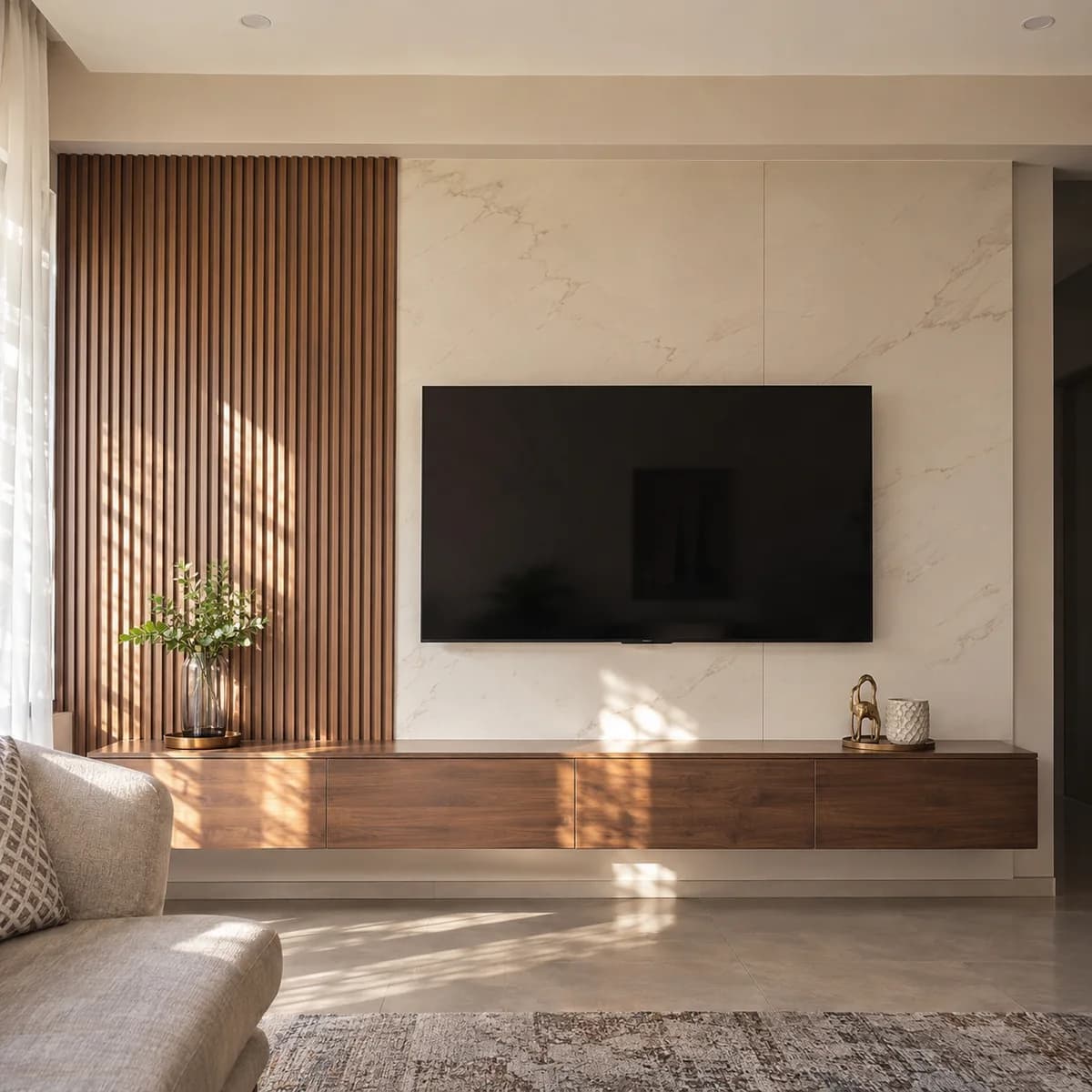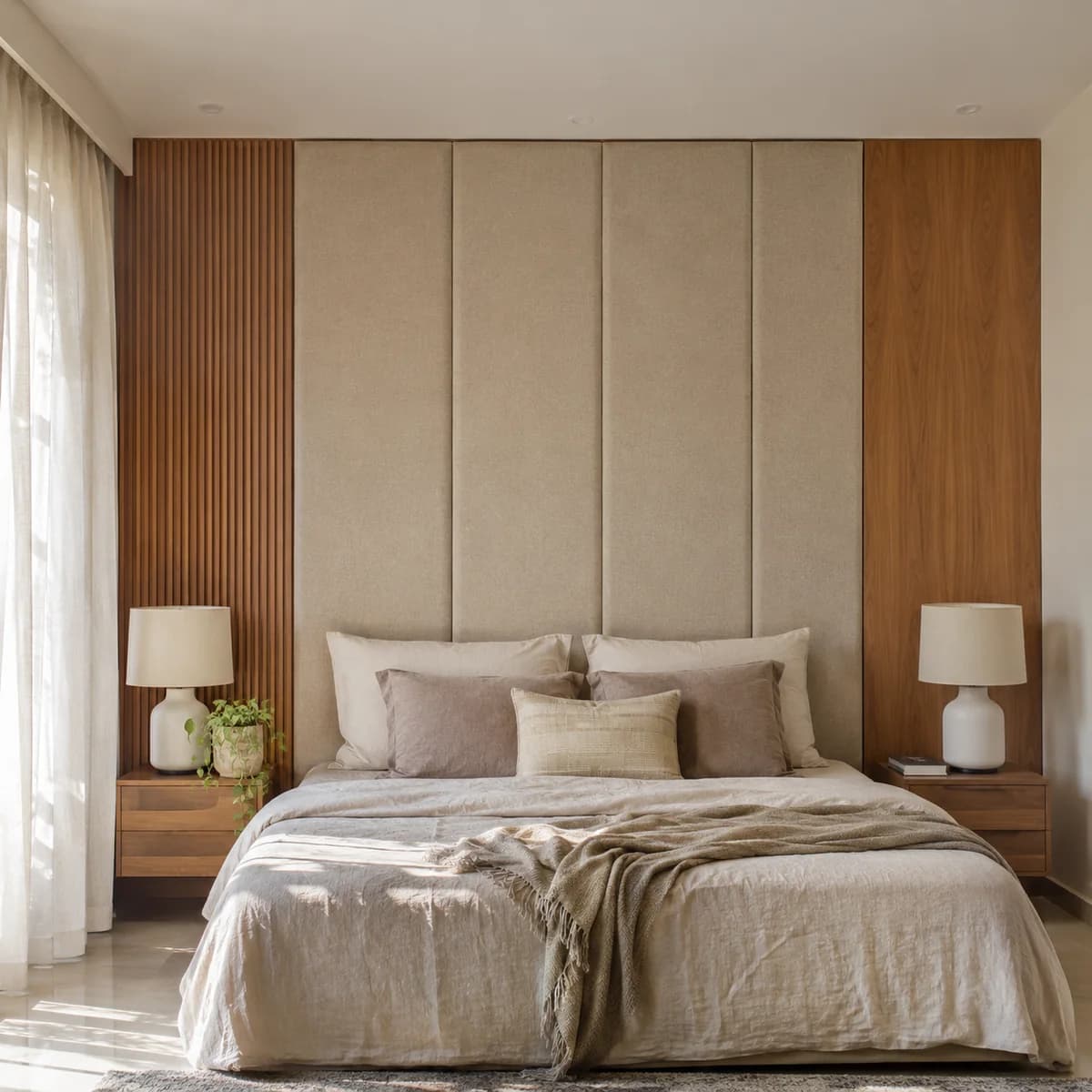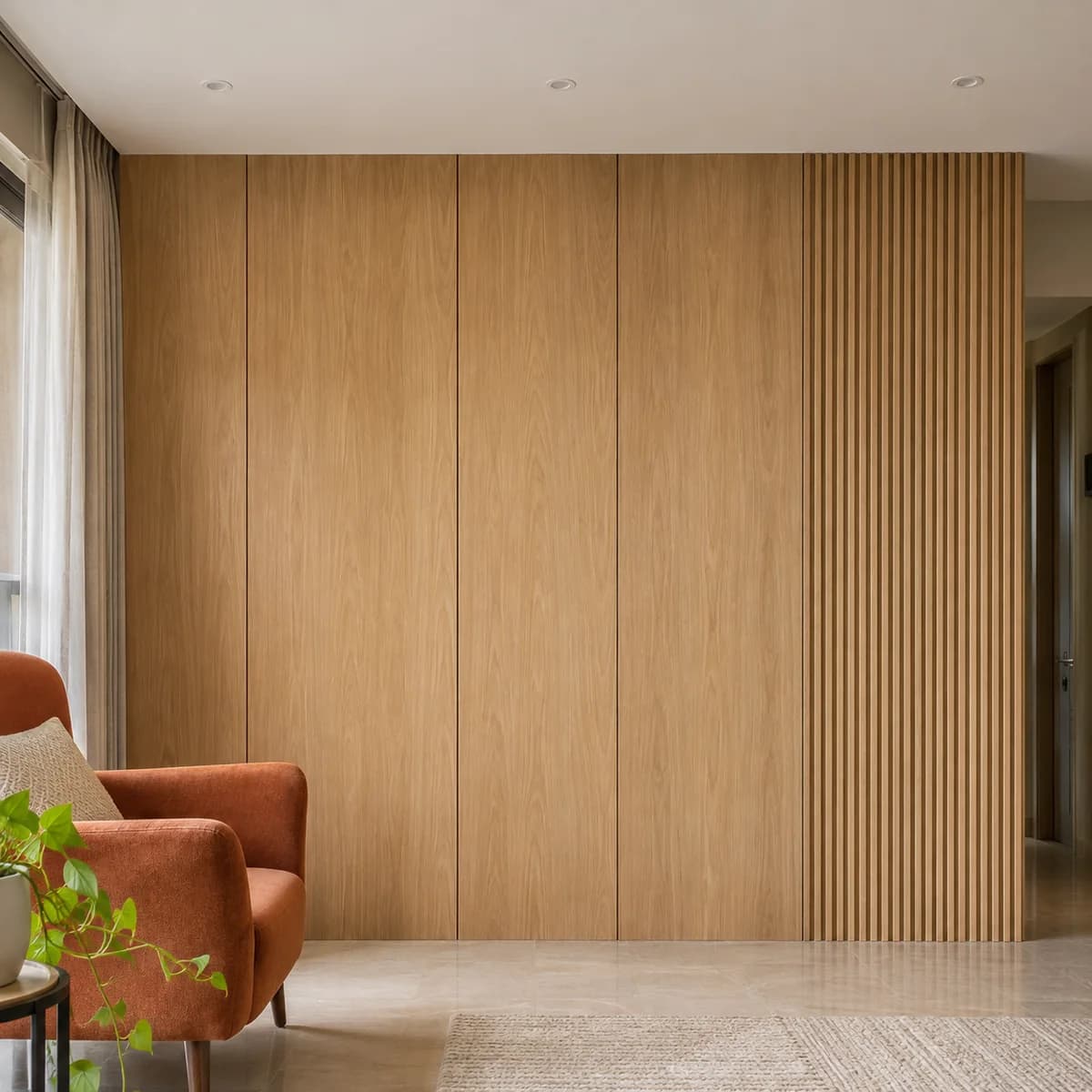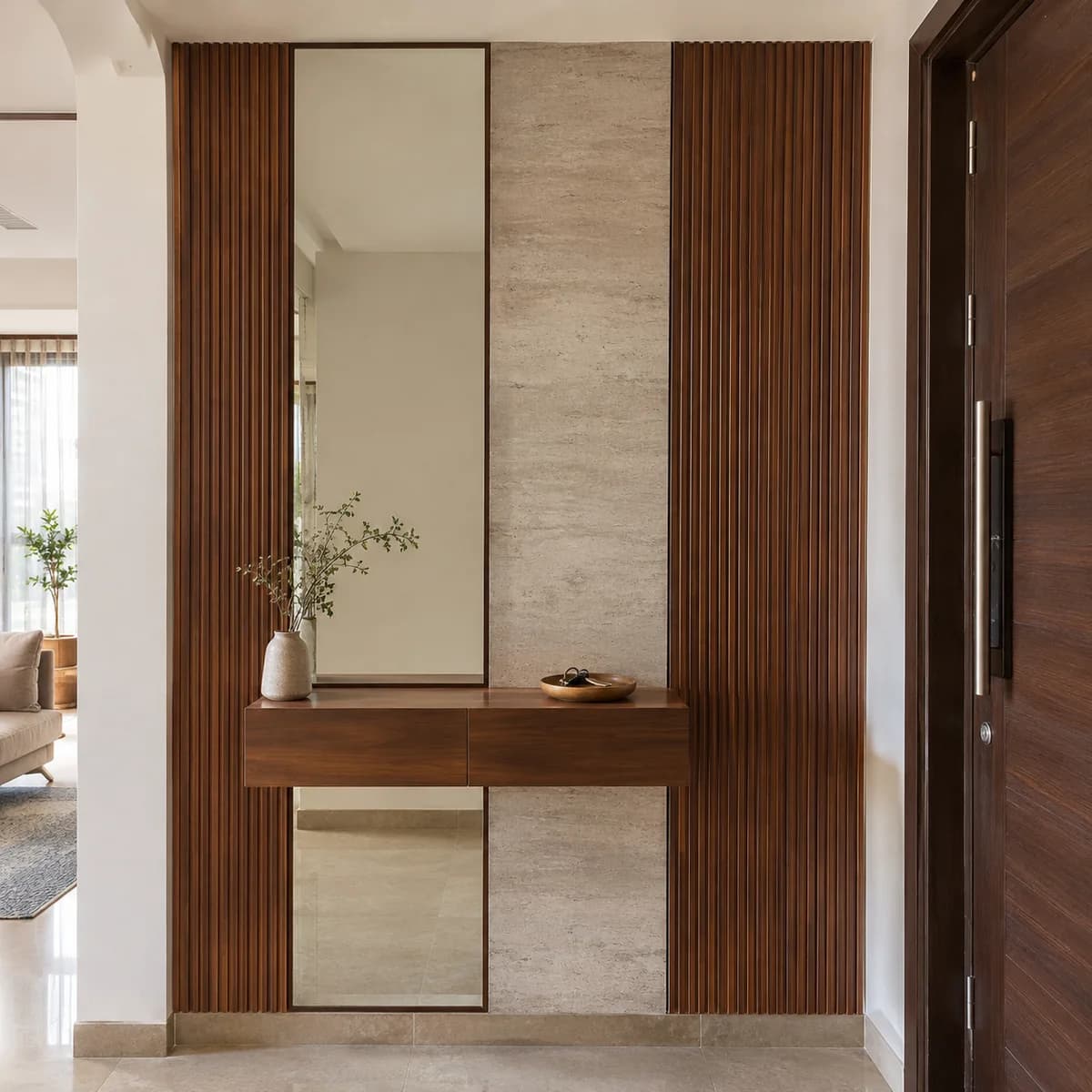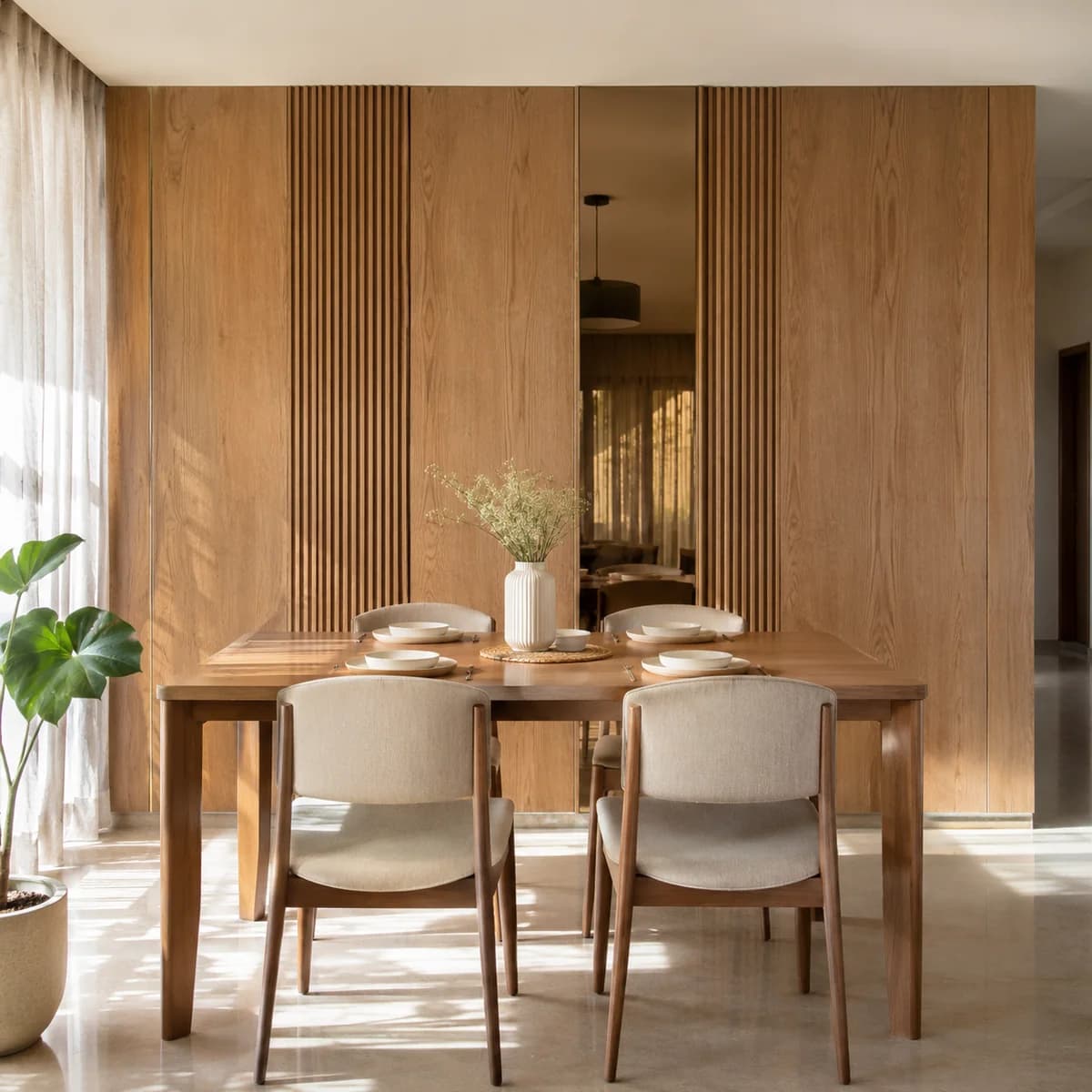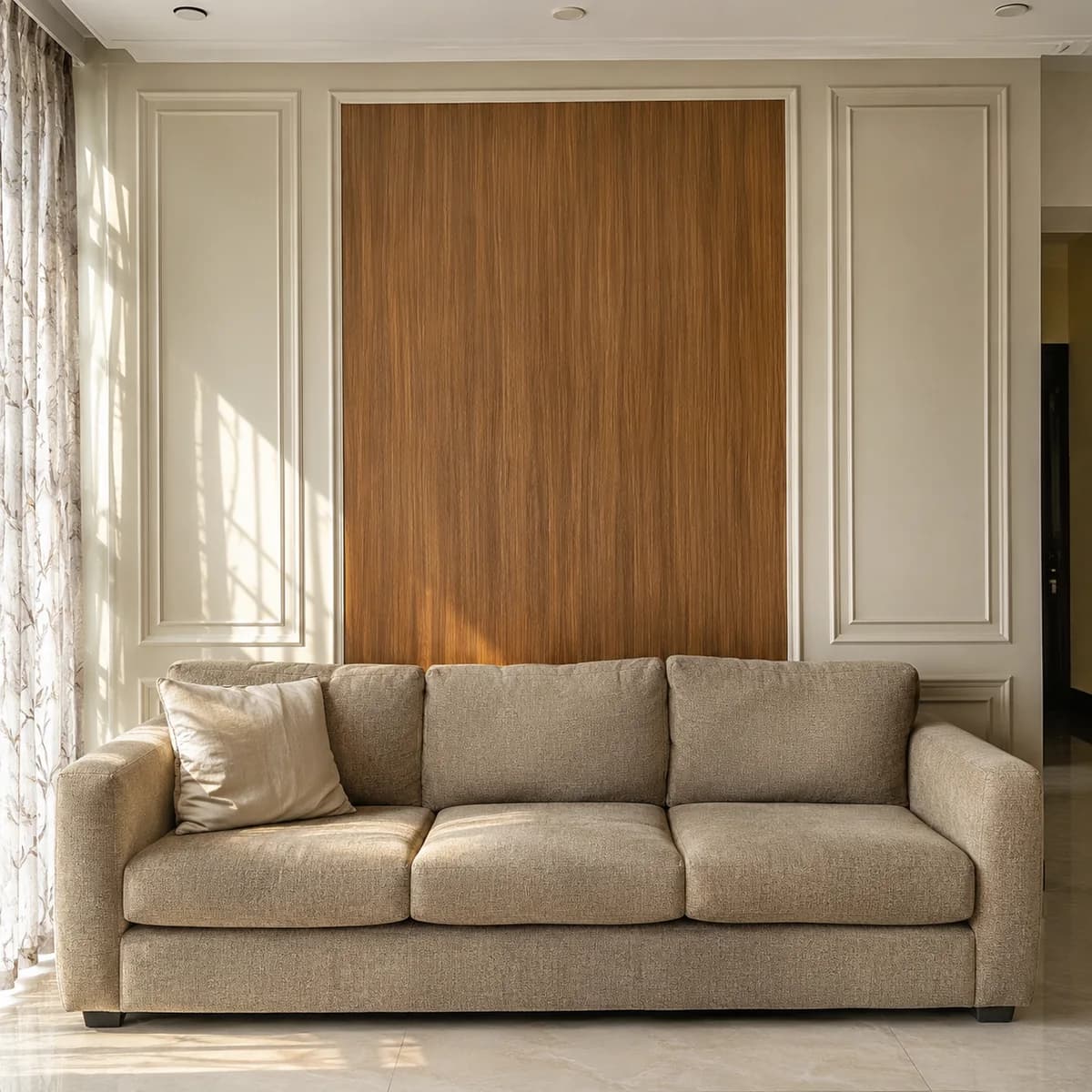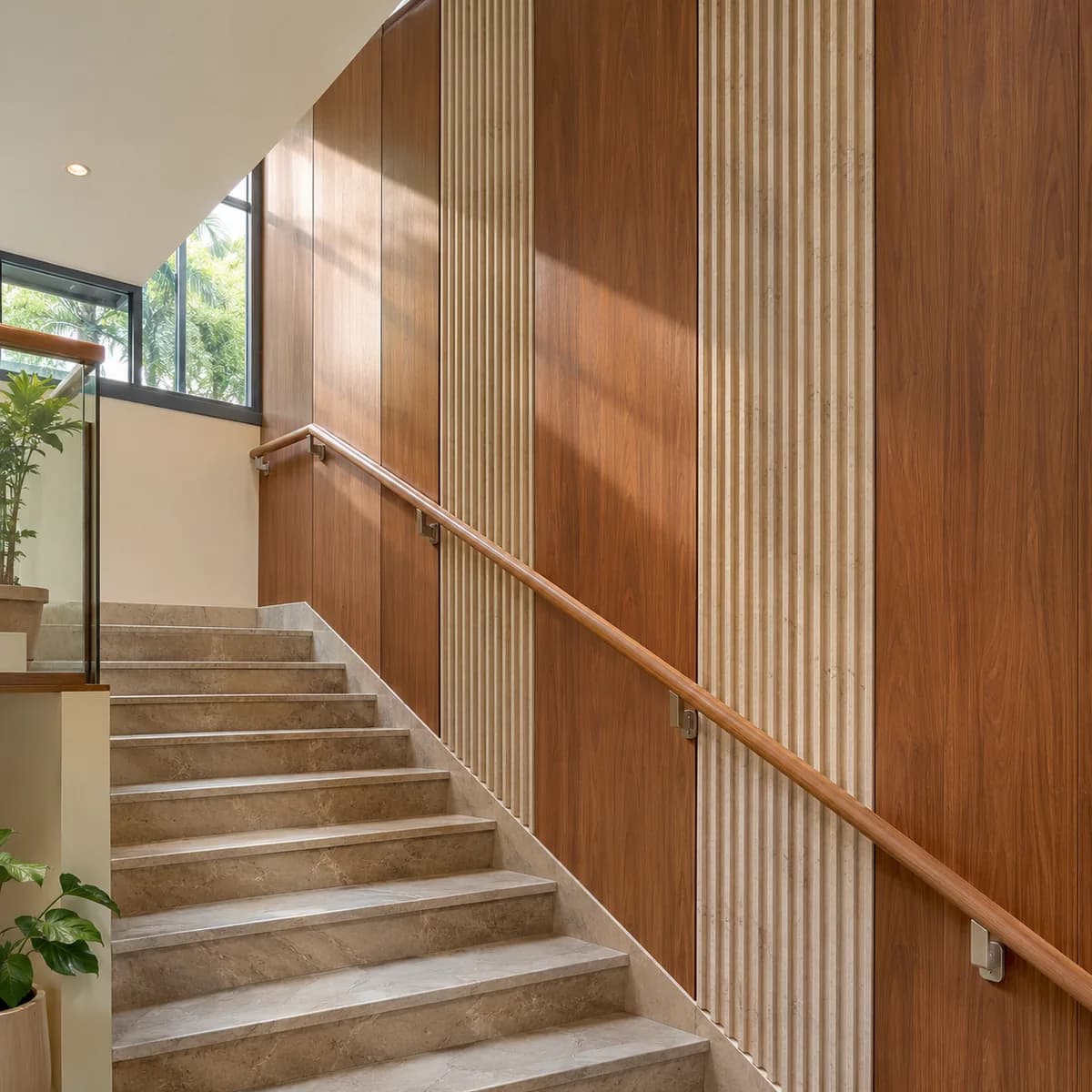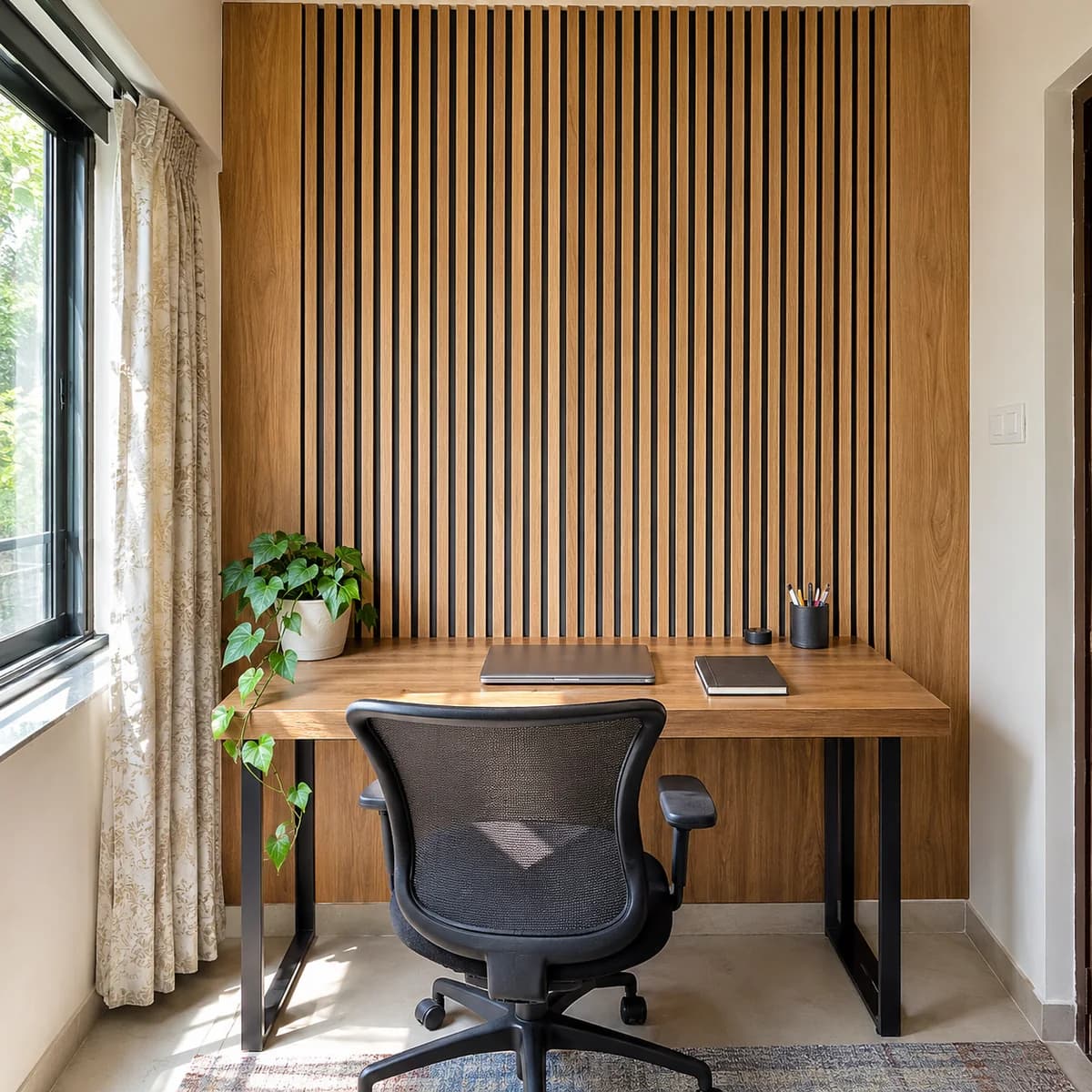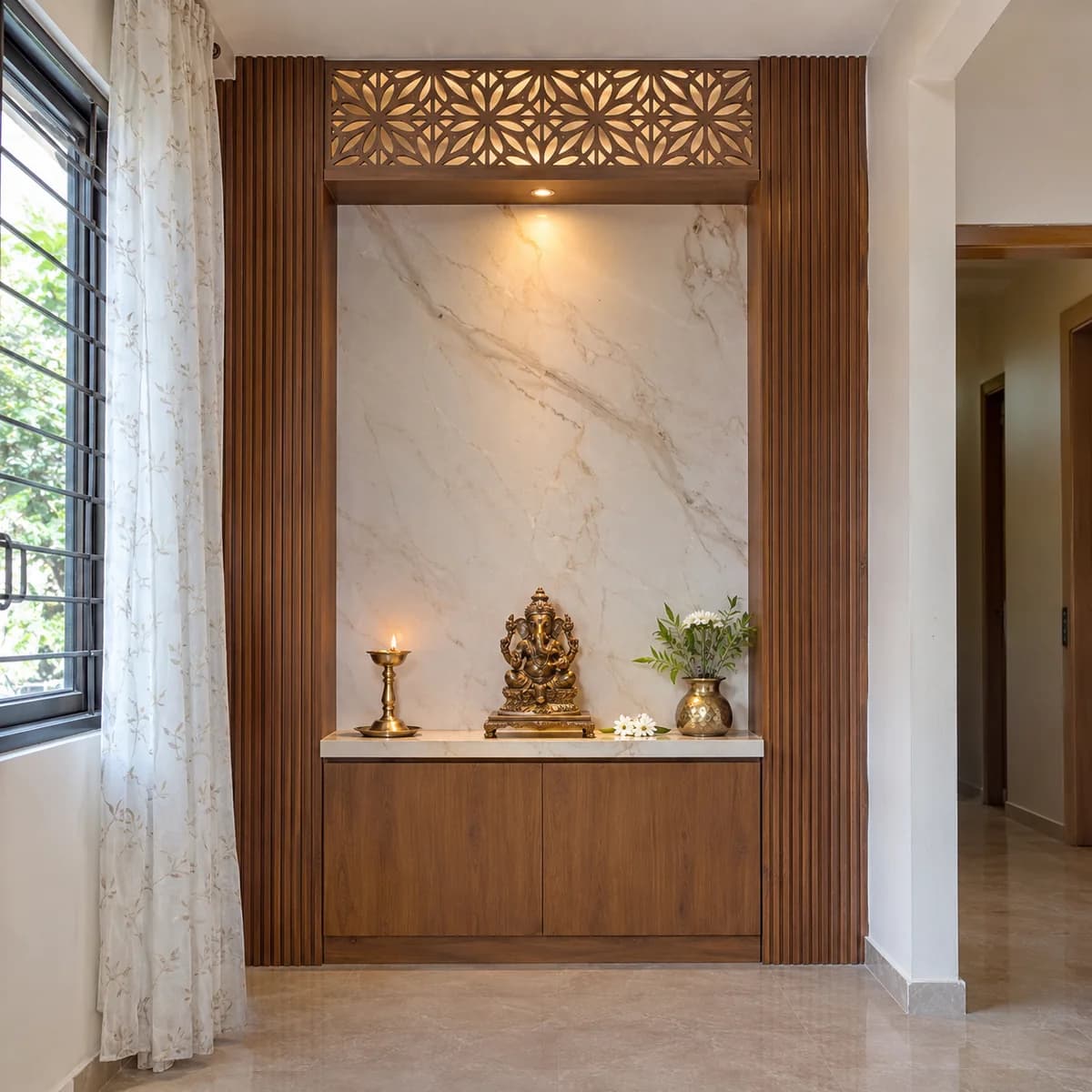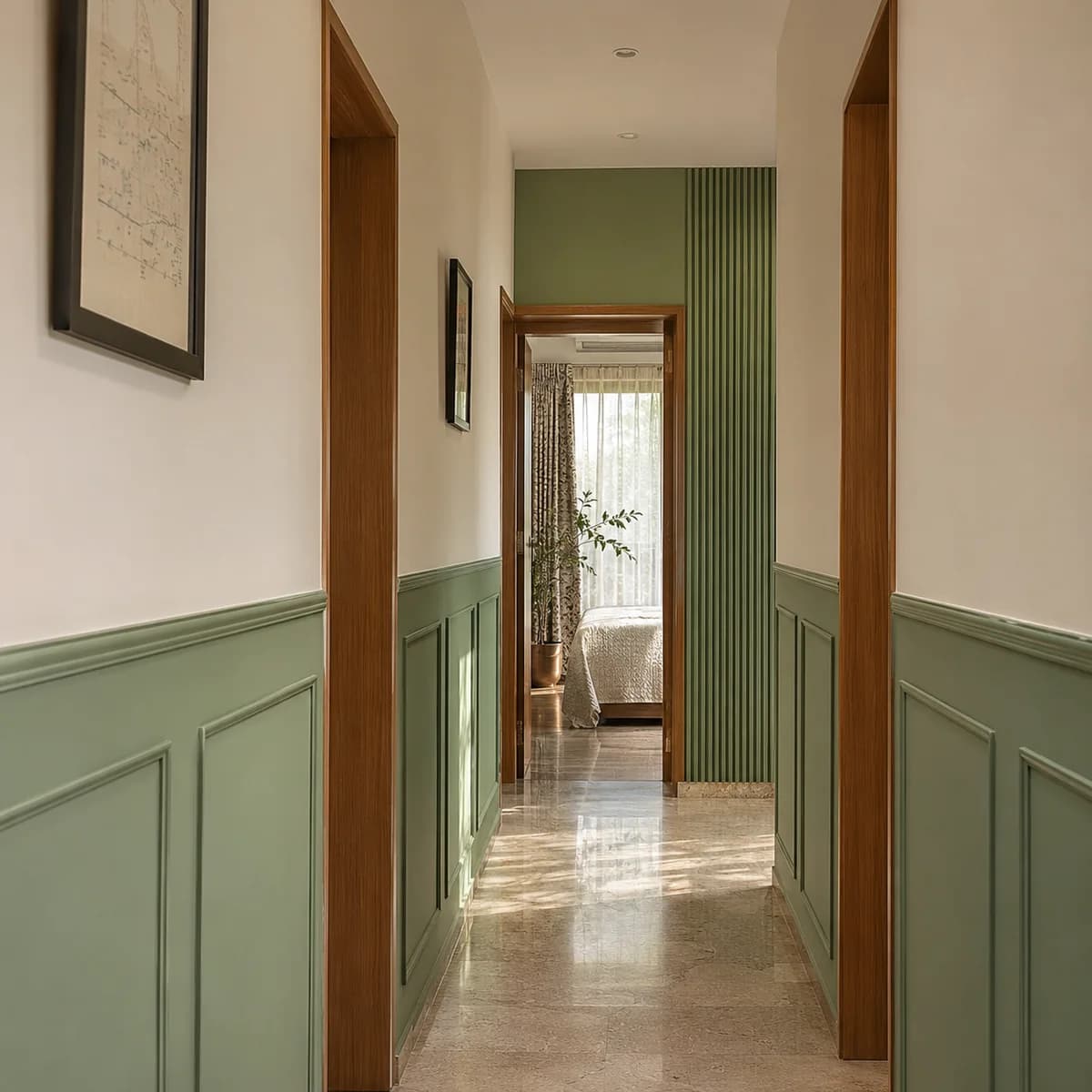
We panel the walls of a passage or corridor. The choices are slim fluted panels, half-height moulding and wood strips. Half-height moulding covers the lower part of the wall and leaves the top plain. A fluted panel often finishes the far end.
The space most homes forget
It makes otherwise wasted passage space look finished. Most homes decorate the rooms and forget the path between them. You walk through it many times a day. A little panelling makes the whole home feel more complete.
A corridor that feels like a gallery
A plain corridor becomes part of the design. The lower moulding also protects the wall from scuffs and bags. A panelled end wall gives the eye somewhere to land. The walk from room to room feels like a gallery.
Half-height moulding, and the wall at the end
Passages take knocks at hip height from bags, trolleys and children, and that is why half-height panelling exists. Moulding or slim fluted panels cover the lower part of the wall, which takes the wear and wipes clean. The upper part stays painted, so the passage keeps its light and does not close in.
The wall at the far end is different. You walk towards it, so it can carry a full-height panel, a lit niche or a piece of art, and it draws the eye down the passage. A fluted panel with warm light grazing down it is the usual choice there. Doing the end wall alone is often enough.
Working the panels around doors and switchboards
A passage wall is interrupted every few steps by a door frame, a switchboard or a cupboard. The panelling has to meet each one cleanly. We measure every opening, then set the panel rhythm so a full panel or a clean half lands at each frame rather than a sliver. Switchboards are either framed within the panelling or moved slightly, with your electrician.
Depth is kept minimal so the passage does not narrow. Lighting matters more here than anywhere else, because passages rarely have windows. Slim strips along the top of the panels or small wall lights between them make the length of the passage work for the house instead of against it.
Who it suits
- Your passage is long, plain and a little dull.
- The lower walls get marked by bags, toys or luggage.
- You want the home to feel finished between the rooms too.
Before you choose
- Passages are narrow, so we keep the panels slim.
- Door frames and switchboards break the run. We plan the panels around them.
- Good lighting matters more here than in any other space.