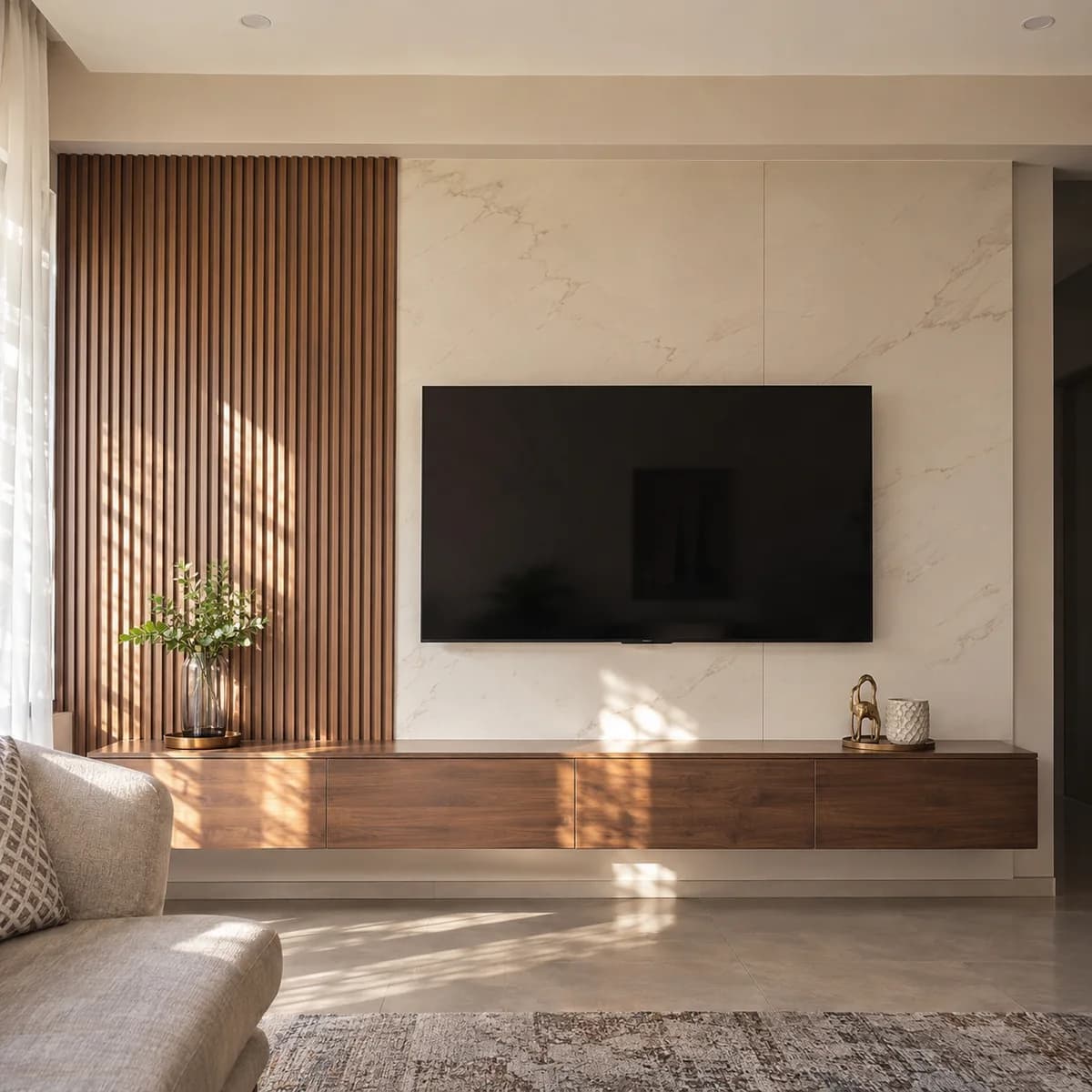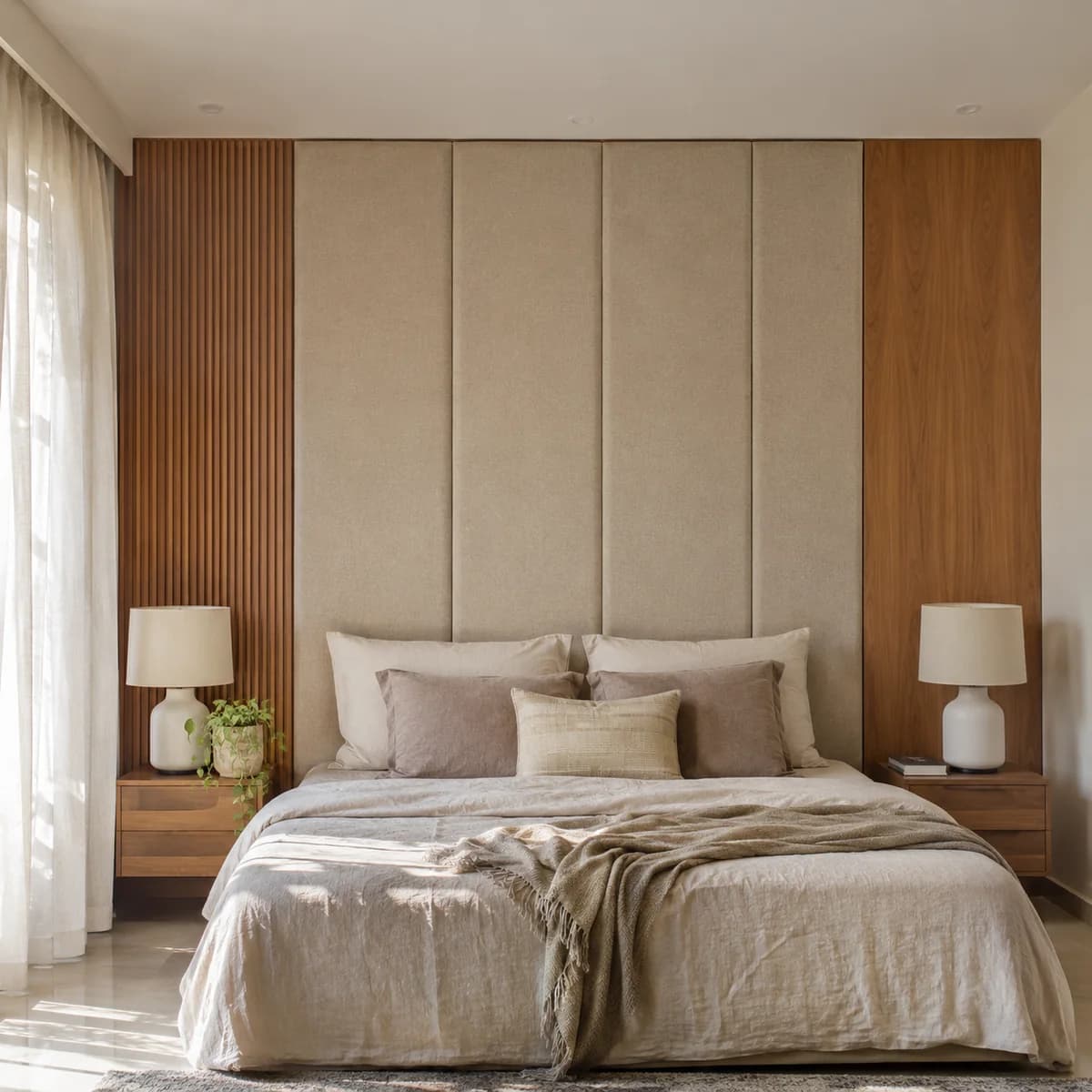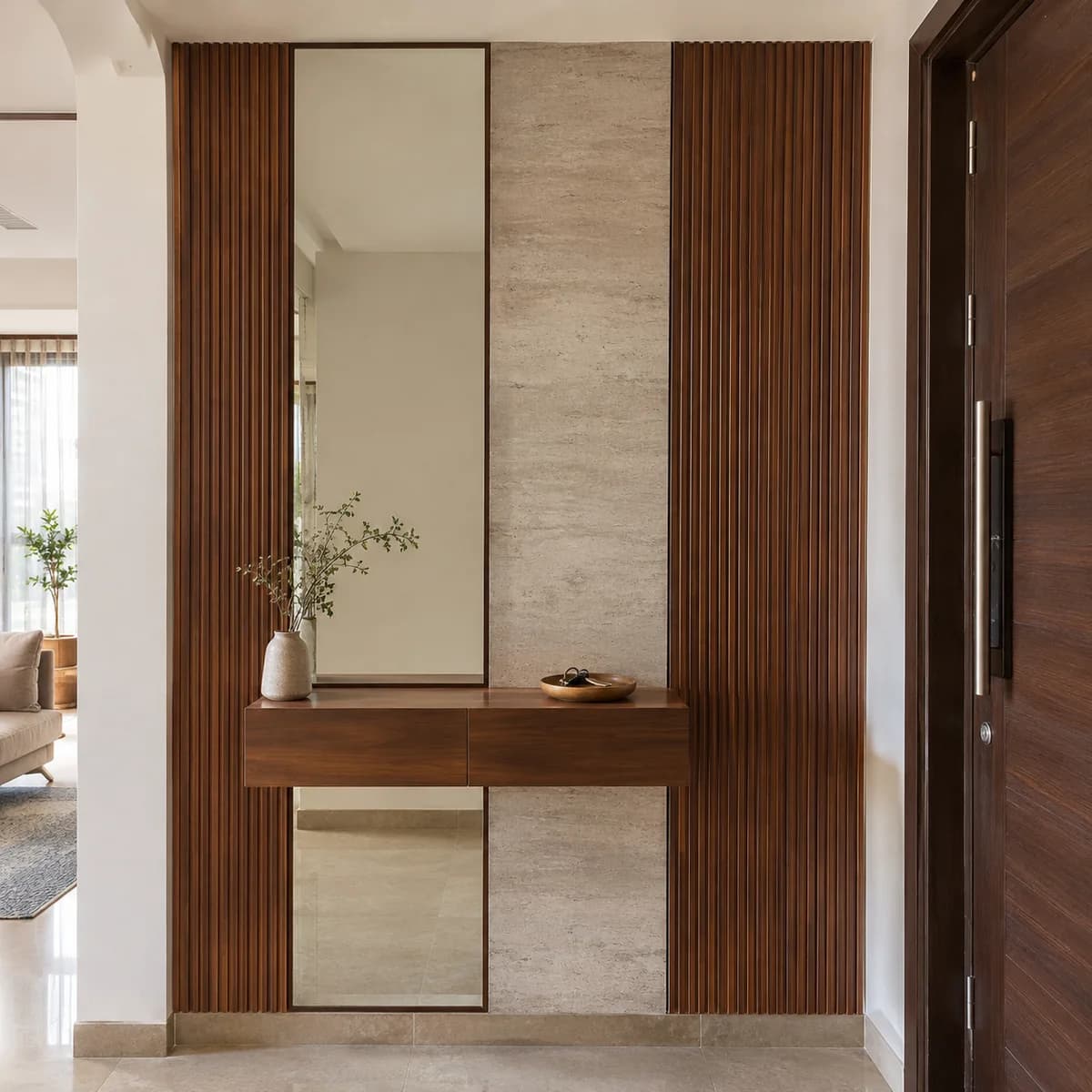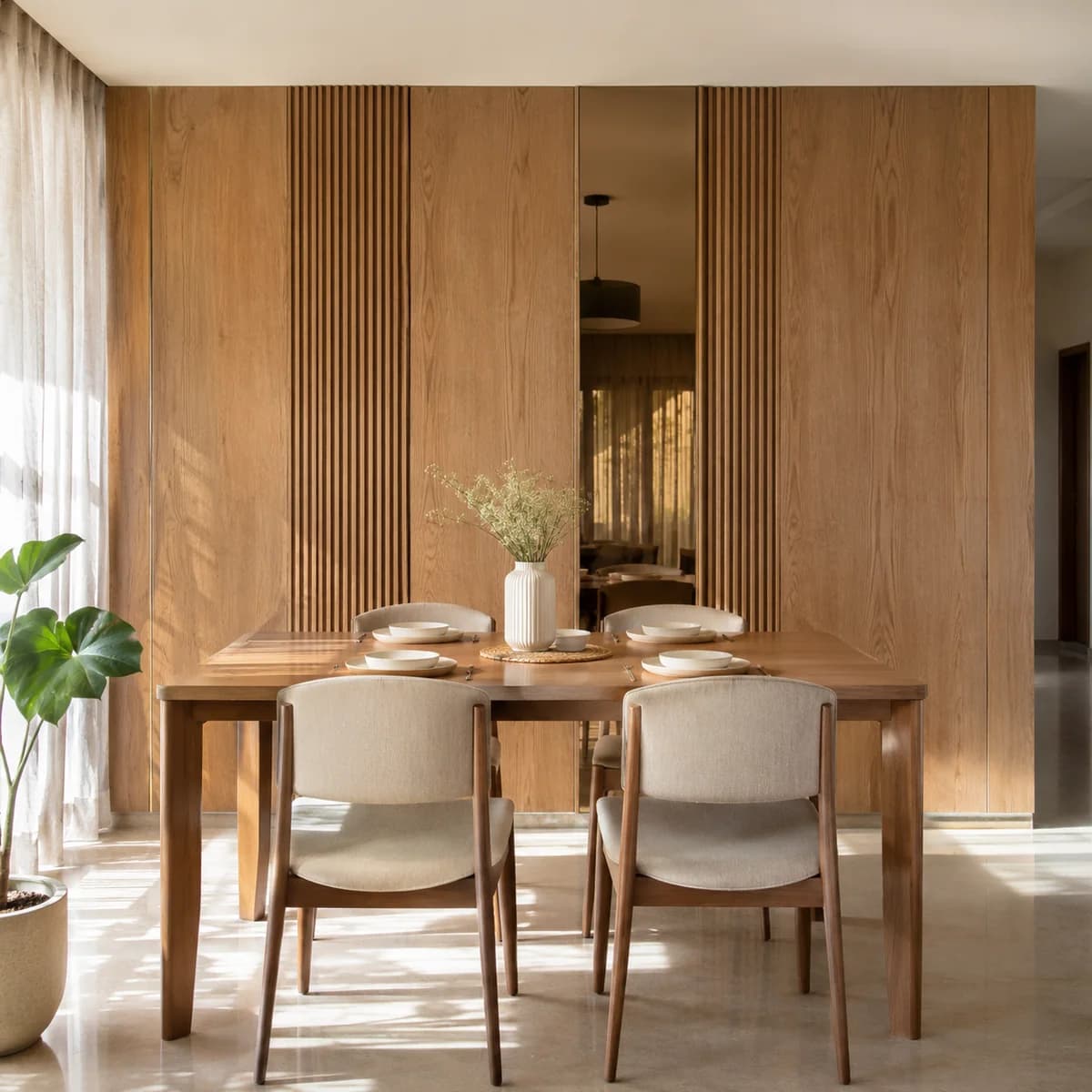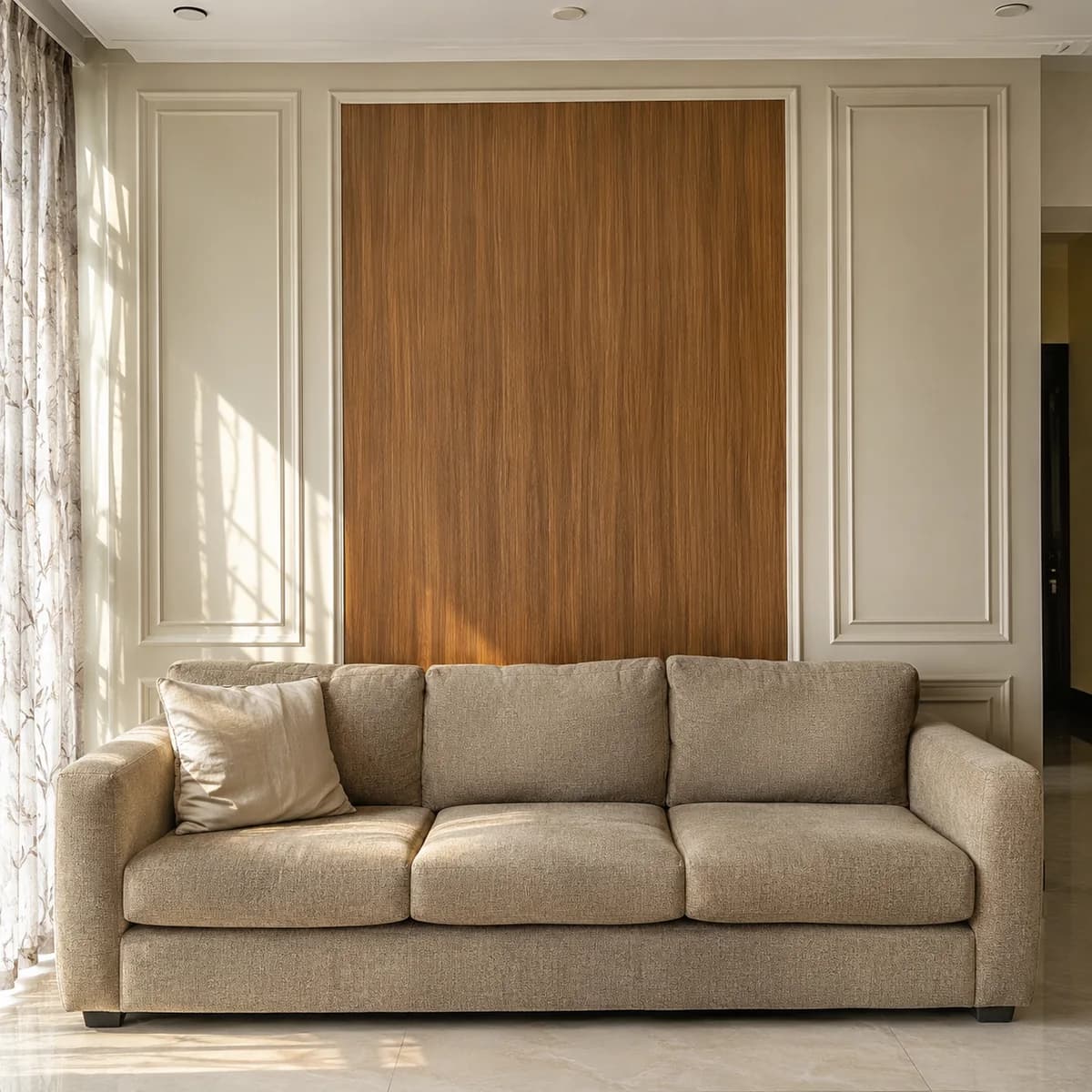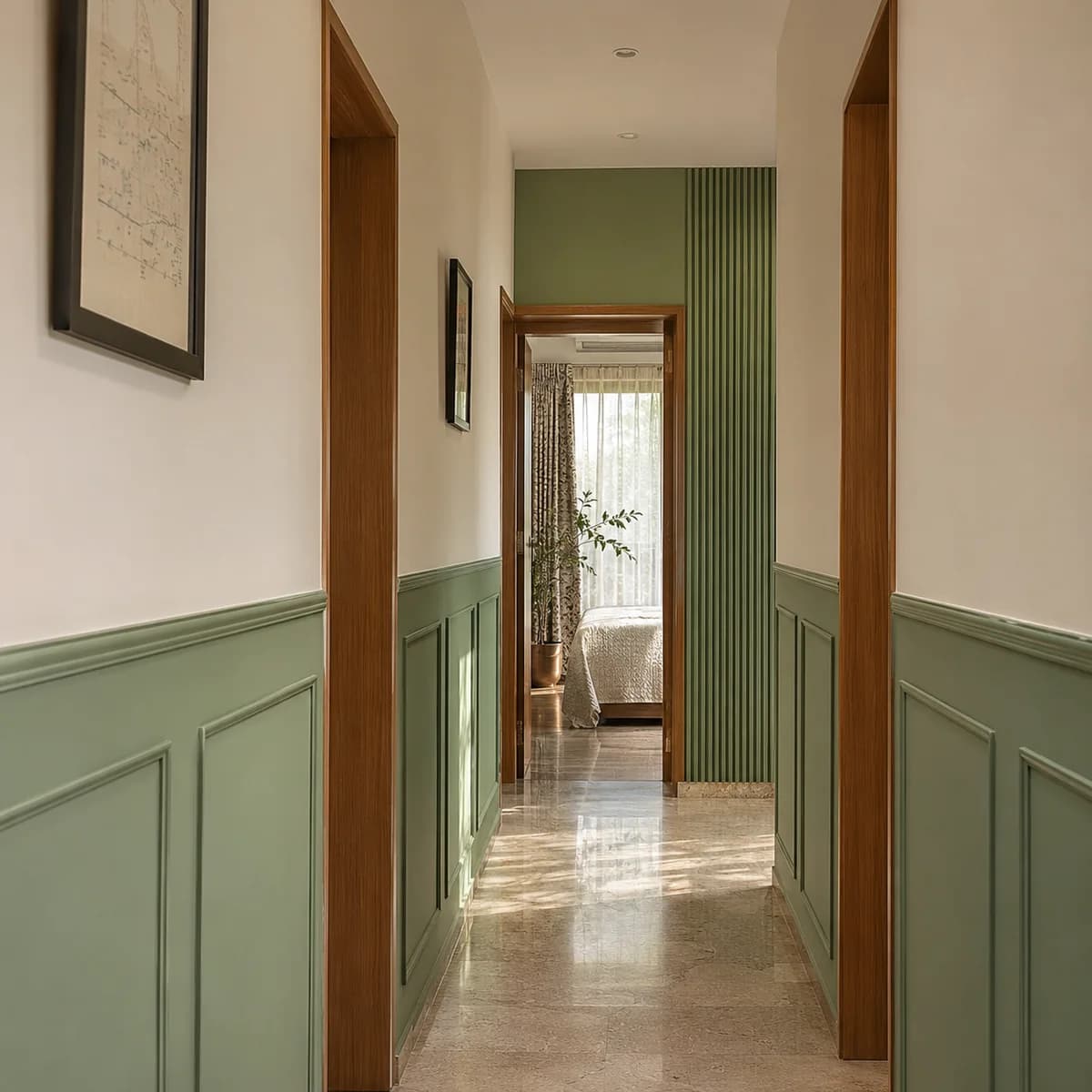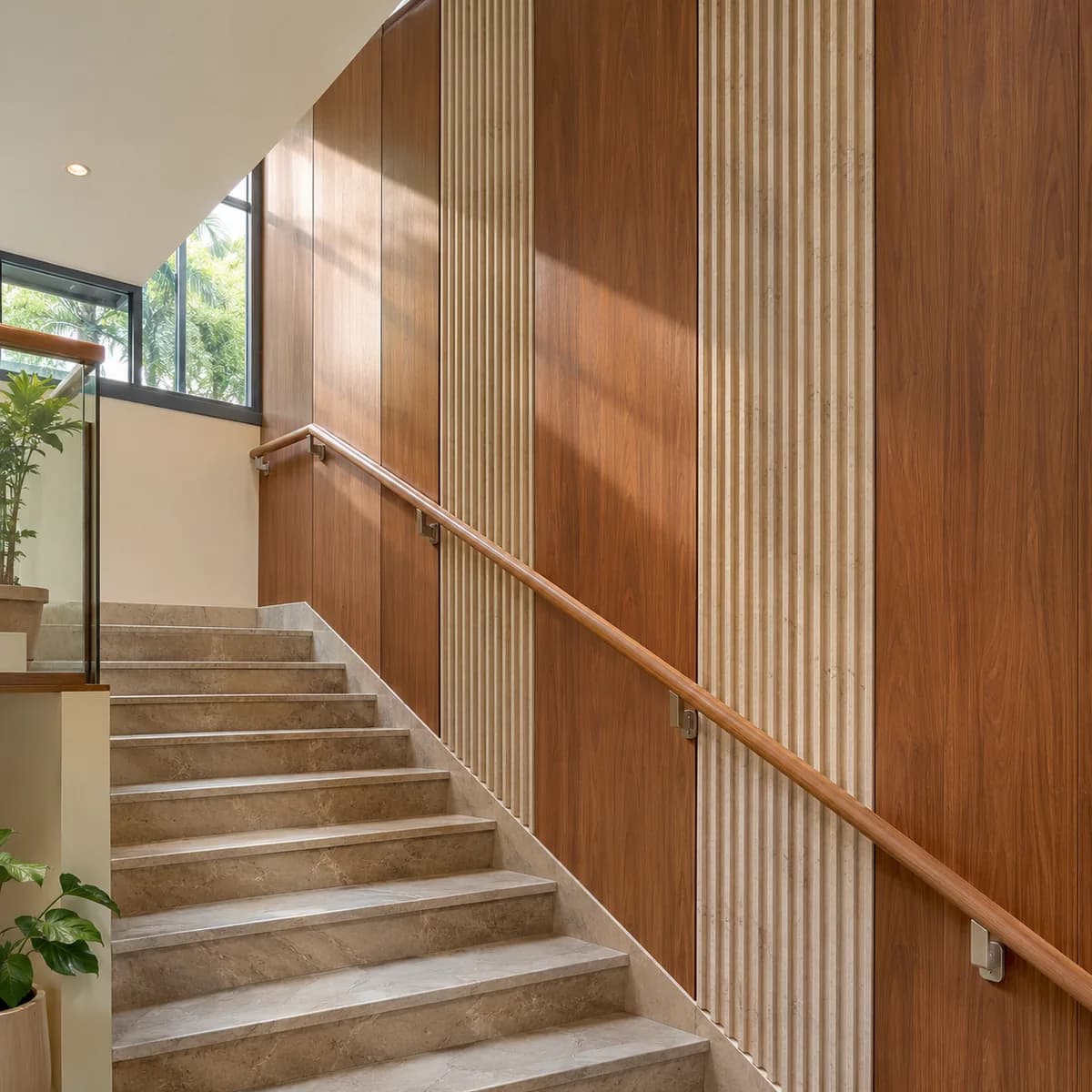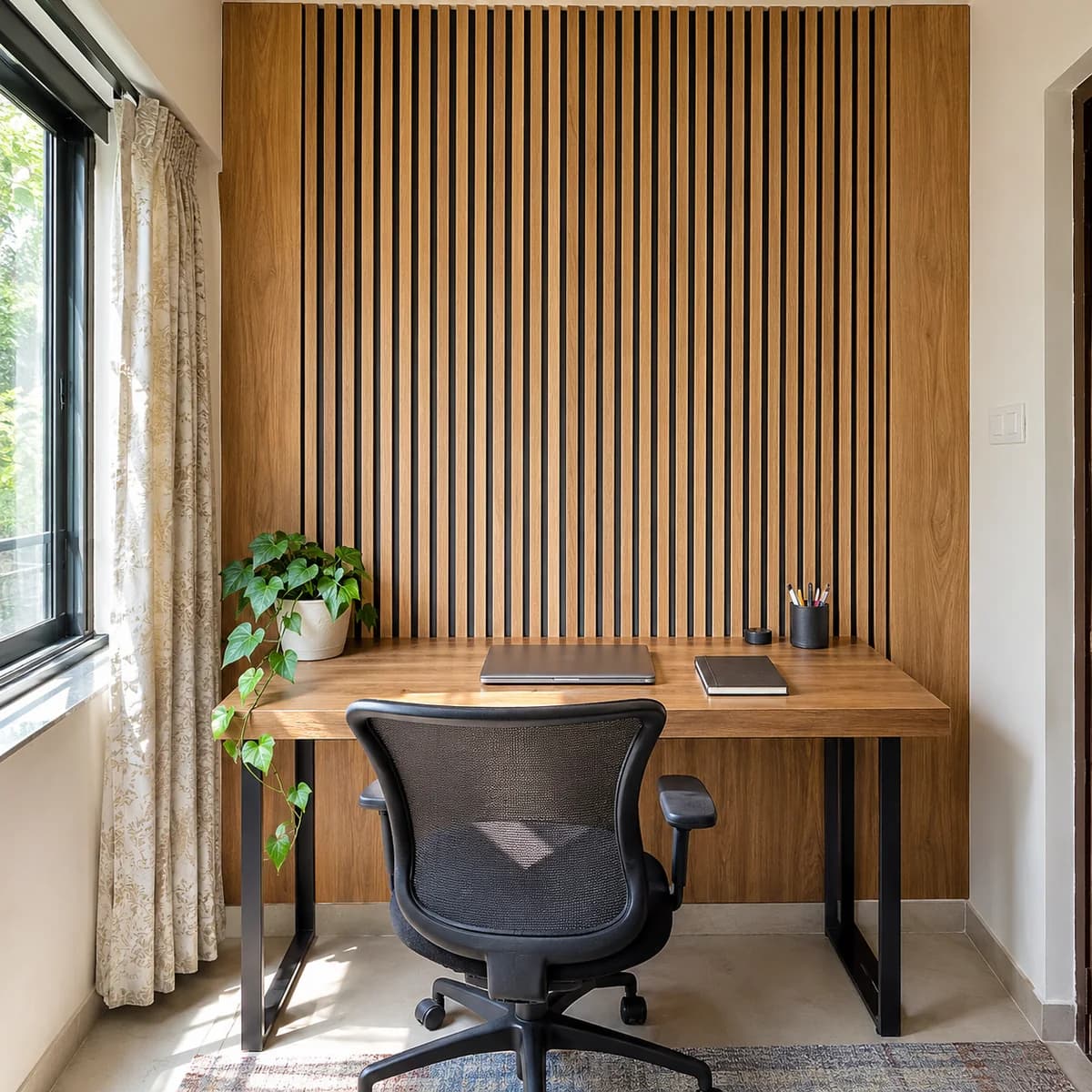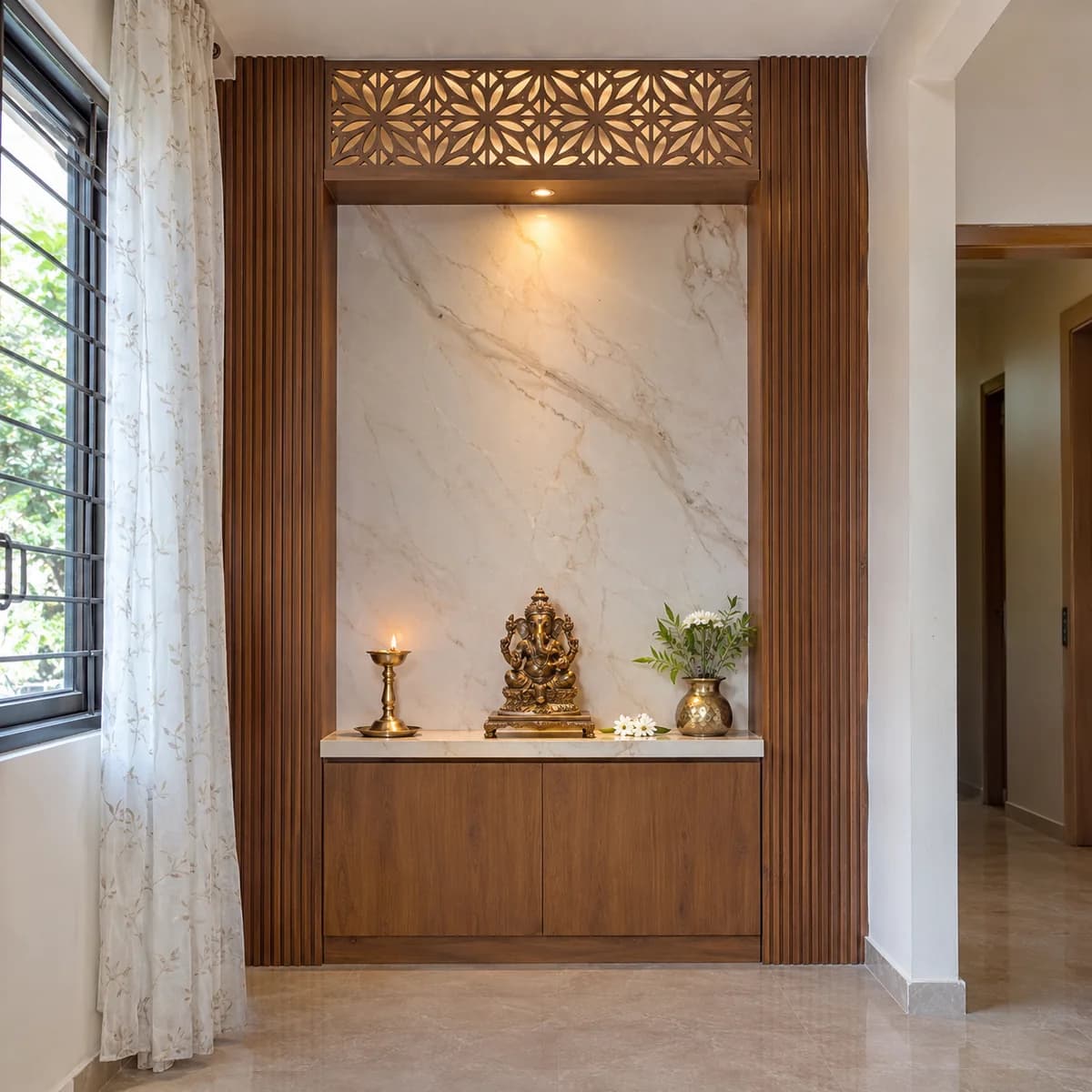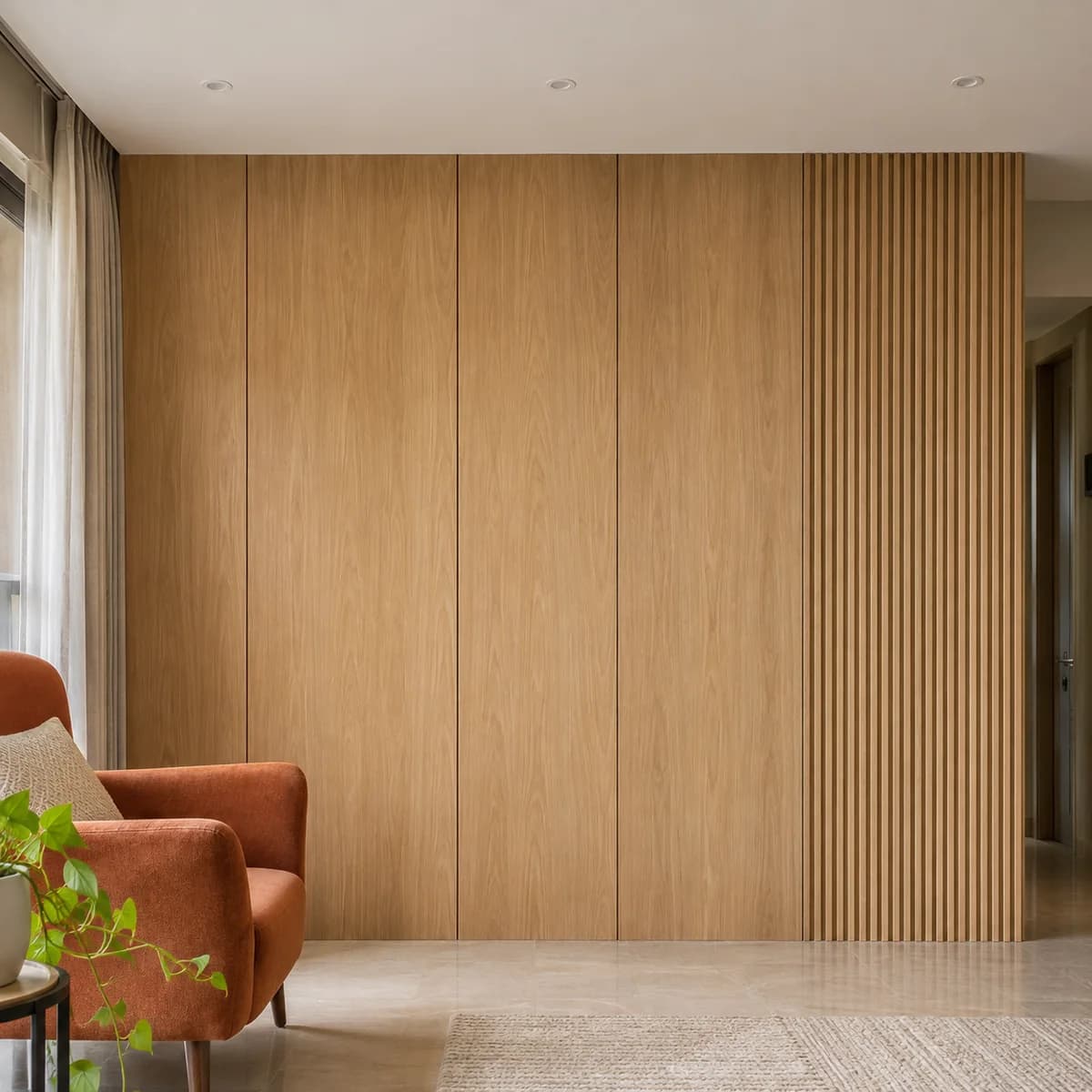
We panel one full wall of your living room, from floor to ceiling. The choices are full-height decorative panels, moulding, veneer and fluted panels. Tall panels in two finishes often alternate across the wall. The wall needs nothing hung on it afterwards.
The wall becomes the decor
It turns a plain wall into the main visual element of the room. You do not need art, shelves or a big unit to fill the space. The wall itself becomes the decor. It works even in a room with very little furniture.
The room gets a clear focus
Full-height panels make the ceiling feel taller. The room gets a clear focus, which makes furniture easier to place. A wall light or two adds depth in the evening. The living room looks planned, not filled.
Picking the one wall that carries the room
A feature wall should be the wall you see first when you walk into the room. Often that is the wall facing the entrance, not the TV wall. A wall with a window in it is a poor choice, because the window breaks the panels and daylight flattens the texture. A long unbroken wall is the best one.
One feature wall is enough. Two in a room compete and neither wins. Once the wall is chosen, the sofa, the lamps and any art are placed in relation to it. We ask where those sit, so the panel joints line up with the furniture rather than landing at random behind it.
Full-height panels and an uneven ceiling
Panels that run from floor to ceiling have to meet both, and neither is ever perfectly straight. We measure the height at several points along the wall. A slim trim at the top and the skirting line at the bottom take up the difference, so the panels themselves stay equal and the joints stay vertical.
If the room has a false ceiling or a cornice, the panels stop under it and the trim is matched to it. Tall panels in two finishes often alternate across the wall, and the rhythm is drawn before anything is cut. Wall lights or warm strips can sit in the recesses between panels, with the wiring run behind.
Who it suits
- You have a large plain wall and do not know what to do with it.
- You prefer a clean room without many frames and shelves.
- Your TV is elsewhere, so this wall is free to be the feature.
Before you choose
- Pick the wall you see first when you enter the room.
- One feature wall is enough. Two in a room fight each other.
- Tell us where your sofa and lamps sit, so the panel joints line up with them.