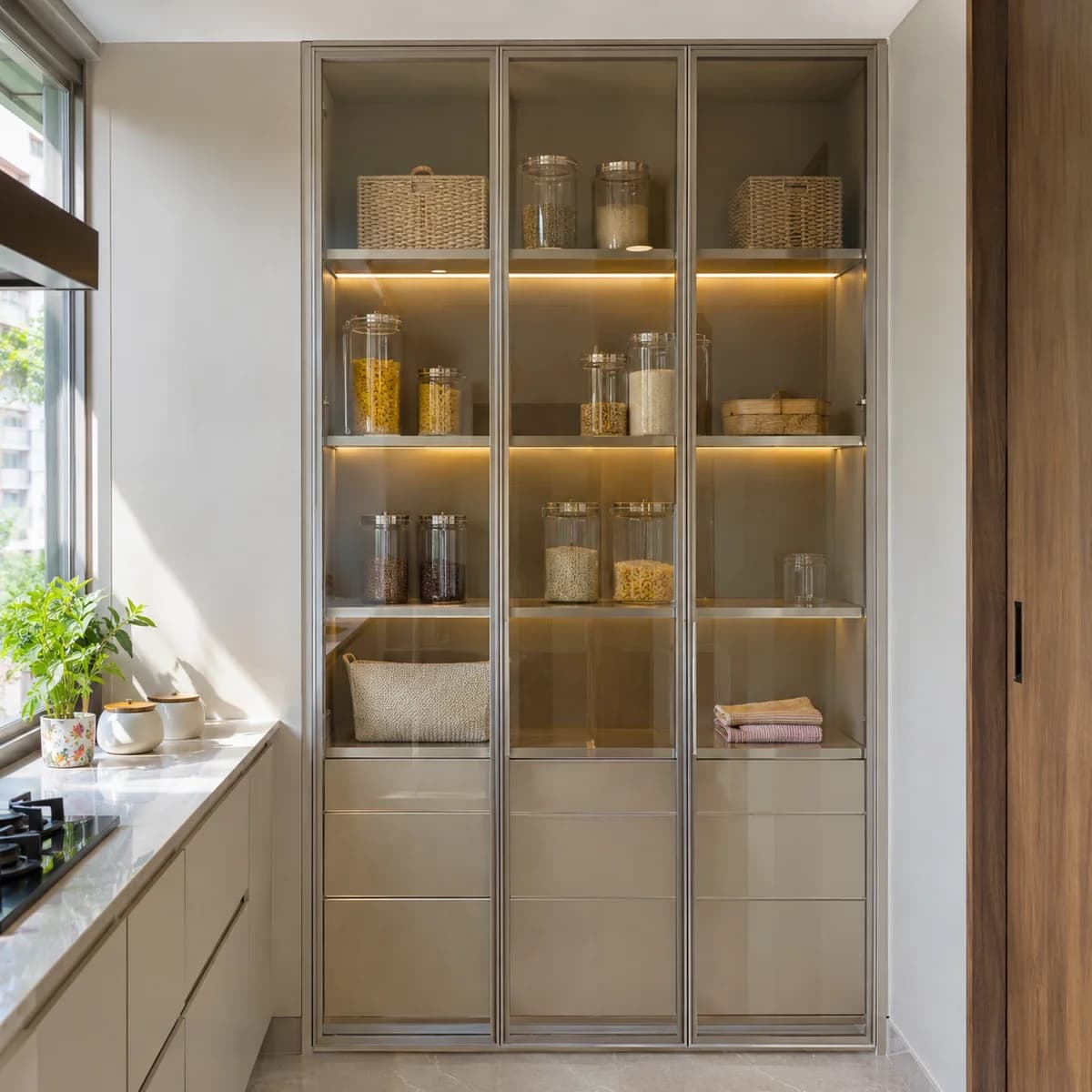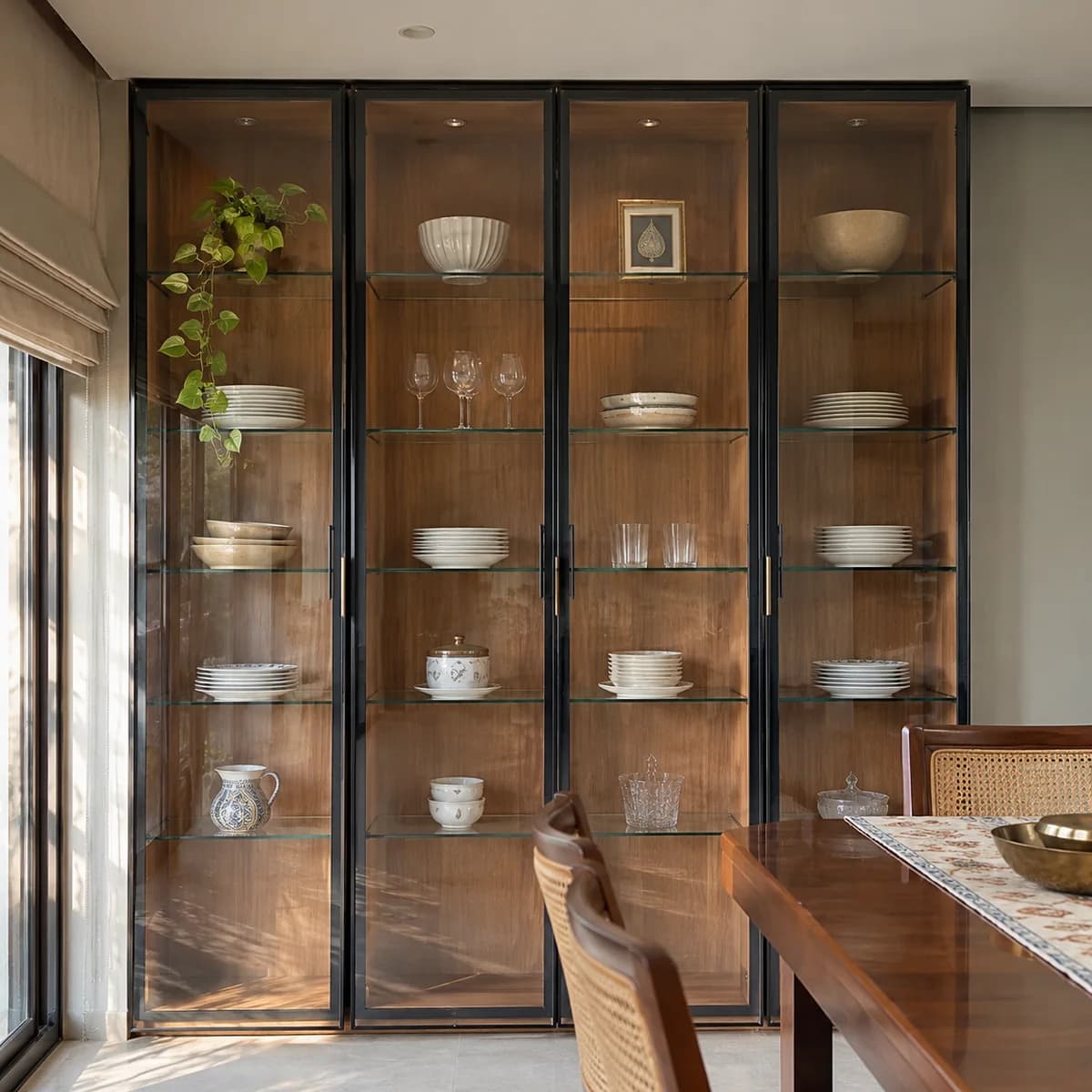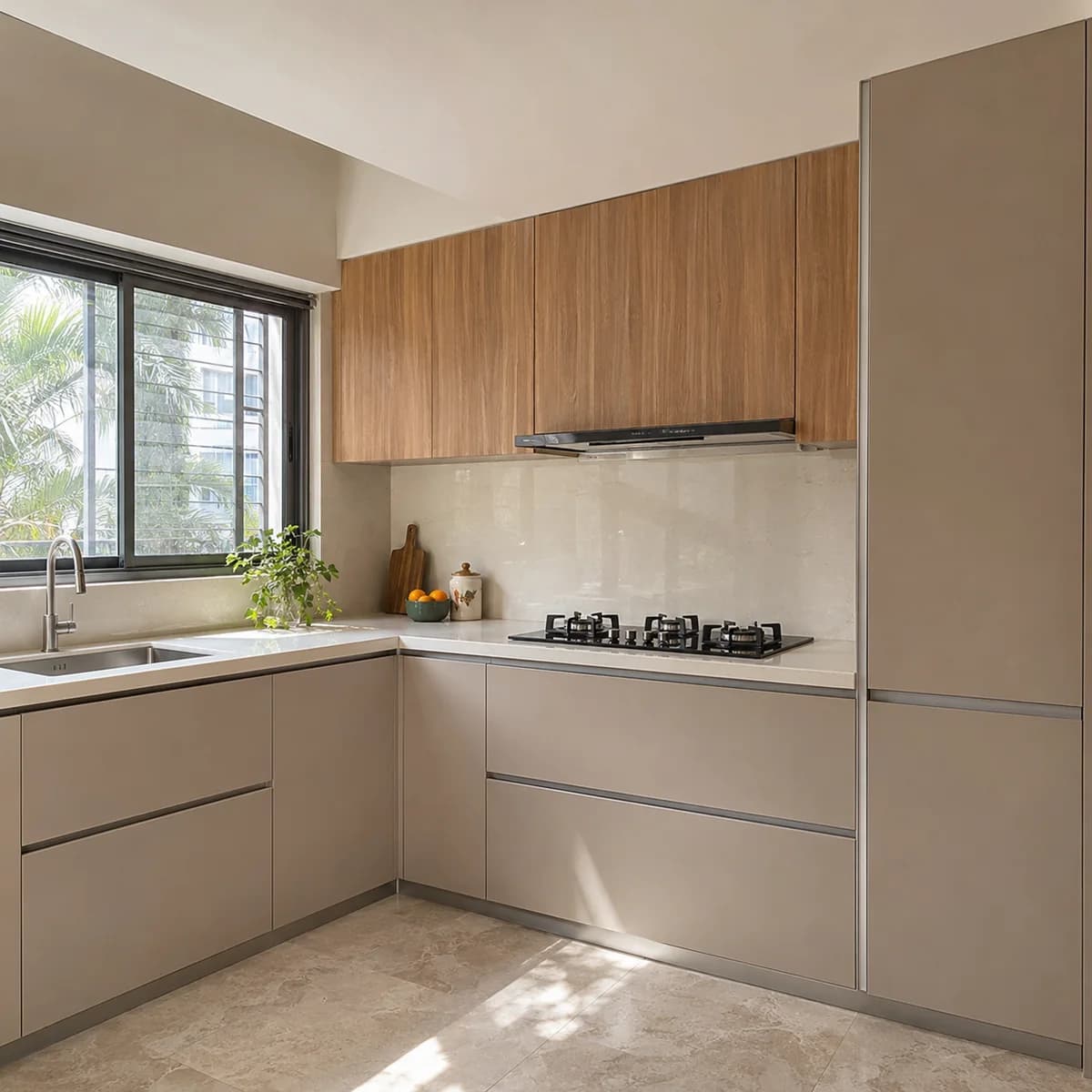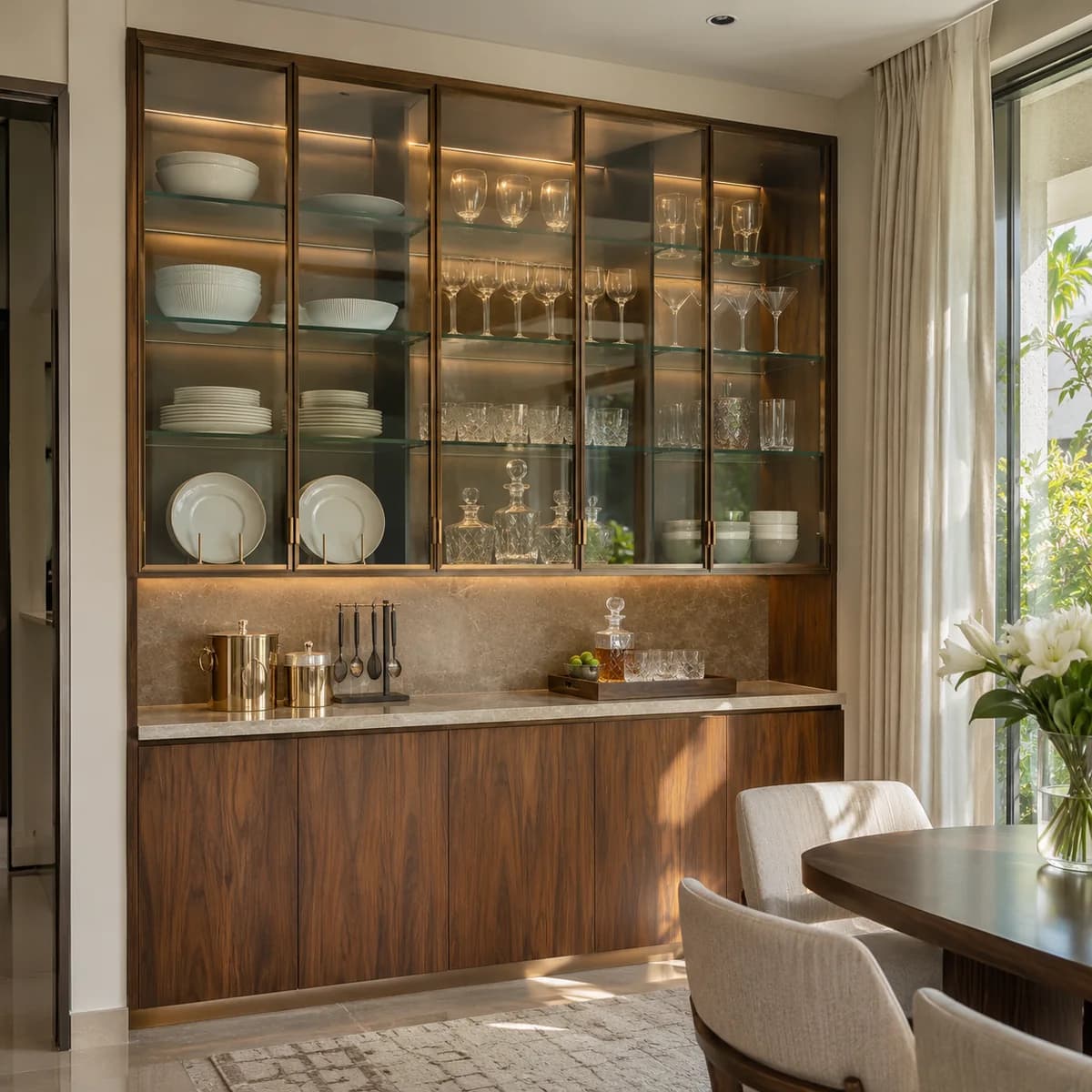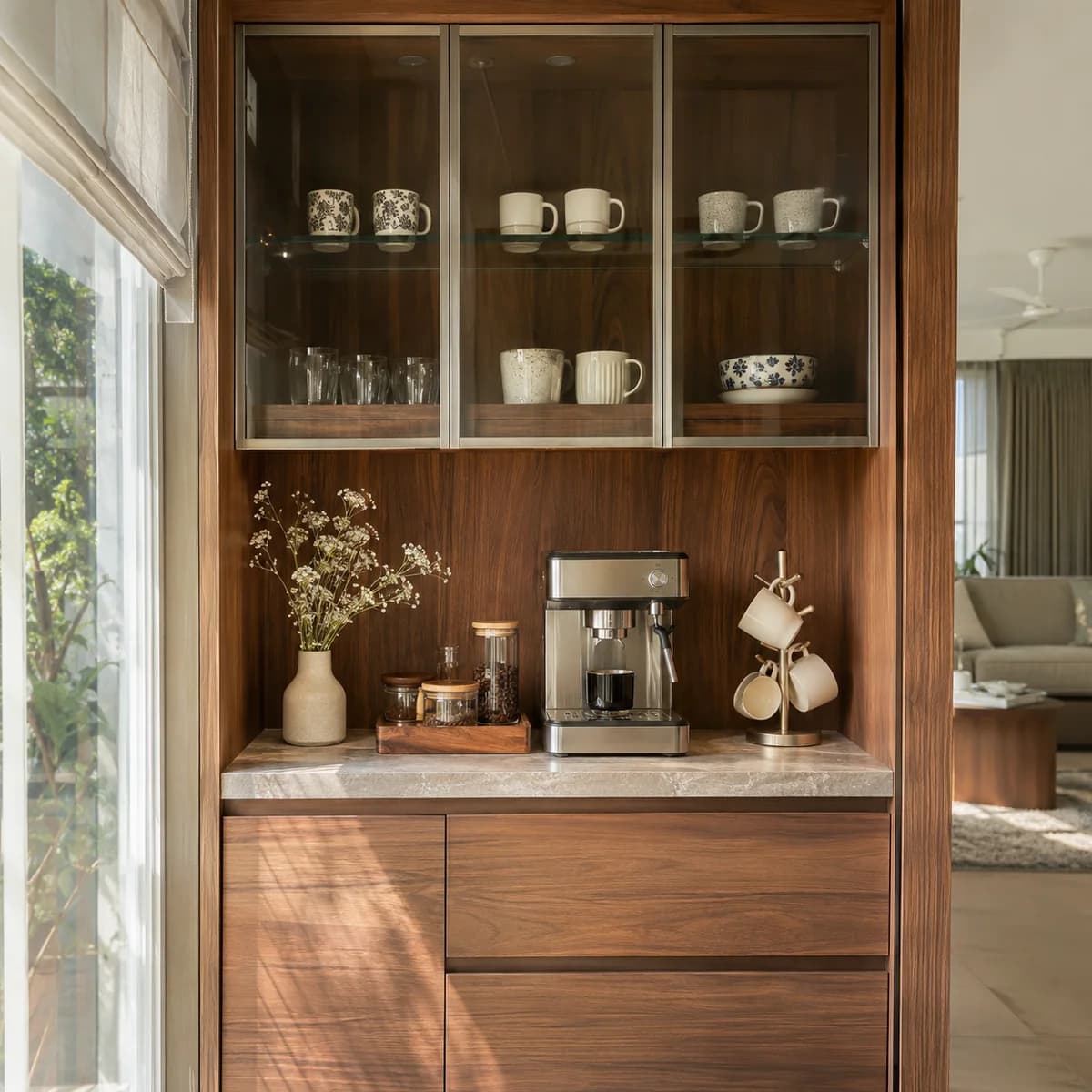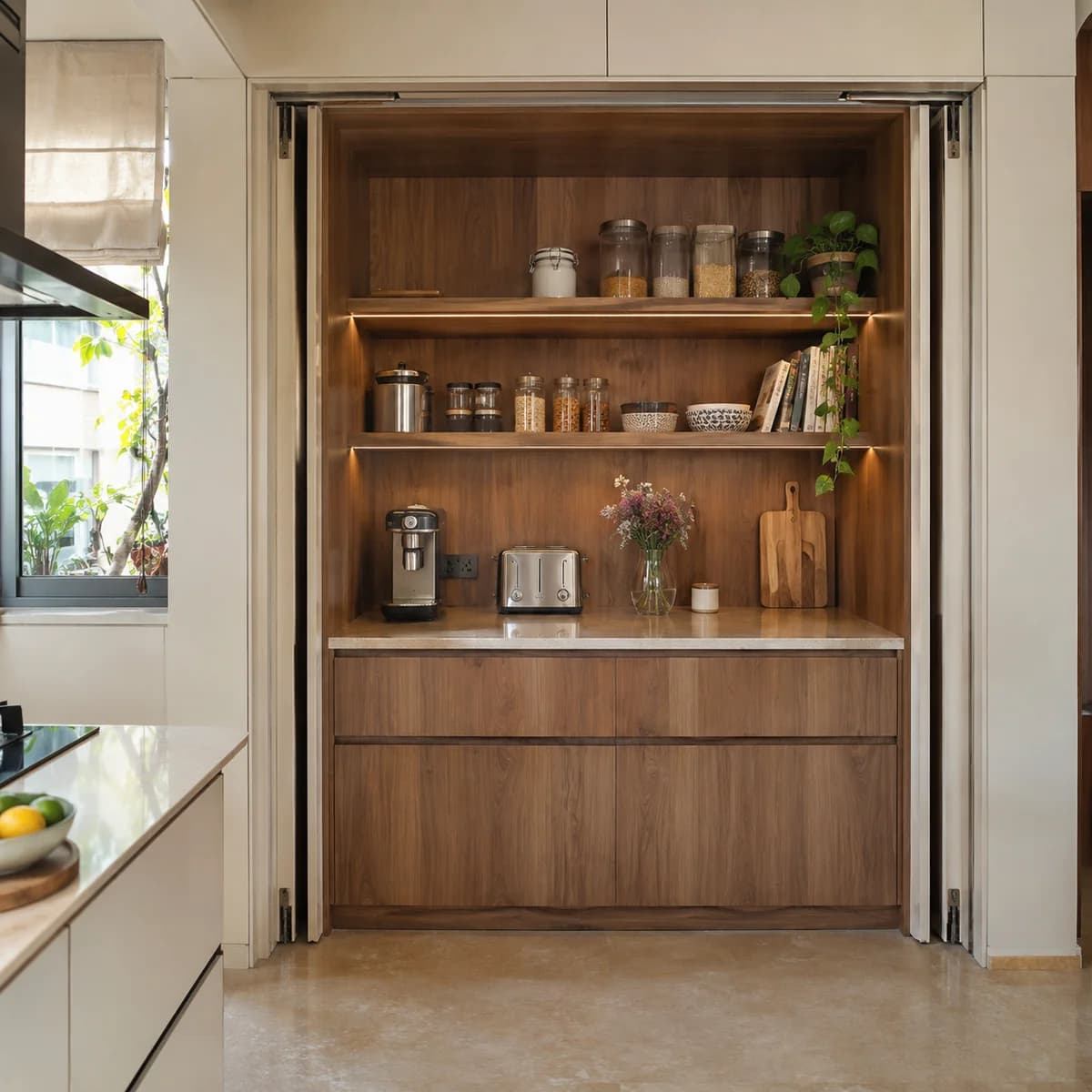
A Delhi kitchen works hard. It cooks for a full family every day, and it often feeds guests as well. Luxy builds glass and aluminium kitchens and single units for homes across Delhi, from one crockery unit in the dining room to a whole kitchen.
Glass near the hob in a Delhi kitchen
Daily cooking with oil and spices leaves a film on every surface near the hob. Glass does not absorb it, which is why glass wipes clean so easily. But clear glass shows the film sooner than board does.
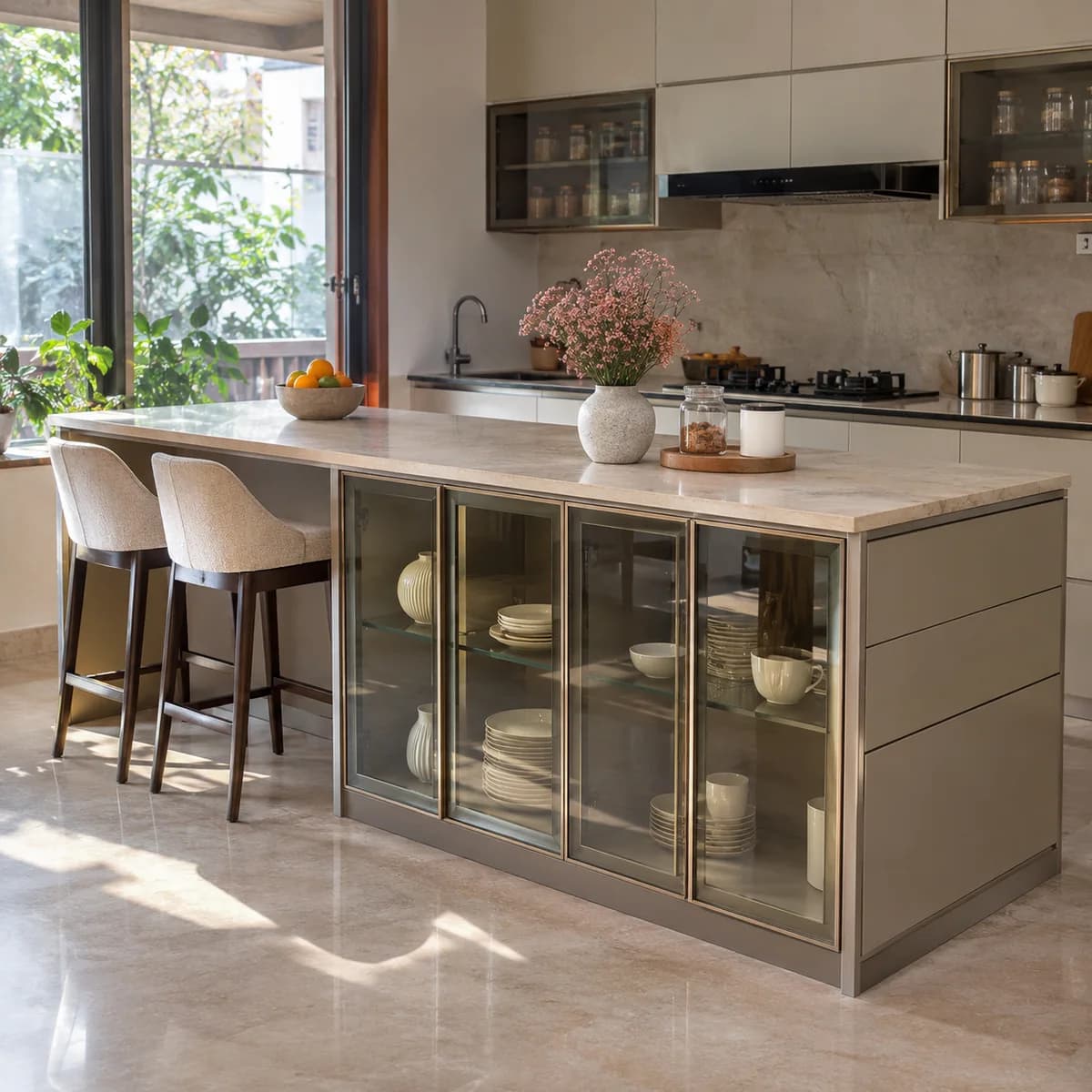
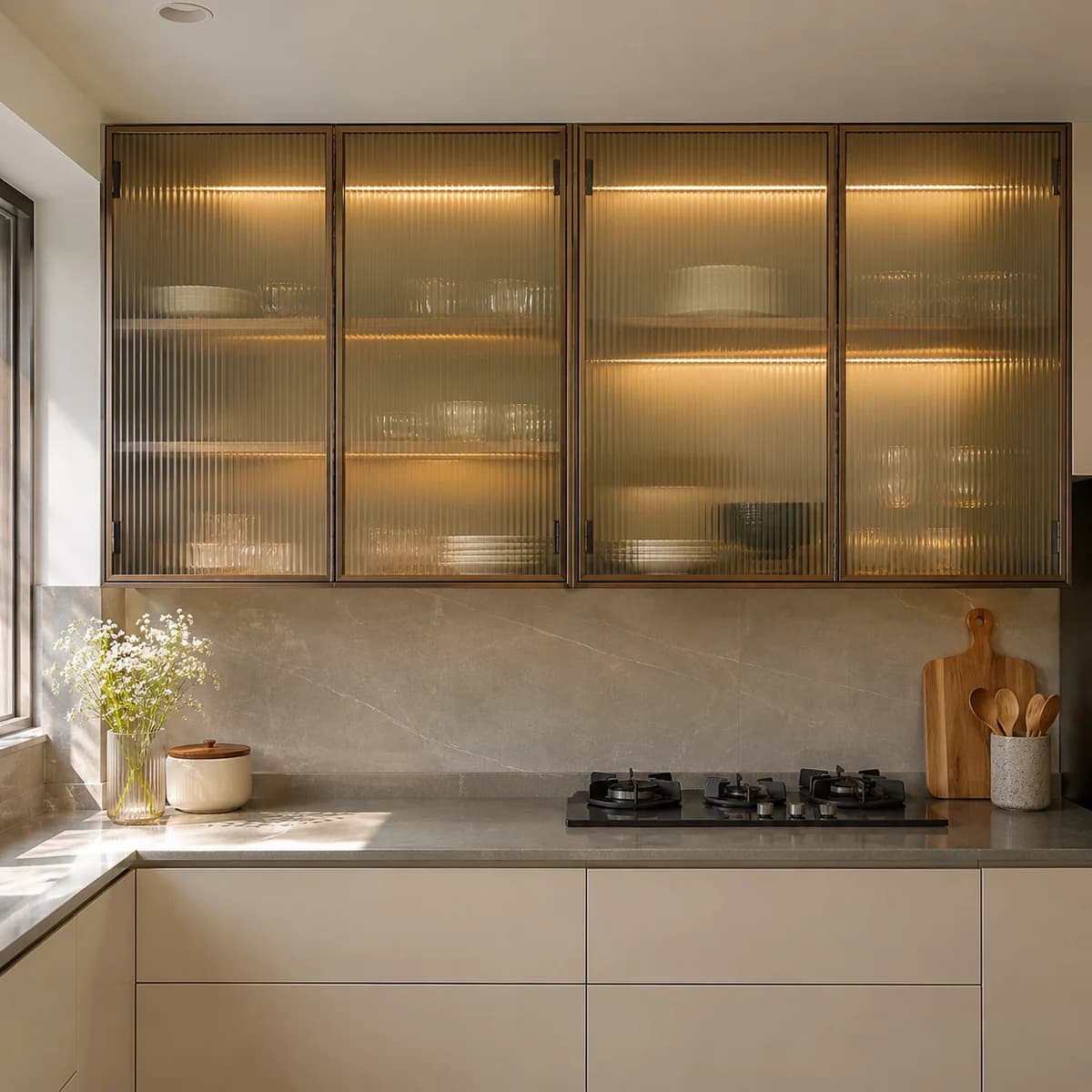
So we keep glass shutters off the hob wall and use them on the units beside and opposite it. Fluted and tinted glass show less than clear glass. A strong chimney matters more than any shutter, and we ask about yours before we place a single glass door.
Hard water and the sink side
Much of Delhi has hard water. It leaves white marks wherever it dries, and glass near the sink shows them clearly. We plan a closed board unit under and beside the sink, and keep the glass for the dry side of the kitchen.
If a glass unit has to sit near water, wiping it dry after the washing up keeps the marks away. The same goes for the tap side of a glass-fronted island. It is a small habit, and it keeps the kitchen looking new.
One unit before a whole kitchen
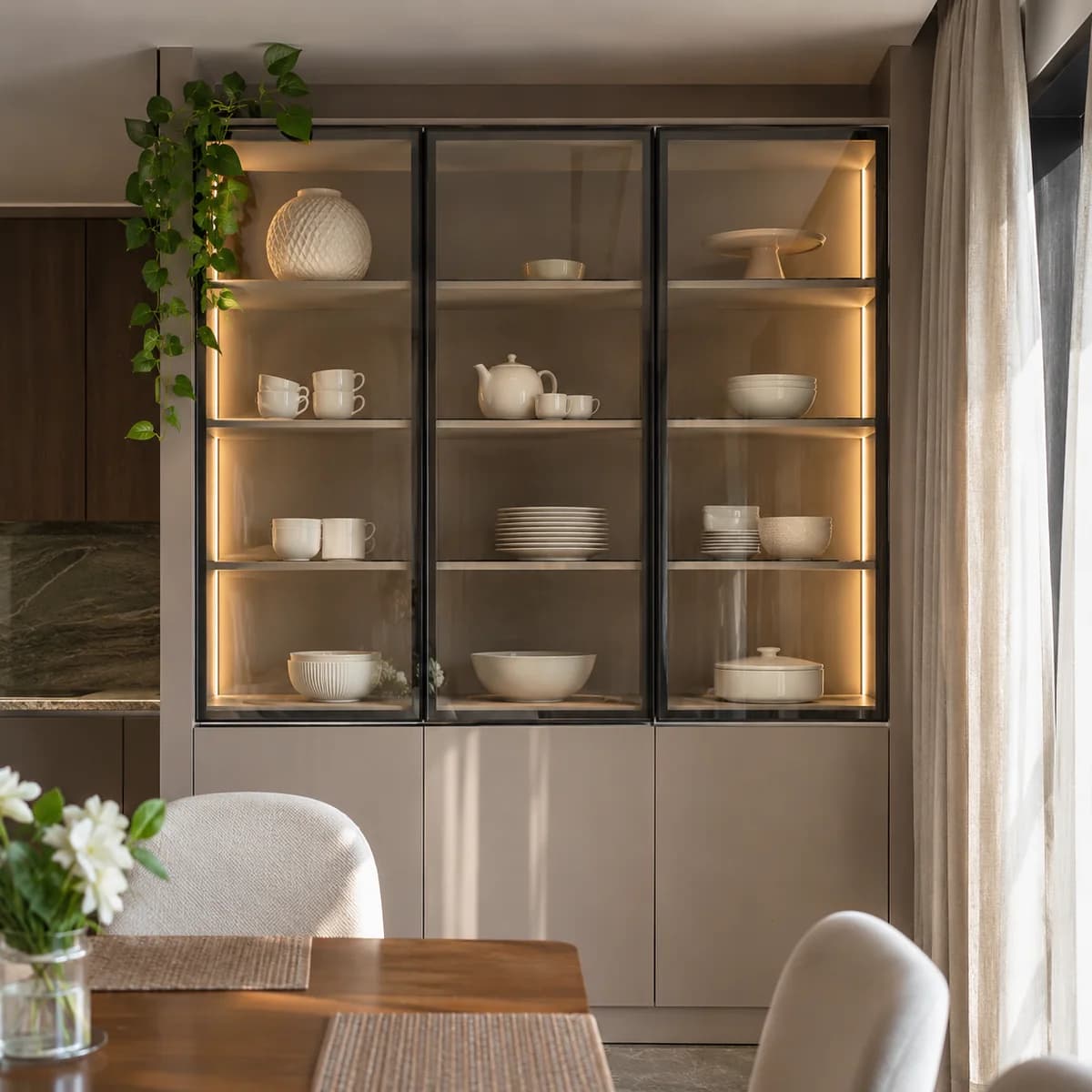
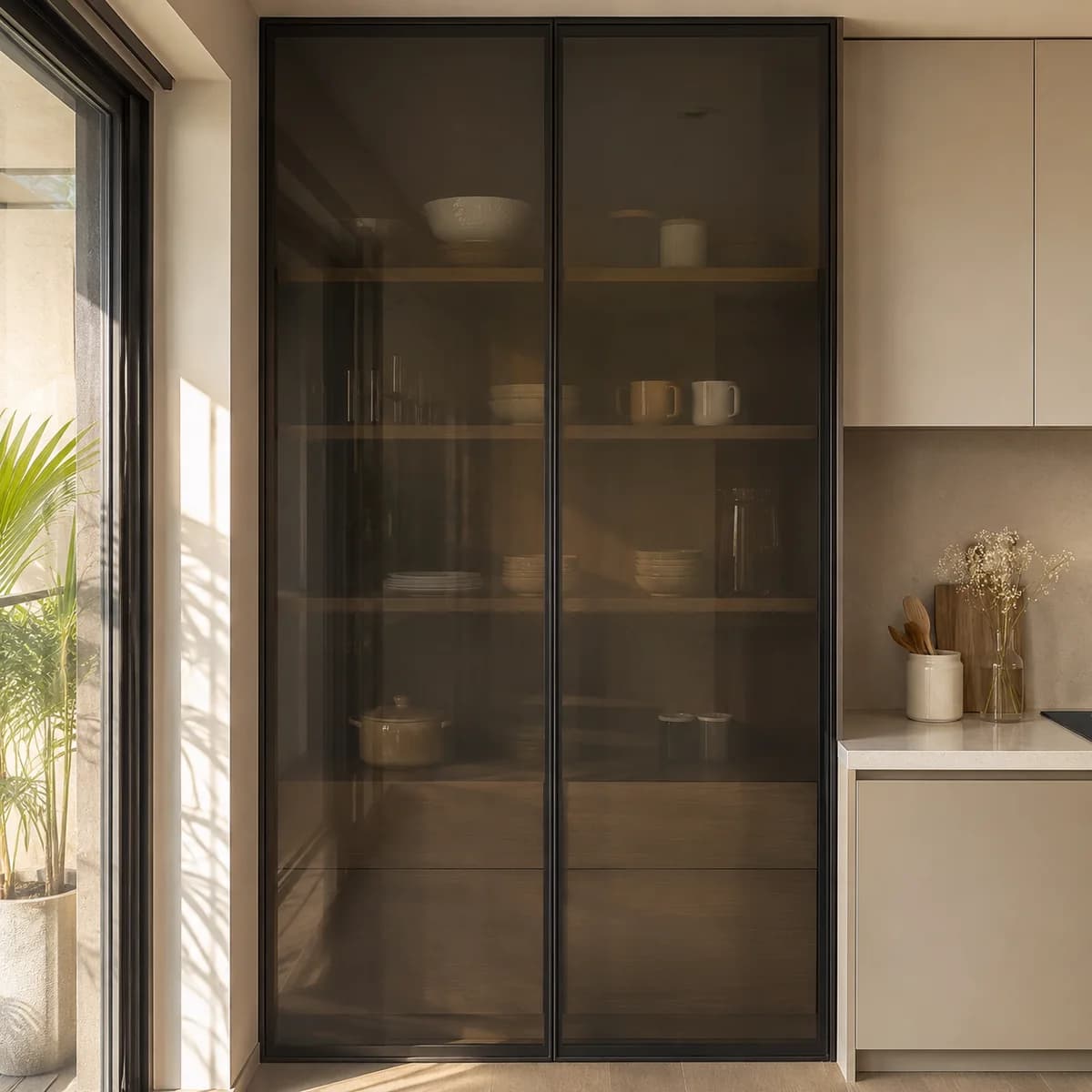
You can start with a single piece. The one families ask about first is a tall glass crockery unit for the good dinner set. It usually stands in the dining room, or between the dining and drawing rooms, lit from inside.
You do not need to order a kitchen to have one. We measure the wall, plan the shelves around what you own, and fit it as its own piece of work. If a full kitchen follows later, it is designed to match the unit already standing.
The range, the materials and the cost
This page is about Delhi. The range itself is explained once, on our main page for Luxy modular kitchens: the materials, how each piece is built and fitted, what decides the cost, and the questions people ask. Read the full guide to Luxy modular kitchens.