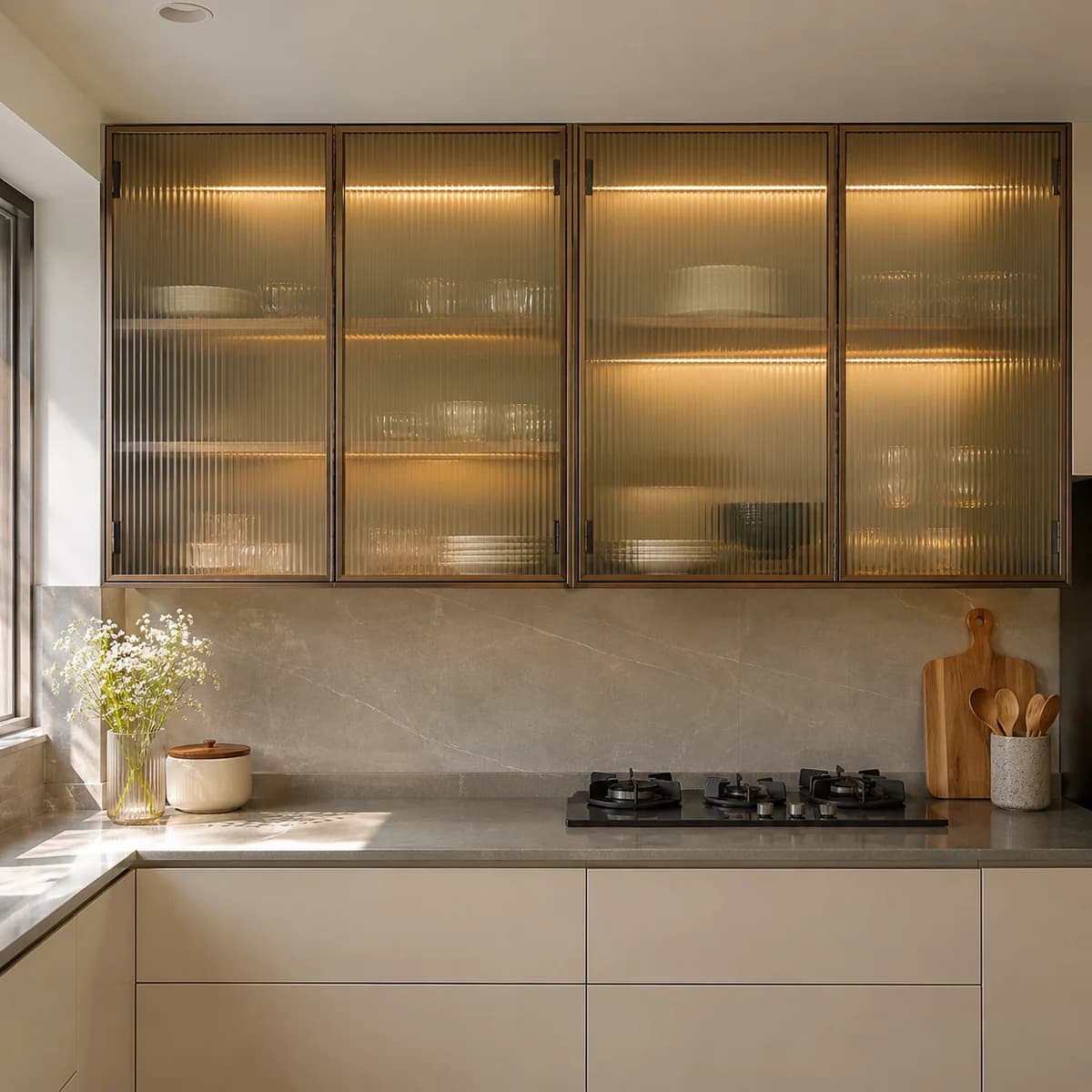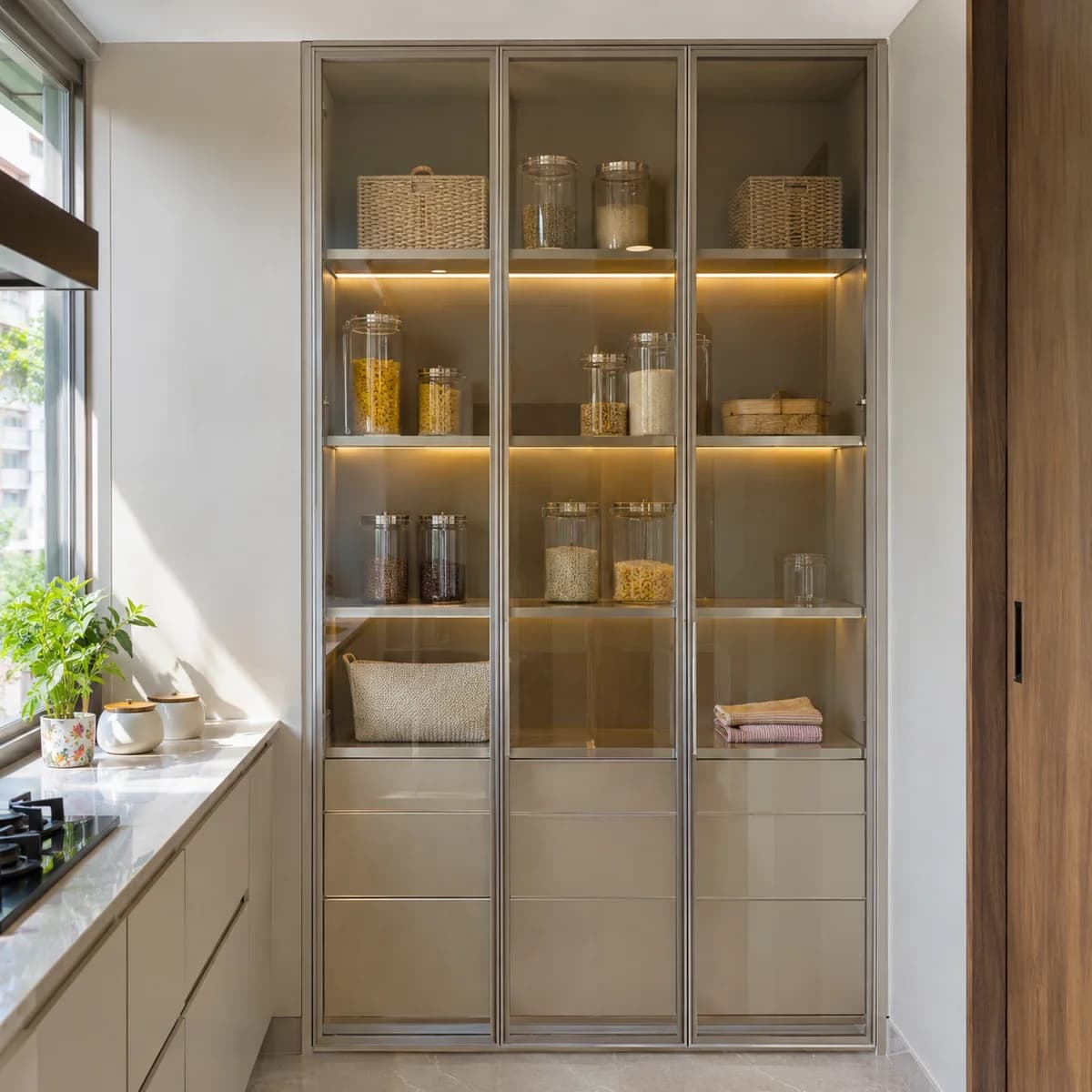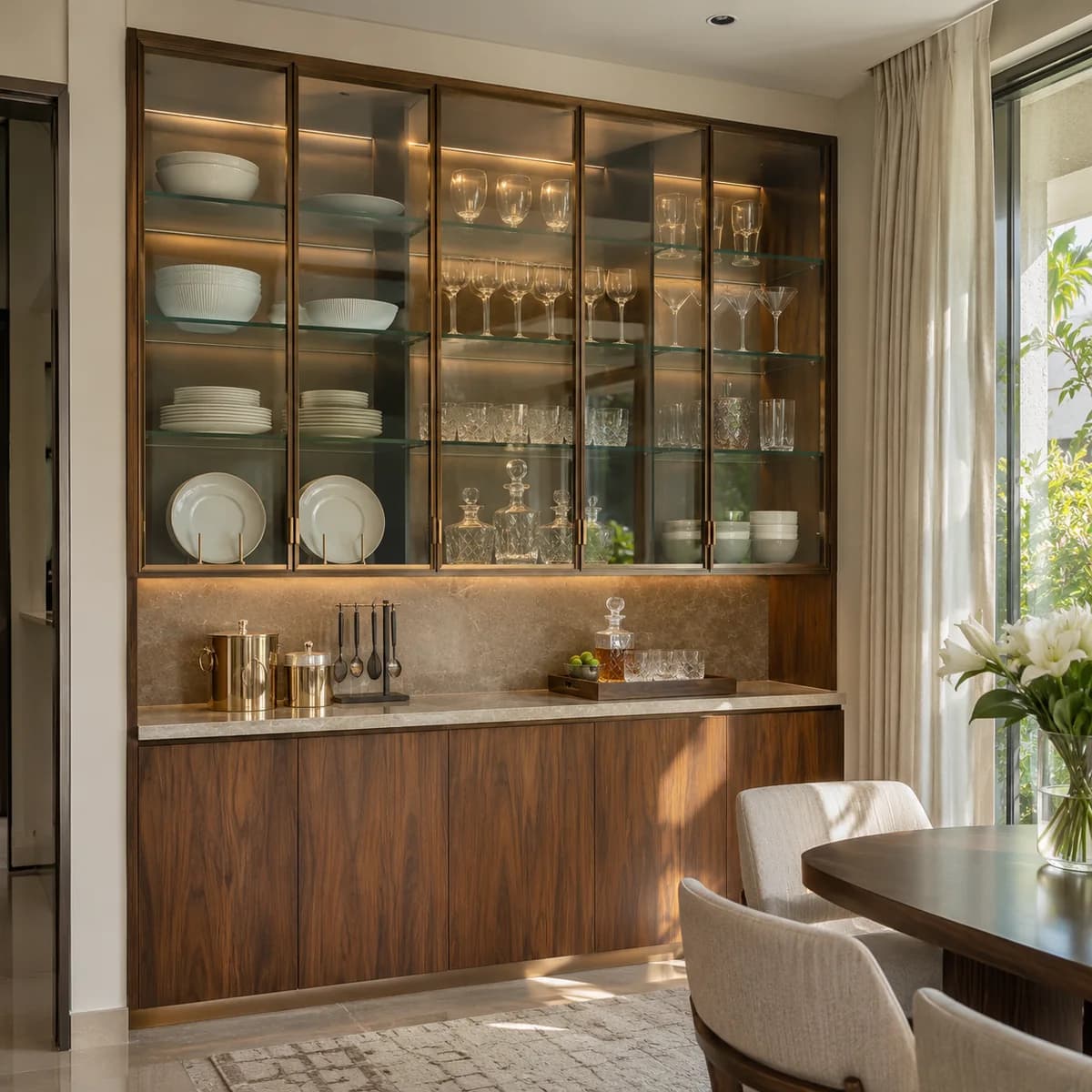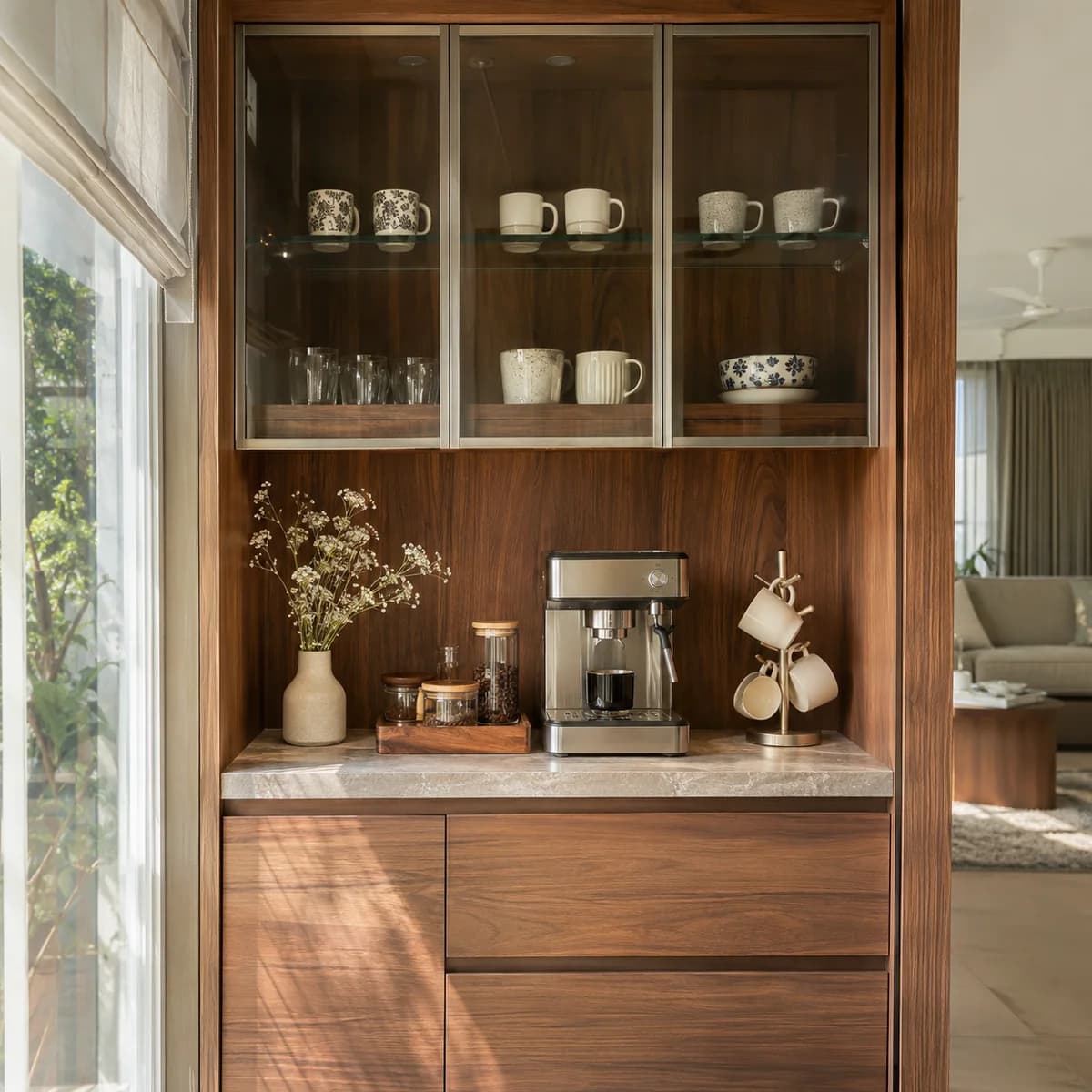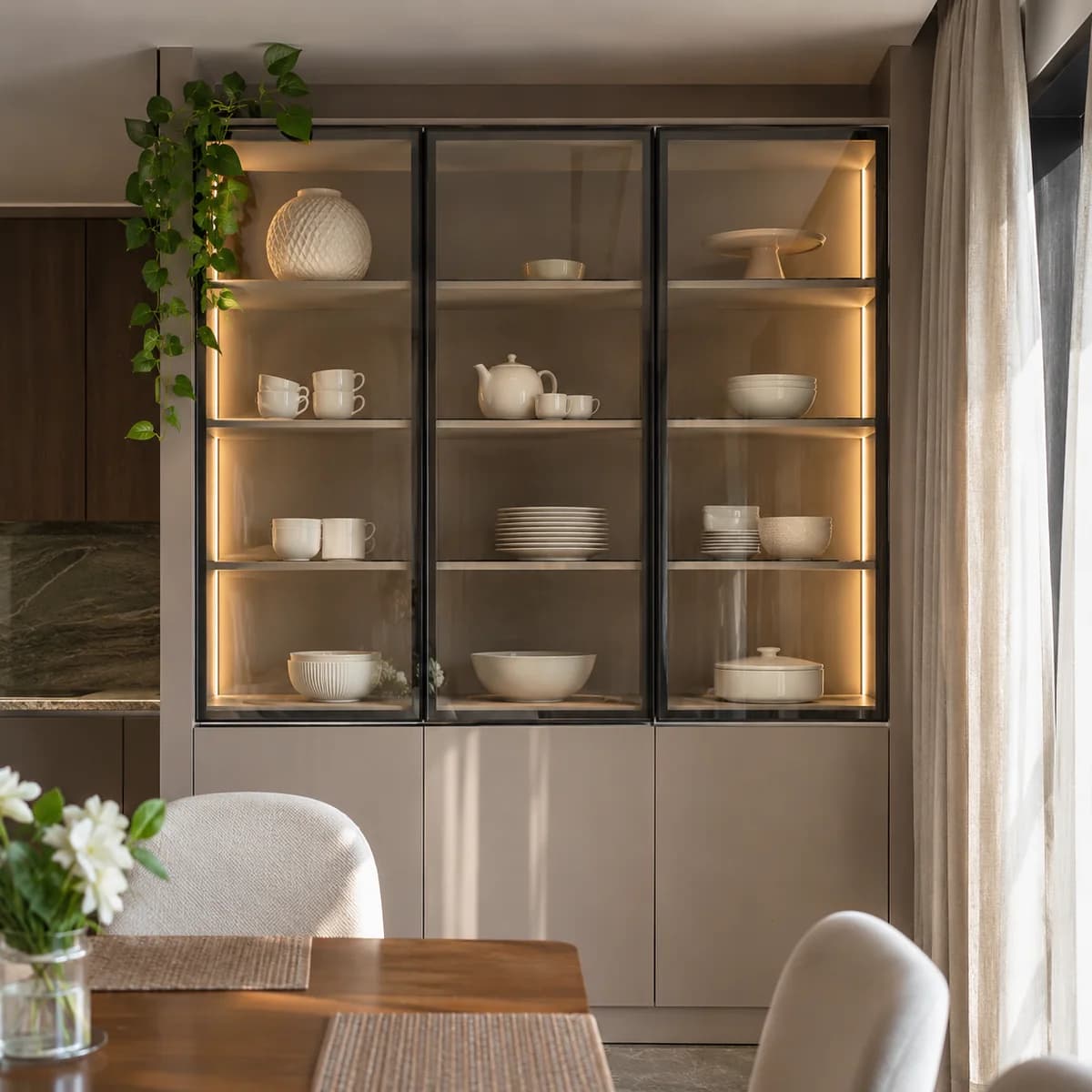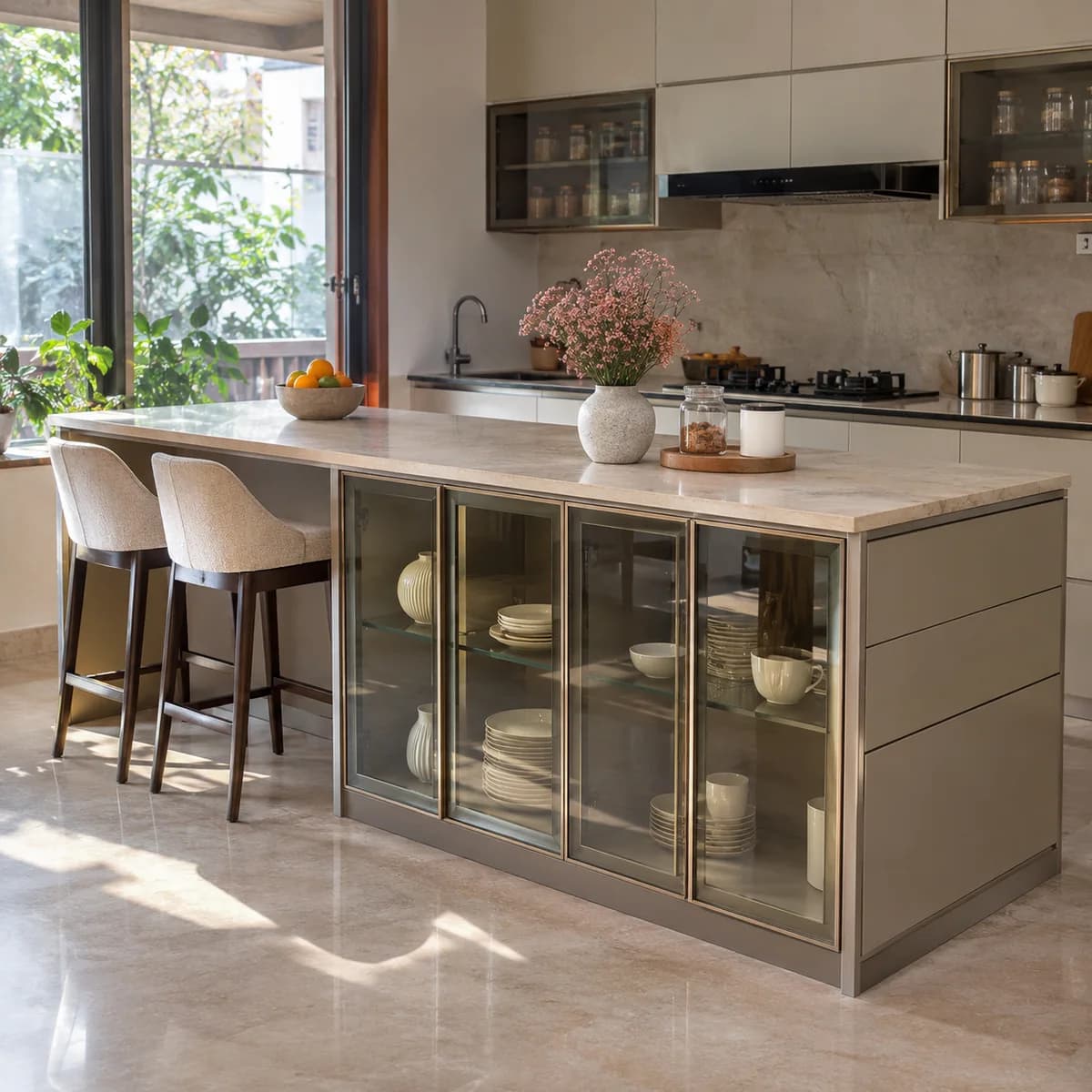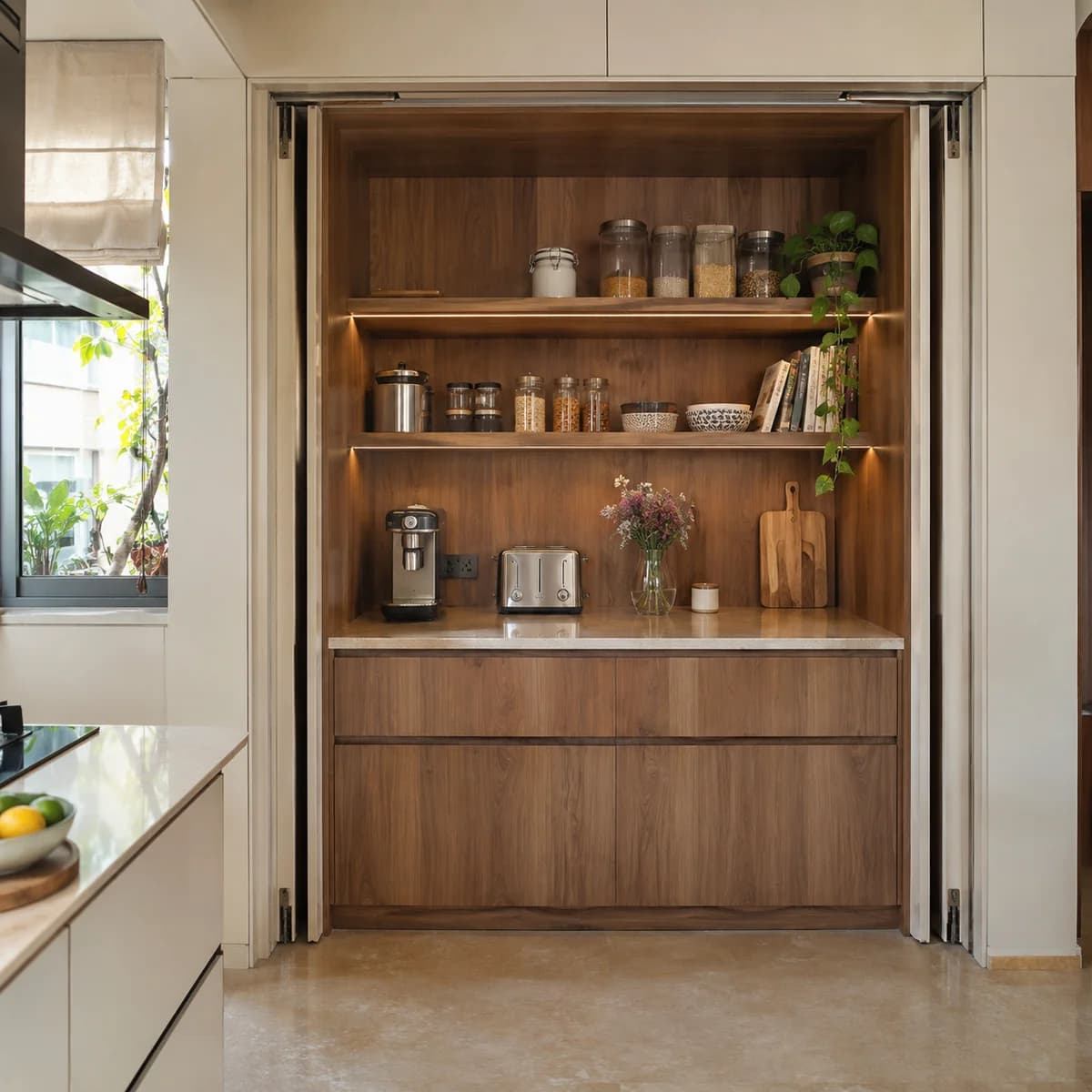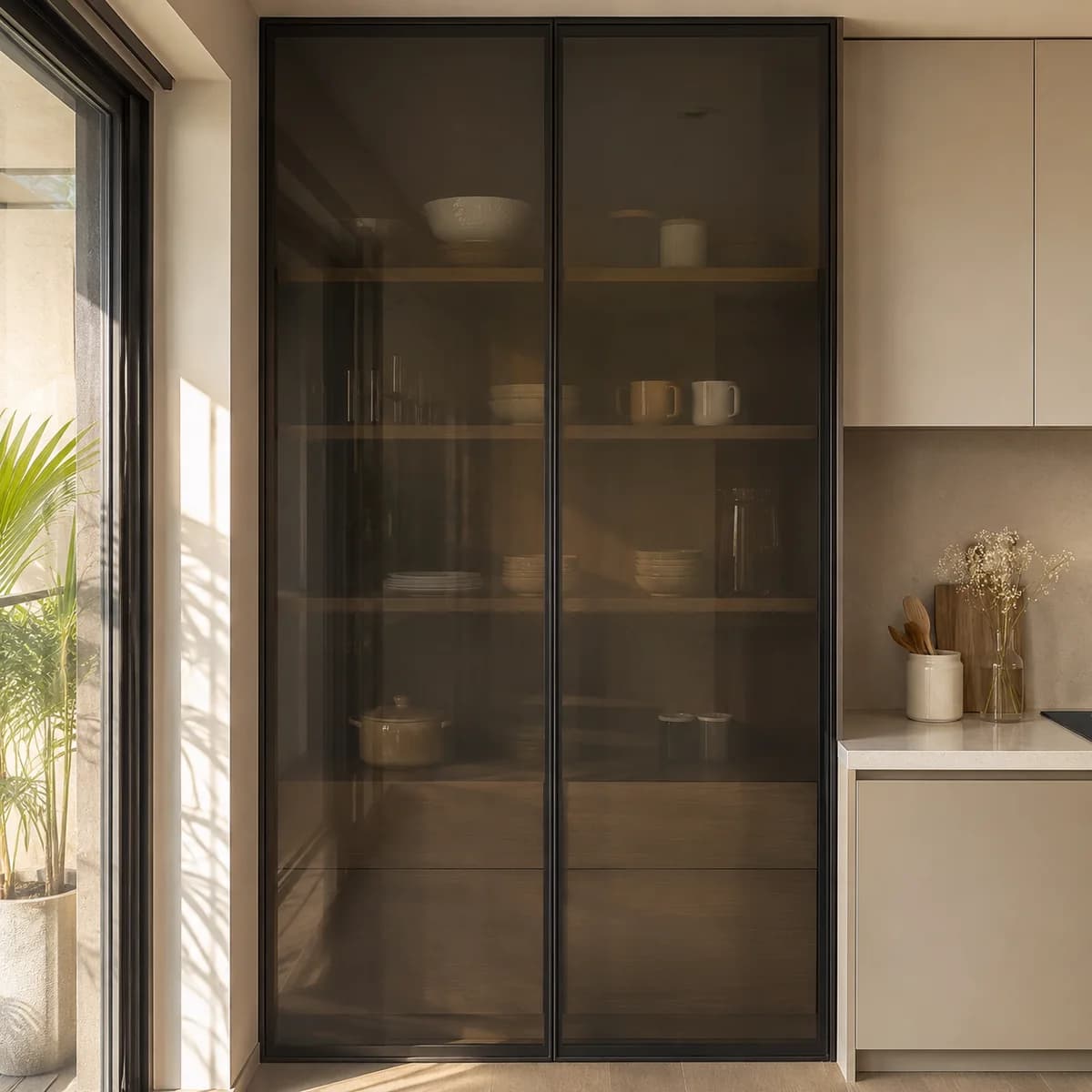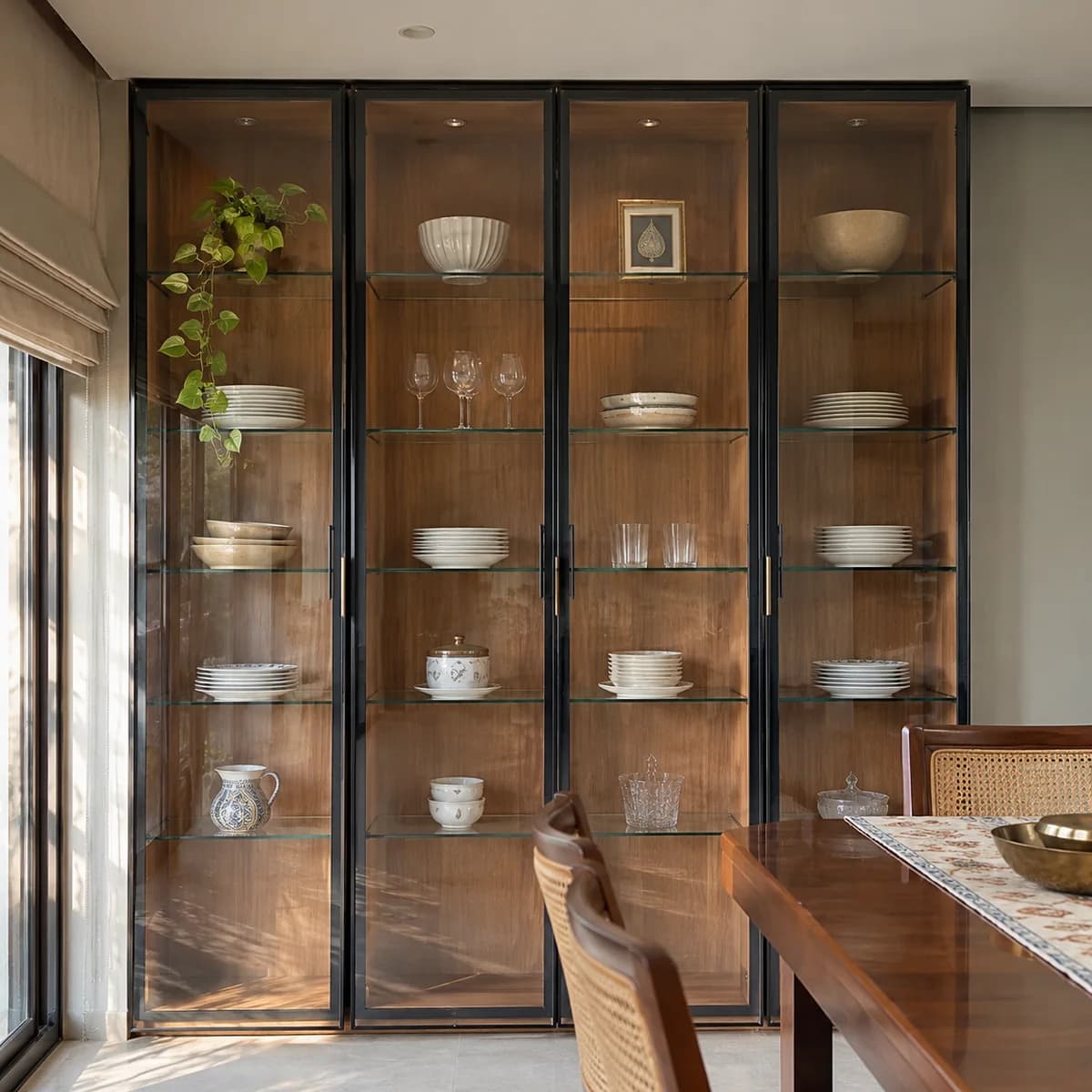
This is a glass cabinet that runs from the floor to the ceiling. Slim aluminium frames hold large panes of clear glass. Inside are shelves for crockery, glassware and a few decor pieces. Lighting runs down the sides.
Your best pieces, on show
Good crockery usually lives in a closed cupboard and comes out twice a year. Here it is part of the room. You enjoy it every day. Guests see it as soon as they walk in.
The kitchen looks taller
A tall glass cabinet draws the eye upward, so the ceiling feels higher. Clear glass does not block the view, so the room keeps its depth. The lit shelves become a feature at night.
Fixing a tall glass cabinet from floor to ceiling
A cabinet that runs the full height of the room has to meet the floor and the ceiling exactly, and we measure both at several points. A slim top trim takes up any difference, so the glass panes stay equal. The cabinet is fixed back to the wall at the top as well as standing on the floor, so it cannot tip when the upper shelves are loaded.
If there is a false ceiling, the cabinet stops under it and the trim is matched to it. Large panes of clear glass in slim aluminium frames are the look here. The lighting runs down the sides, so every shelf is lit evenly from top to bottom.
Arranging crockery so it reads as a display
Behind clear glass the arrangement is the design. Group pieces by kind and colour. Give each shelf one idea: dinner plates on one, glassware on another, a few decor pieces on a third. Leave space around things. A crowded shelf reads as storage, and a shelf half full reads as a display.
Glass shelves let the light pass down through the cabinet, but they carry less weight than board shelves, so heavy stacks of plates go low down on board. Everyday crockery is better in a closed cabinet near the sink. The display cabinet holds what you are happy to look at every day.
Who it suits
- You own crockery or glassware worth showing.
- Your kitchen opens onto the dining or living room.
- You want one tall feature piece in the kitchen.
Before you choose
- Glass shelves carry less weight than board shelves. Heavy stacks of plates go lower down.
- Clear glass shows dust and fingerprints, so it needs a regular wipe.
- Leave space between pieces. A crowded display looks like storage.