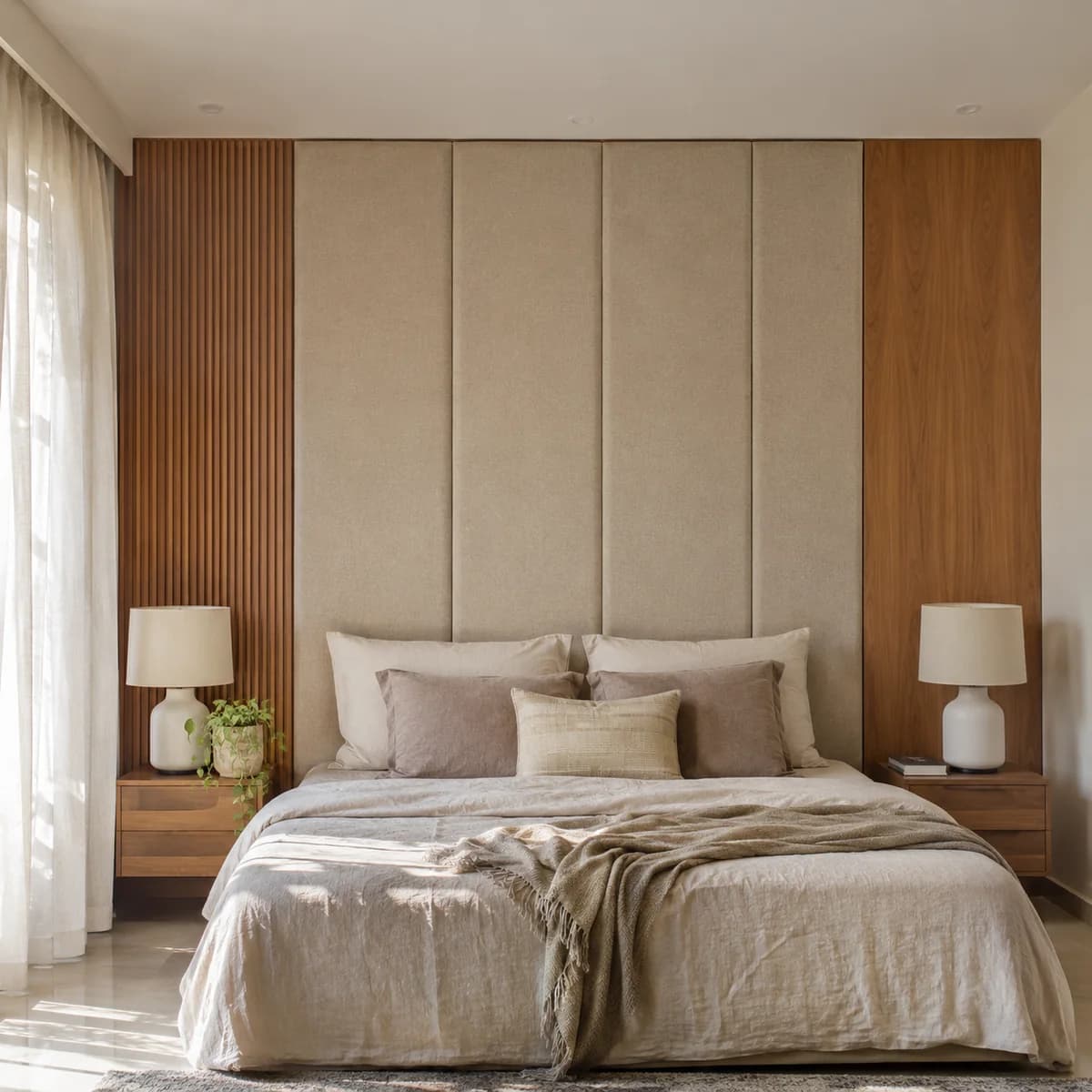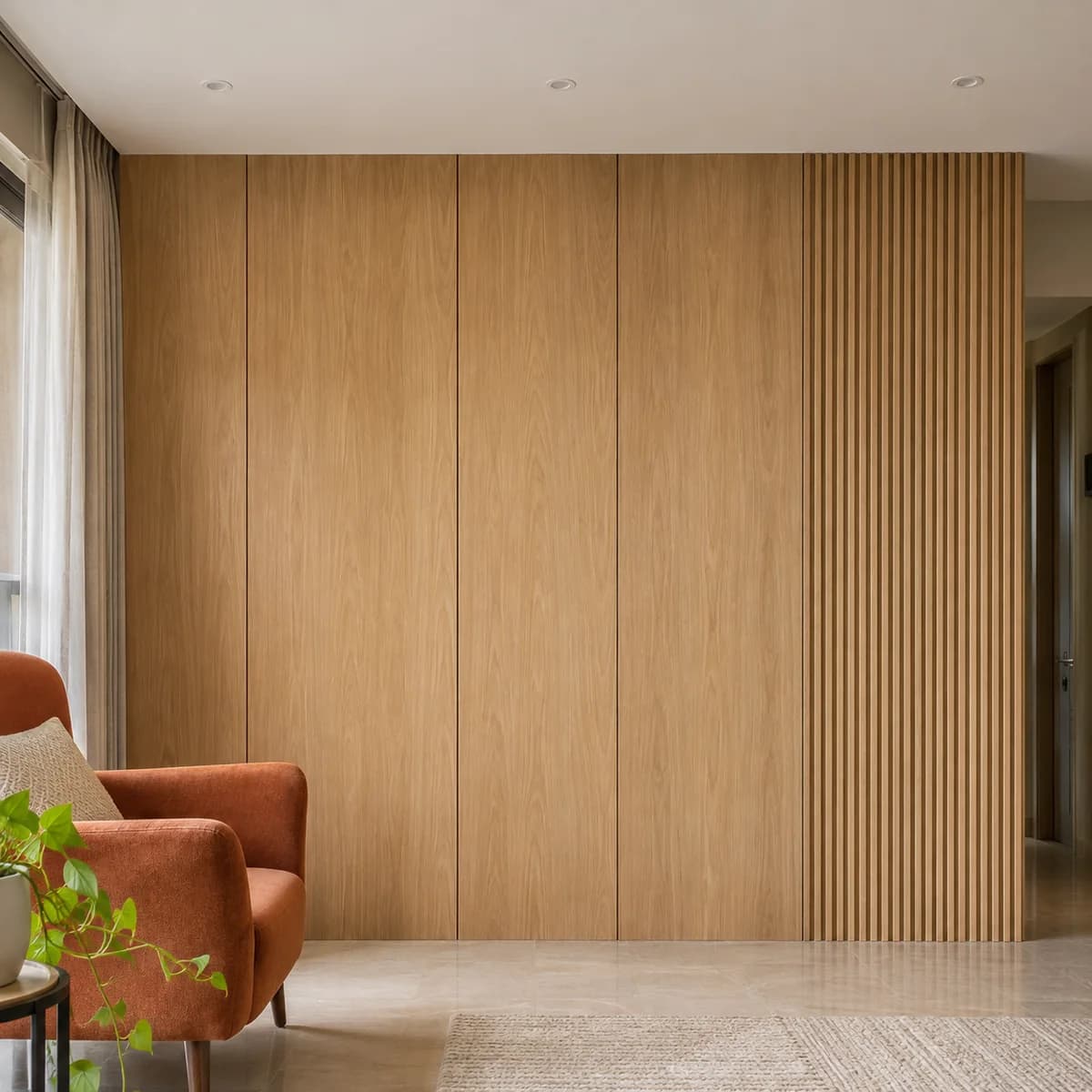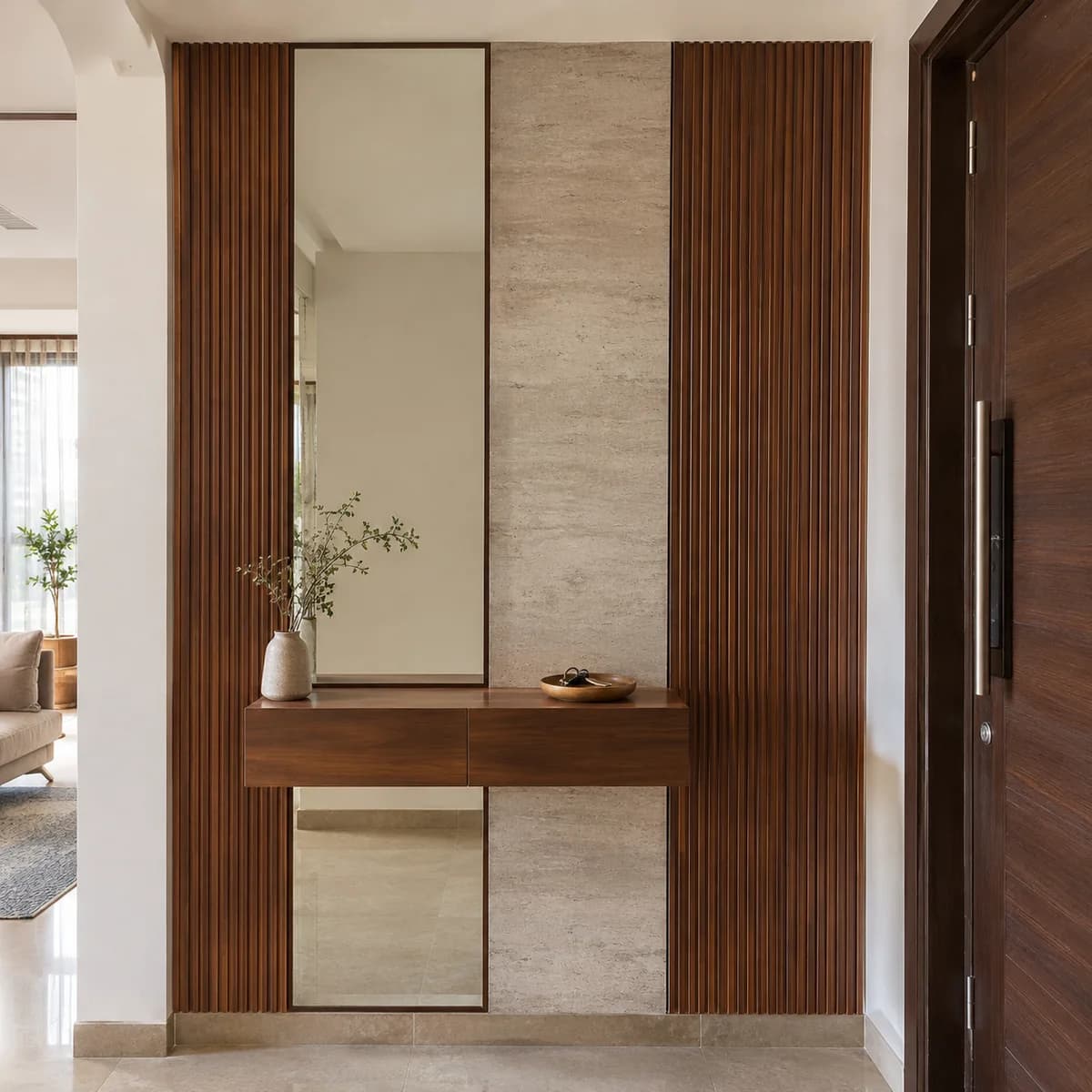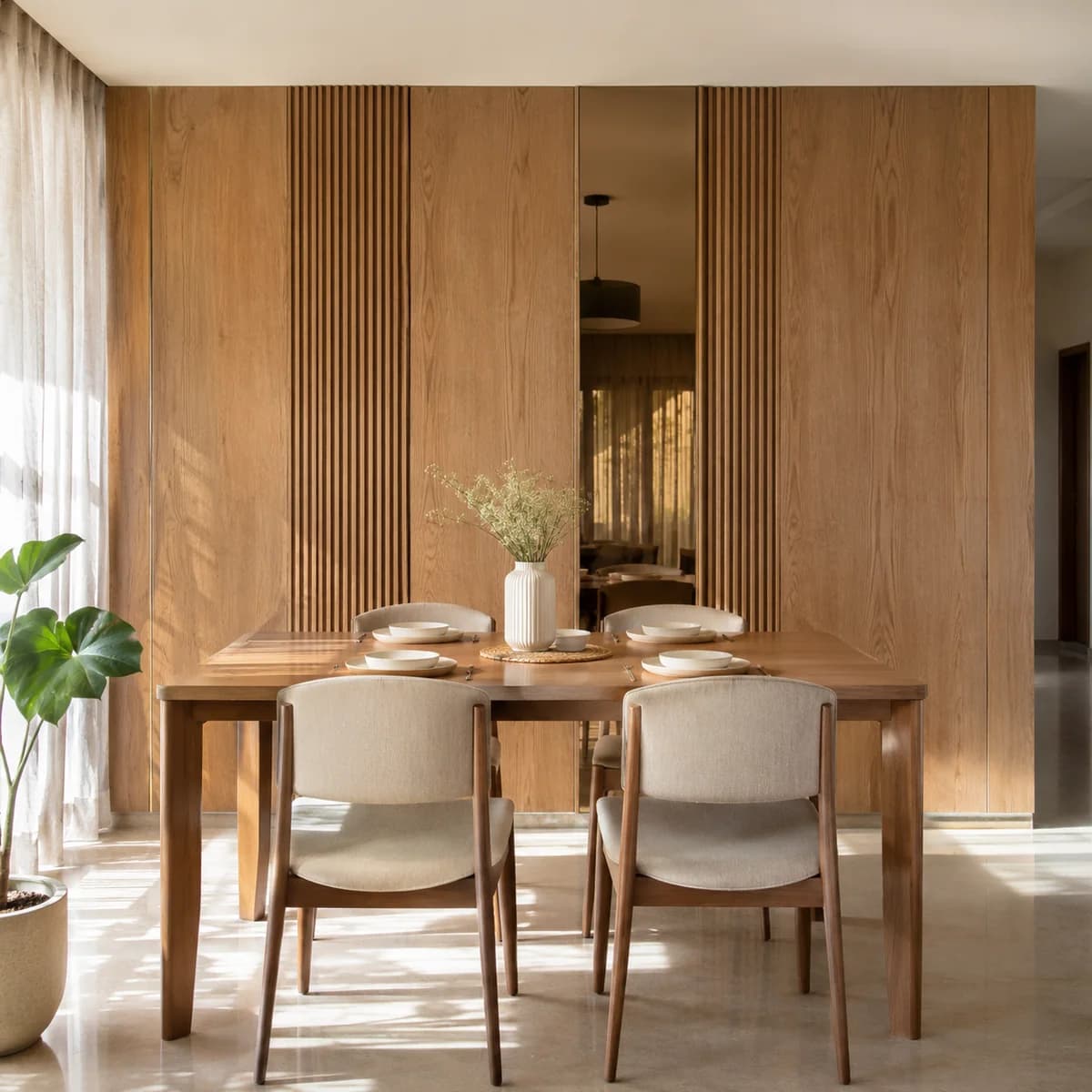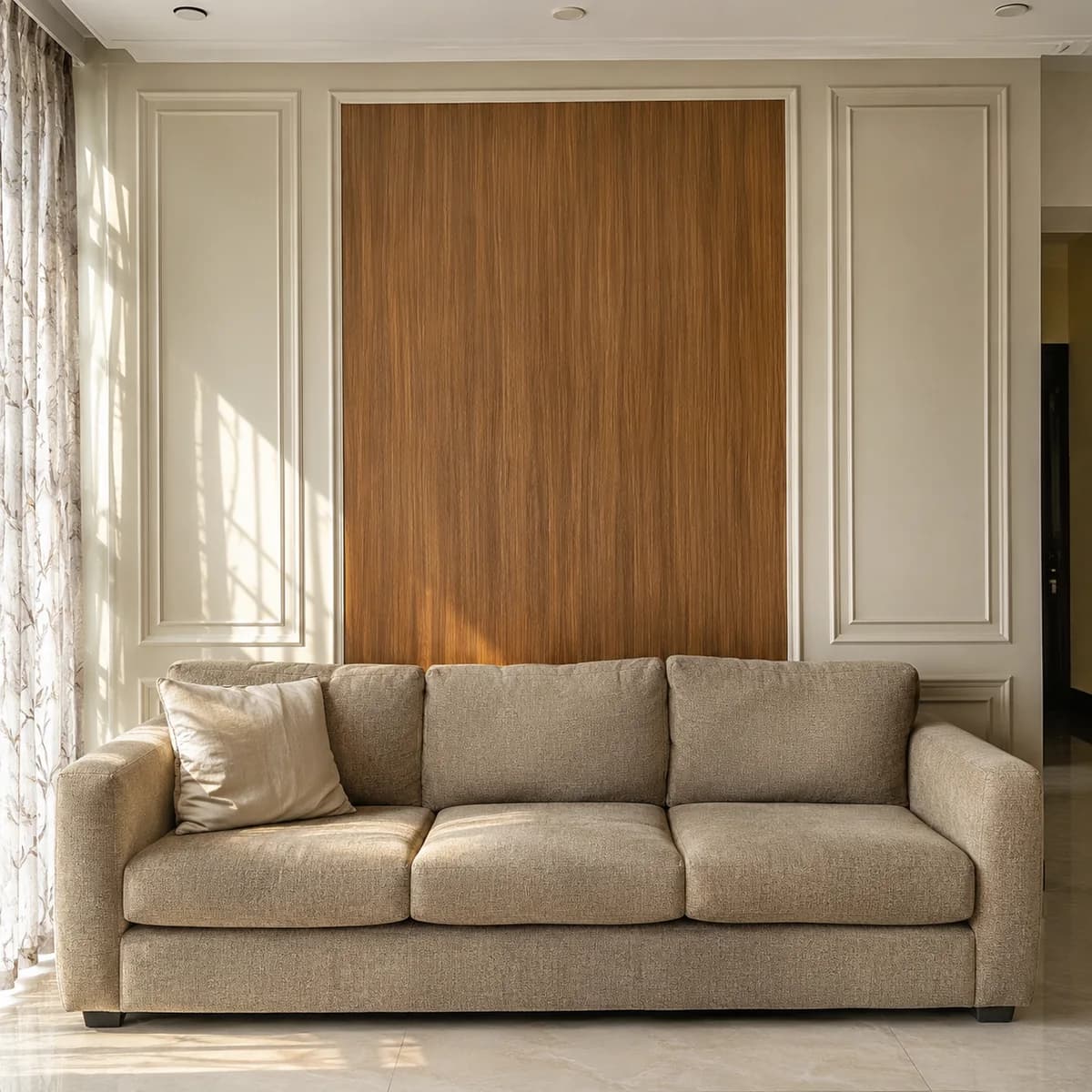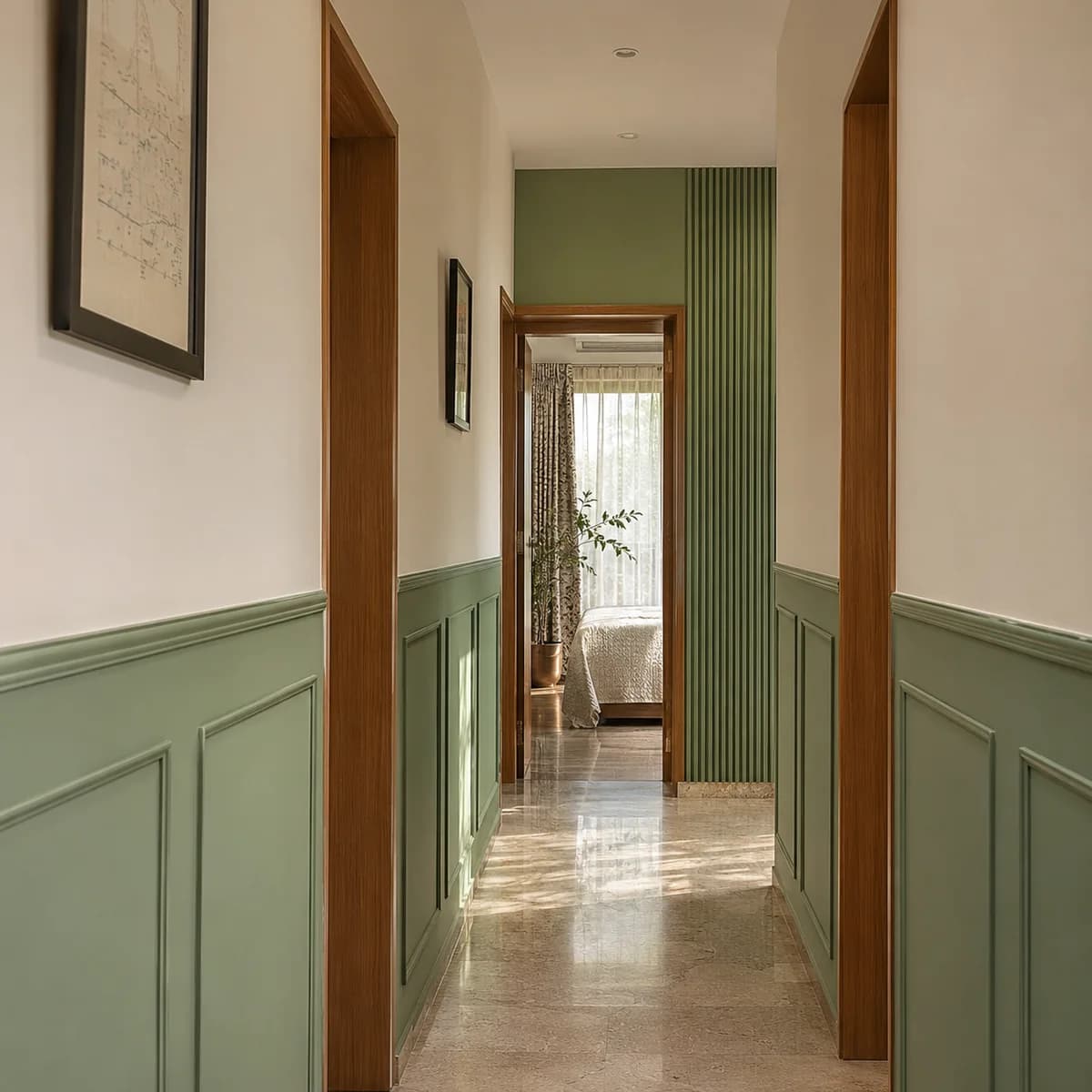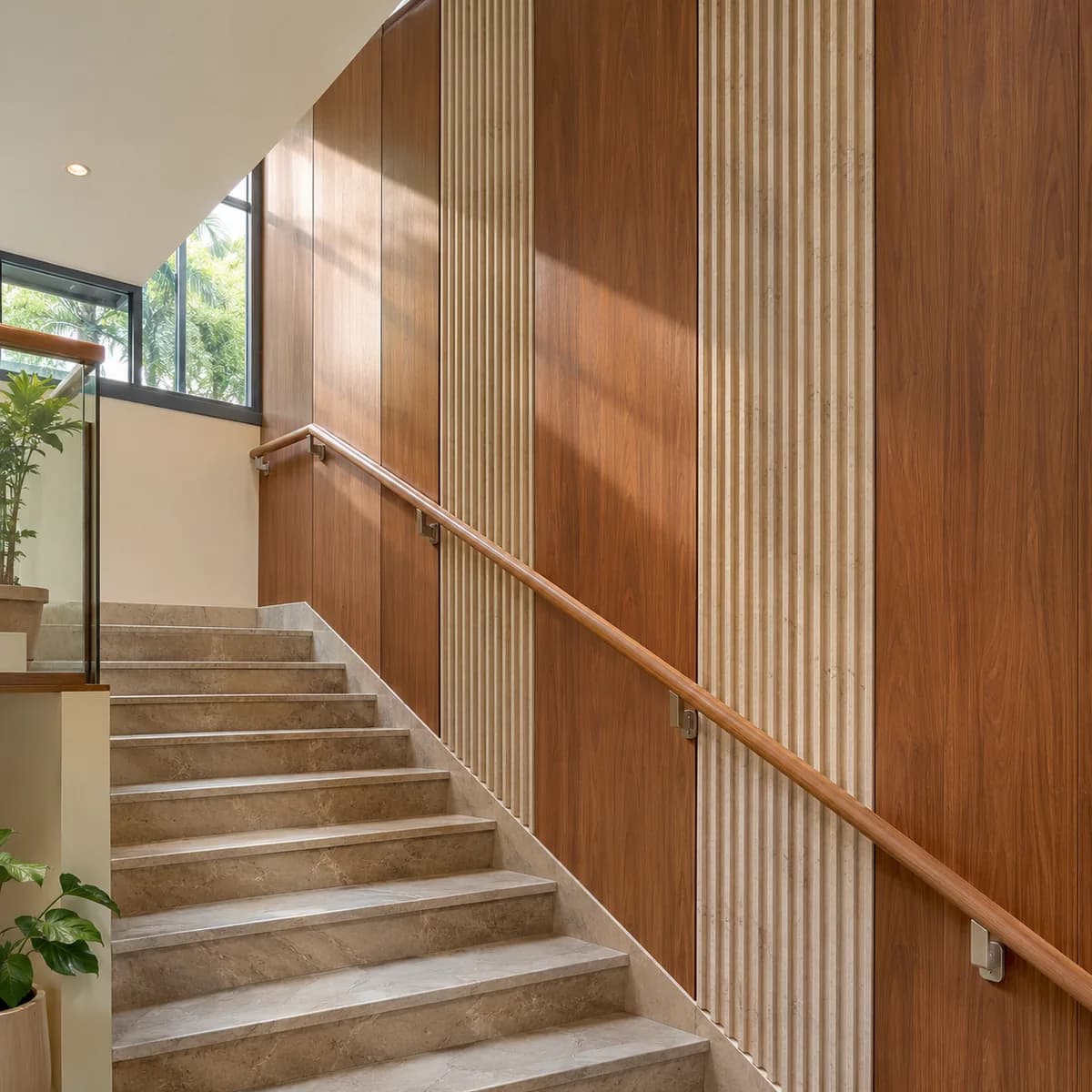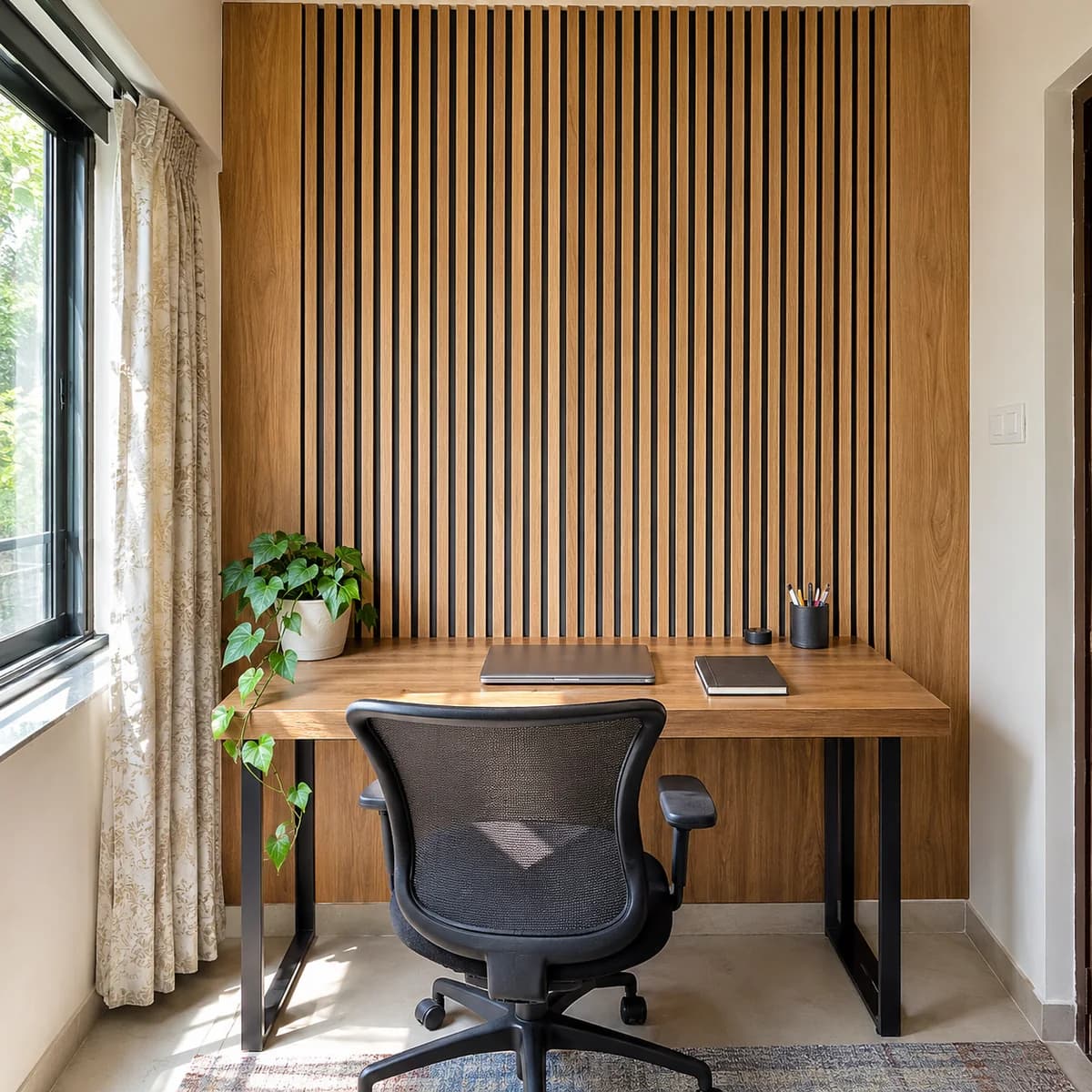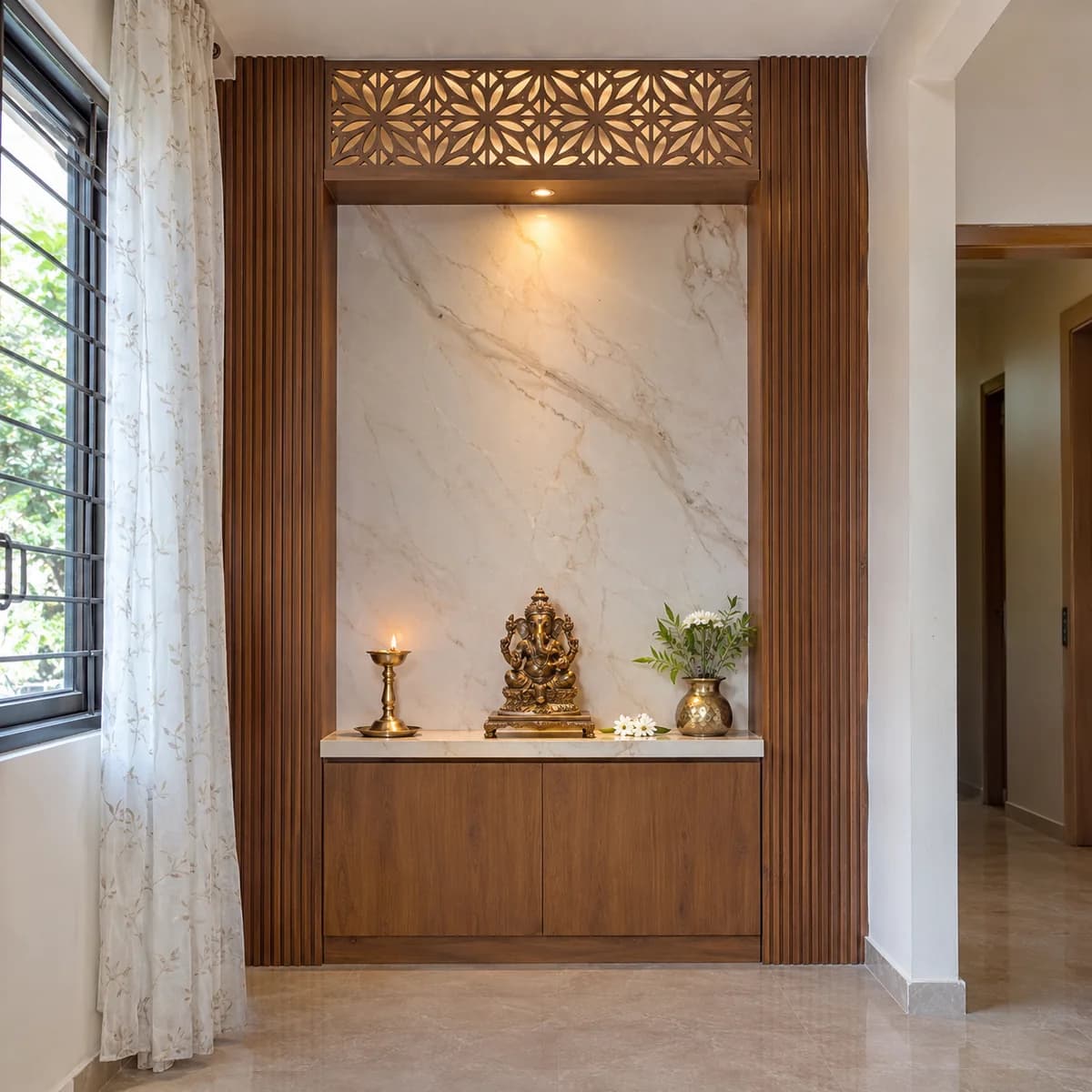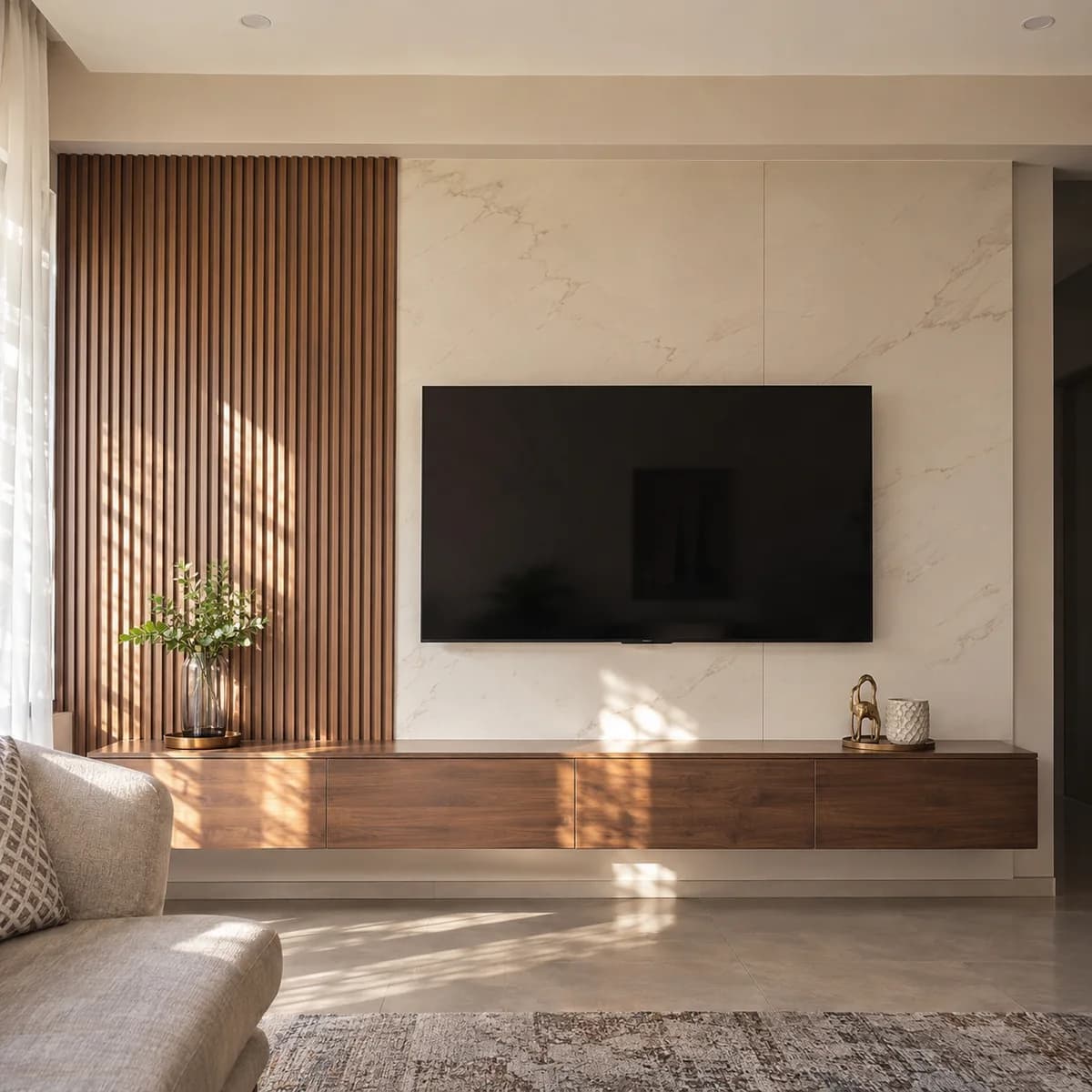
We panel the wall your TV hangs on. The usual choices are fluted WPC, marble-look panels, charcoal louvers and wood slats. WPC is a wood-plastic board that holds a crisp fluted shape. Most TV walls mix two of these, with the TV on the plain panel.
The wall everyone already faces
This is the wall people ask for most. Everyone in the room already faces it. Panelling it makes the whole living room look designed at once. No other single wall changes a home as much.
The TV stops being a black box
The TV stops looking like a black box on a bare wall. Wires and the bracket are planned behind the panels. A slim console and a little warm lighting can finish it. The room gets a clear centre.
Cables, sockets and the bracket go in before the panels
A TV wall is planned backwards from the screen. We agree the TV size and its height on the wall first. Then the power points, the set-top box, the soundbar and the console are placed around it. Cables run inside a conduit behind the panels, so nothing hangs down the wall.
The TV bracket is fixed through the panel into the wall, never to the panel alone. If you may buy a larger TV later, say so, and the plain section is made wide enough for it. Changing the wiring after the panels are up means taking panels down, so this planning is worth an hour.
Choosing the mix for a TV wall
Most TV walls use two materials. A plain matte panel sits behind the screen, because a busy or glossy surface behind a TV tires the eyes. Fluted WPC, charcoal louvers or wood slats go either side, where the texture is seen and not looked through.
The plain section is usually wider than the TV, so the screen does not look squeezed. The textured sections then fill out to the room's corners or stop at a clean edge. A floating console under the TV carries the box and the soundbar. Warm strip lighting behind the console or along the panel edges finishes the wall and gives a soft light for evening viewing.
Who it suits
- You want one change that lifts the whole living room.
- Your TV wall is bare, or crowded with an old unit.
- You want the wires and set-top box out of sight.
Before you choose
- Decide the TV size and position first. The panels are planned around it.
- Power points and cables go in before the panels do.
- A plain, matte panel behind the screen is easiest on the eyes.