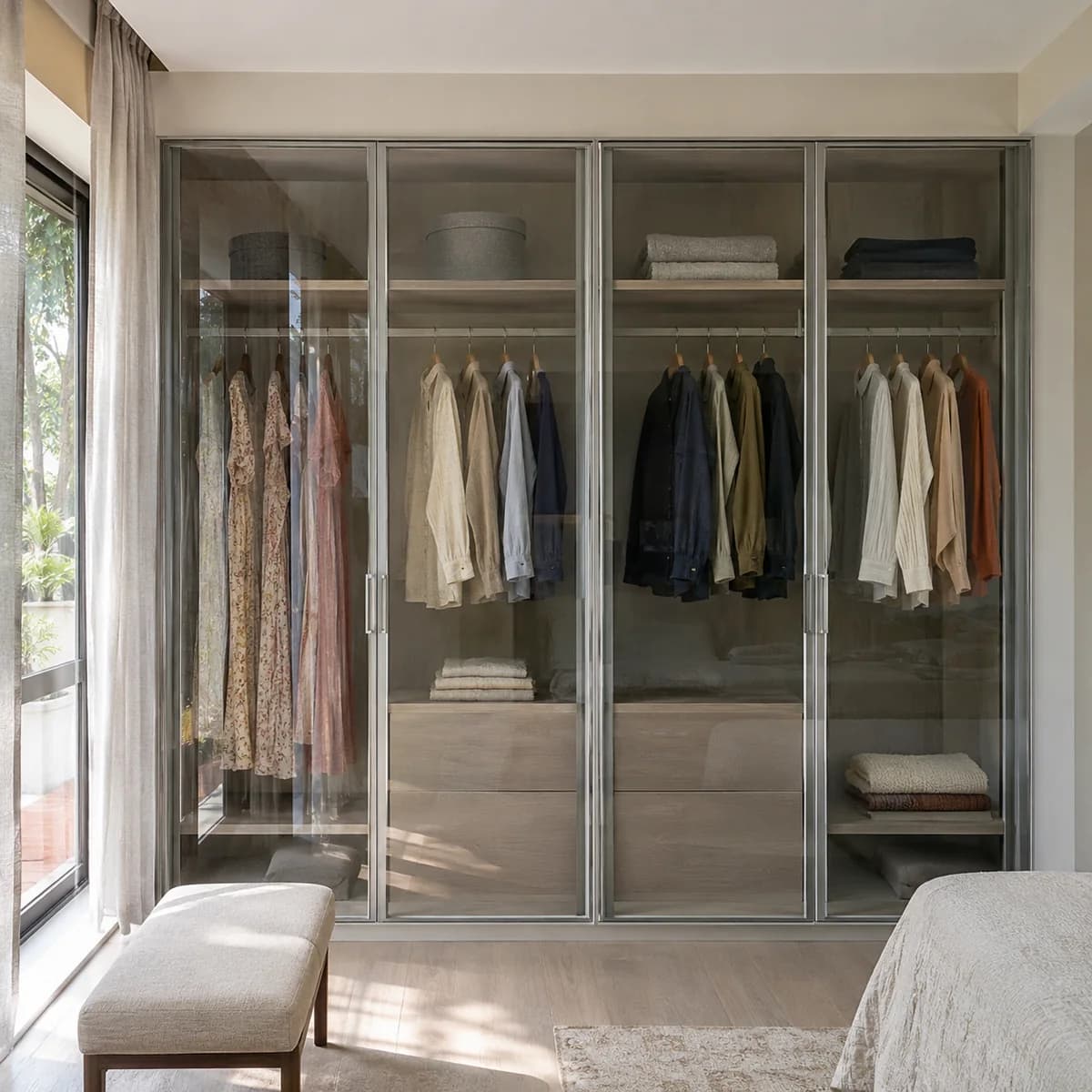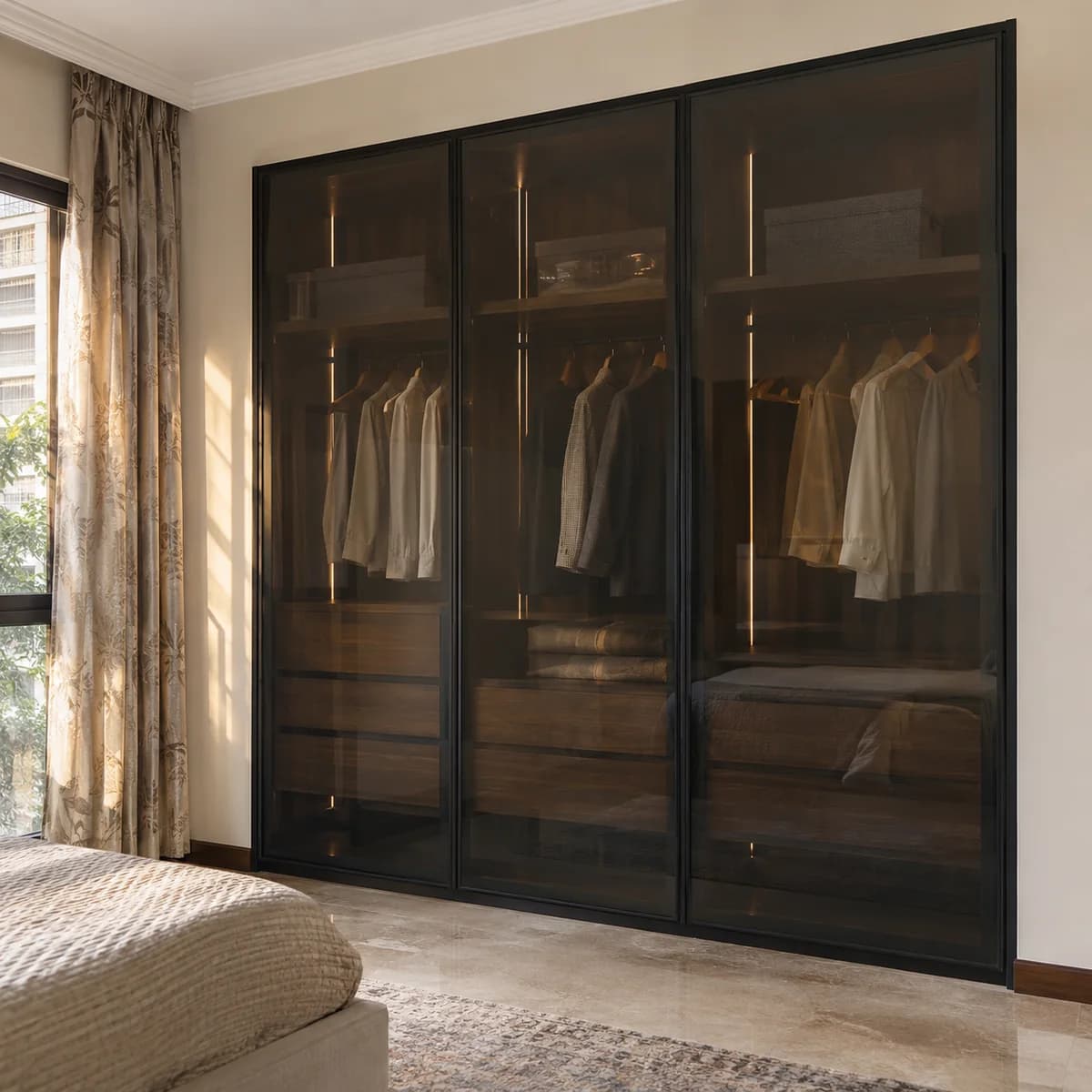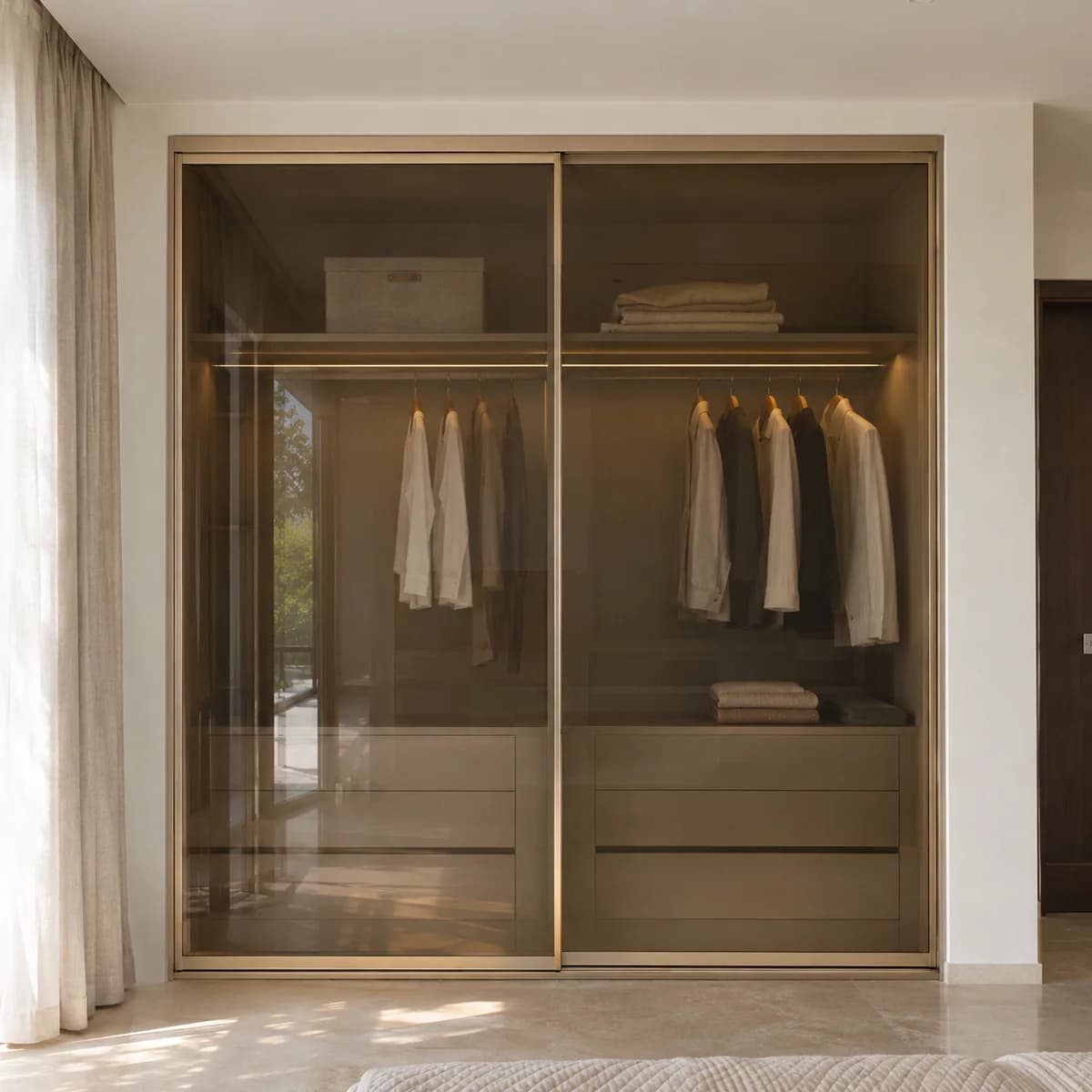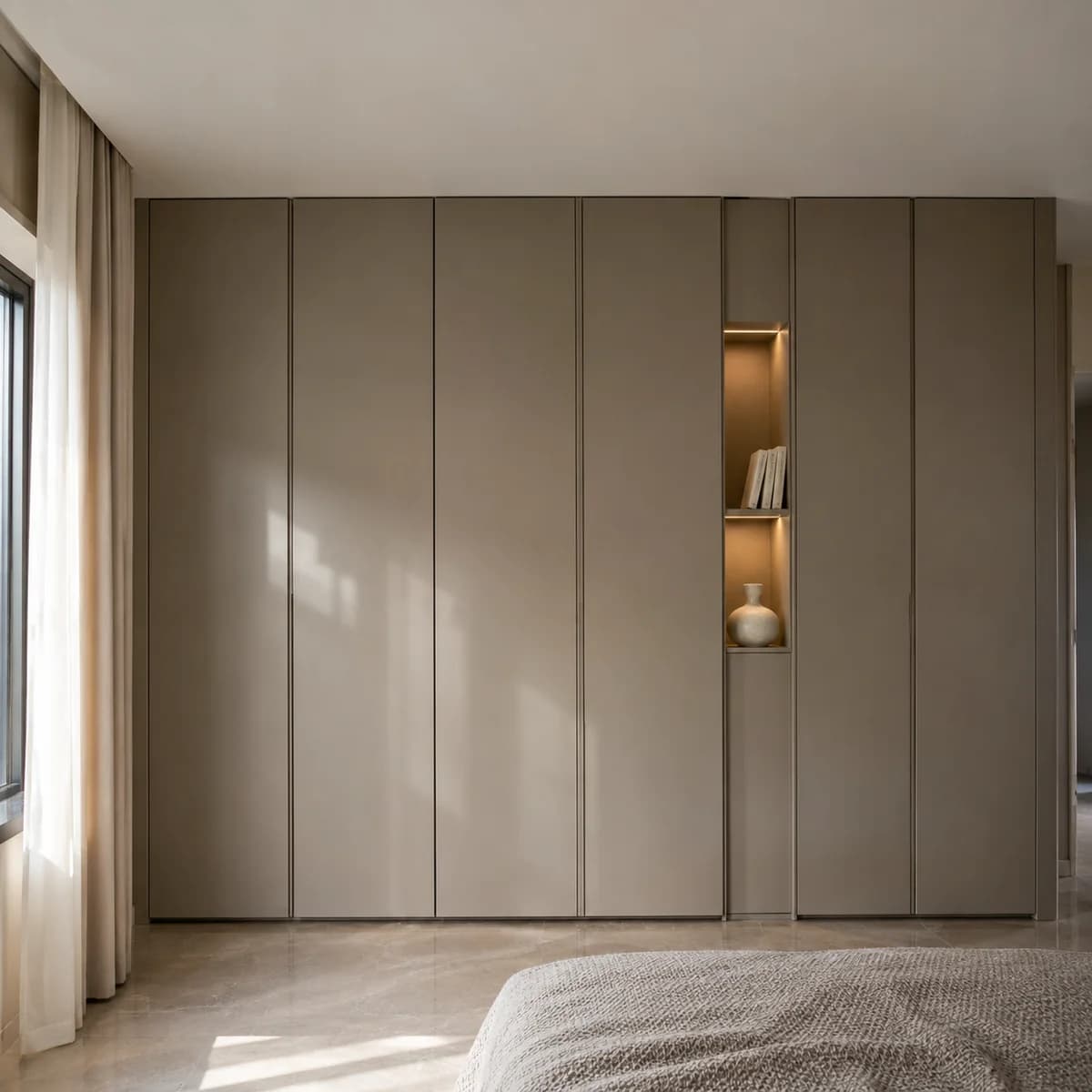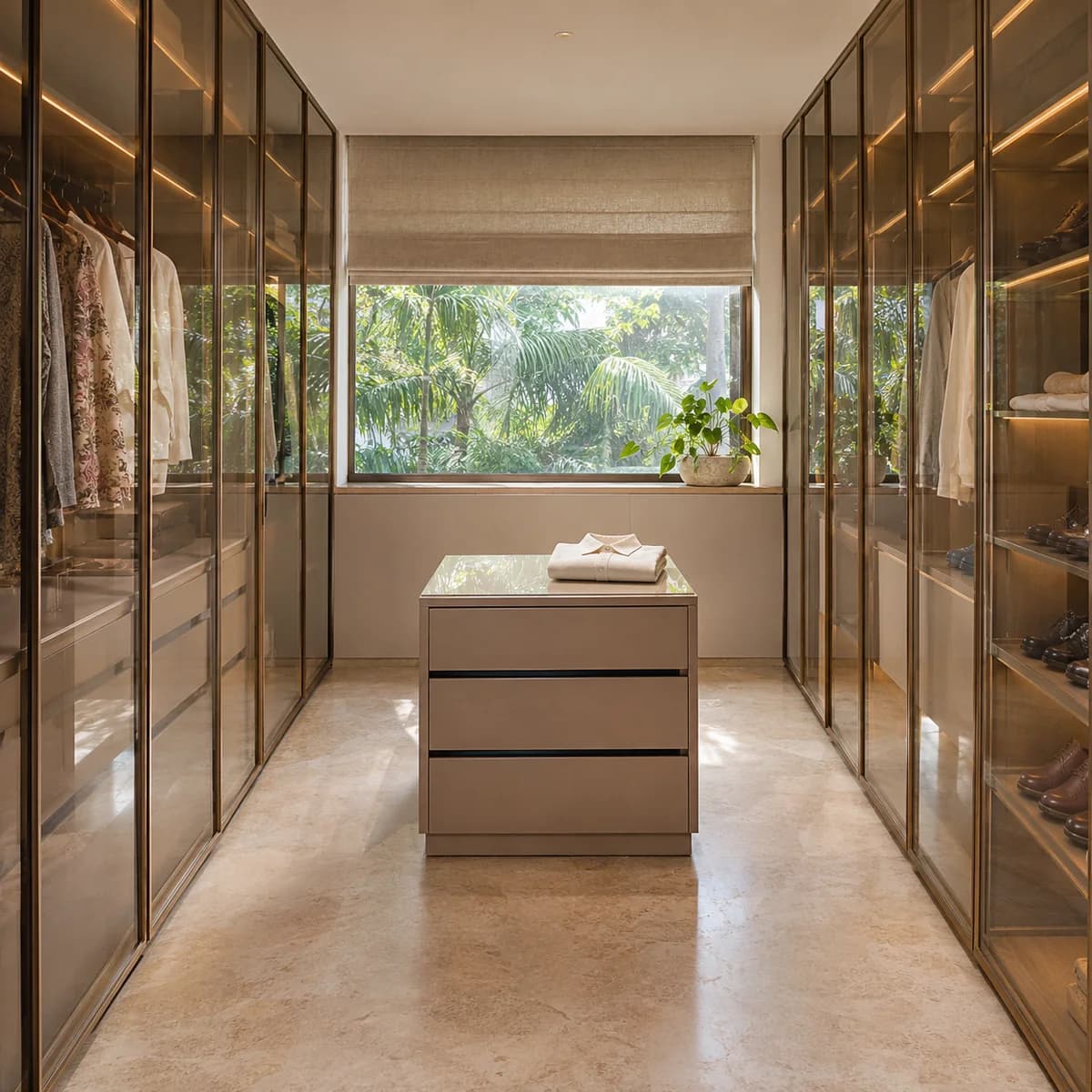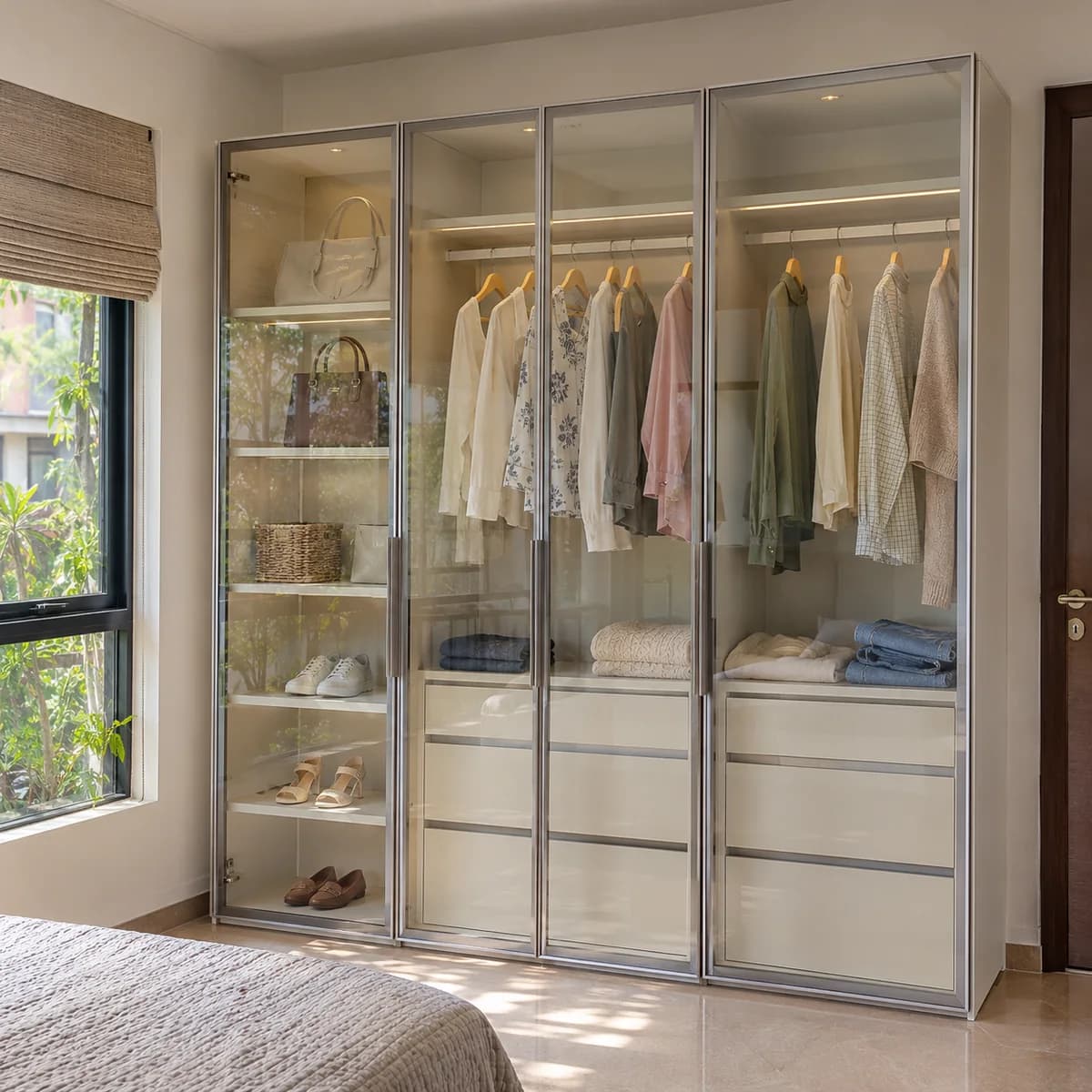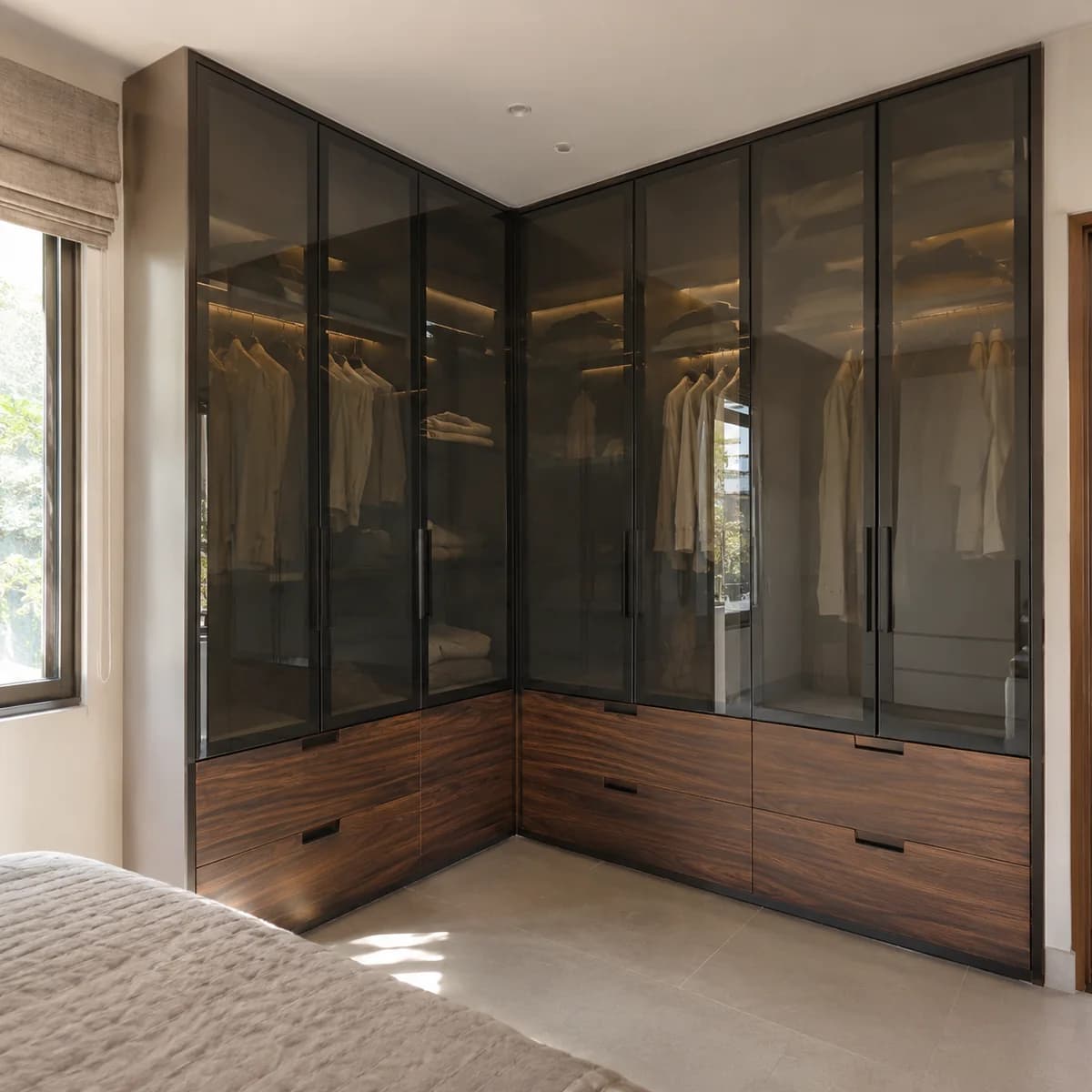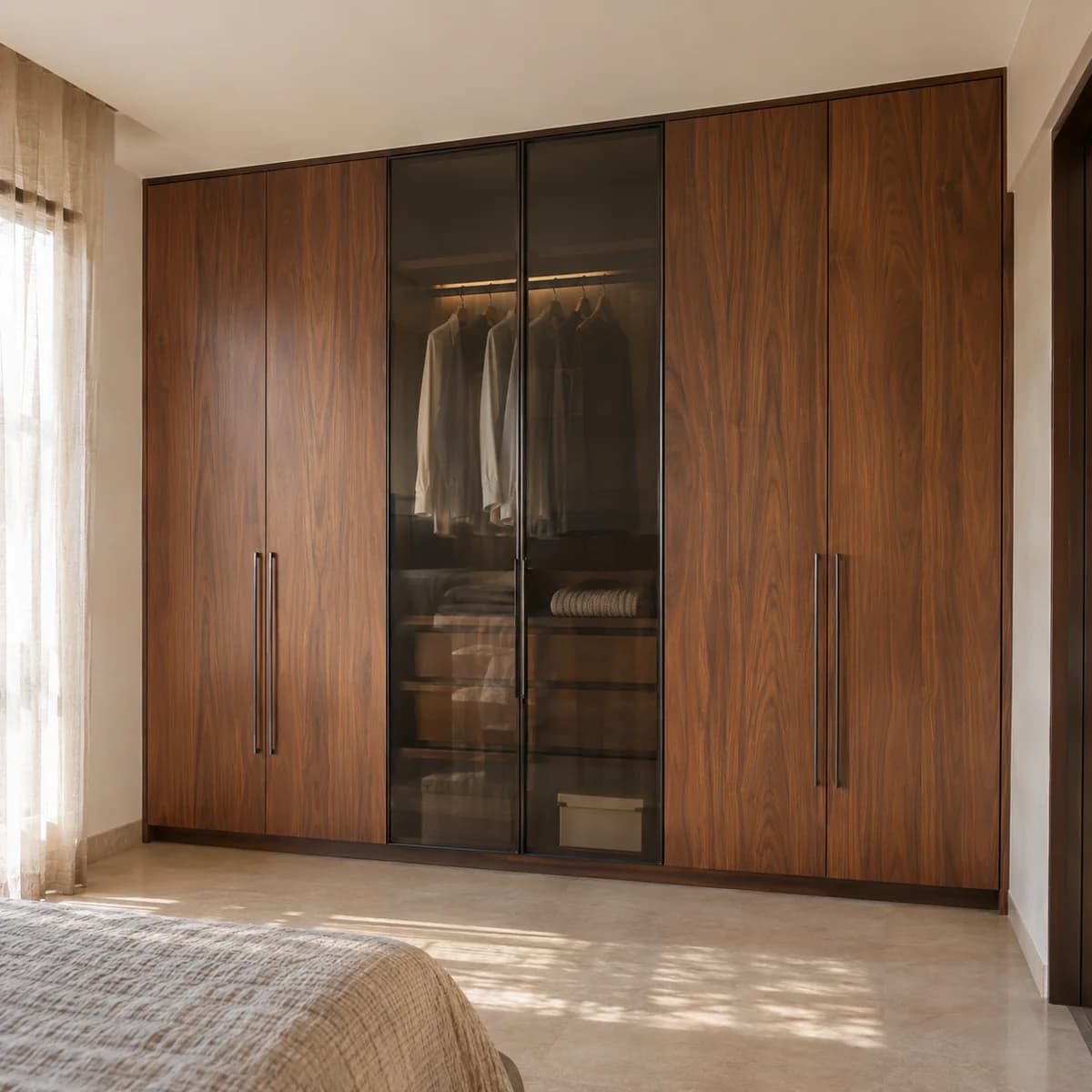
Many homes in Ghaziabad have been lived in for years. The flats of Indirapuram, Vaishali and Vasundhara already have wardrobes, made by a carpenter when the family moved in. Luxy replaces them with glass and aluminium wardrobes, and builds new ones in the towers of Raj Nagar Extension and Siddharth Vihar.
Replacing an old wardrobe
An old plywood wardrobe hides the wall behind it. When it comes out, we often find unpainted plaster, old wiring or a patch of damp. So we plan a little time between the removal and the fitting, and we tell you what we find.
The wall is made good first. Then the new wardrobe is measured to the cleared space, not to the old one. The masonry loft above usually stays, and it gets new shutters that match the wardrobe.
One bedroom at a time, with the family at home
In a lived-in flat, nobody can empty every room at once. We work one bedroom at a time. You clear one wardrobe, we replace it, and you fill it again before the next room starts.
The wardrobe is made in our workshop and arrives ready to assemble, so the noisy part of the work in your home is kept short. Floors and beds are covered. We leave the room swept at the end of each day, because you are sleeping in it that night.
Making a compact bedroom feel larger
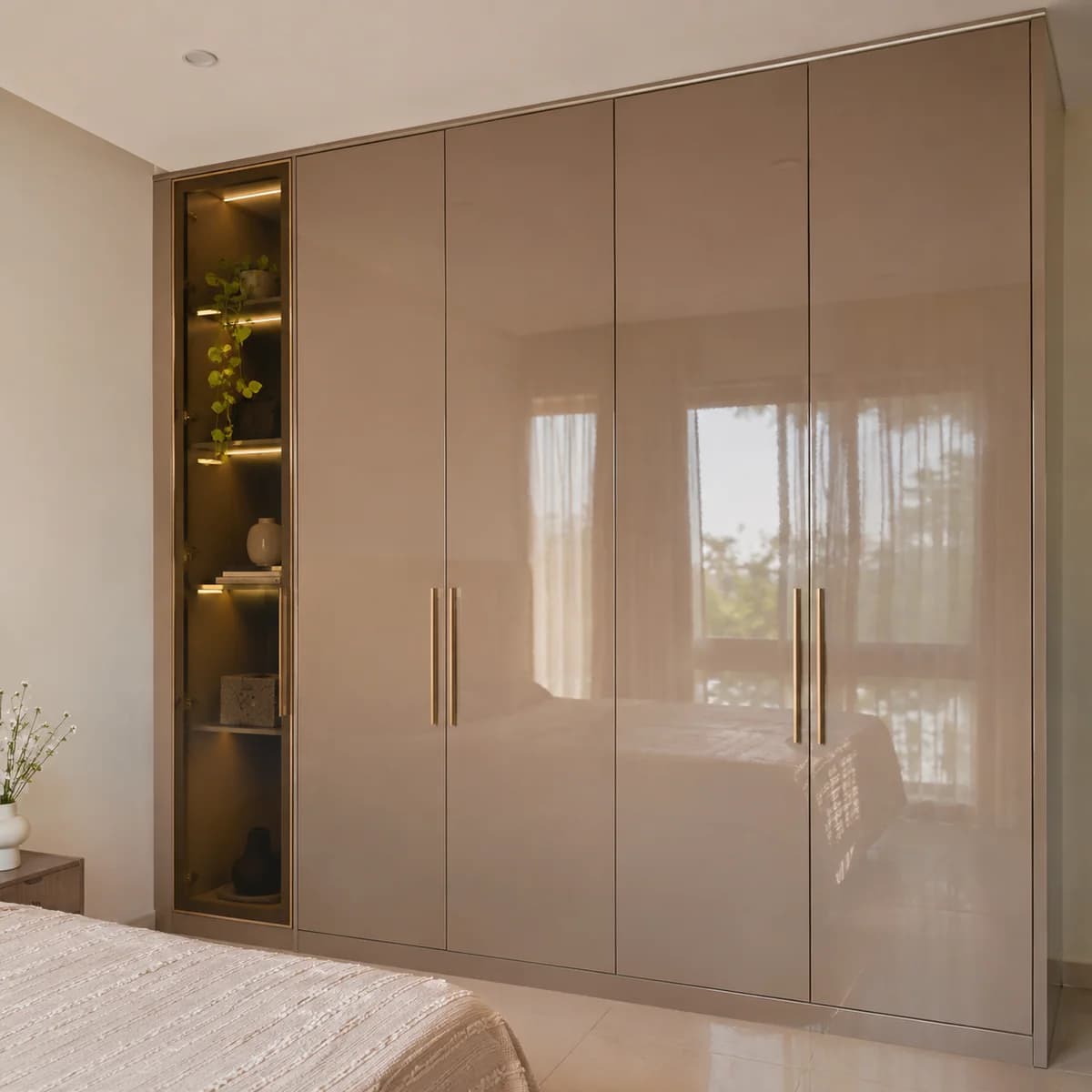
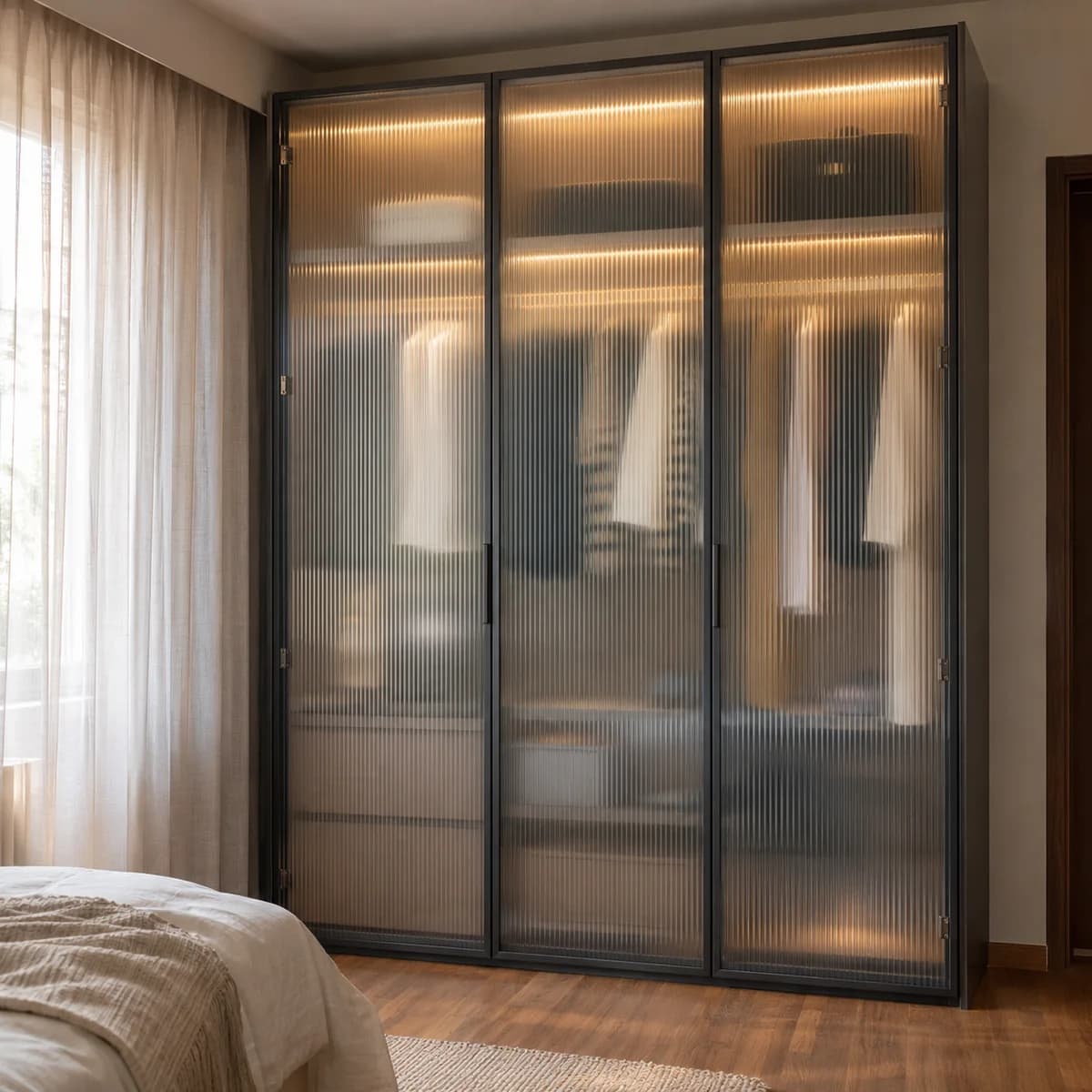
Bedrooms in the society flats here are compact, and the old wardrobe was usually a dark box that took a corner. A glass wardrobe changes the feel of the room. Glass reflects light and shows depth, so the wall seems to step back.
Sliding shutters save the floor that swinging doors need. A wardrobe built to the full height and width of the wall usually holds more than the old one did. In the larger houses of Raj Nagar and Kavi Nagar, we have room to add a dressing unit as well.
The range, the materials and the cost
This page is about Ghaziabad. The range itself is explained once, on our main page for Luxy wardrobes: the materials, how each piece is built and fitted, what decides the cost, and the questions people ask. Read the full guide to Luxy wardrobes.