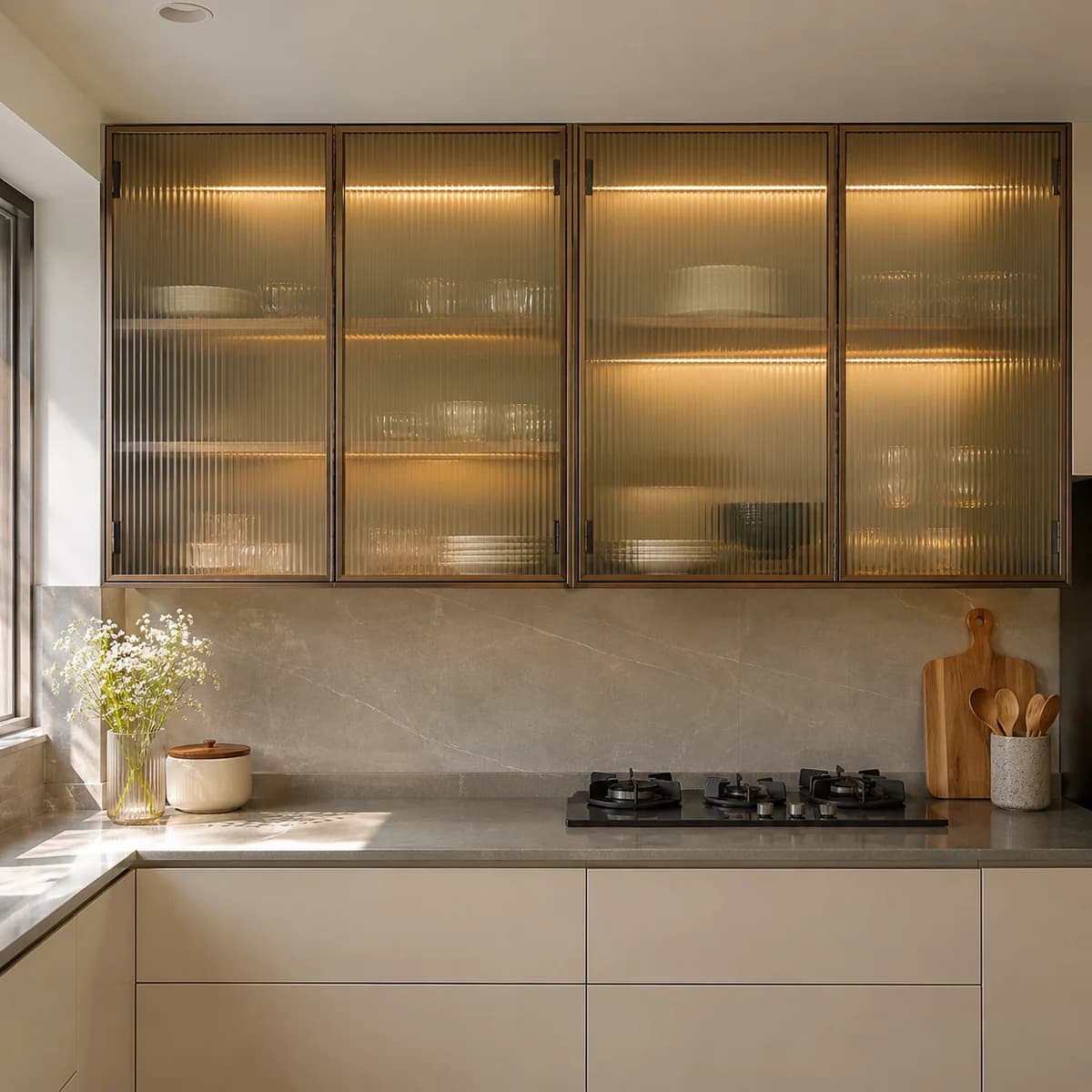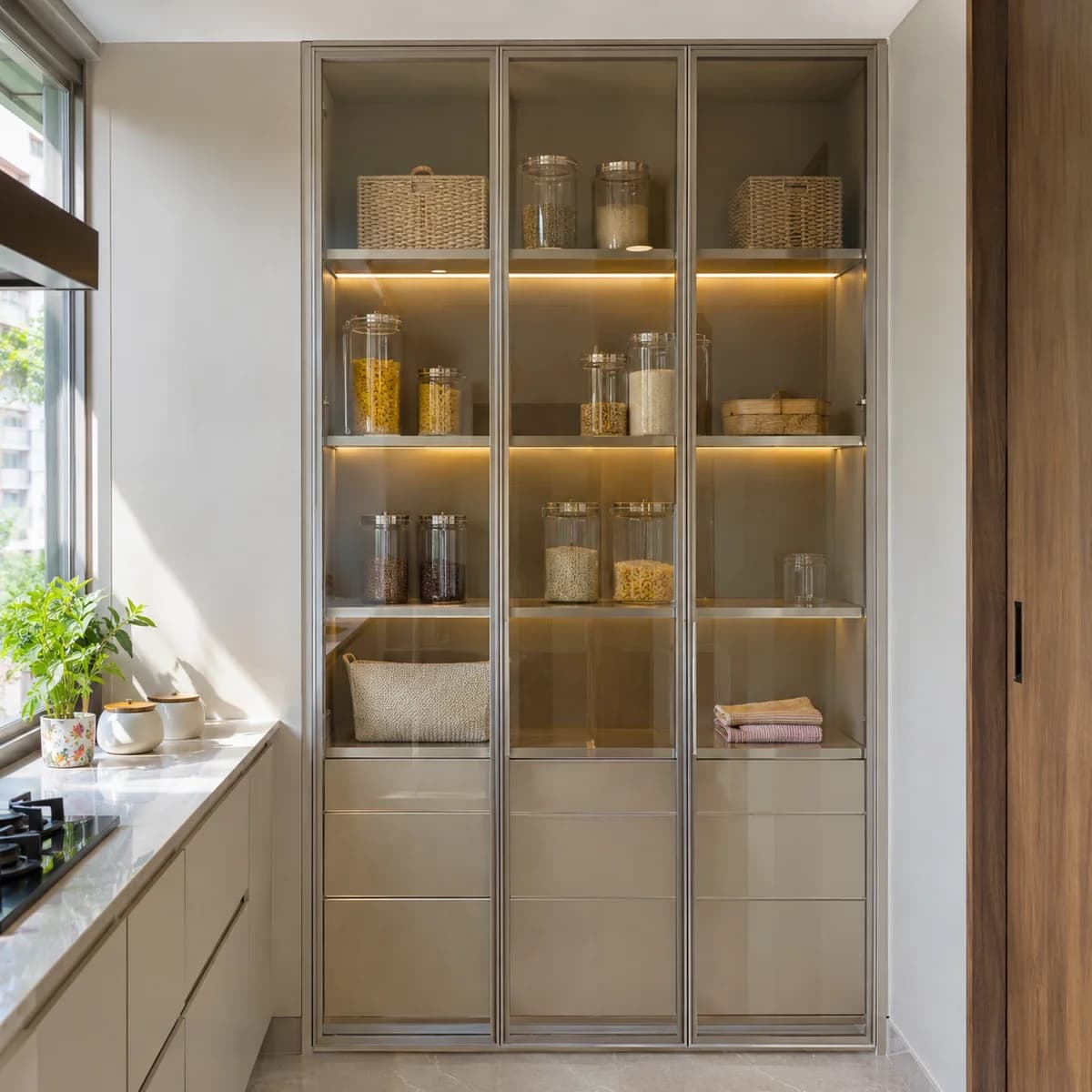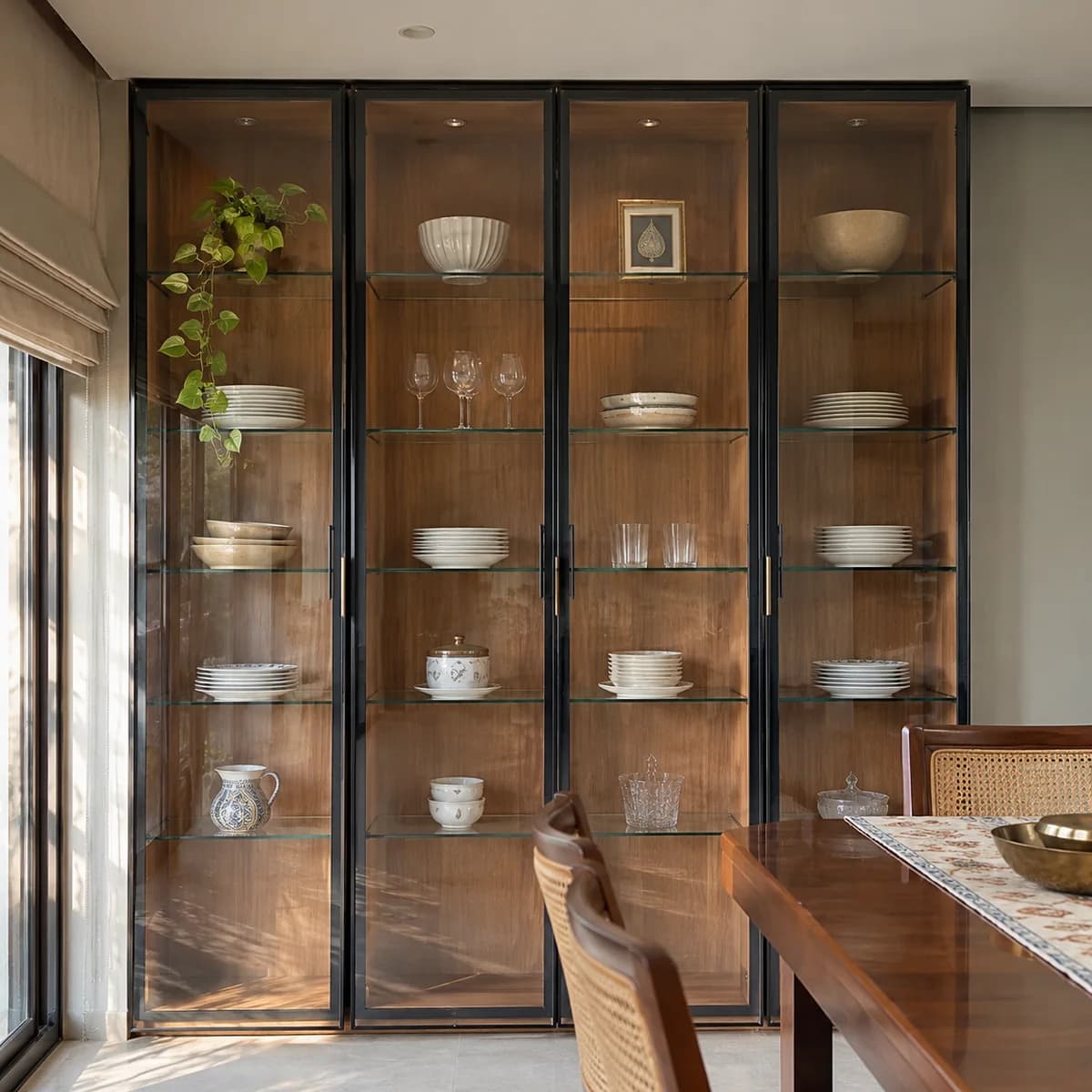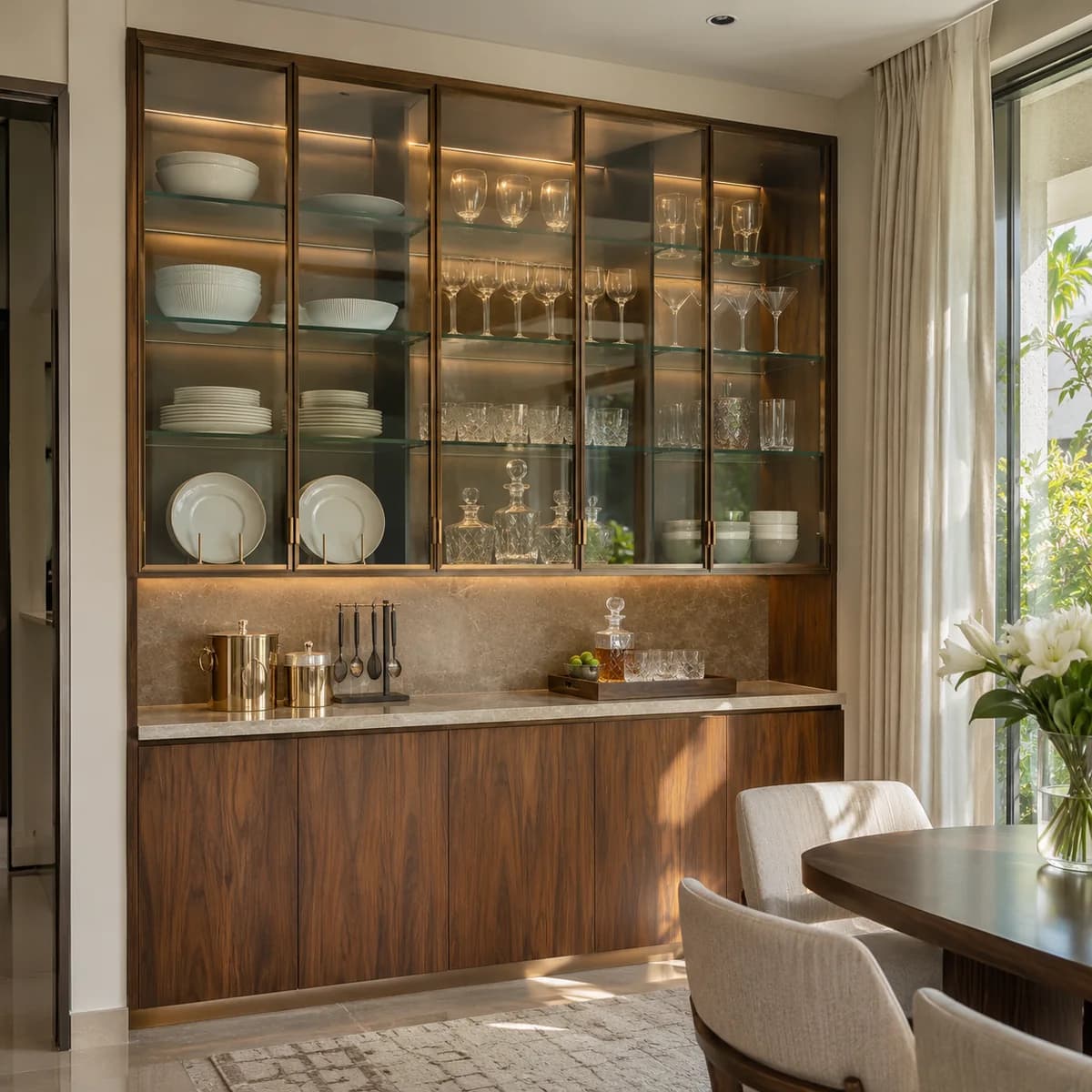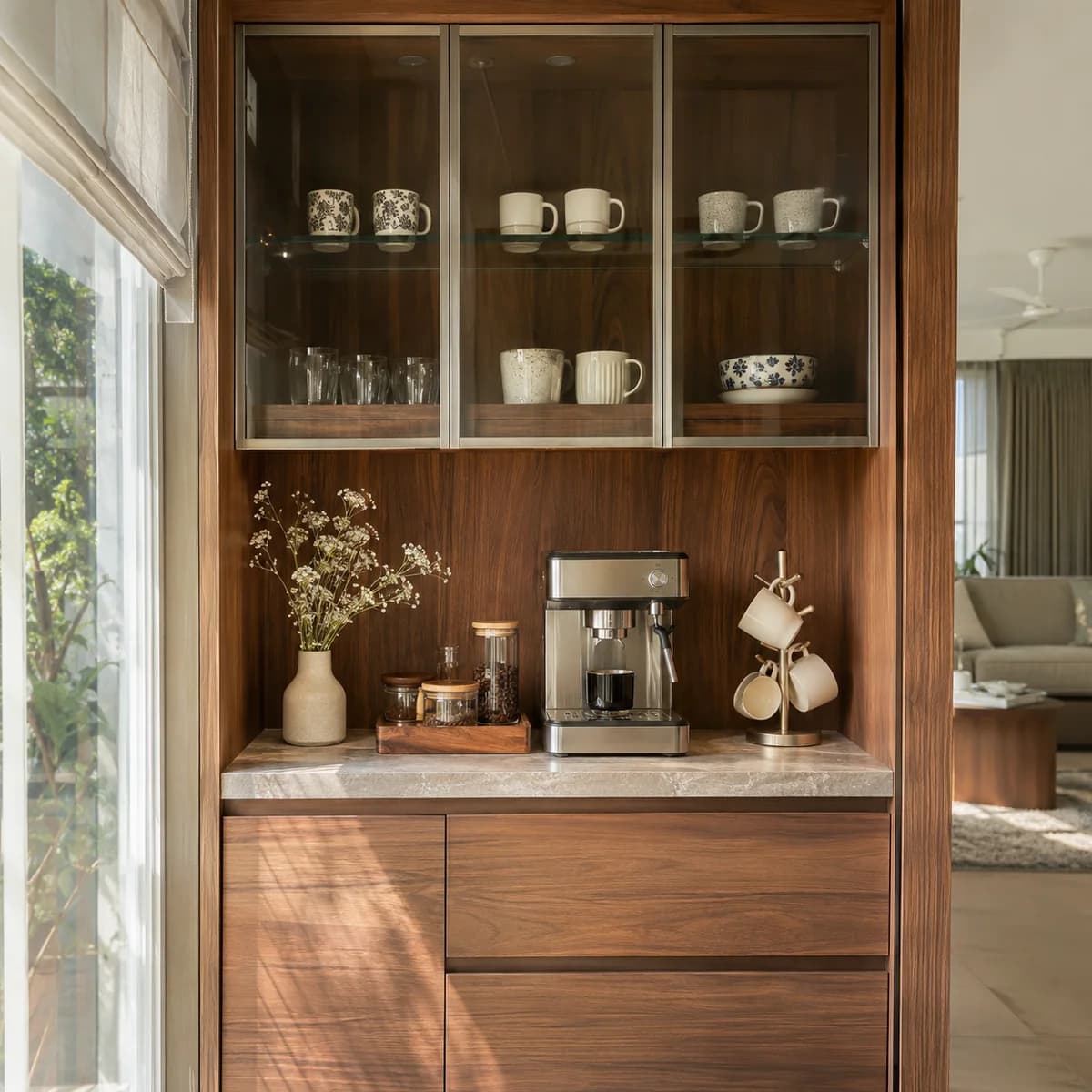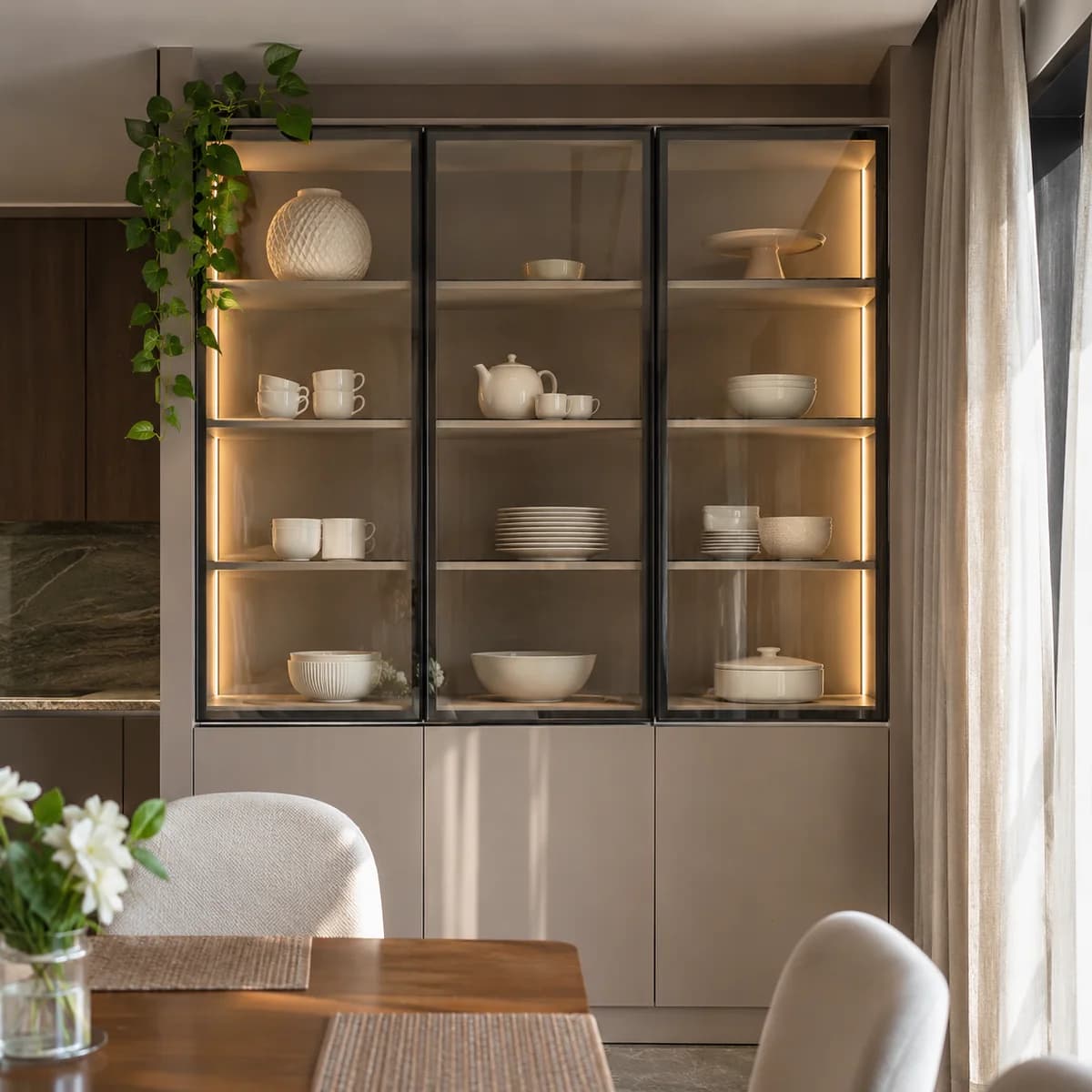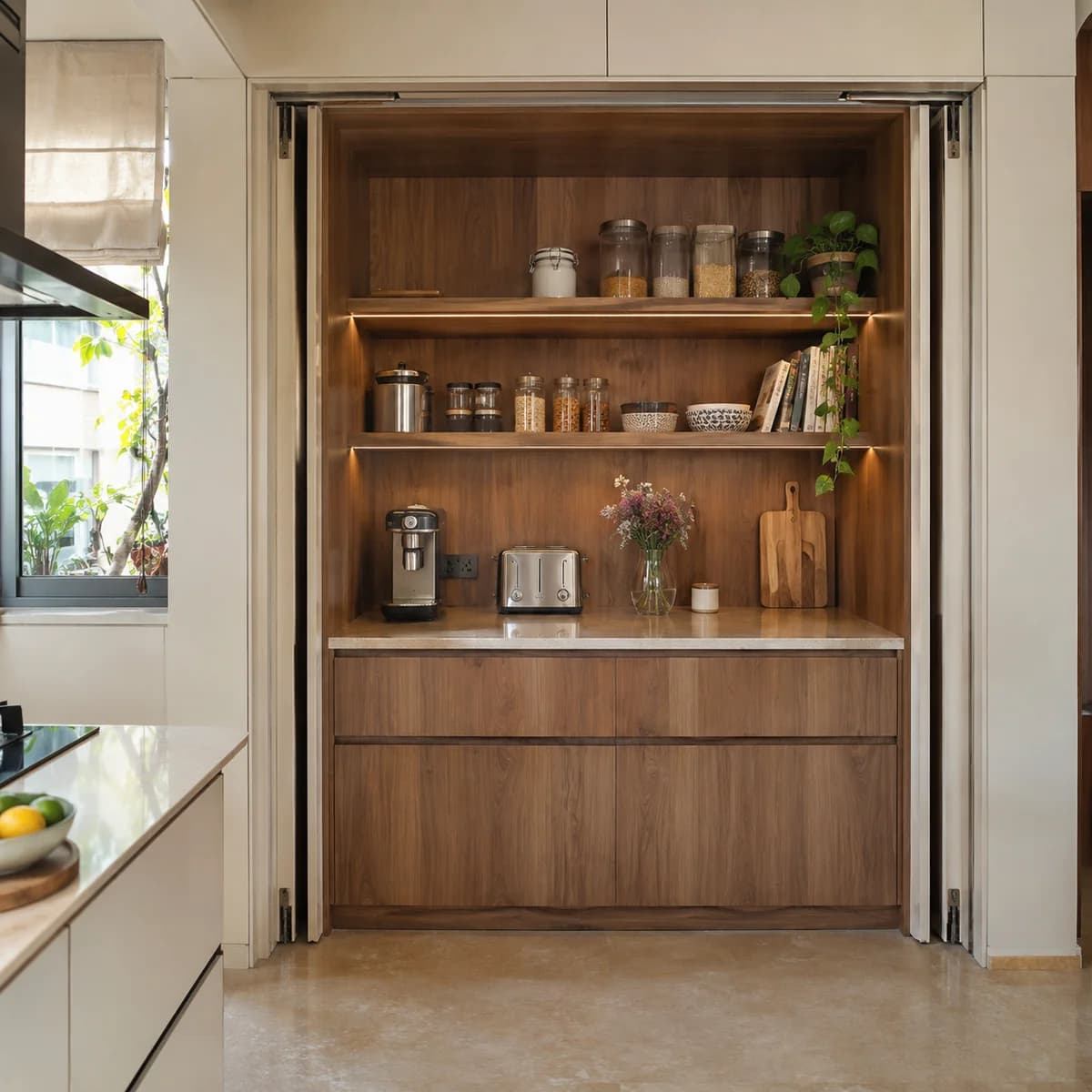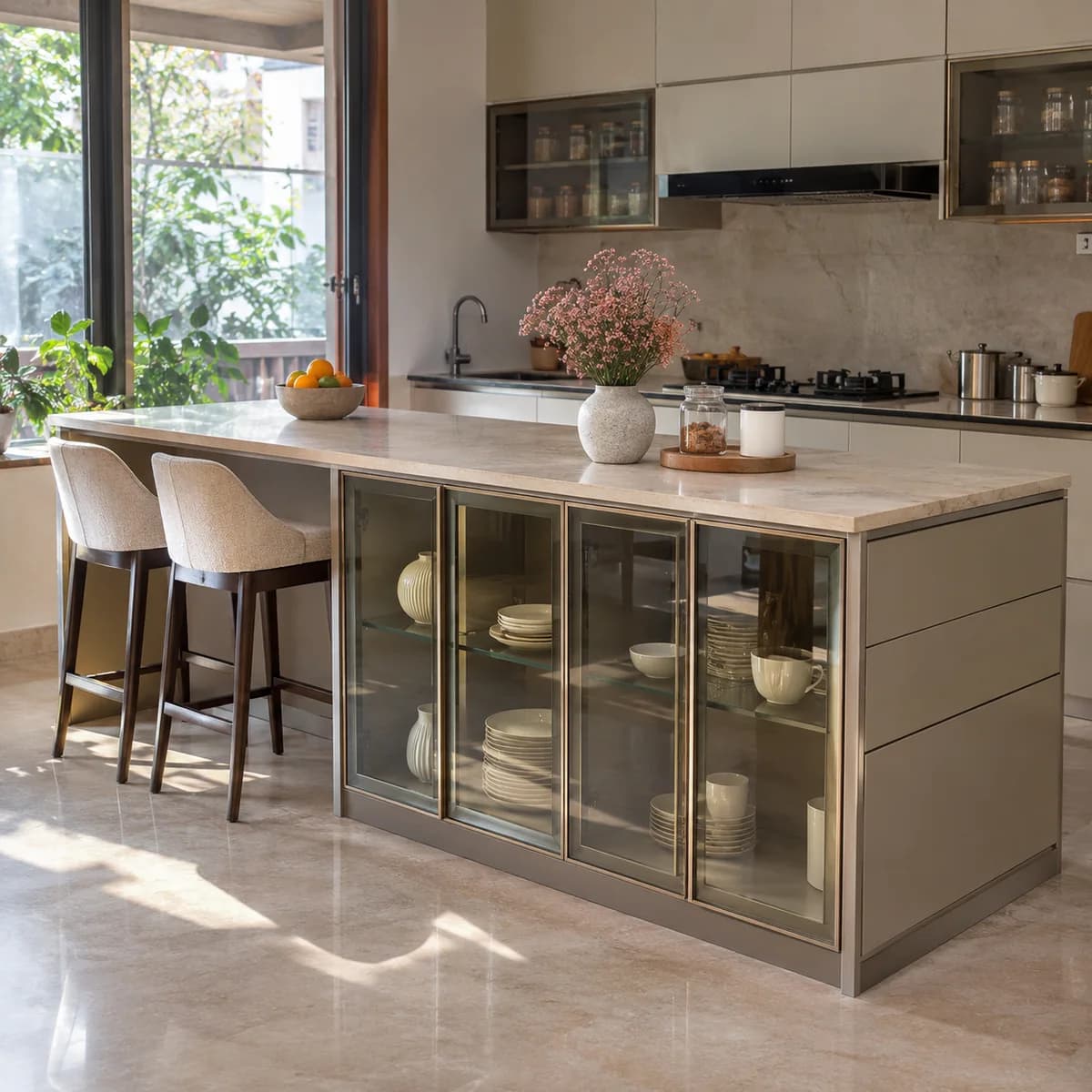
This is a kitchen island with a stone top and glass display sections. Slim aluminium frames hold the glass. Plates and glassware sit inside, lit and on show. The other side works as a normal island, with storage and space to prepare food.
An island that stores and shows
Most islands are a block of closed cabinets. This one shows something. It stores, it gives you a work surface and it looks like furniture. Guests gather around it without being asked.
The centre of the room
An island becomes the centre of an open kitchen. People cook, talk and eat around it. The glass side faces the dining or living room, so the kitchen looks good from there too.
Walking space, seating and the working side
An island needs room to walk around on every side, with cabinets open and a stool pulled out. That is the first thing we check, and in many kitchens it decides whether an island fits at all. The working side faces the hob and the sink, and holds drawers for tools and pans. The other side can take stools for breakfast, or the glass display, or both.
A power point in the island runs a mixer or charges a phone. If you want a hob or a sink on the island, the pipes and the power have to run under the floor, so that has to be settled before any flooring is laid.
Glass display on the quiet side of an island
The glass sections face away from the cooking. On the working side, splashes from the hob and the sink would land on the glass every day. On the room side they stay clean and the plates and glasses inside are seen from the sofa or the dining table, lit softly in the evening.
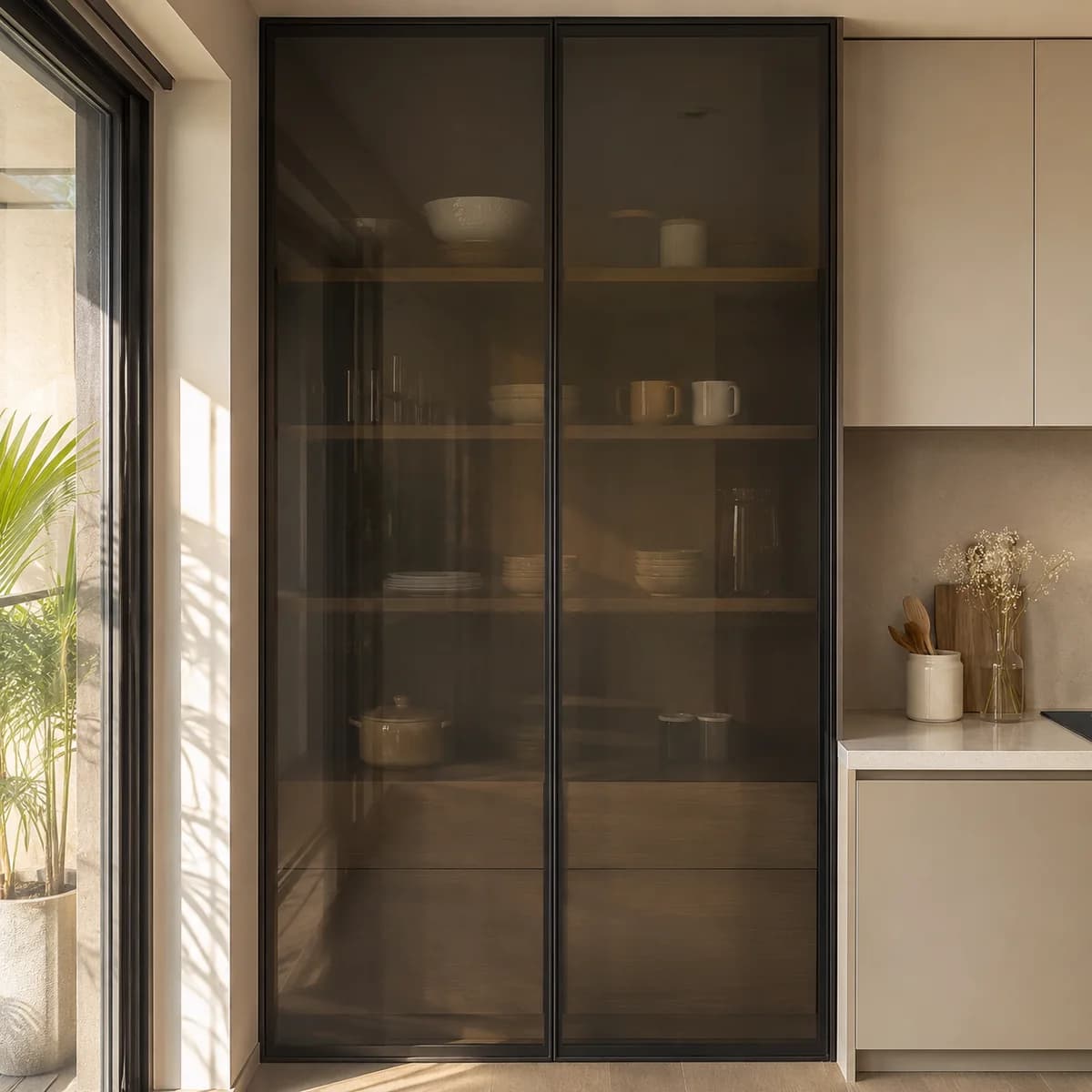
The top is stone, which is heavy, so the island is built on a strong frame and the glass sections sit inside that frame. Slim aluminium profiles hold the glass. Clear glass shows the most, fluted or smoked glass blurs the contents and still glows when lit. The display shelves are planned around what you want to show.
Who it suits
- You have a large, open kitchen.
- You host often and people gather in the kitchen.
- You want the kitchen to look good from the living room.
Before you choose
- An island needs walking space on every side. As a rough guide, keep about three feet clear around it.
- The glass side faces away from the cooking side, where there is less splashing.
- A stone top is heavy, so the island is built around a strong frame.