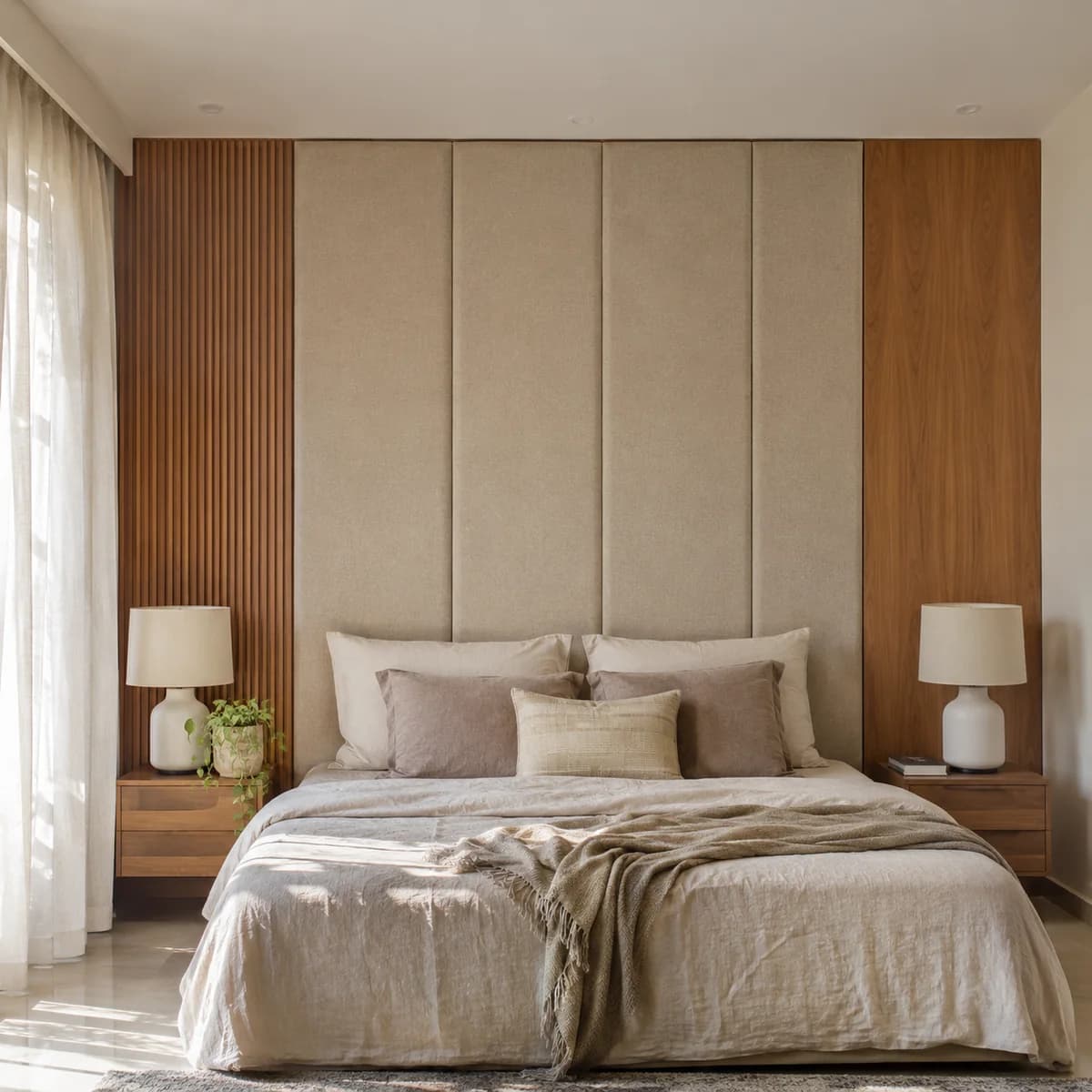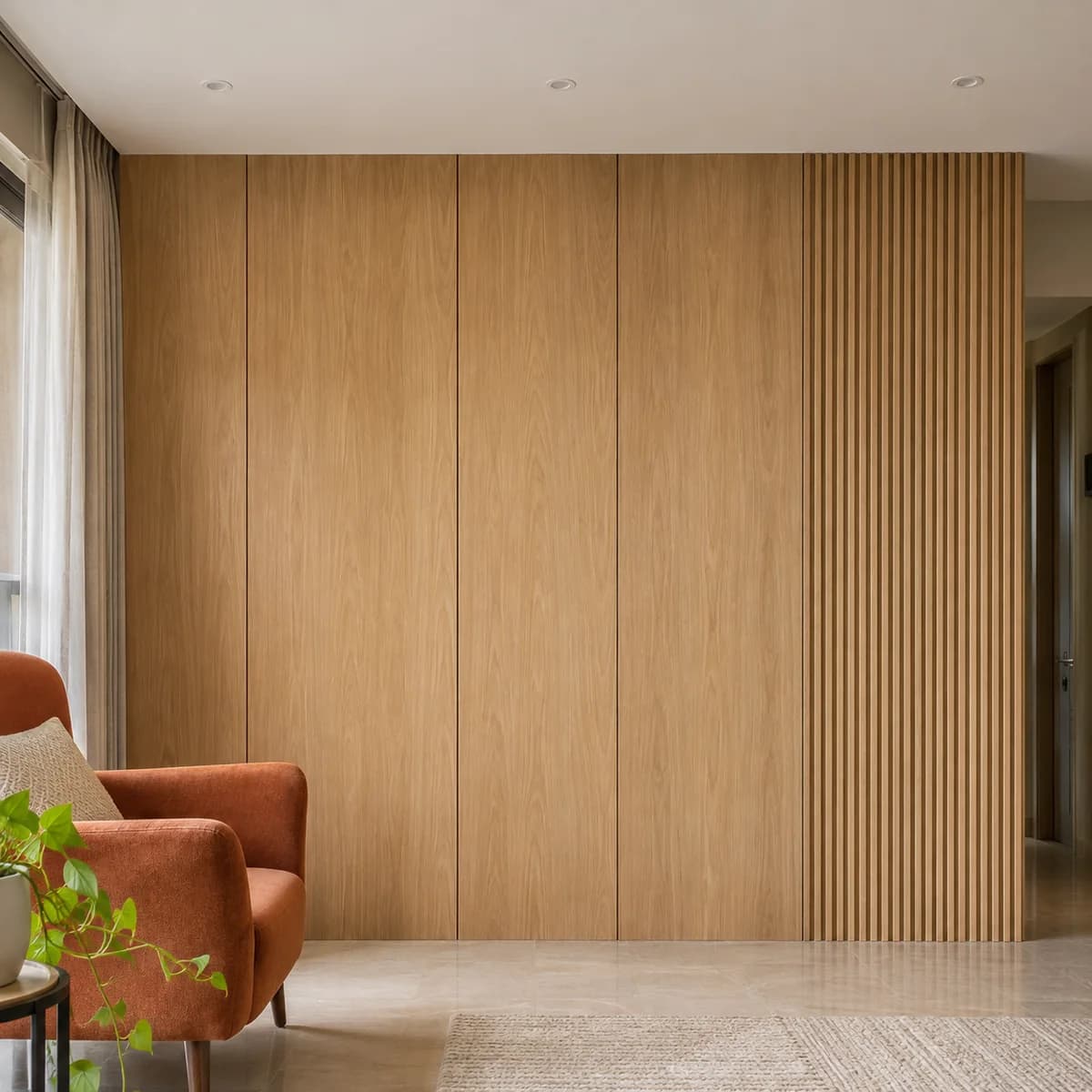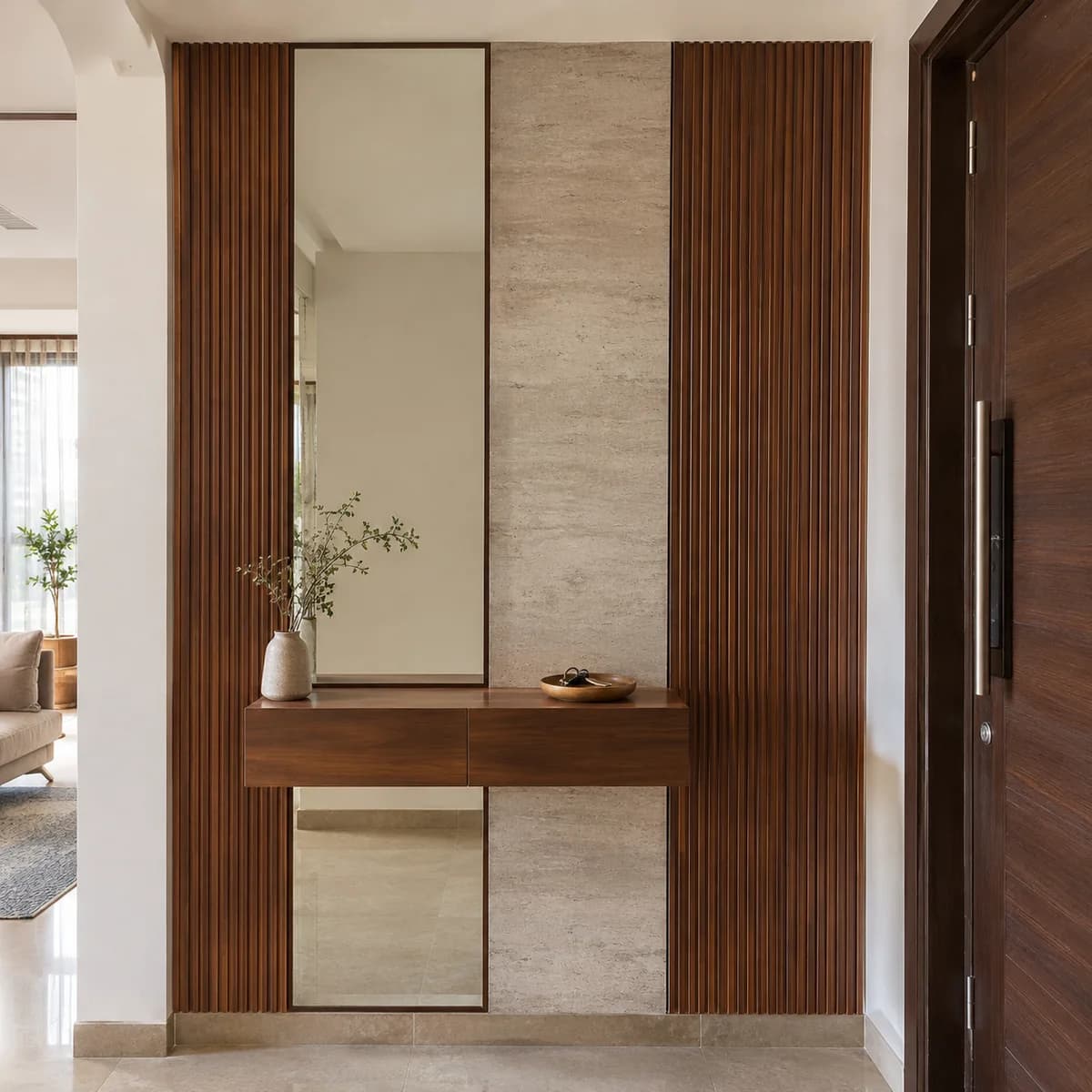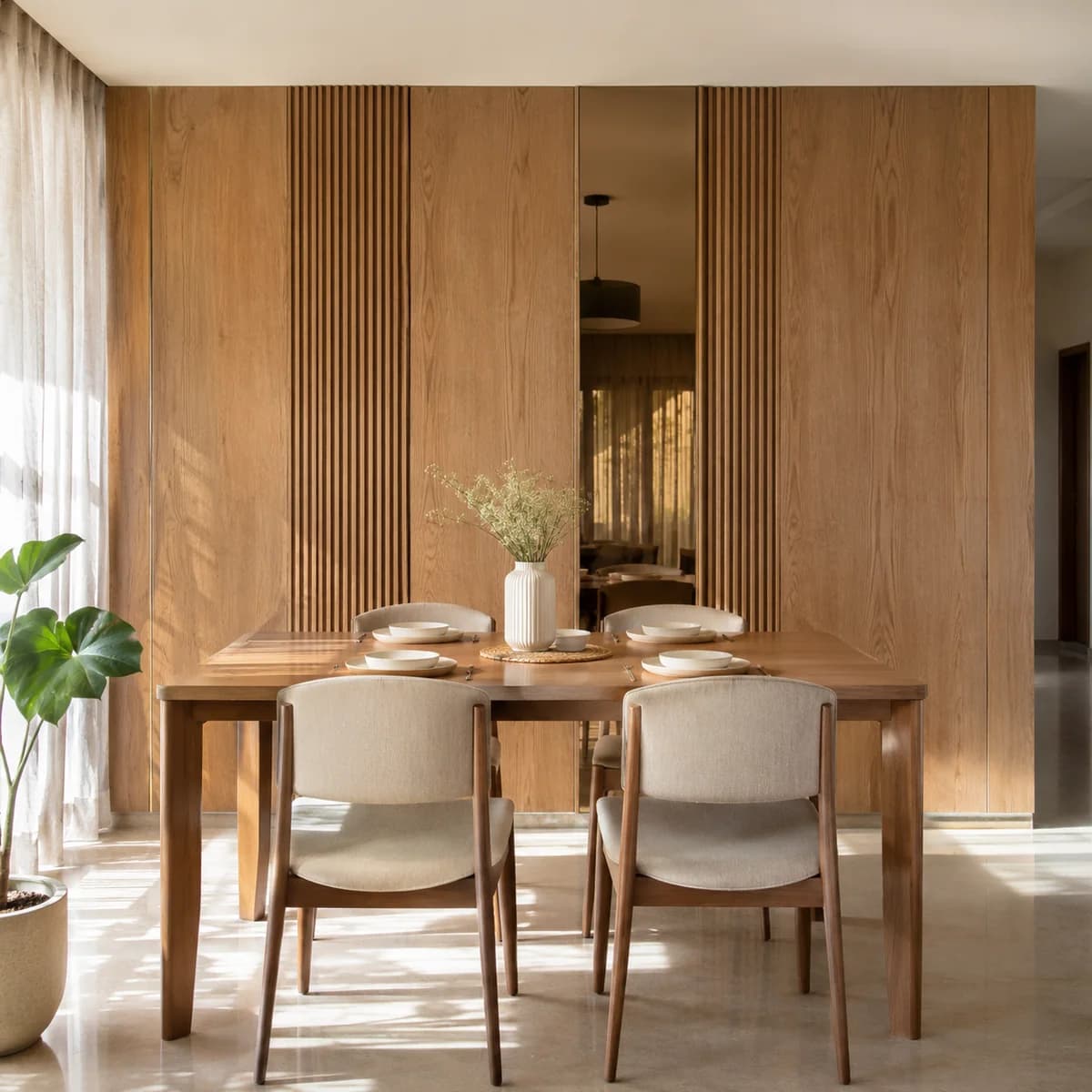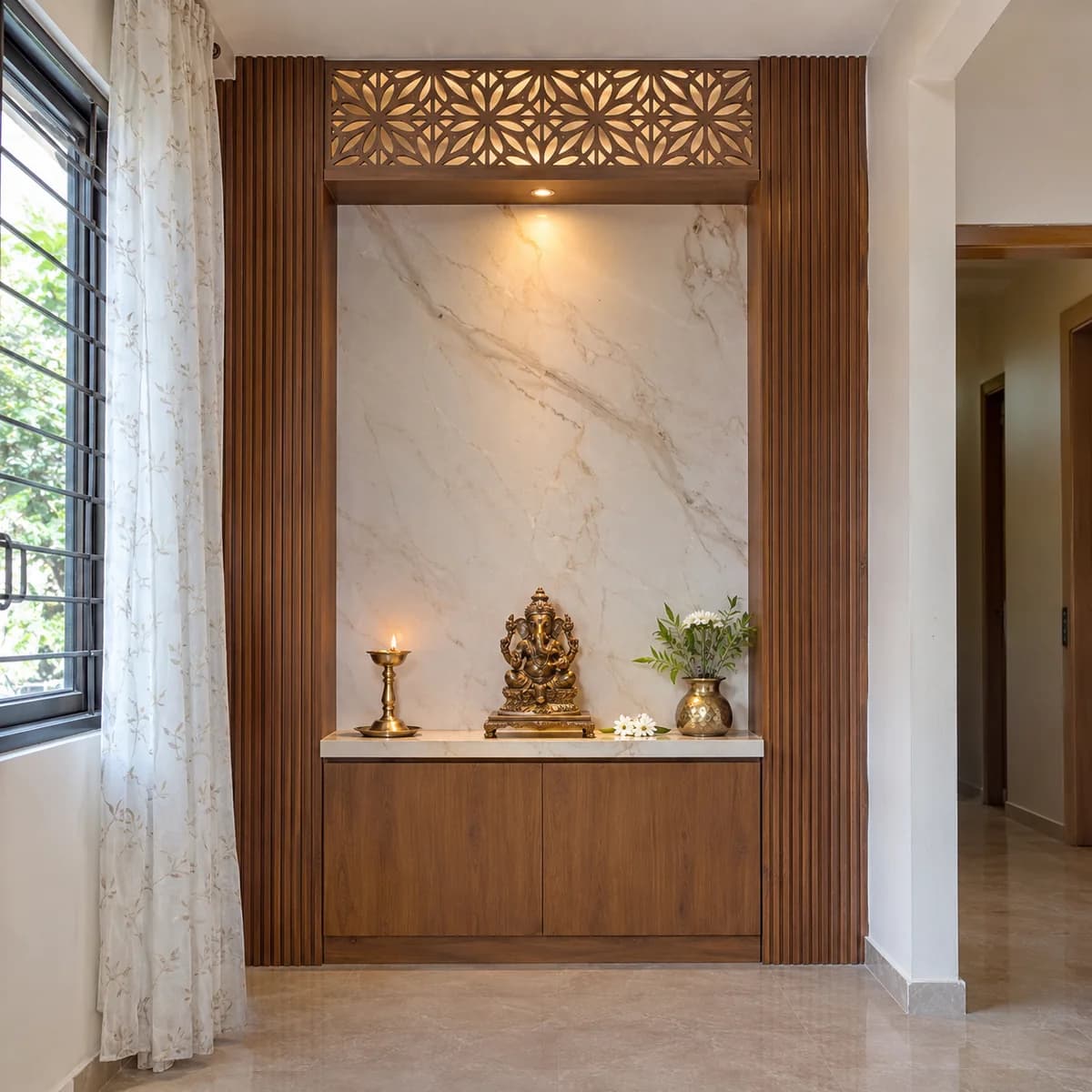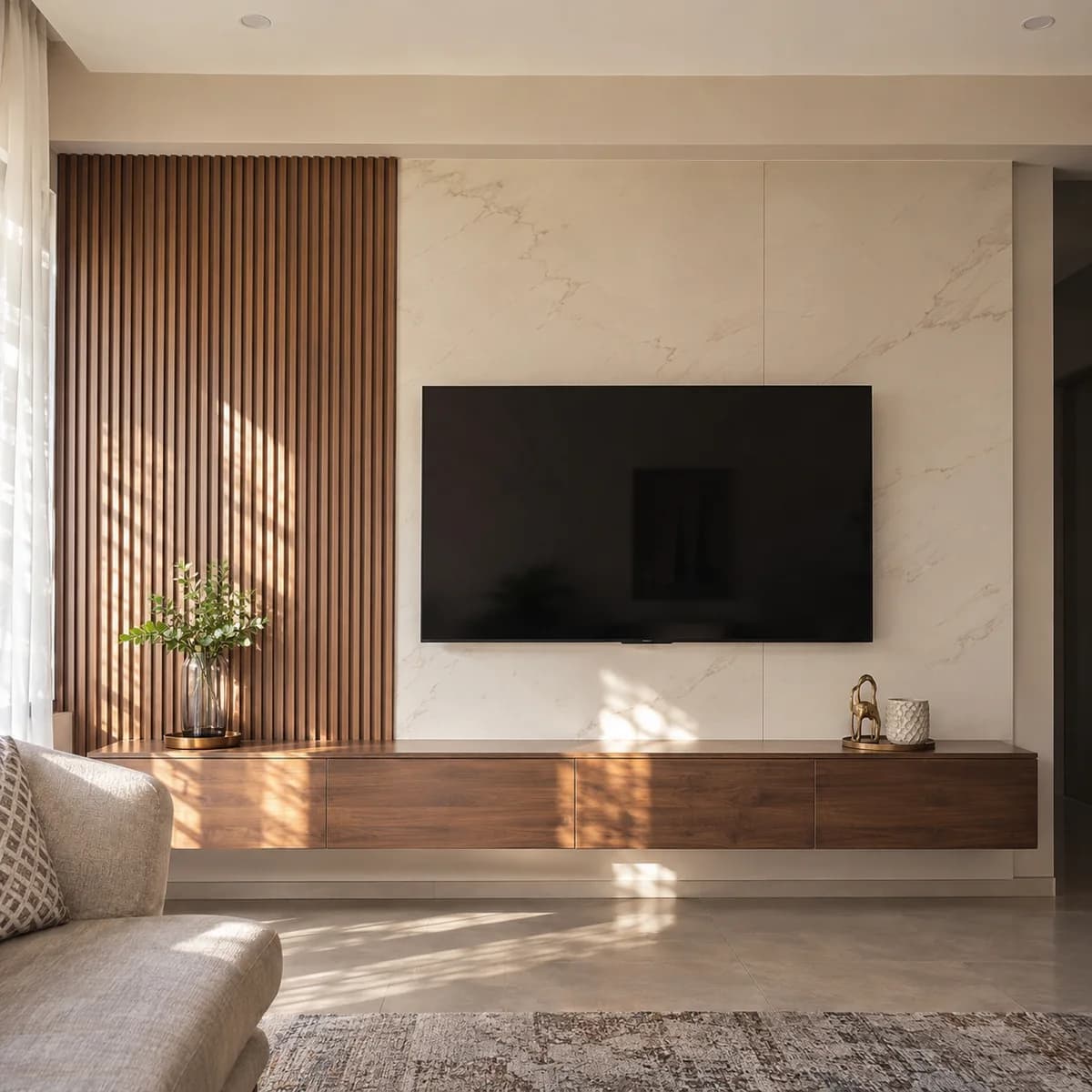
The houses of Basavanagudi are old, and so are their walls. A pooja wall is the first wall most families here ask Luxy to panel, and the living room wall comes next. On an old wall nothing is glued: a batten frame is fixed and shimmed true, the damp is dealt with first, and the panels sit on the frame.
Pooja and feature walls near Bull Temple Road
A Basavanagudi pooja is used every morning, and its wall is planned for lamps and incense: a marble-look panel behind the flames that wipes clean of soot, fluted wood or a CNC jali either side, soft light behind the jali. The ledge is set at the height the family prays at, with drawers for lamps and wicks, and we ask which way the pooja faces before we draw.
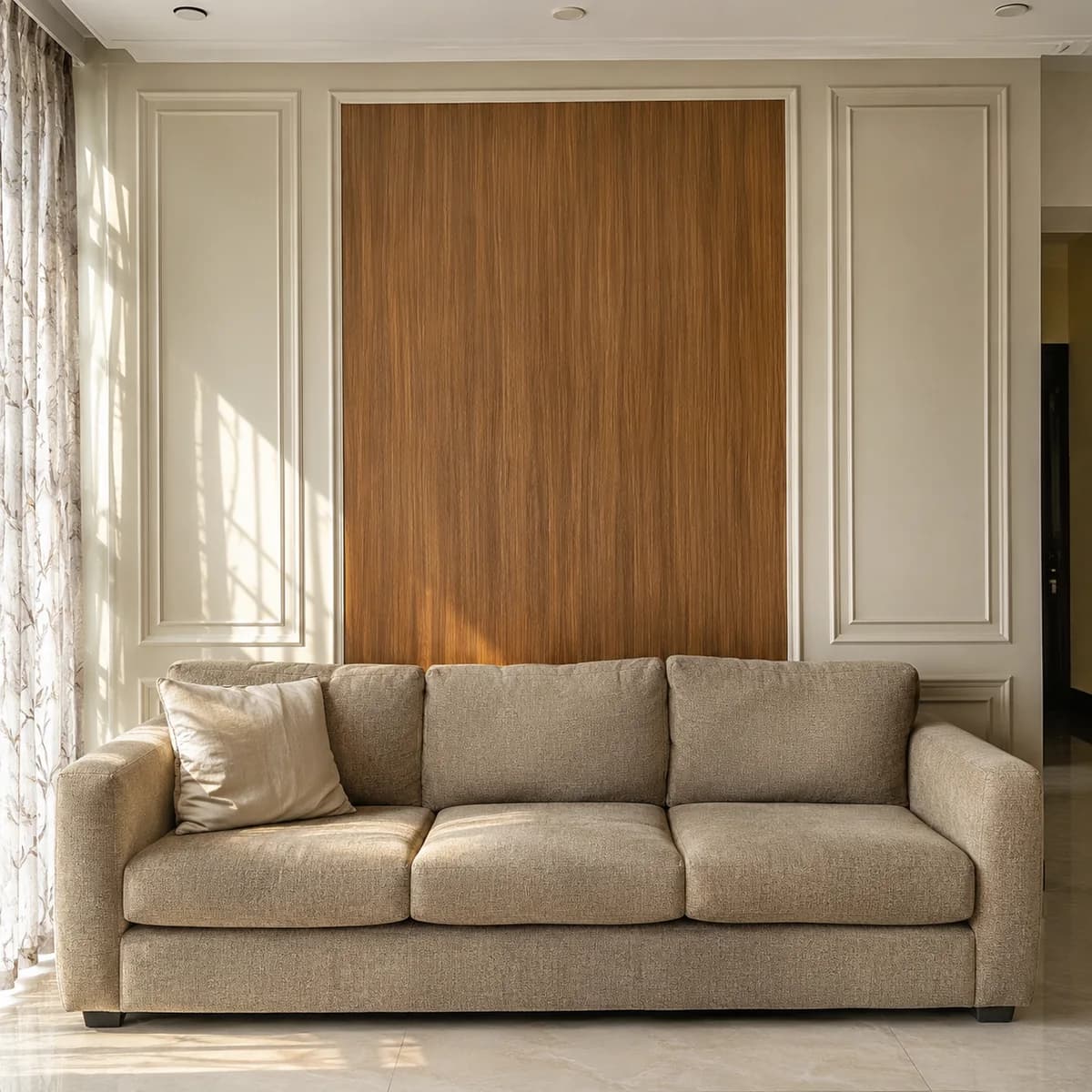
The living room wall facing the entrance takes the feature panels, in wood and fluted finishes that suit a traditional house, with warm strip light in the recesses between them.
Old plaster, lime walls and battens in Basavanagudi
Older houses here have lime plaster in places, and a wall that is not flat, with corners out of square and the odd filled niche under the paint. Panels cannot be glued to that. We fix a batten frame, shimmed until it is true, and the panels sit on the frame, so the wall behind can be as uneven as it is.
Damp is checked first on the side that faces the rain or backs a bathroom, and treated before the frame goes up. Old houses have fewer sockets than a family needs now, and the panelling is the chance to add them behind the panels, with the wiring hidden.