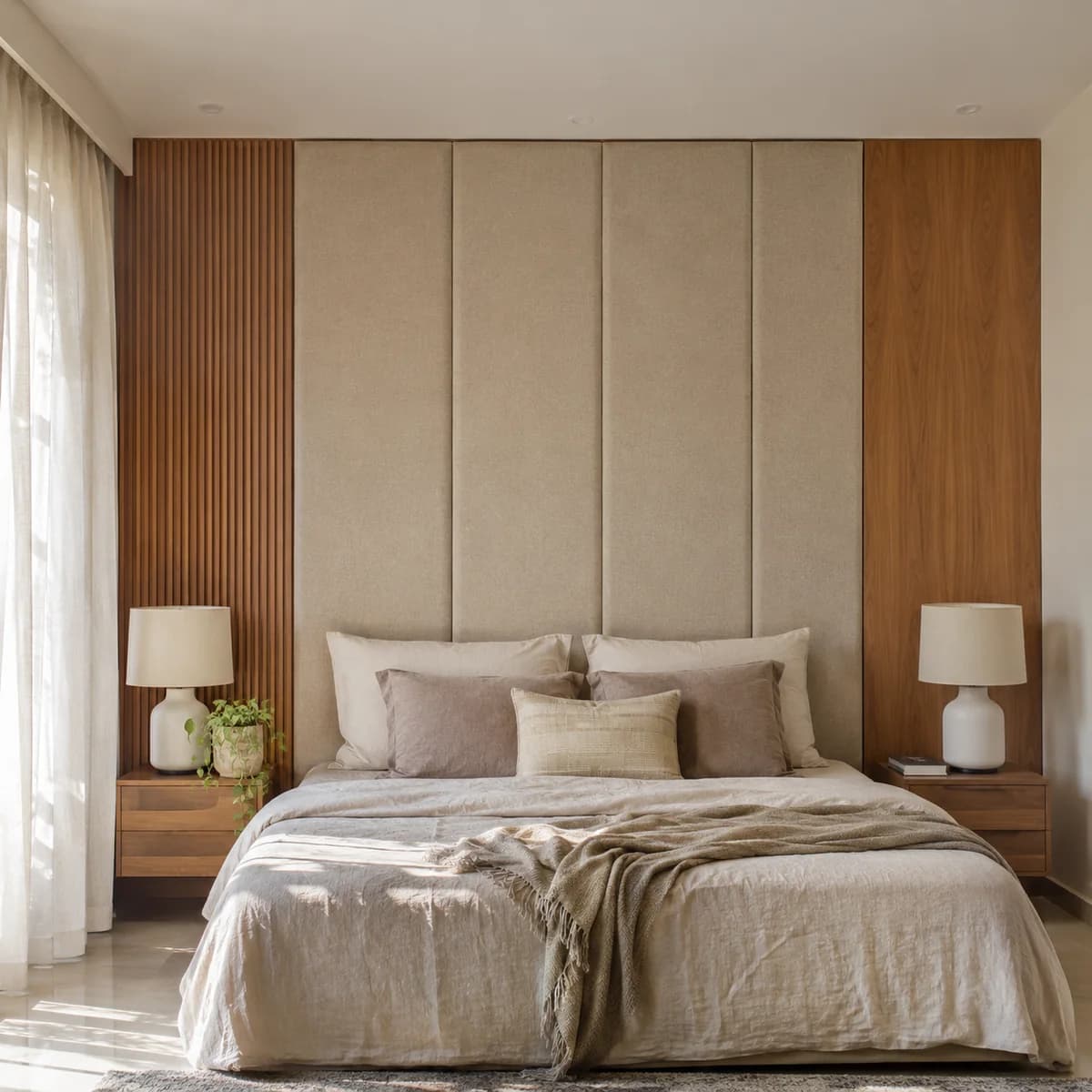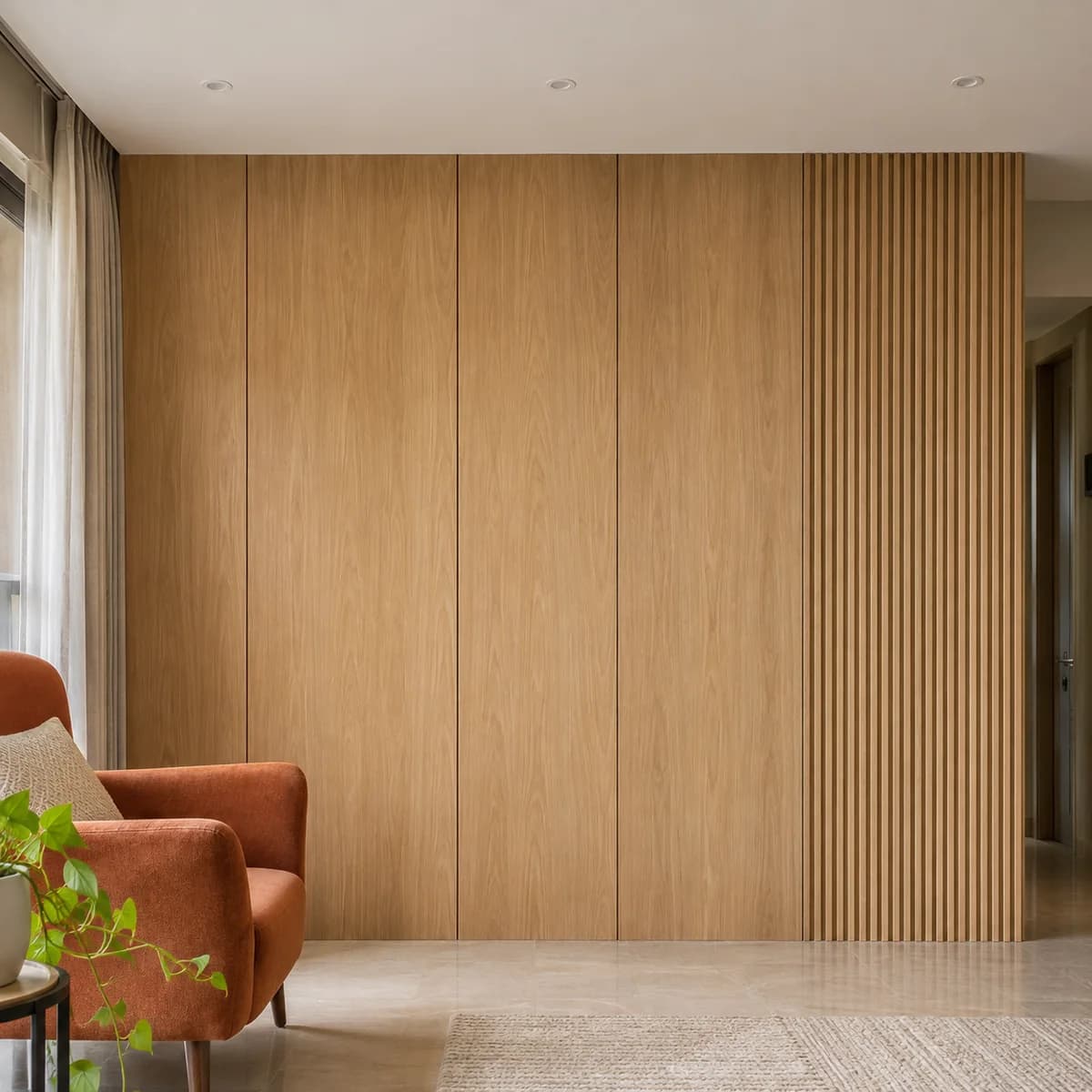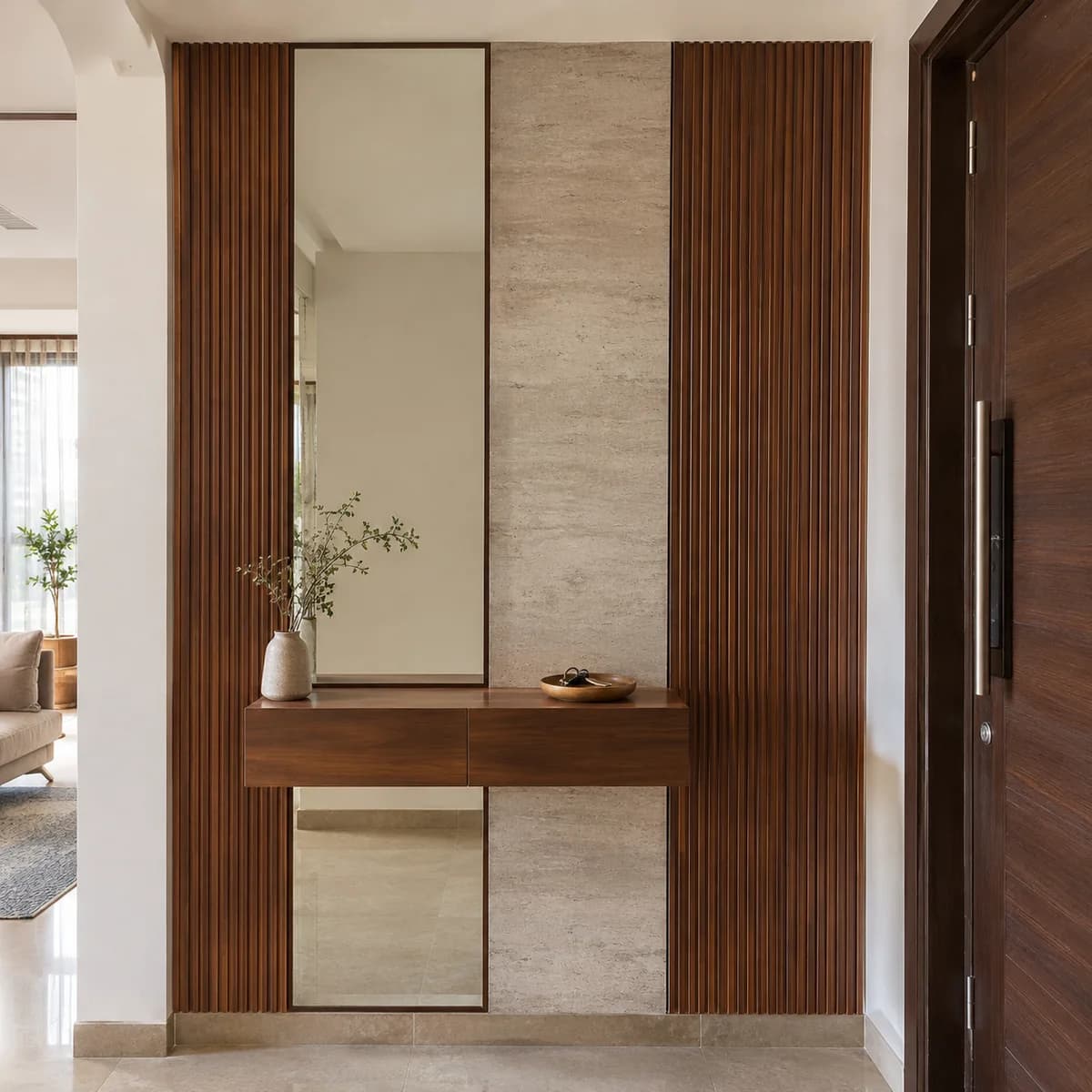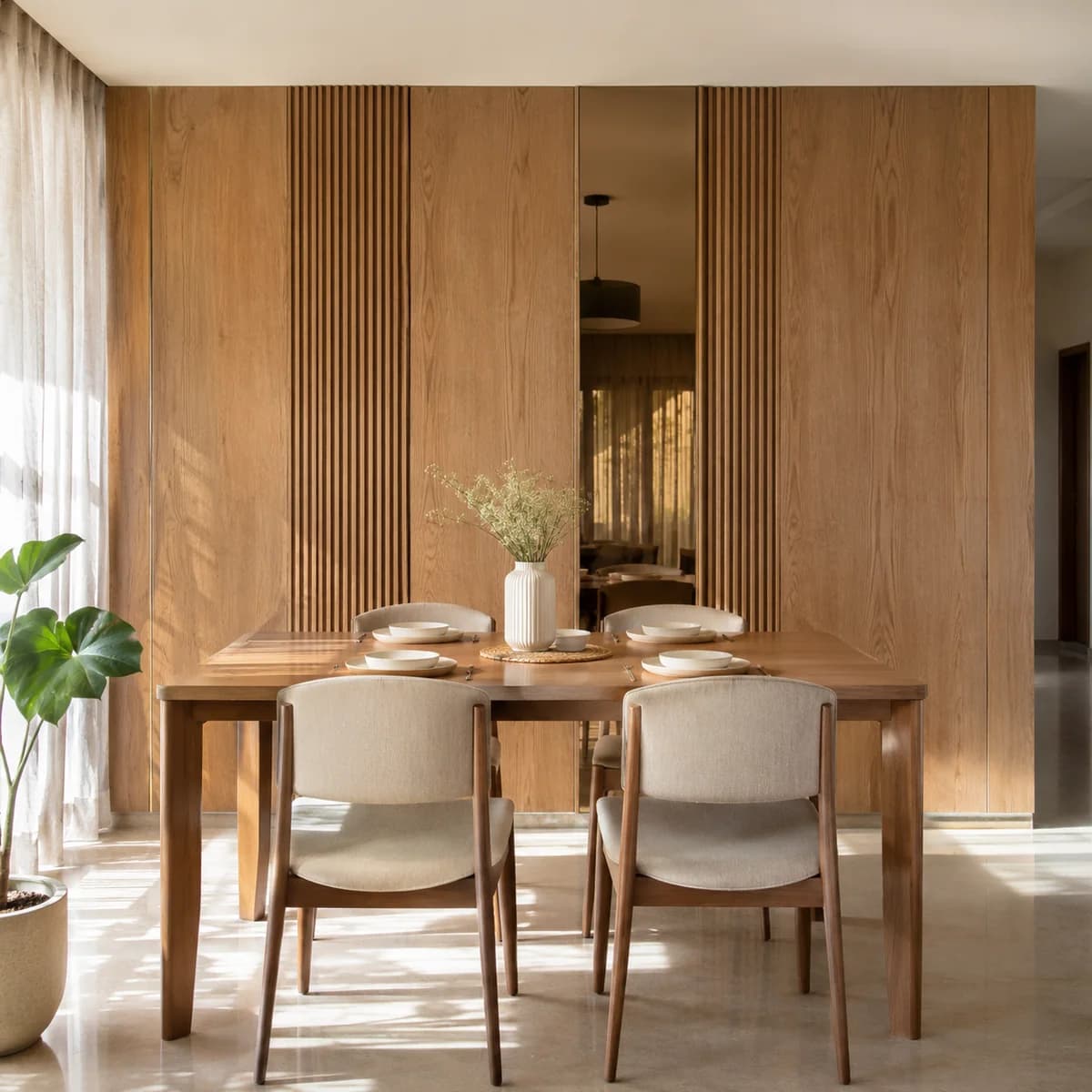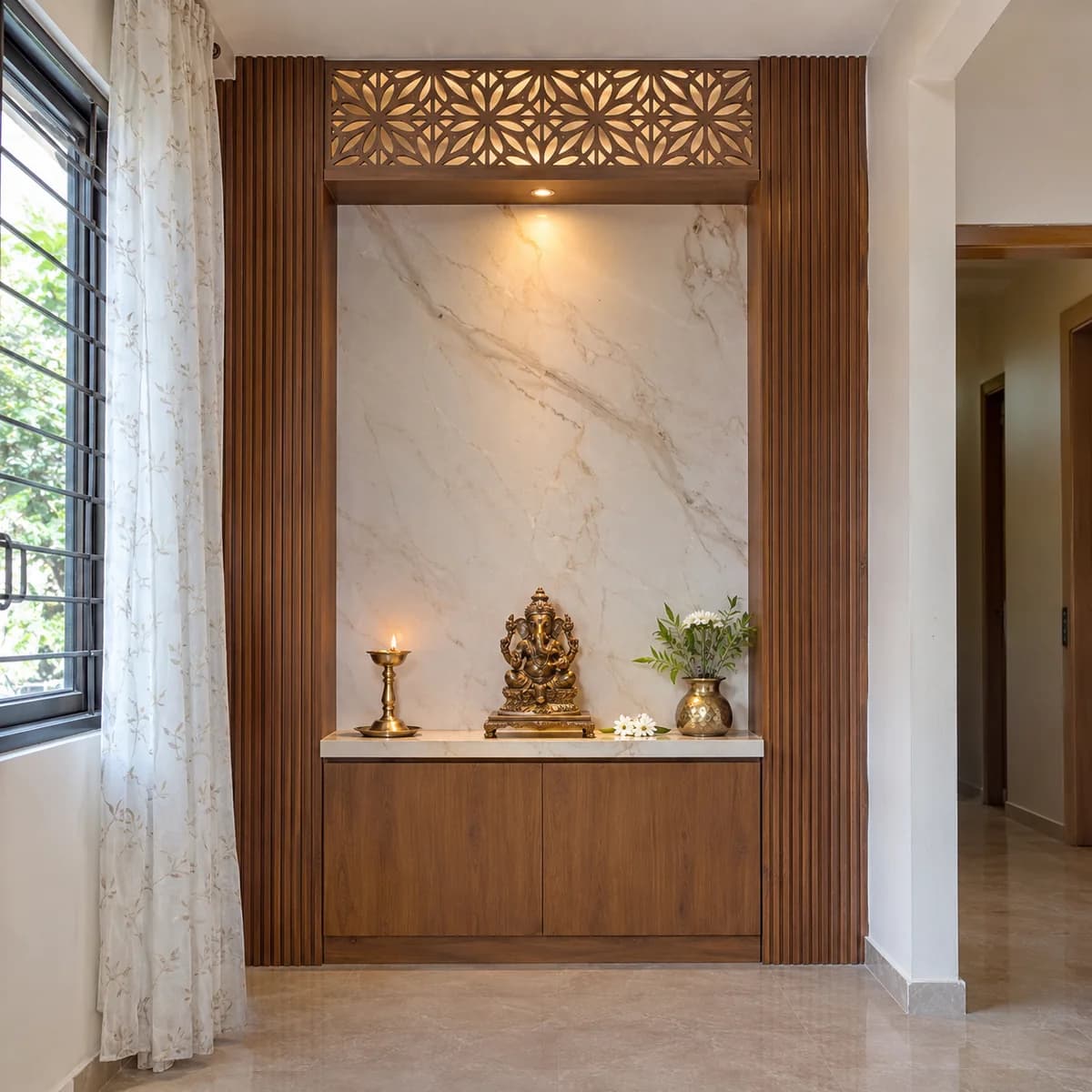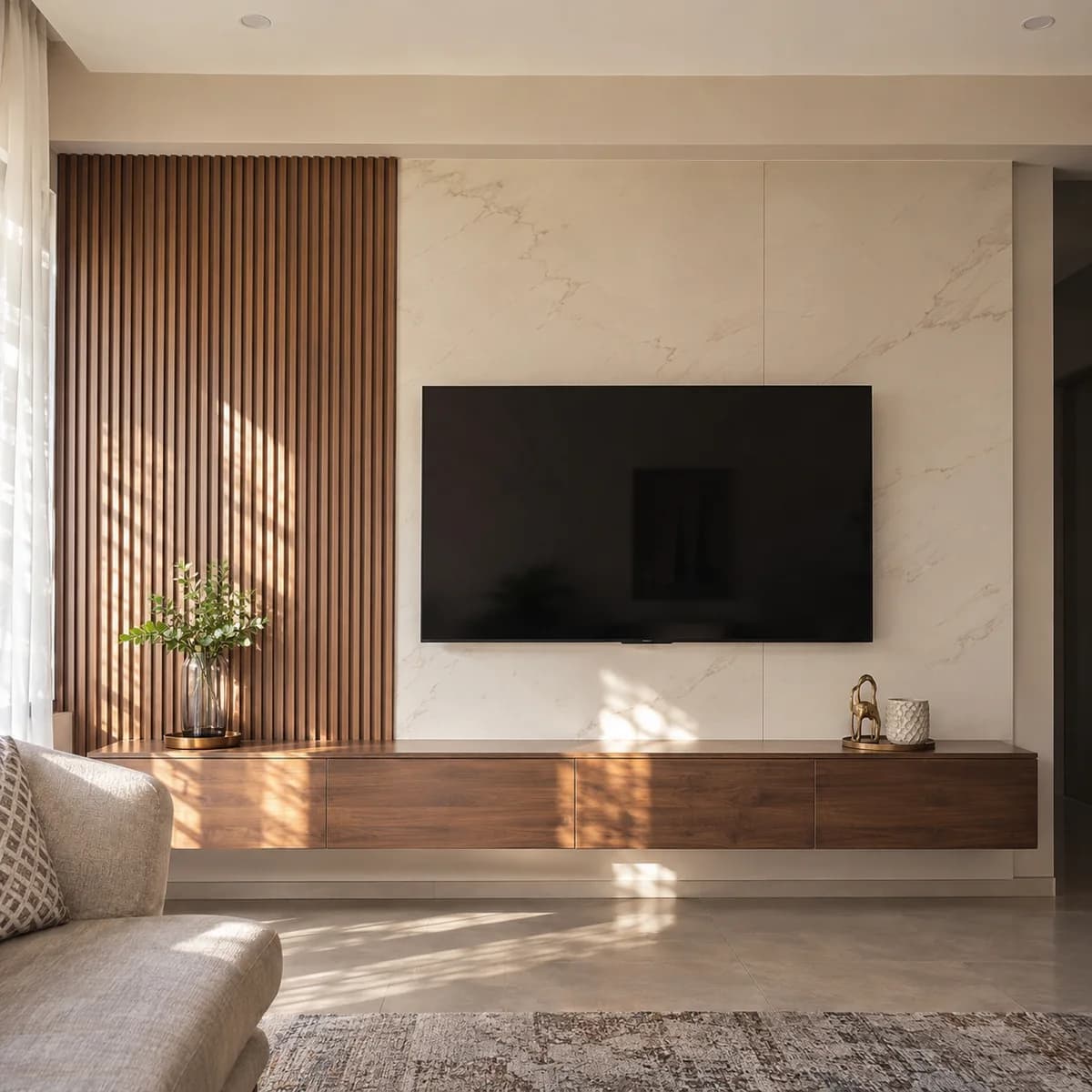
Hebbal's towers are full of people who work near Manyata and from home in turn, and their flats are lived in and furnished. The walls Luxy panels here are the TV wall in the living room, which hides the cables and finishes the room, and the wall behind the desk, which is the office everyone on a video call sees.
TV walls in Hebbal's apartment living rooms
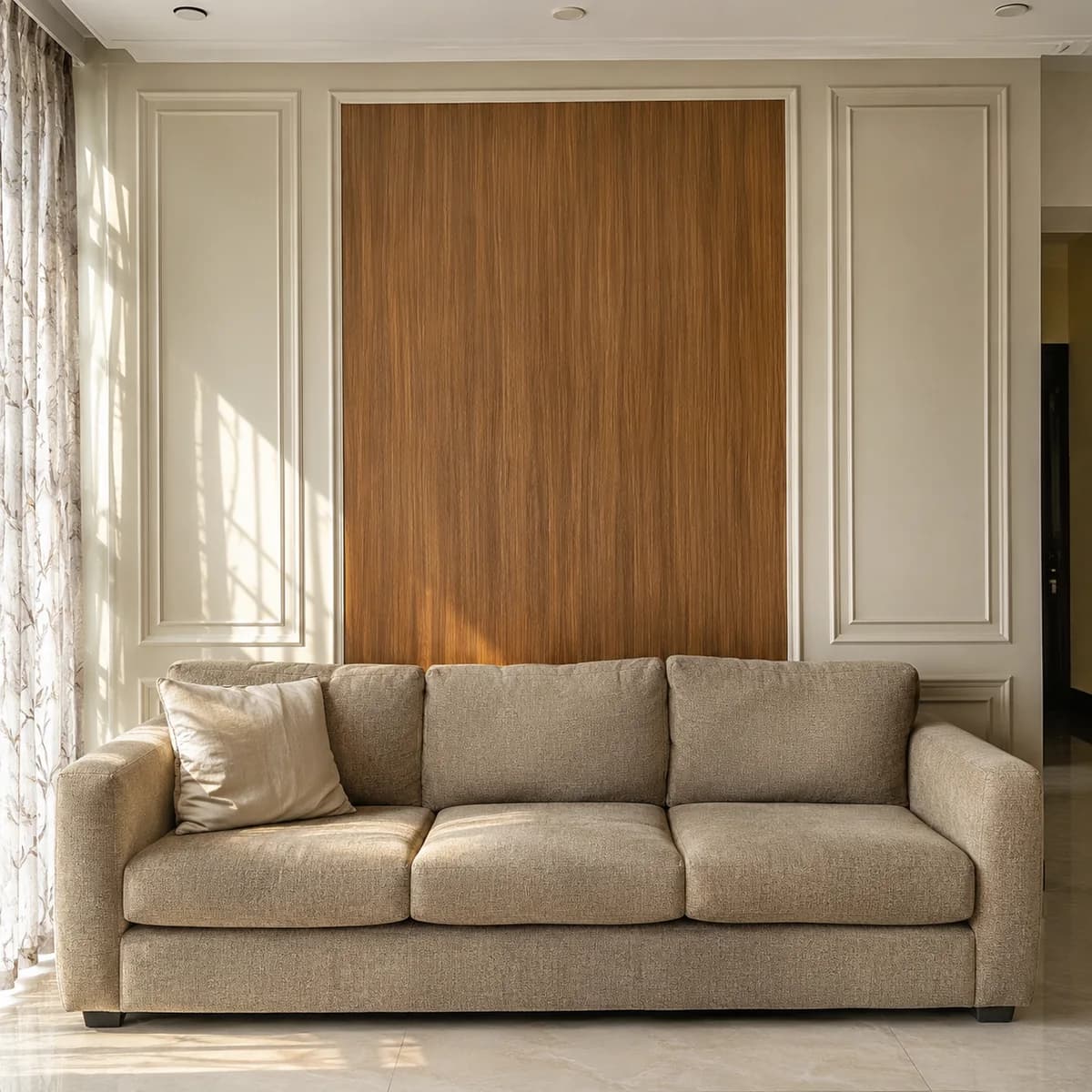
The living room in a Hebbal tower is open to the dining area, with one solid wall for the TV. In a settled flat the TV point, the sockets and often an air conditioner are already on it, with some cables on the surface. The panelling hides those cables in a conduit behind it and gives the set-top box and the soundbar a console below the screen.
A plain matte panel sits behind the TV and fluted or slatted panels either side, planned to the furniture that is staying. One wall, one day, inside the society's hours, with the service lift booked for the panels.
Home office walls for Hebbal's Manyata workforce
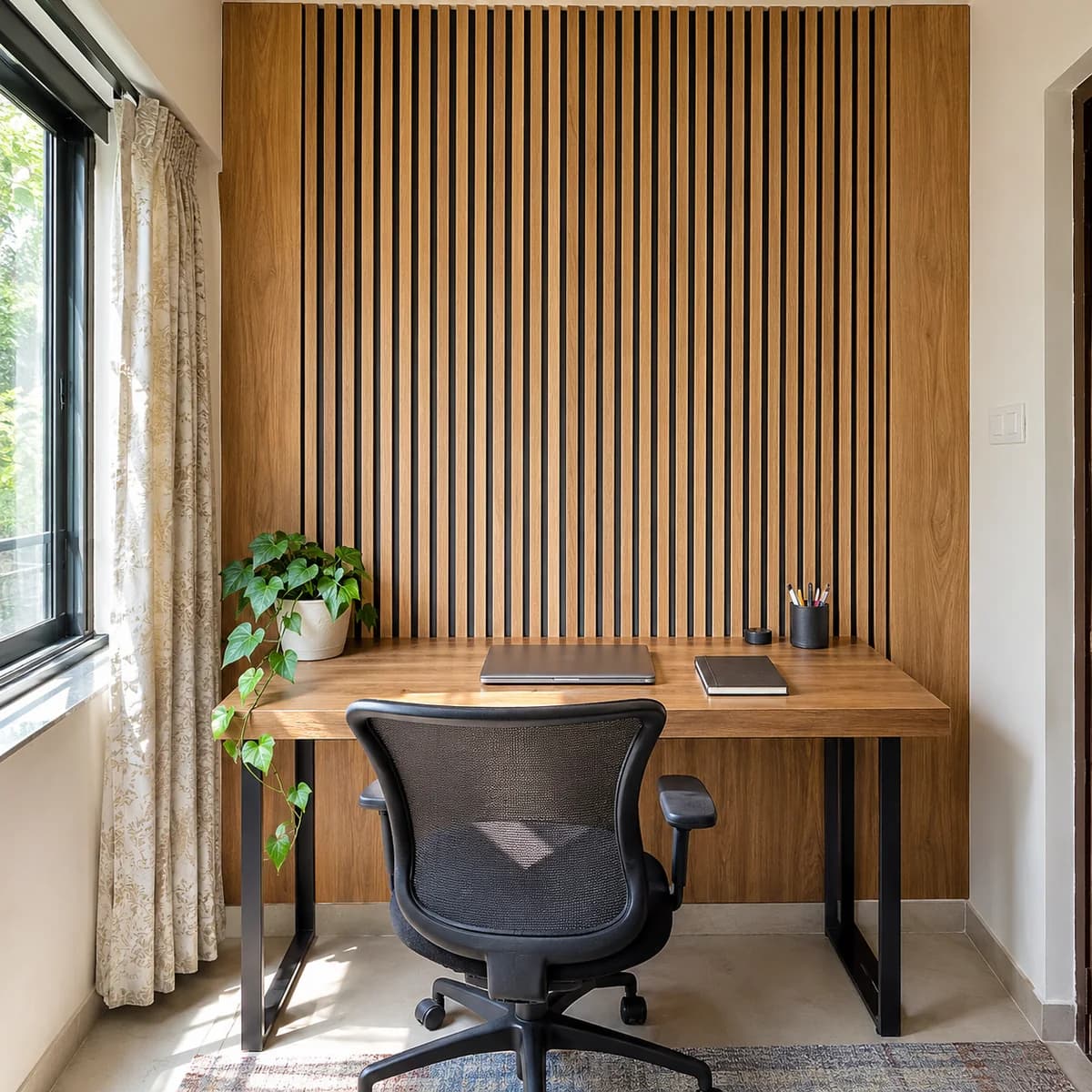
Sit in your chair, open the camera, and the wall it shows is the one to panel. In a Hebbal flat that is usually a bedroom wall given over to a desk. Acoustic slat panels soften the echo in the room, so your voice is clearer on a call. They do not block the flyover's traffic, and we say so rather than promise it.
Open shelves set into the wall give the camera something tidy to look at, with warm light on them. A window behind the desk puts your face in shadow, so the desk is placed to face it where the room allows. Sockets and cable routes are planned before the panels go up.