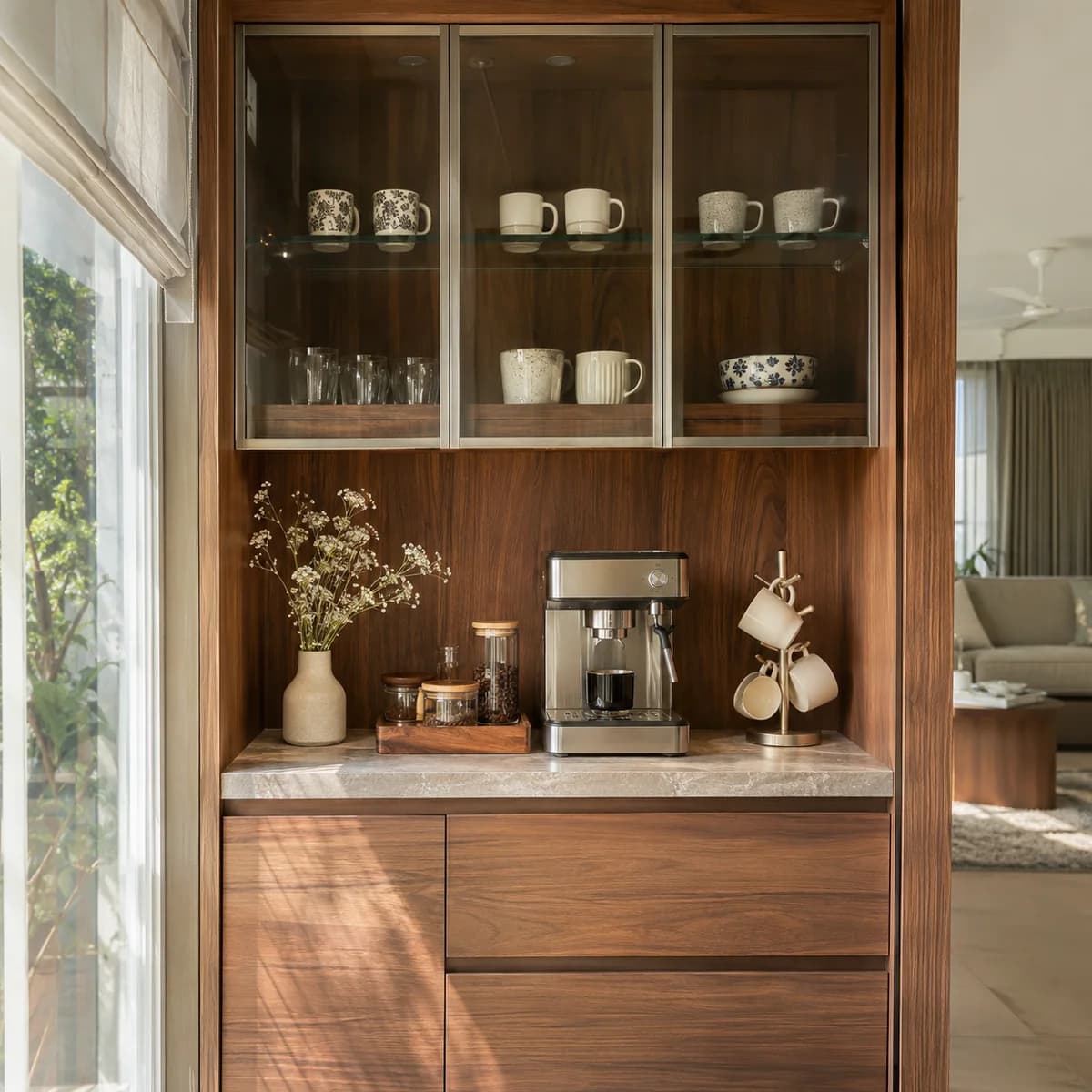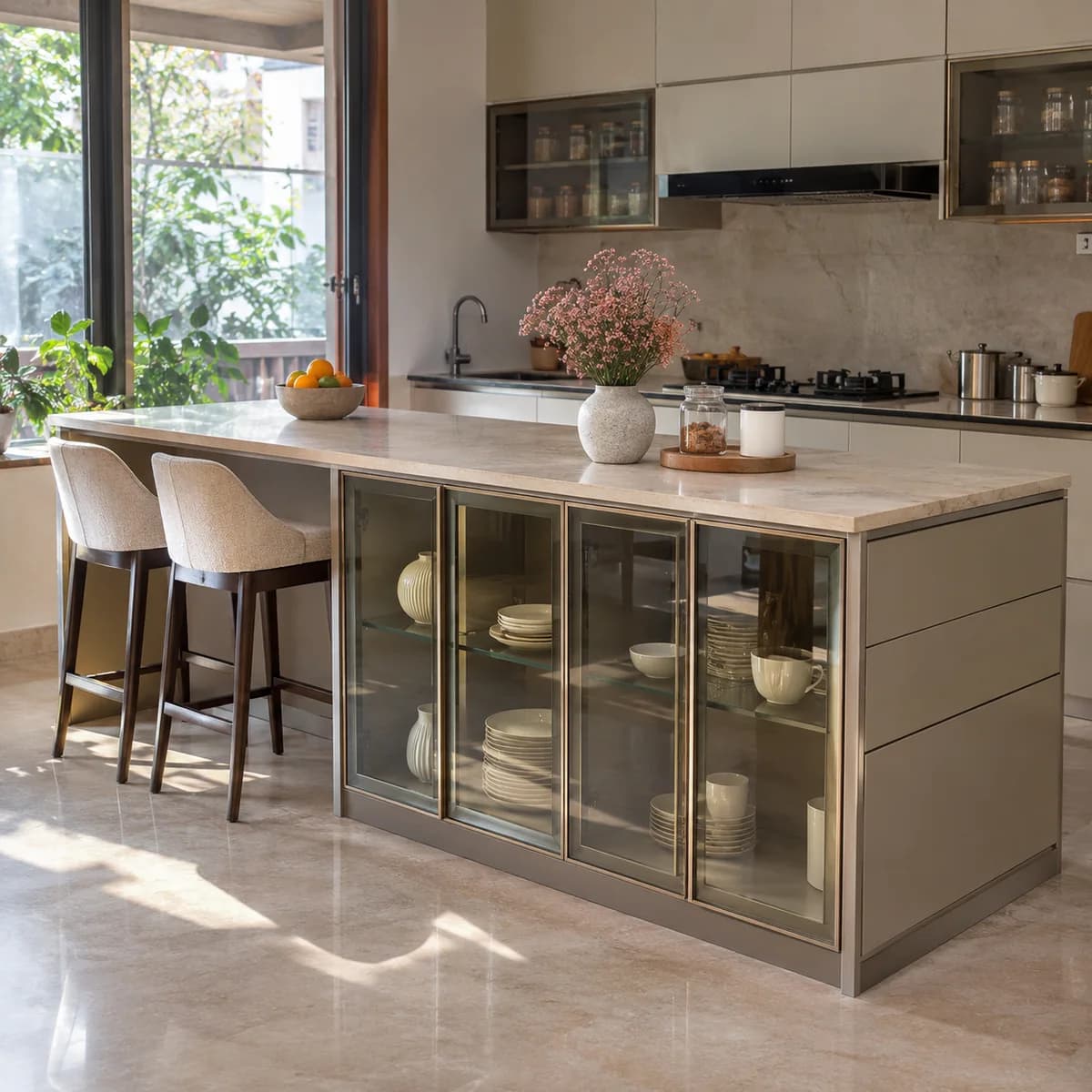
A Banashankari kitchen is a traditional one: it cooks every meal, keeps a month's stock and has a steel almirah that has done years of service. Families here come to Luxy for two things. A glass crockery unit and a pantry that bring the kitchen up to date without rebuilding it, or a full glass and aluminium kitchen when the house itself is being rebuilt.
A modern crockery unit for a traditional Banashankari kitchen
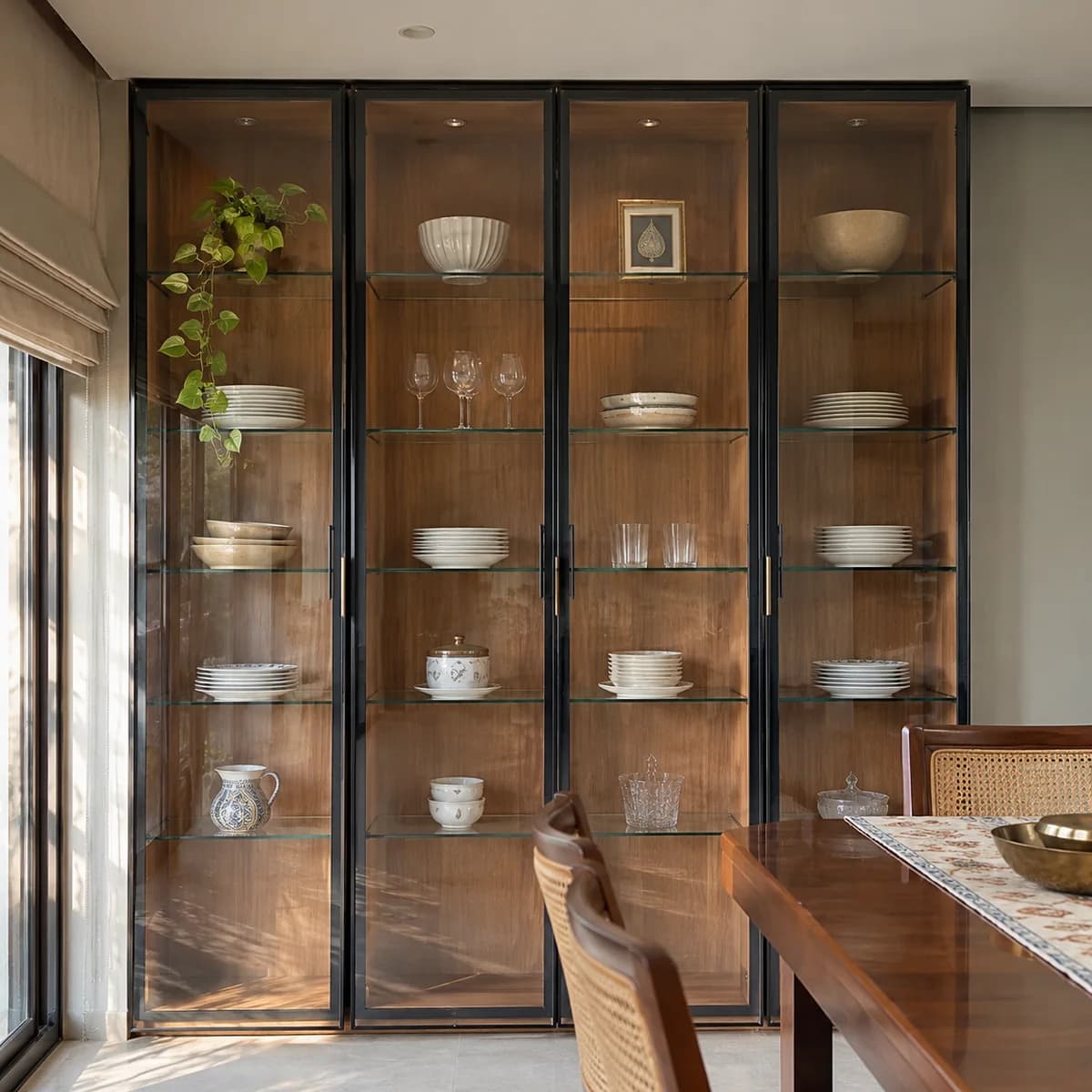
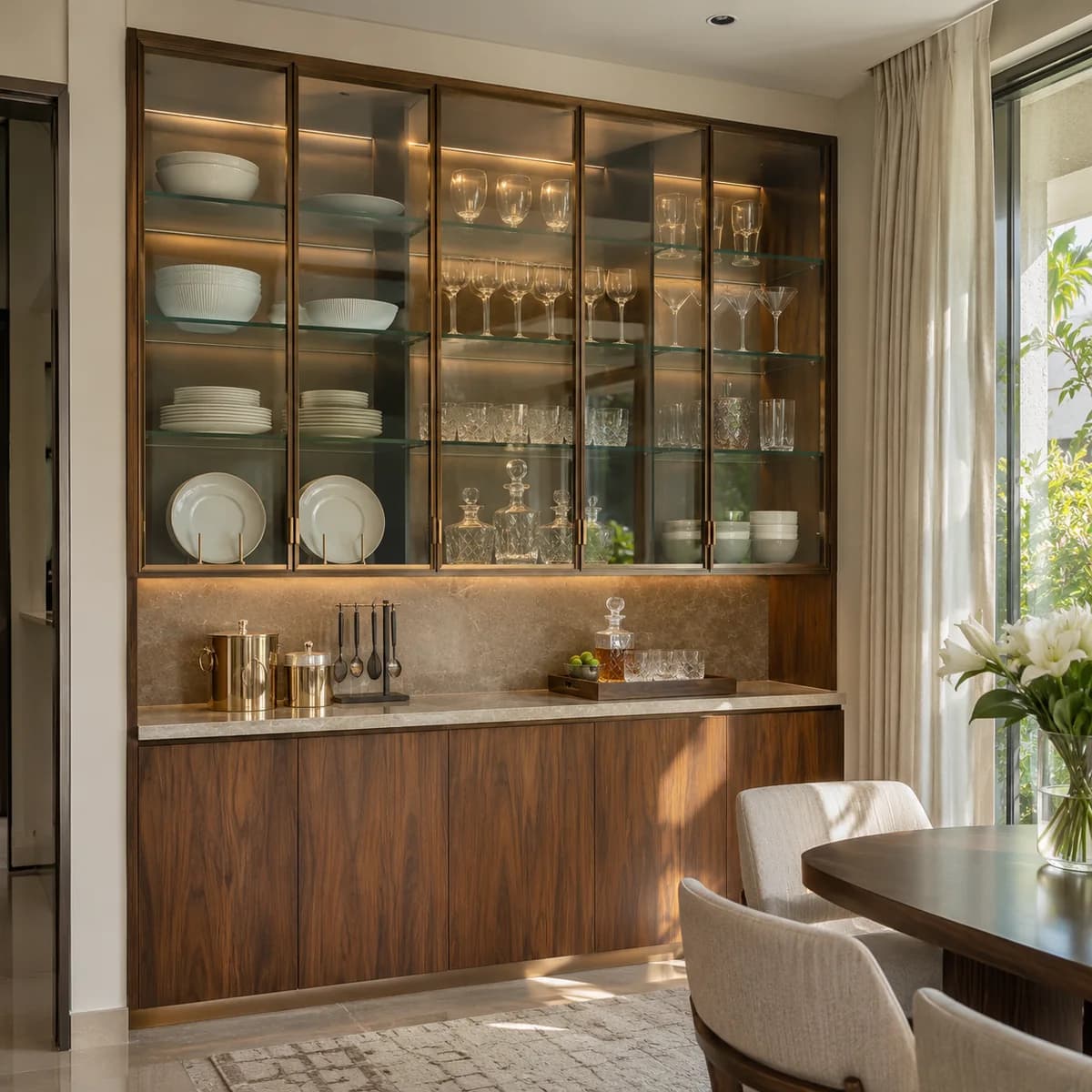
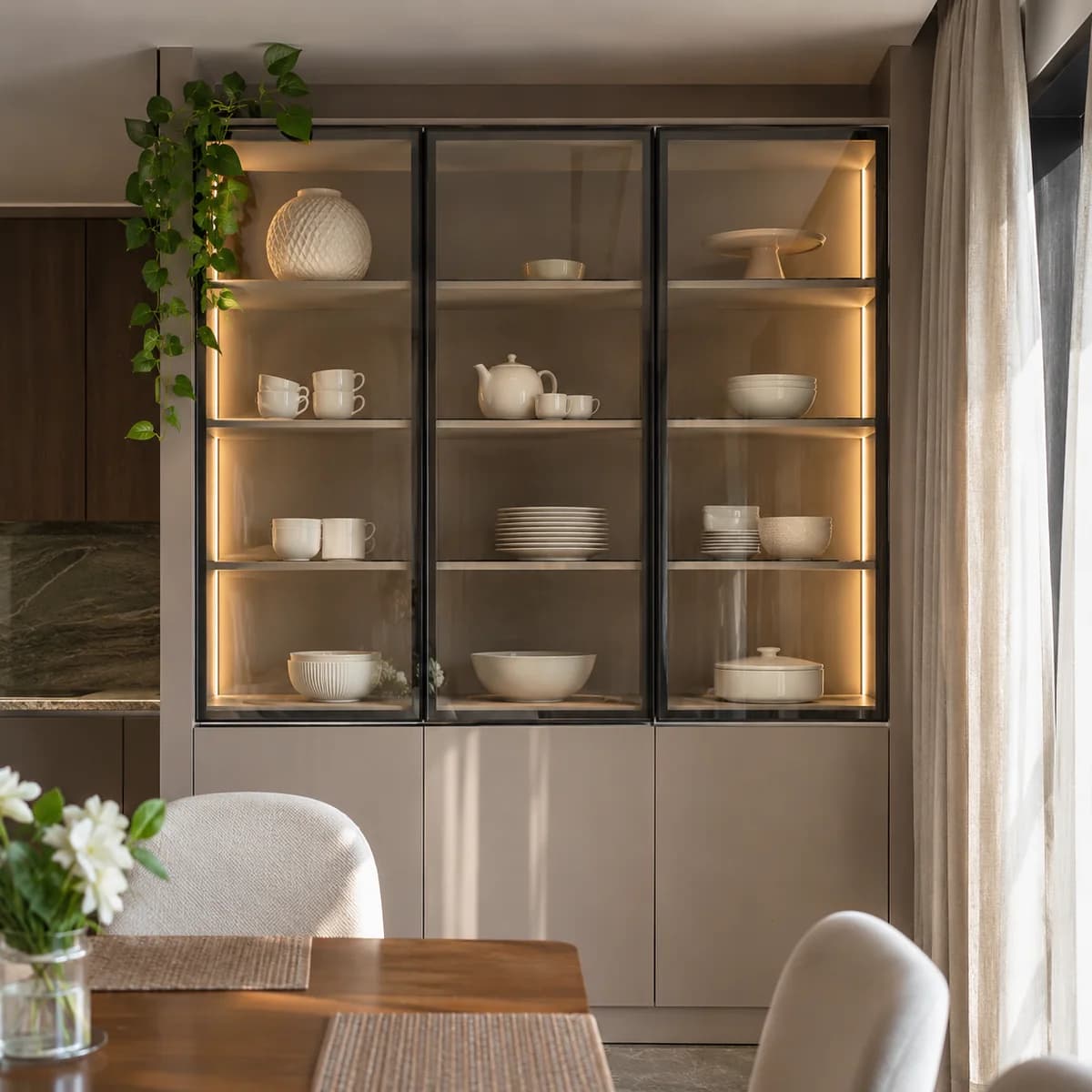
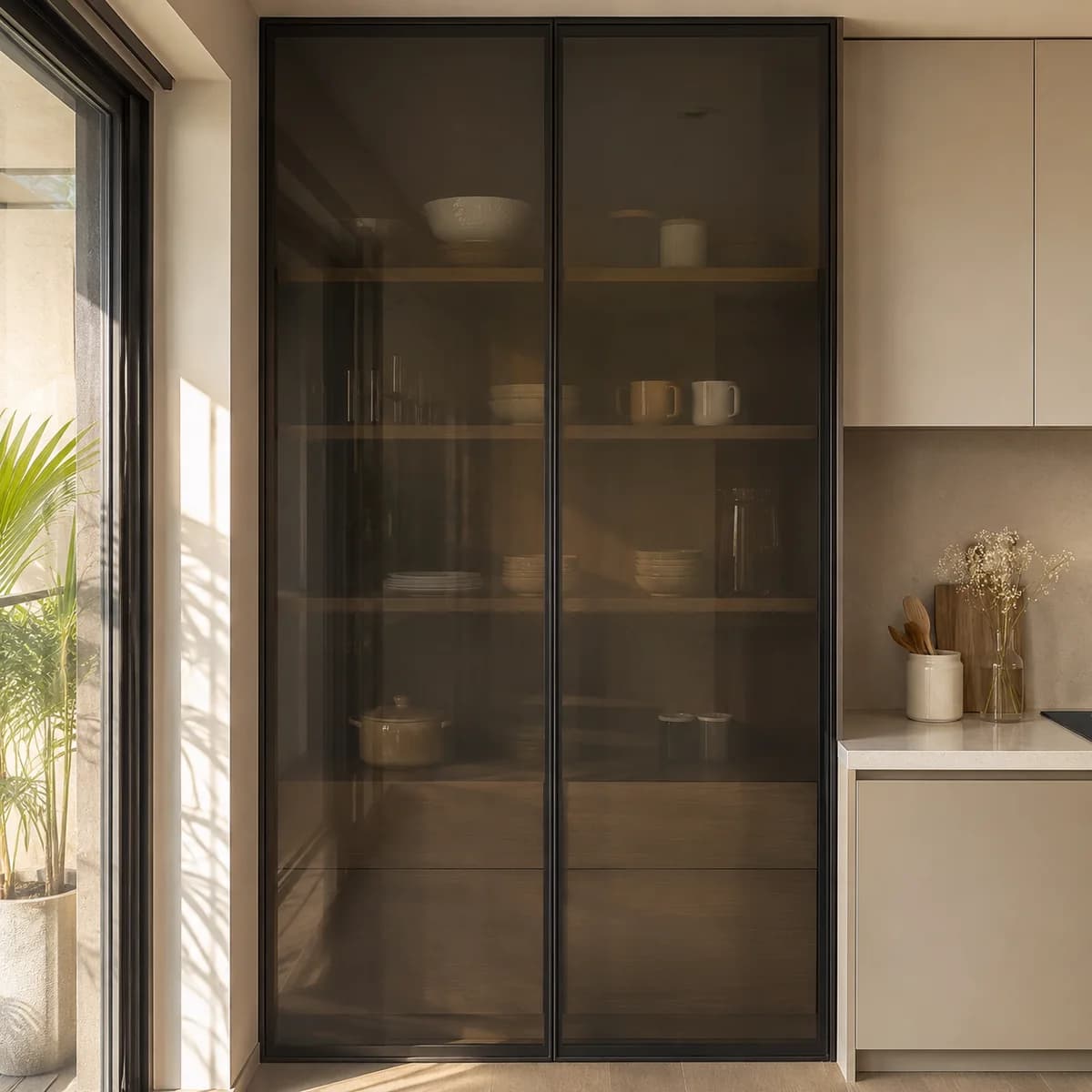
The steel almirah in the dining room is where many Banashankari families keep the good plates, and a tall glass crockery unit replaces it with something seen rather than hidden. Lit shelves hold the steel, the plates and the glassware, with closed cabinets below for the rest. It stands on the dining side, away from the cooking.
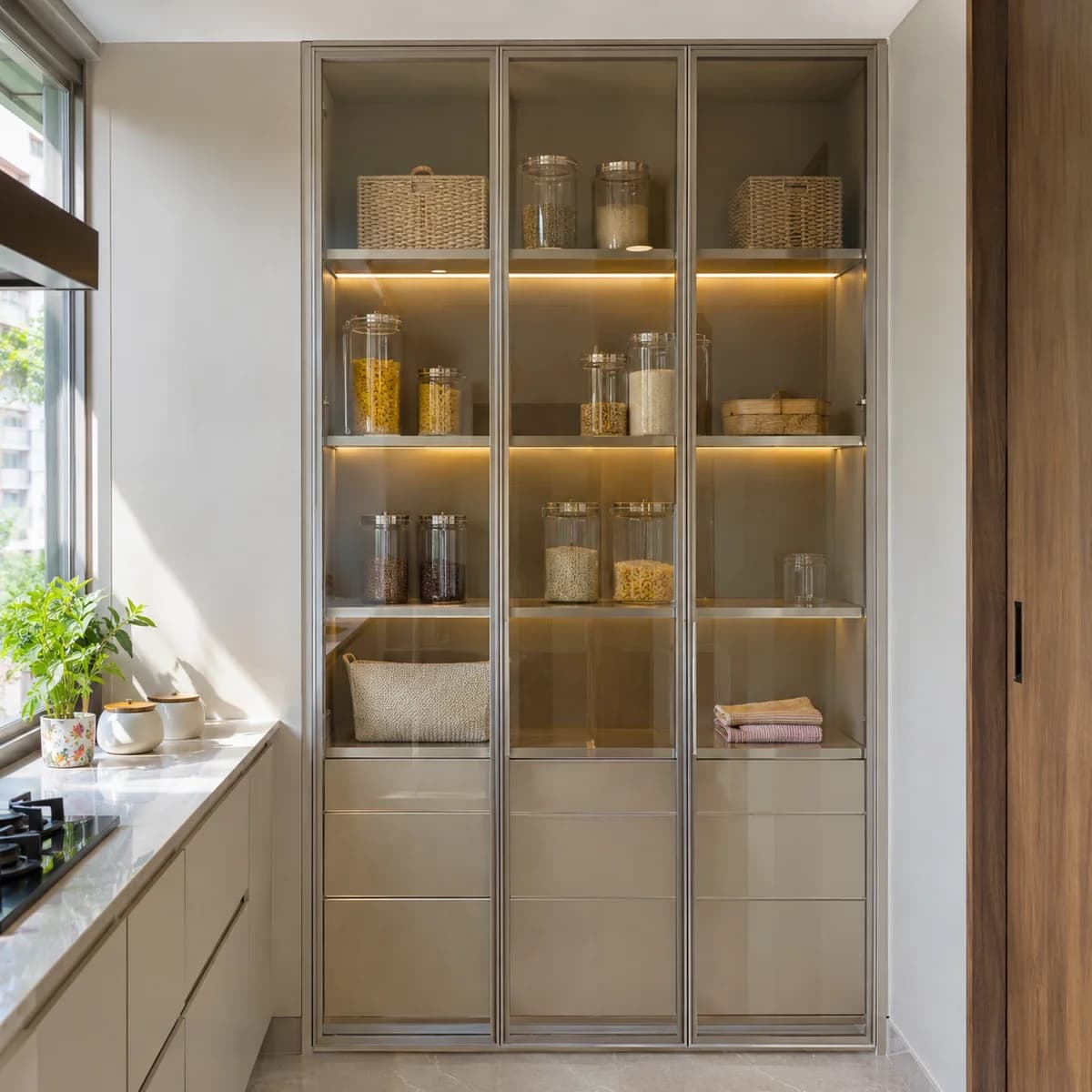
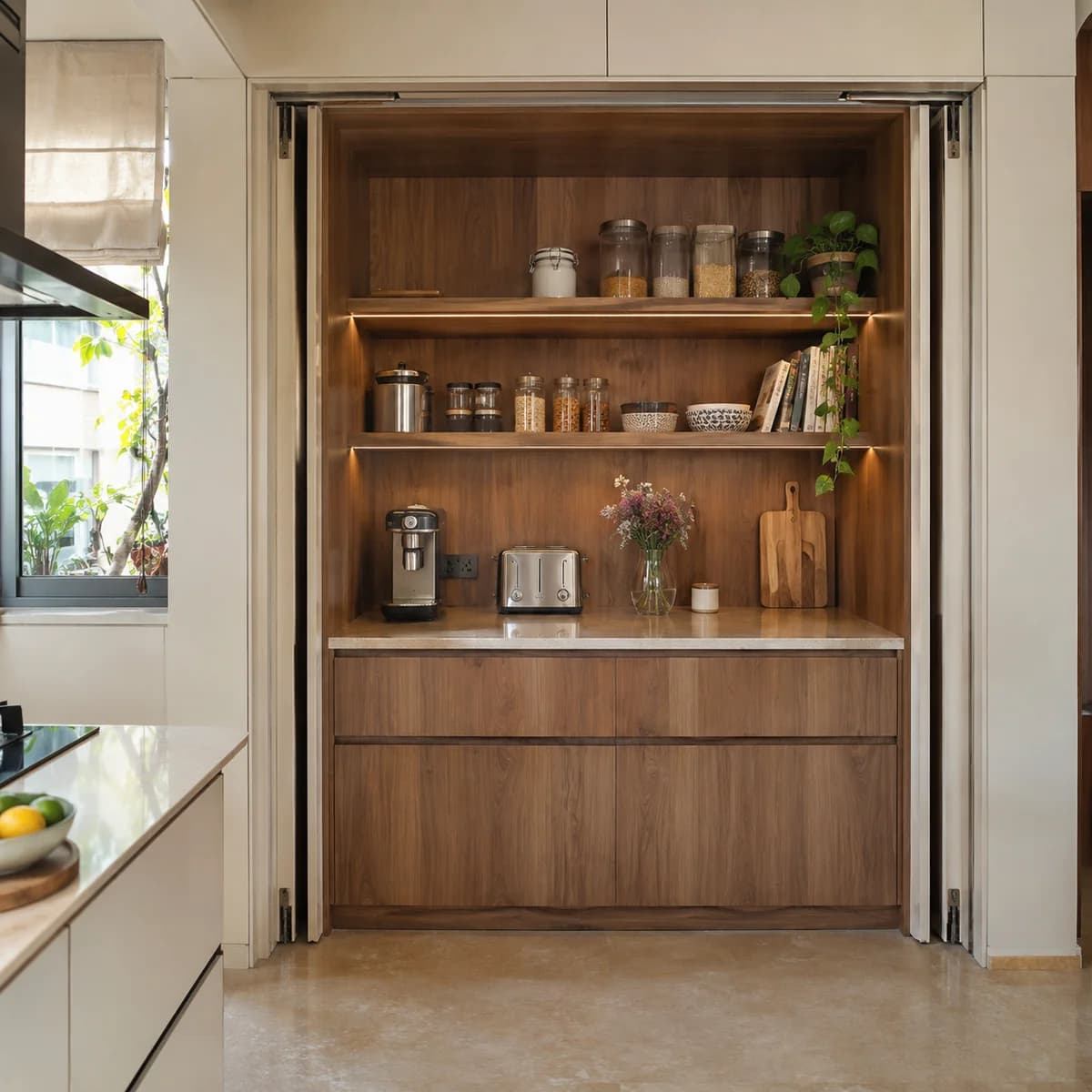
A tall glass pantry in the kitchen takes the rice, the dals and the jars, with baskets low down and lit shelves above, and doors that close fully against dust. Neither needs the kitchen's plumbing touched, so both are fitted in a day or two.
A glass and aluminium kitchen for a rebuilt Banashankari house
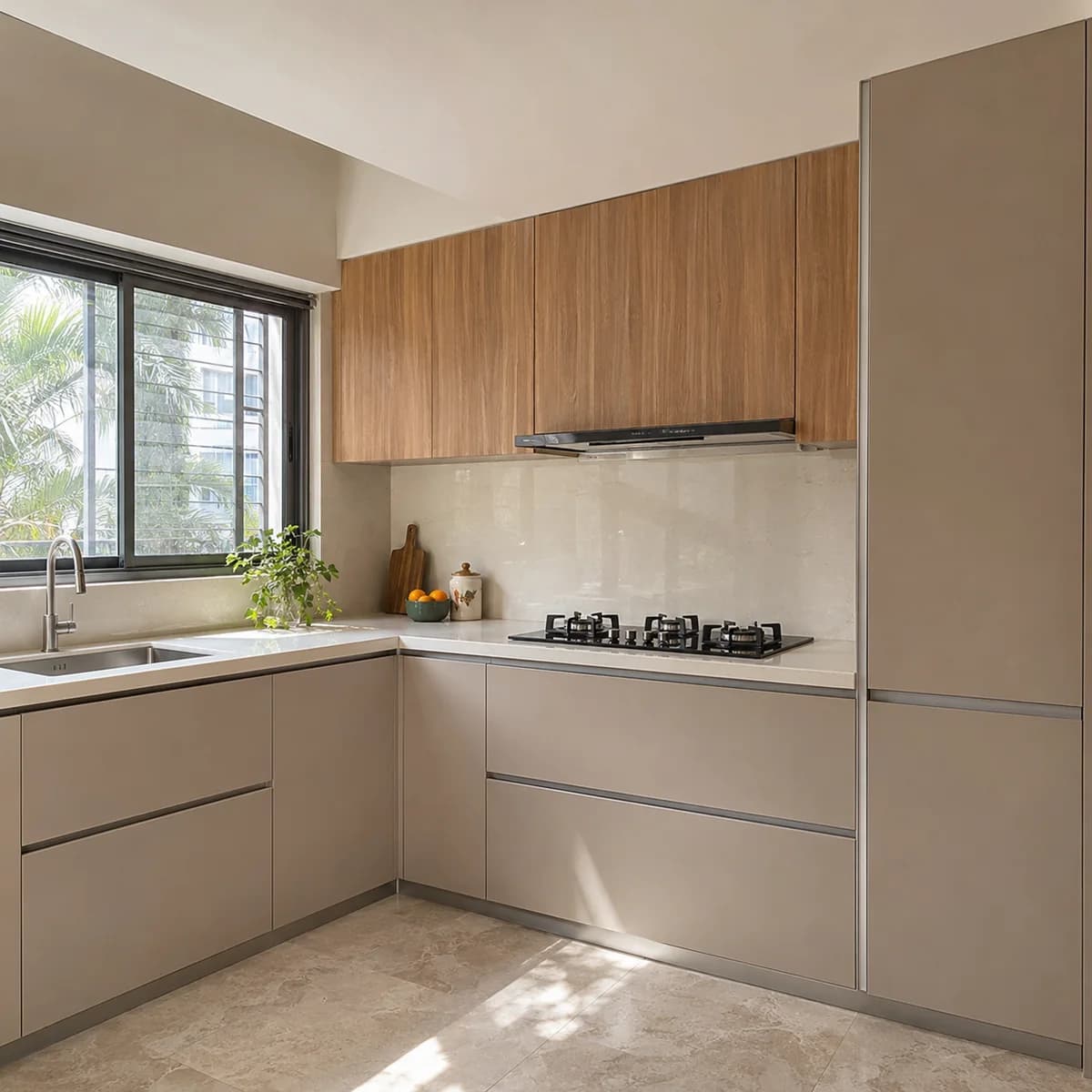
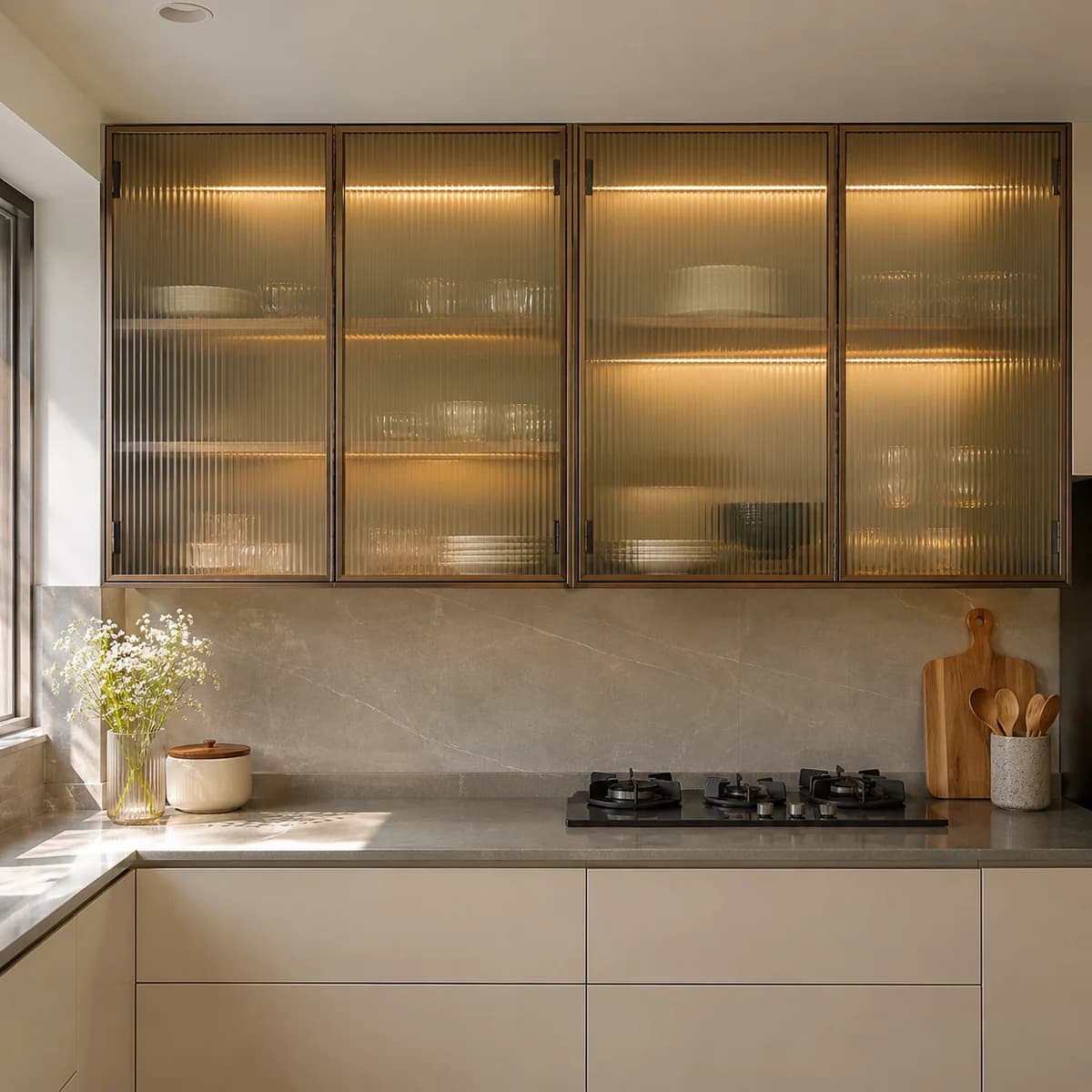
When a Banashankari house is rebuilt, the kitchen is planned fresh and usually opens to the dining room. We plan fluted glass uppers with warm light, matte handleless fronts below, a tall pantry and a crockery unit on the dining side. The hob and chimney section stays as board, because this kitchen will cook three meals a day and the grease is heaviest there.
The points for the sink, the hob and the chimney are fixed during the civil work, and we plan around them. We measure after the flooring and the painting, when the room is at its final size.