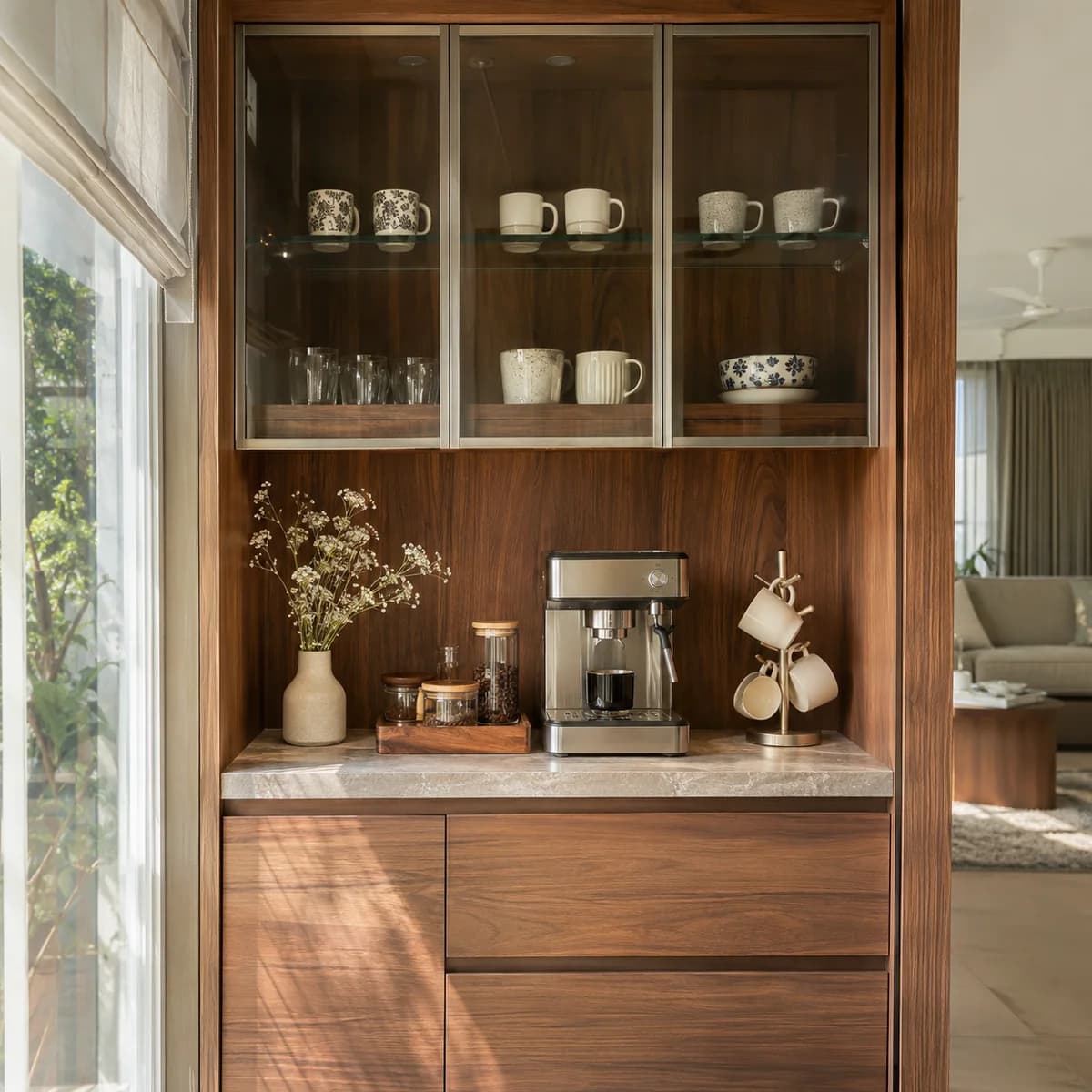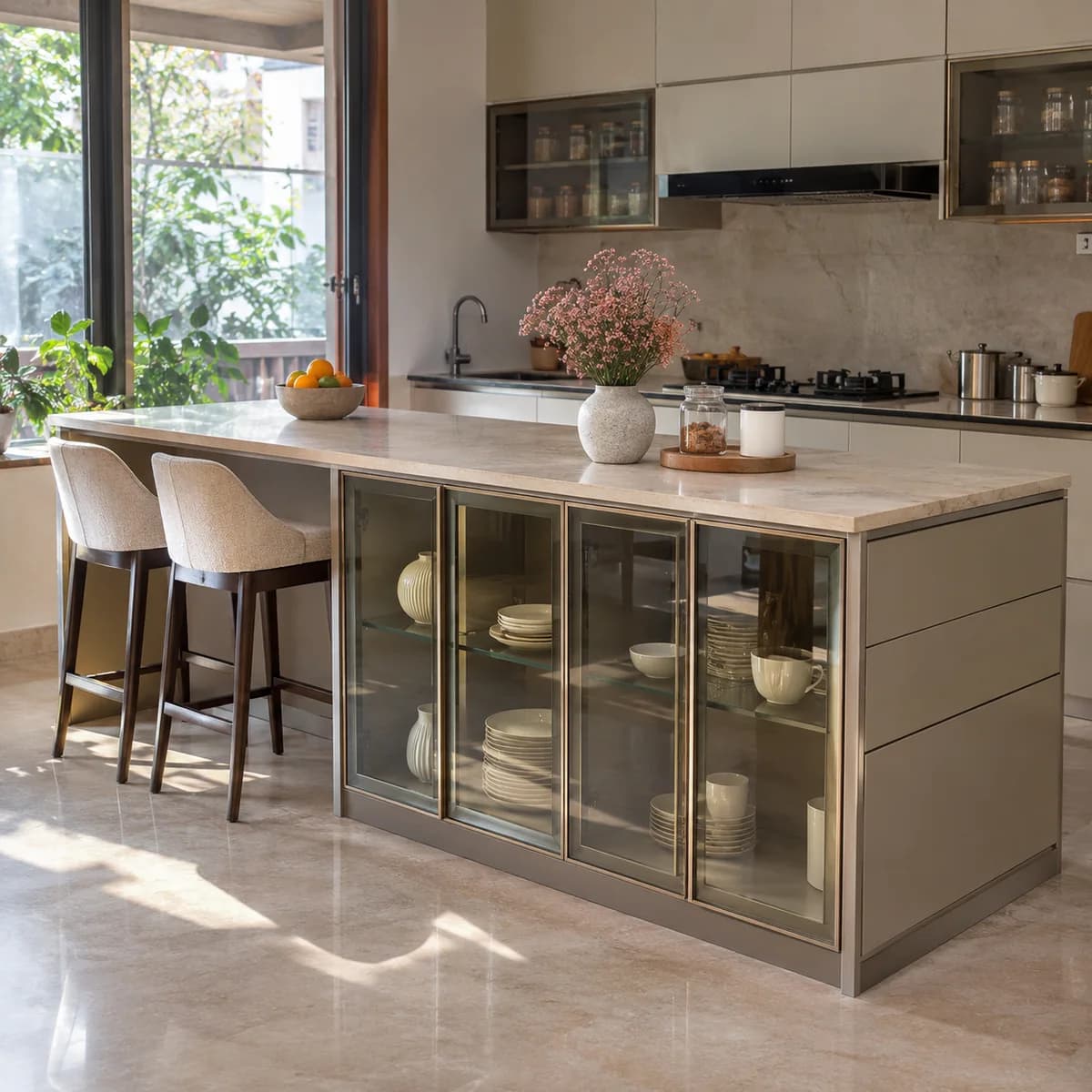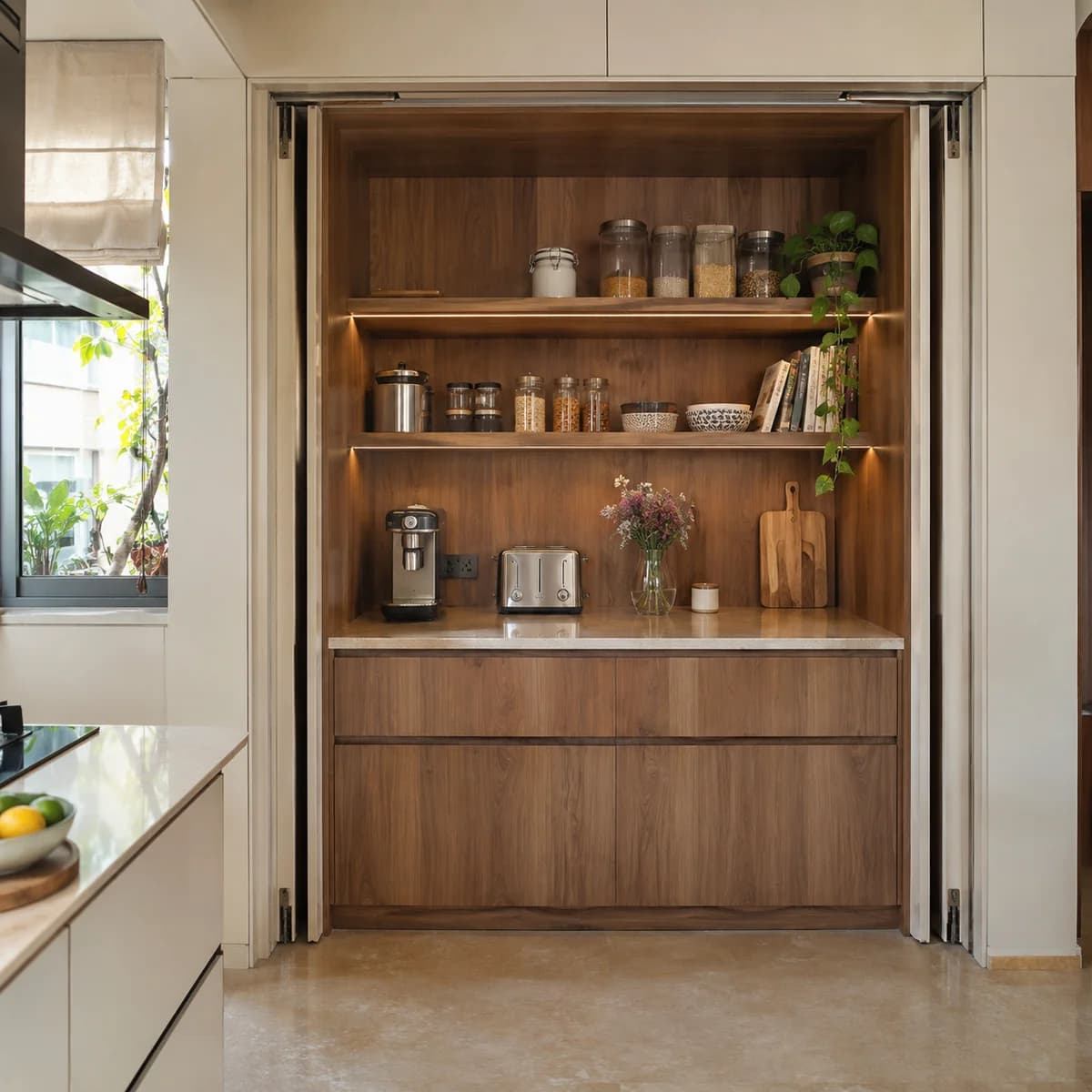
A Malleshwaram kitchen cooks every meal, often for three generations, and it stocks up from the markets on Sampige Road by the month. It is being rebuilt along with the house, or refitted in place. Luxy plans glass and aluminium kitchens for it that stand up to daily cooking and look like furniture from the dining room.
Malleshwaram kitchens that cook every day
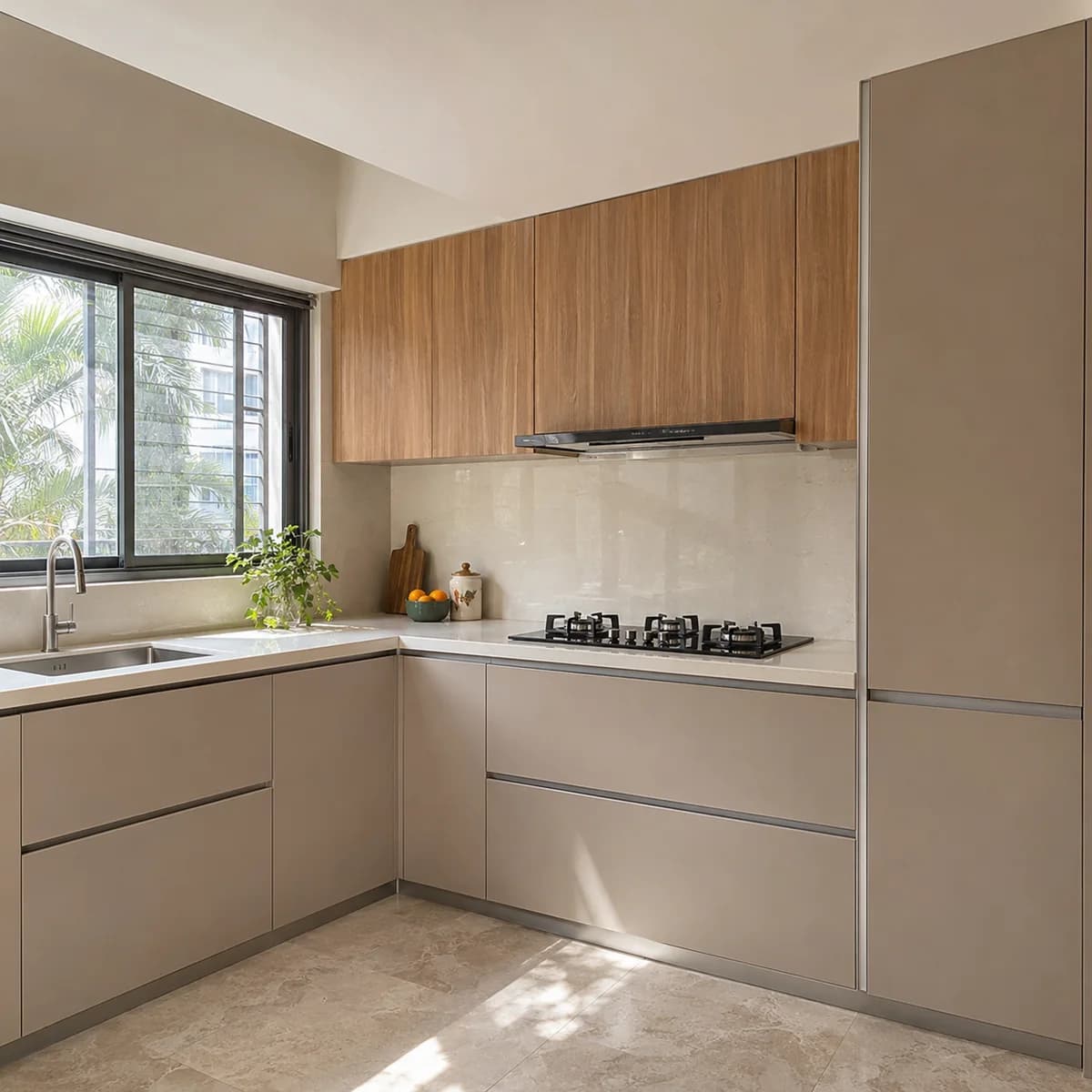
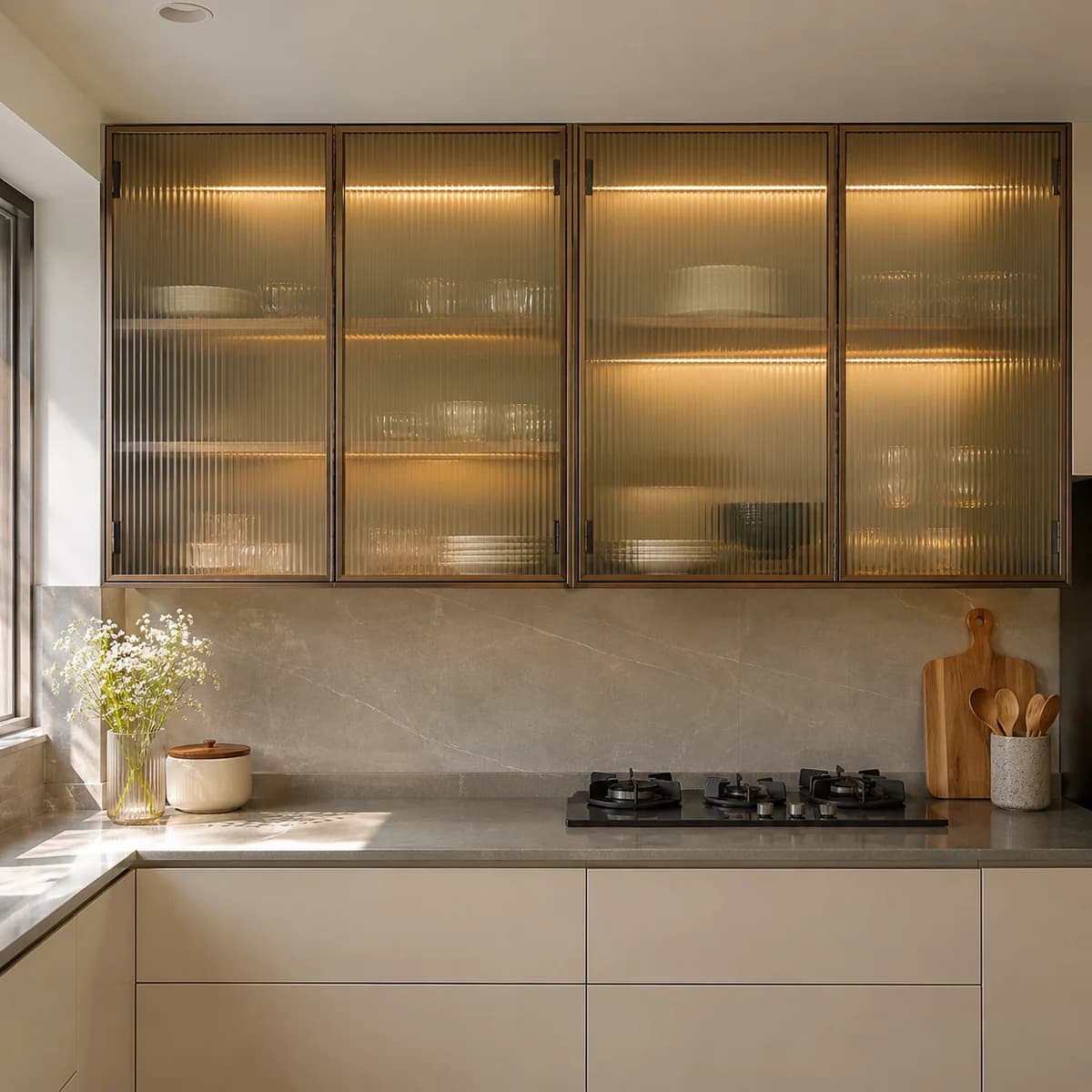
A kitchen that cooks this much puts oil in the air, and the glass is chosen for it. Fluted glass uppers hide the fine film between wipes and blur the packets behind them. The cabinets over the hob stay as board or as the chimney. A wipe with a mild cleaner along the ribs clears the glass. Matte handleless fronts below hide splashes.
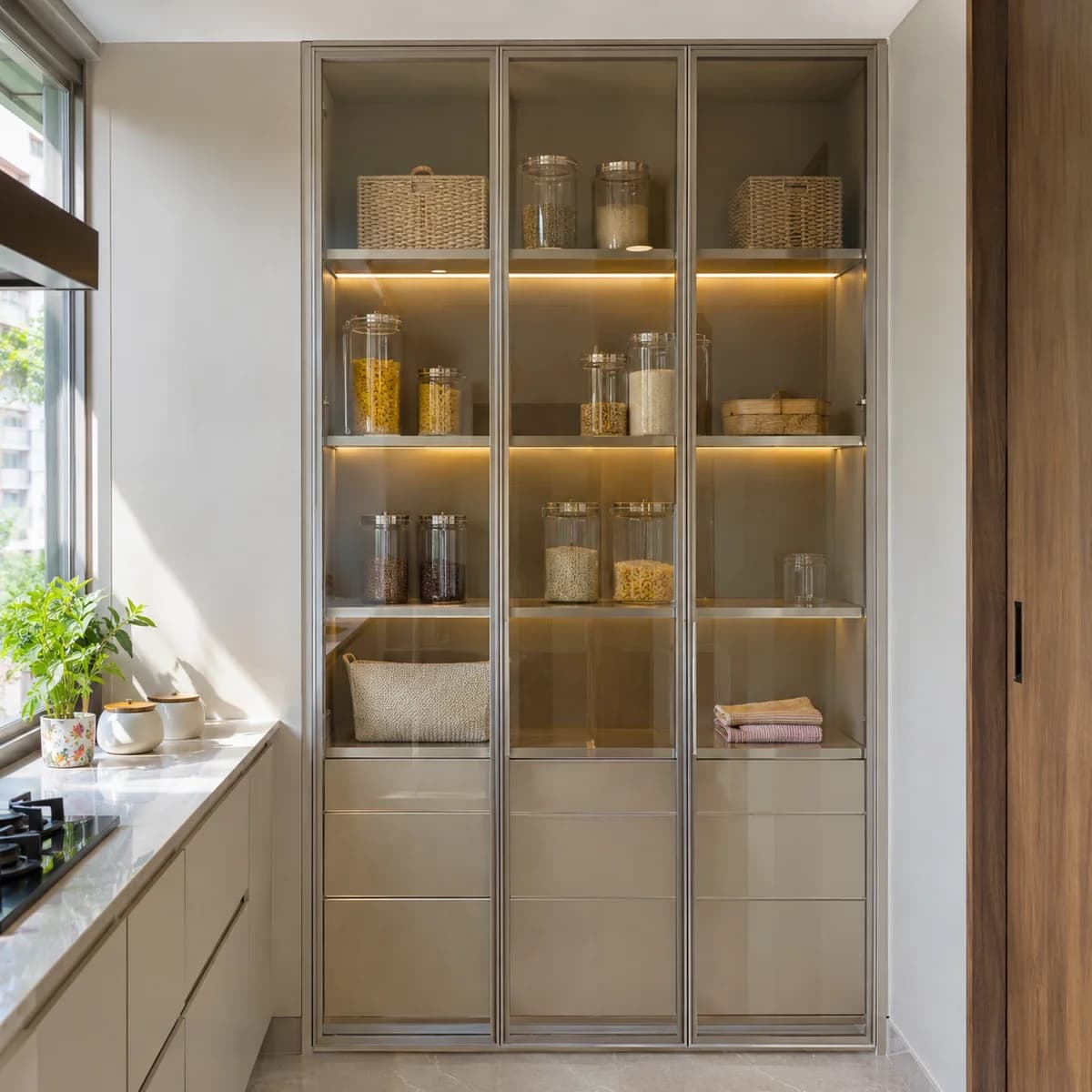
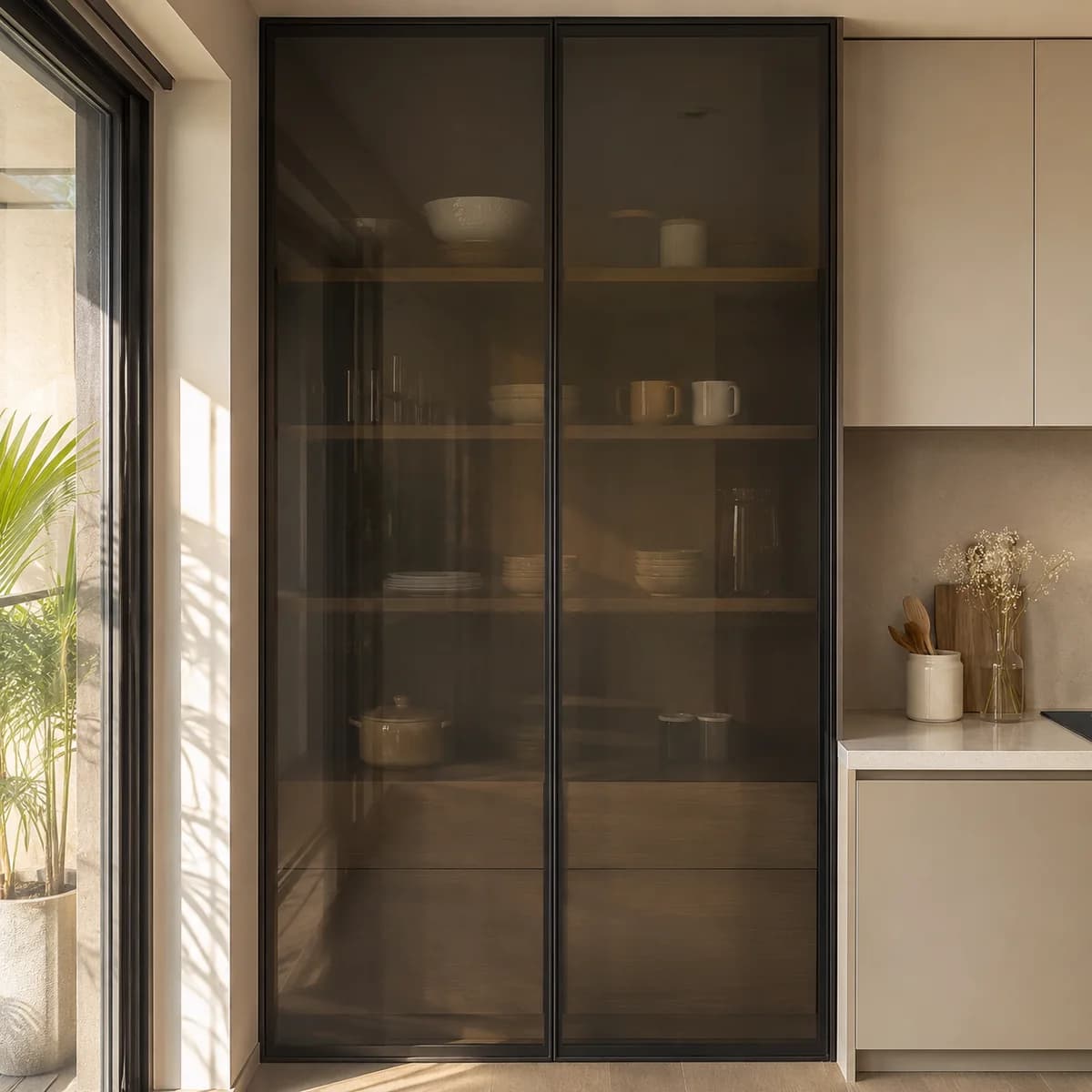
A tall unit takes the month's rice, dals and jars, with baskets low down and lit shelves above, and doors that close fully against the dust of a busy street. The plumbing stays where it is in a refit, and the units are planned around the sink and the hob.
Crockery units for the dining room in a Malleshwaram house
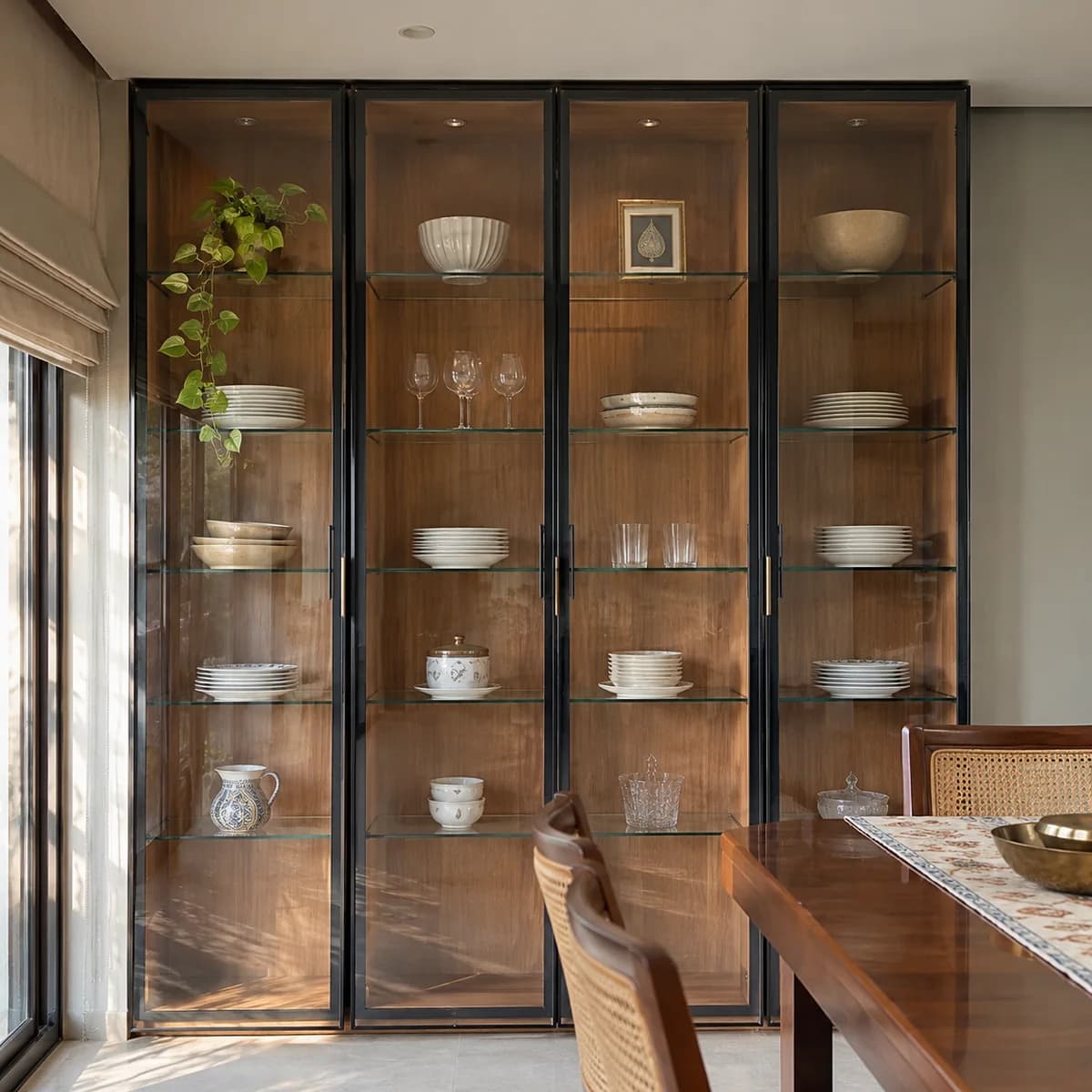
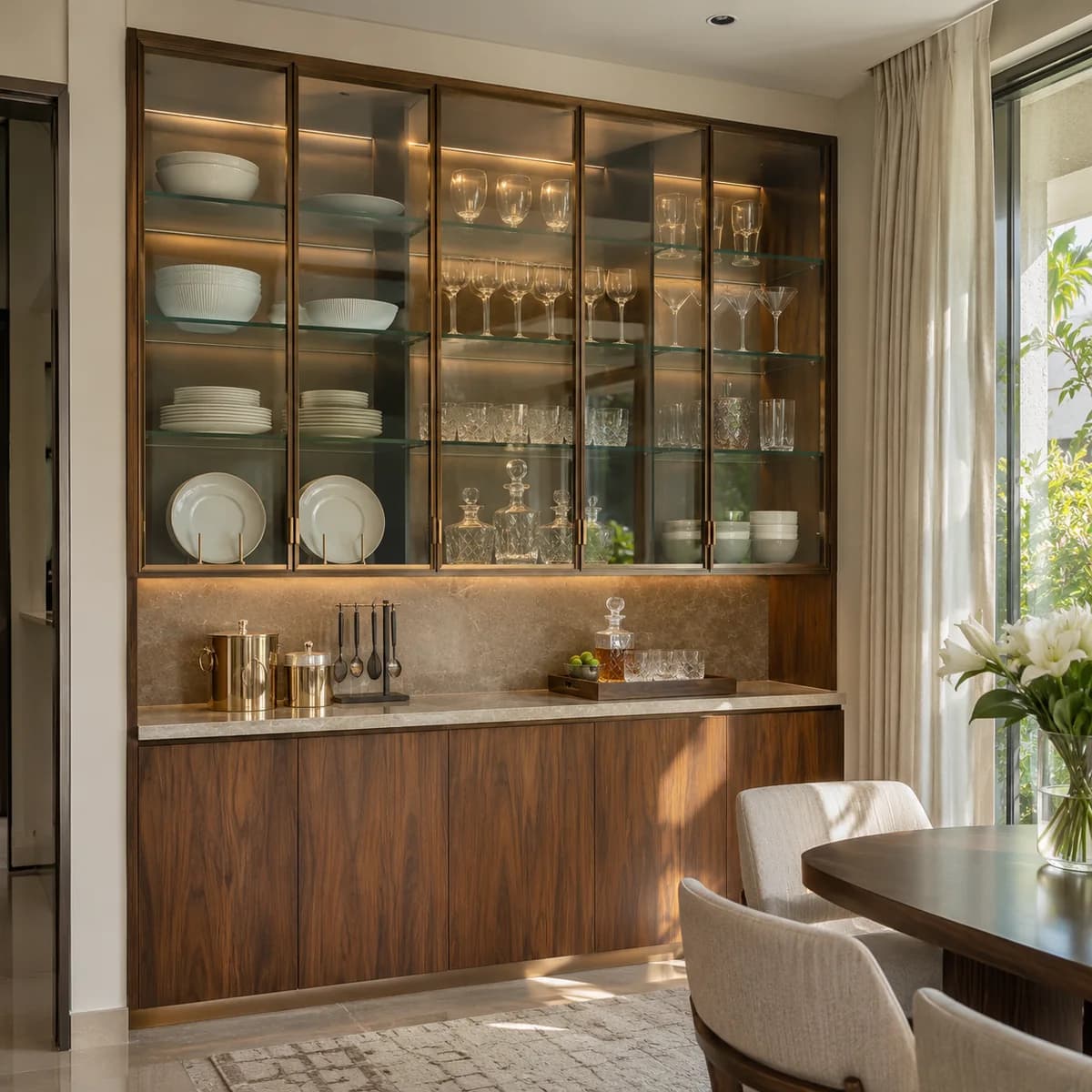
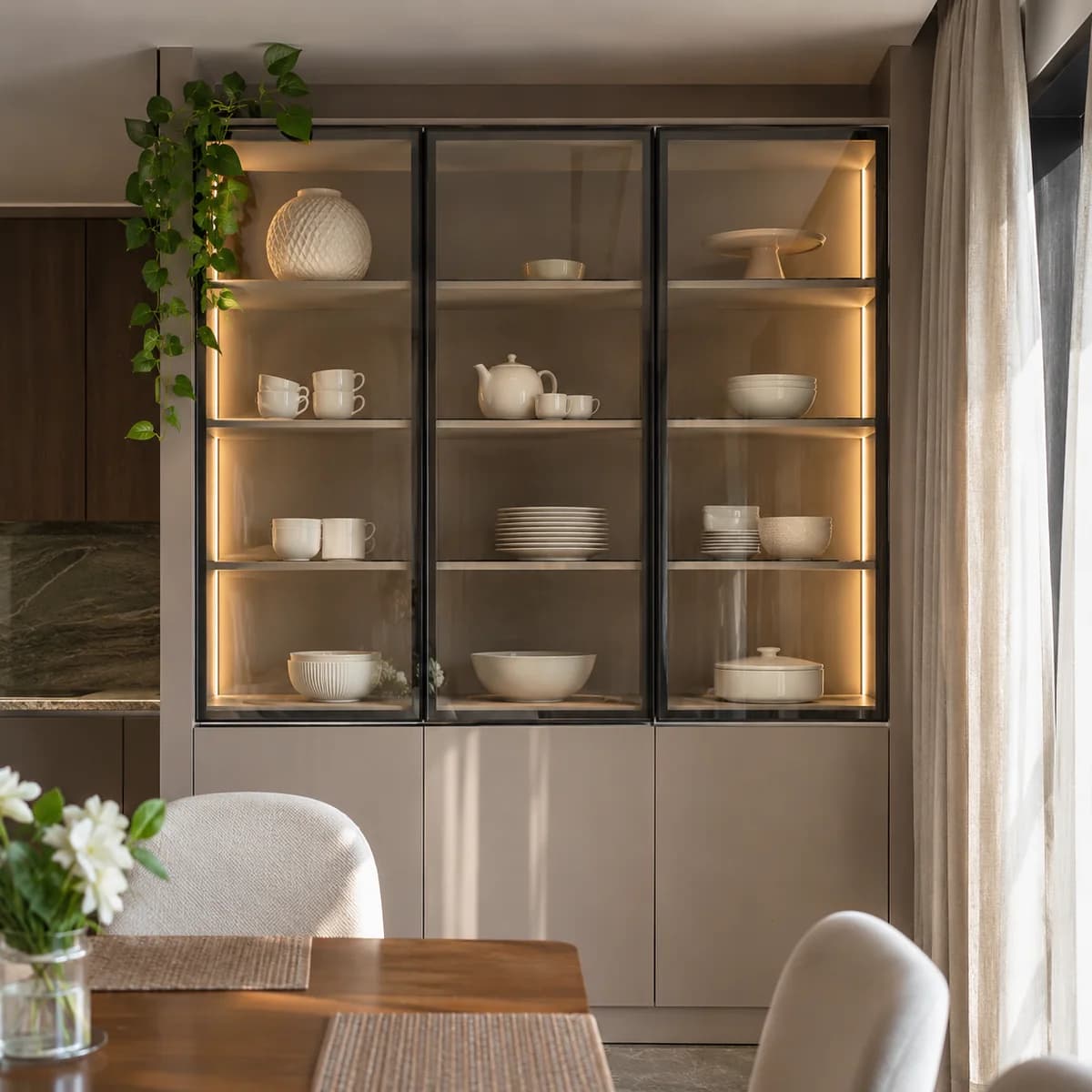
The dining room in a rebuilt Malleshwaram house usually opens to the kitchen, and the wall between is where a tall glass crockery unit belongs. It holds the steel, the good plates and the glassware a family brings out for festivals, lit from inside and seen from the table. Closed cabinets below take the rest.
In a narrow house the unit is made in sections that clear the stair's turn and are joined in the room. It runs to the high ceiling, with a loft above for the vessels used once a year.