In this guide
- How to reduce heat from windows: the short answer
- How heat gets in through a window in summer
- Free ways to stop heat from windows
- Shading outside the window or inside: which cuts sun heat more
- Window films and blinds for heat: an honest look
- How to reduce heat from glass windows with better glass
- Sealing window gaps so the AC air stays in
- Top floors, balconies and other heat that is not from the window
- Mistakes people make when cutting heat from windows
- The order of work for a cooler room in summer
Key takeaways
- Stop the sun before it reaches the glass. Shade outside the window works better than anything fitted inside.
- Heat comes two ways: sunshine through glass and hot air through gaps. Each needs its own fix.
- Seal the gaps if you run an AC. A leaking window lets cooled air out and hot air in all day.
- Curtains, blinds and film all help, and none is our trade. We explain them fairly so you can compare.
- Glass comes last. Reflective or double glazed glass helps most on windows that take hours of direct sun.
How to reduce heat from windows: the short answer
To reduce heat from windows, first find out which kind of heat you have. If the sun shines on the glass, shade it, from outside if you can. If the room is hot even without direct sun, look for gaps that leak air. Shade handles the sun, sealing handles the hot air, and better glass handles what is left.
The order matters because the costs are very different. Closing a curtain is free. Sealing gaps is a small repair. New glass is the biggest spend. Many homes become comfortable on the first two alone.
We are a glass, aluminium and uPVC company, so some of the best answers here are not ours to sell. Outside blinds, awnings, curtains and window film belong to other trades. They are still part of an honest answer, so they are all in this guide.
How heat gets in through a window in summer
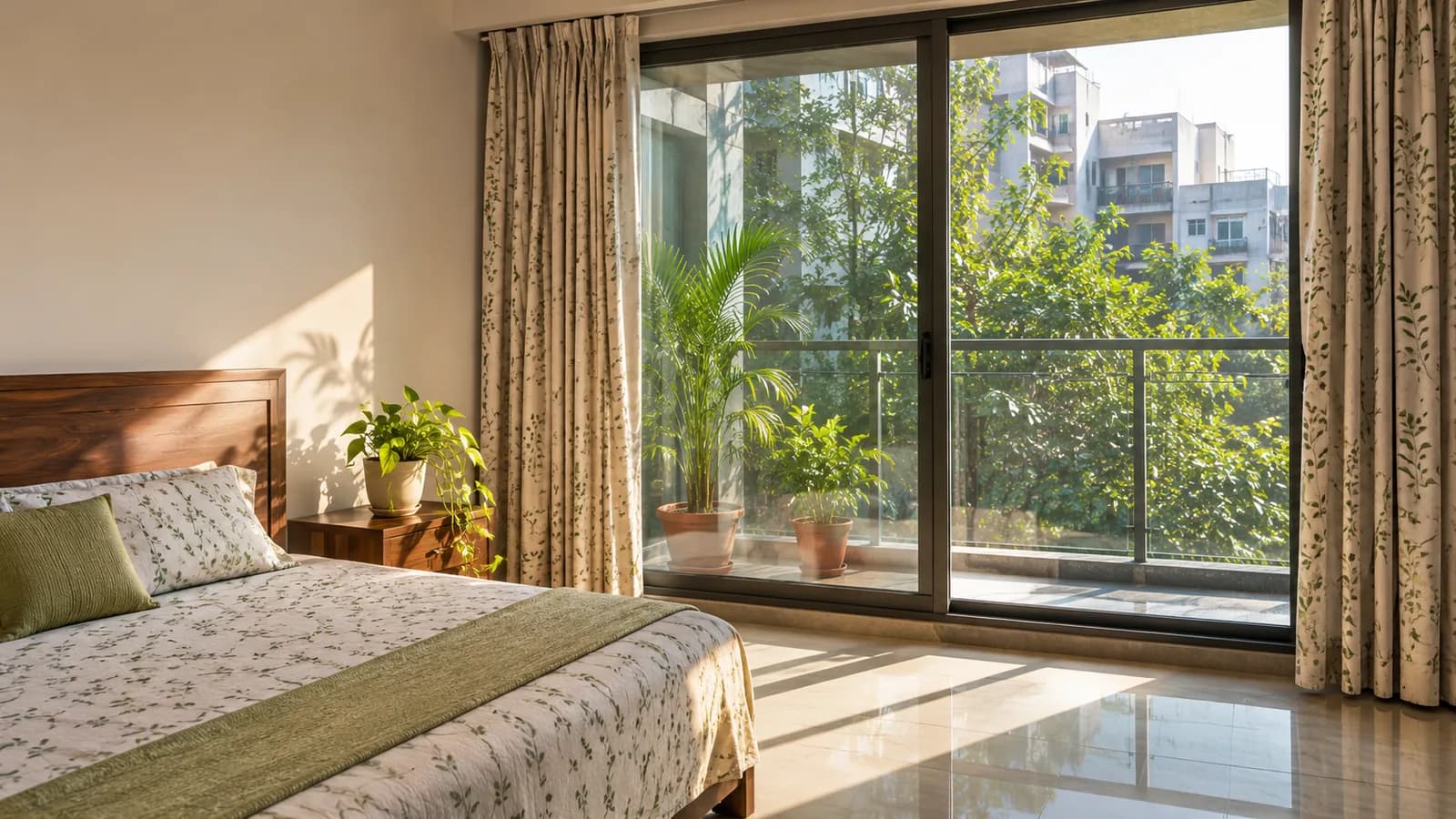
- Direct sun. Sunlight passes through clear glass and warms the floor, the bed and the walls. Those surfaces then warm the room. This is usually the largest source on any window the sun reaches.
- Hot air through gaps. Worn seals and an open frame joint let hot outside air in. They let your cooled air out at the same time.
- Heat through the glass and frame. A single pane and a plain aluminium frame get hot and pass that heat inside, even in shade. This path is slower than the other two.
The direction of the window decides a lot. In most of India, west-facing windows take low afternoon sun when the day is already at its hottest. East-facing windows take the morning sun. South-facing windows usually get high sun, which a small overhang can block. North-facing windows usually get the least.
Free ways to stop heat from windows
- Close early. Shut the windows and curtains on the sunny side before the sun reaches them. Closing after the room is hot helps much less.
- Air the house when it is cooler outside. Open windows on two sides in the late evening and early morning. Mesh on the windows lets you do this without insects. See window mosquito net and mesh.
- Turn the pale side out. A curtain with a white or light lining facing the glass sends back more sun than a dark one.
- Use the balcony. Tall plants or a drying sheet on the balcony can shade the glass door behind them for part of the day.
- Lock sliding windows. A locked shutter sits tighter against its seals and leaks less air.
These habits cost nothing, and they also show you which windows matter. The window that still heats the room after all this is the one to spend on.
Shading outside the window or inside: which cuts sun heat more
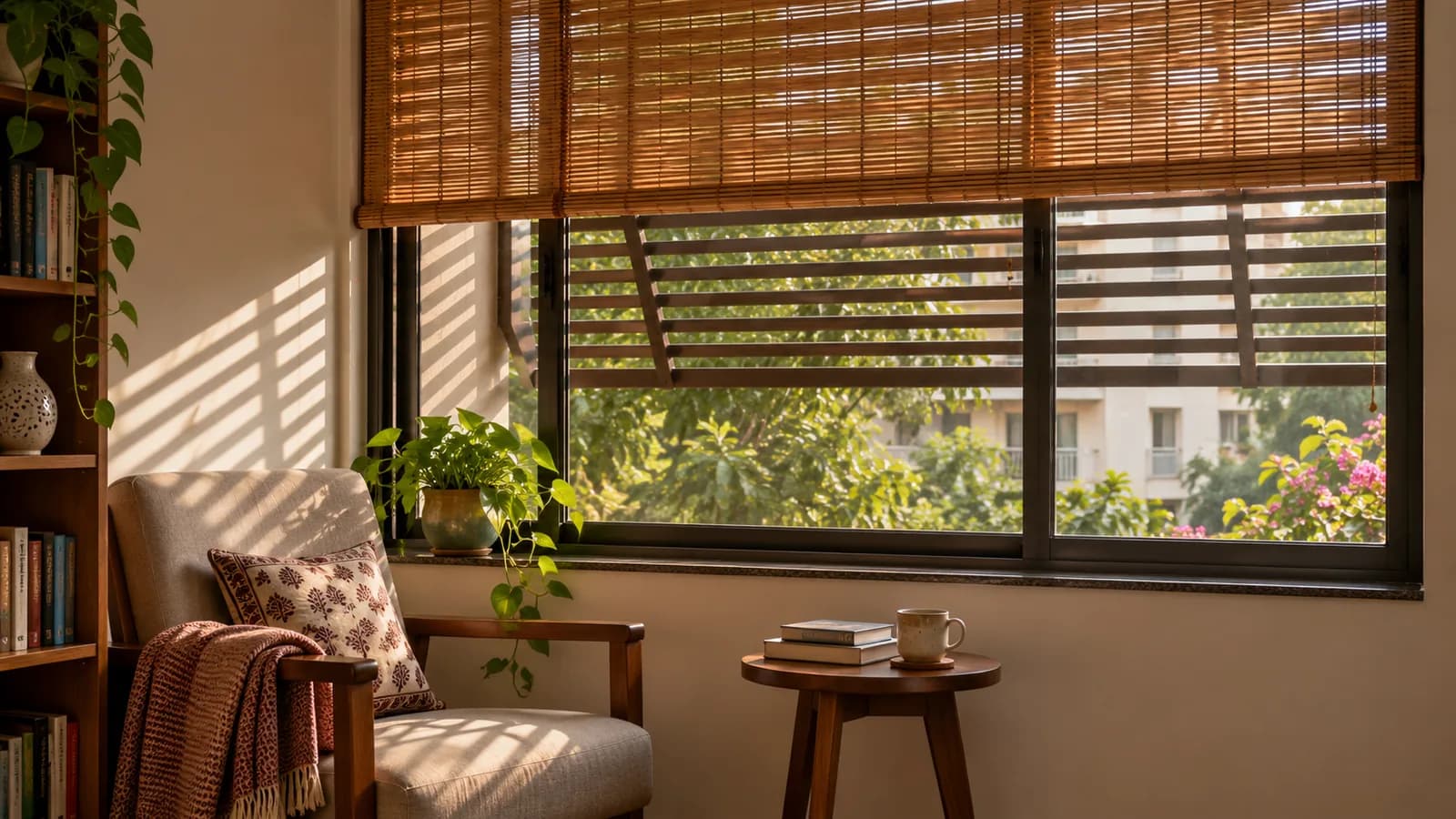
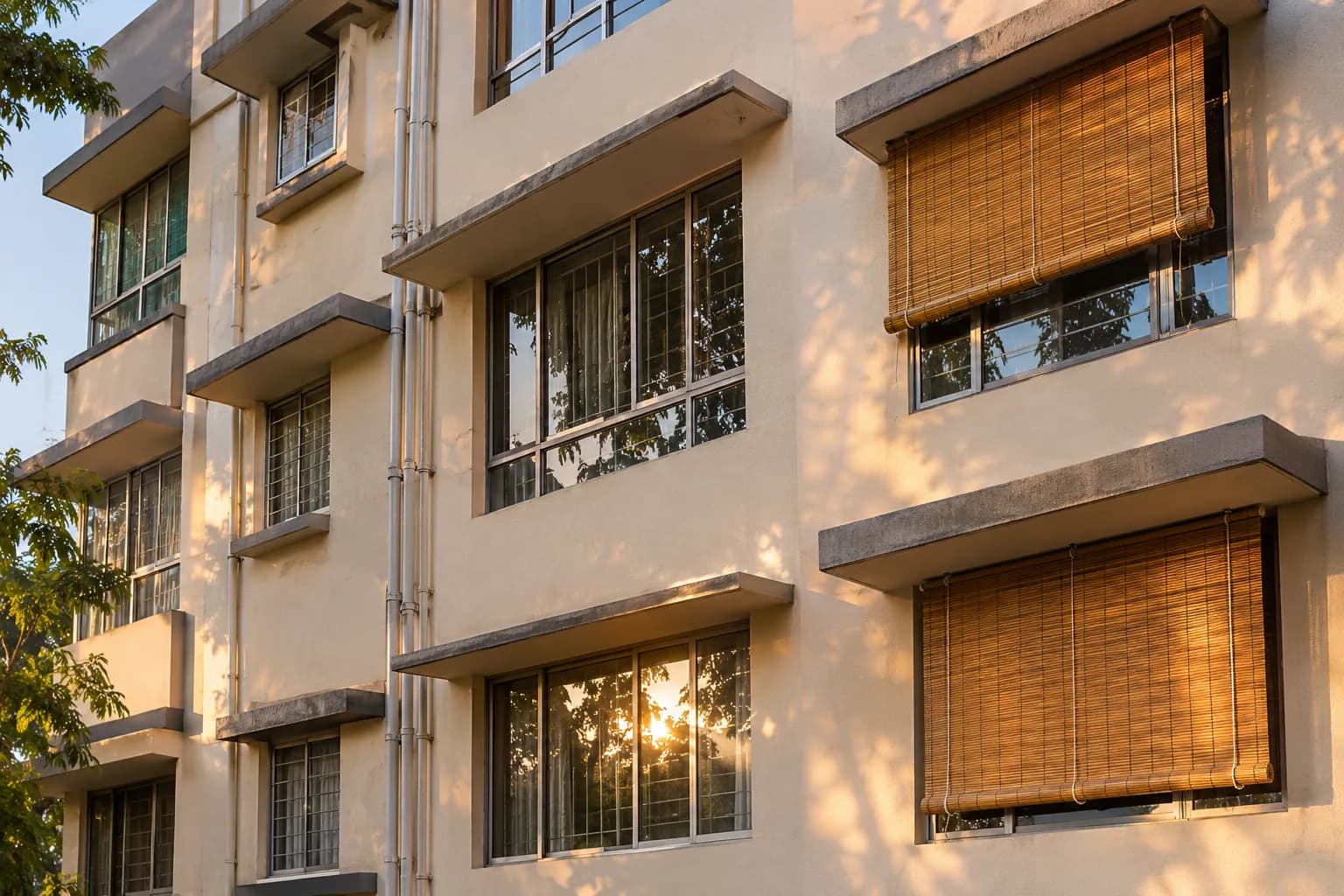
Outside shade wins. When the shade is outside, the sun's heat stays outside. When a curtain is inside, the sun has already passed through the glass. The curtain gets warm and gives part of that heat to the room. A shade outside the glass stops sun heat before it enters; a curtain inside can only slow it down.
| Shade | Where it sits | How well it works | Our trade? |
|---|---|---|---|
| Chajja or fixed sunshade | Outside, above the window | Good against high sun; weak against low west sun | No, this is building work |
| Awning or outdoor blind | Outside | Good, and it can be rolled away | No |
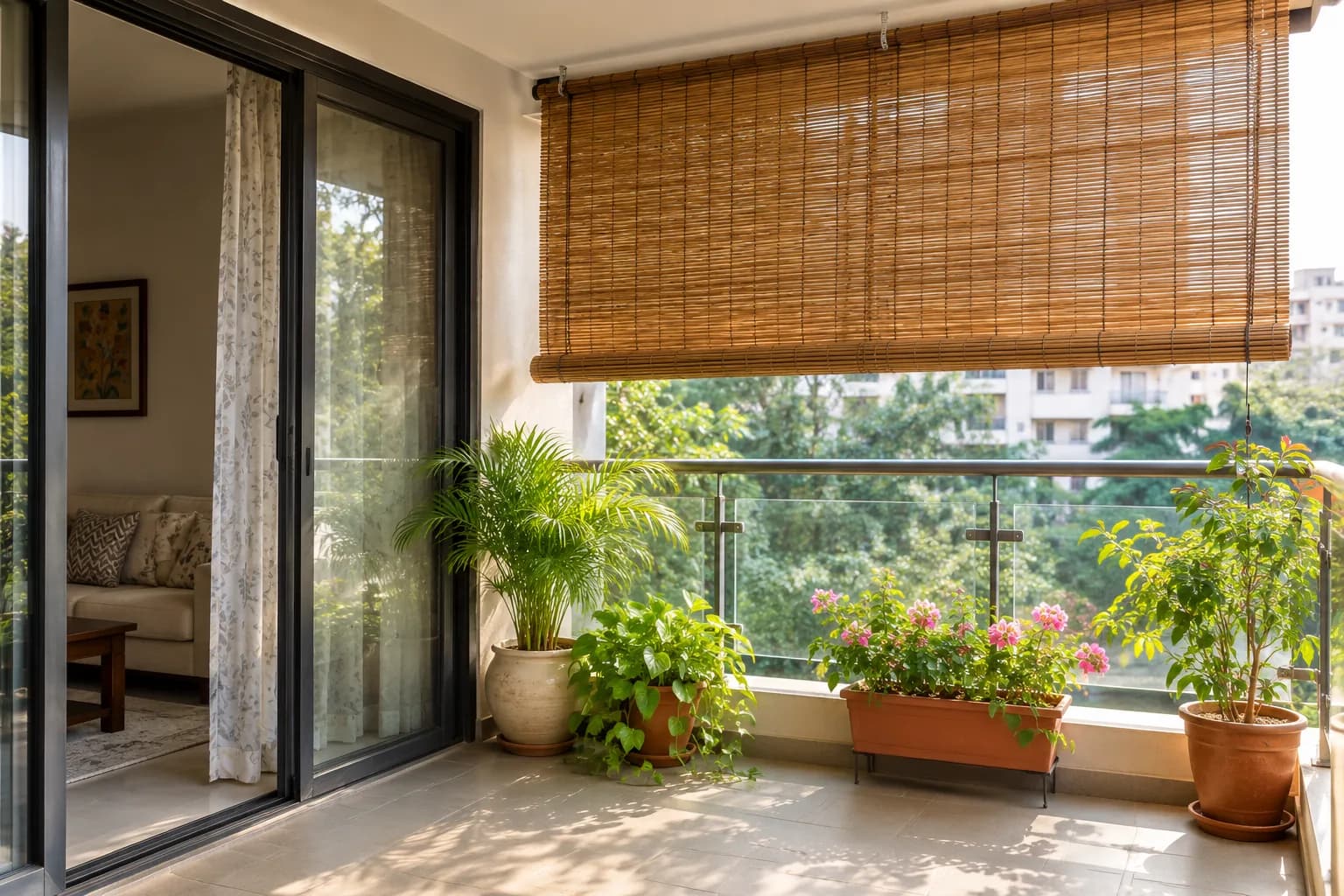
| Bamboo chick blind on a balcony | Outside the balcony door | Good for its cost; weather wears it out | No |
| Trees, creepers and balcony plants | Outside | Helpful, and slow to grow | No |
| Pergola over a terrace or balcony door | Outside | Shades the door and the floor in front of it | Yes, see pergola installation |
| Light-coloured lined curtains | Inside | Fair; best when closed early | No |
| Blinds | Inside | Fair; a reflective backing helps | No |
| Sun-control window film | On the glass | Fair to good, depending on the film | No |
In a flat, anything fixed to the outside wall usually needs the society's permission. Ask before you order an awning or an outdoor blind. On a high floor, outside fittings also face strong wind, so they must be fixed by people who do that work.
Window films and blinds for heat: an honest look
We do not fit window film or blinds. Many people ask about them, so here is a fair summary.
Sun-control film is a thin layer stuck to the inside face of the glass. It reflects or absorbs part of the sun's heat. Reflective films usually cut more heat than plain dark tints. Most films also cut glare and some daylight, so the room gets dimmer. A reflective film looks like a mirror from outside by day. At night, with the lights on, the mirror side is inside and people outside can see in.
Two cautions apply. A dark, heat-absorbing film makes the glass itself run hotter. On some panes, especially ones that are partly in shade, that stress can crack the glass. Ask the film supplier to confirm that the film suits your glass. Also check whether your society has a rule about mirror-finish glass on the outside of the building.
Blinds and curtains work on the room side. Choose a white or reflective backing facing the window. Honeycomb blinds trap a layer of air and insulate a little. Blackout curtains block light well, but a dark fabric with no pale lining gets hot itself.
How to reduce heat from glass windows with better glass
If a window takes hours of direct sun and you cannot shade it, the glass itself can change. Here are the common choices.
| Glass | What it does to heat | Good to know |
|---|---|---|
| Clear single glass | Lets most of the sun's heat in | What most windows have |
| Tinted glass | Absorbs part of the heat, so the pane gets warm | Helps less than people expect |
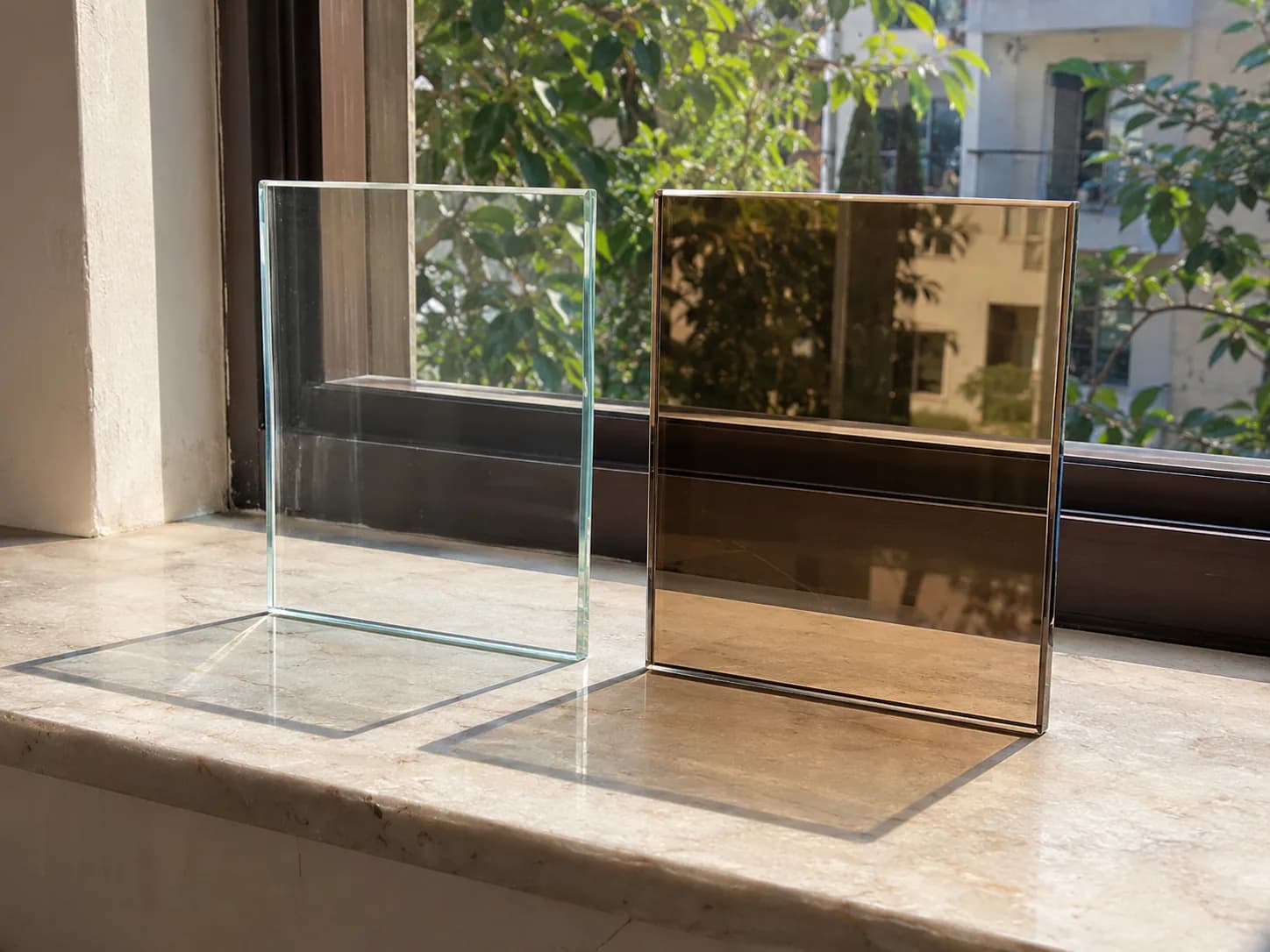
| Reflective glass | Reflects part of the sun away | Darker view; mirror look from outside by day |
| Low-E coated glass | A thin coating that slows heat passing through | Usually used inside a double glazed unit |
| Double glazed unit | Slows heat moving through the pane | Clear double glazing still lets direct sun in |
| Double glazed unit with a sun-control outer pane | Works on both the sun and the hot air at the glass | Costs the most; needs a frame that suits it |
Notice the fifth row. Double glazing on its own is not a sunshade. Its sealed gap slows heat moving through the pane, which helps most while the AC is on. For direct sun, the outer pane needs a sun-control coating or tint as well.
We fit double glazed windows in Bengaluru, in new uPVC or aluminium frames. The glass combination is decided at the site visit, after we see which way the window faces. The frame counts too. A uPVC frame passes less heat than a plain aluminium one. Aluminium frames with a thermal break, a plastic strip inside the metal, reduce that difference.
Our windows and doors guide compares the two frames. The guide to types of glass for homes explains each glass in more detail. The service page shows the live starting rate. The size of the opening, the glass chosen and the frame move the cost.
Sealing window gaps so the AC air stays in
This is the fix people skip, and it is often the cheapest real one. An AC cools the air inside the room. If the window leaks, that cool air escapes and hot air takes its place. The AC then has to run longer to hold the same comfort.
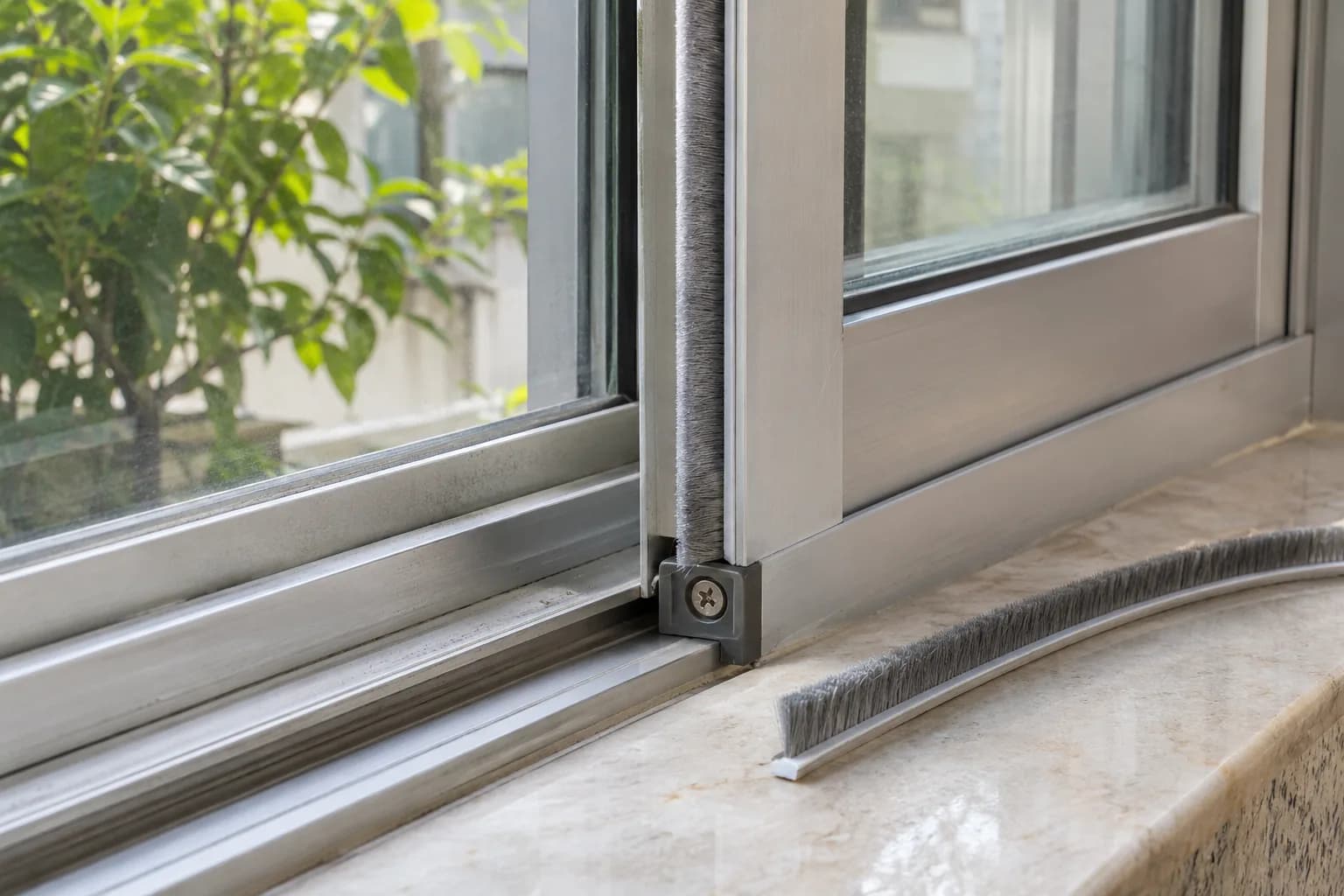
- Where two sliding shutters overlap. The middle of a sliding window is its leakiest point. Worn brush strips there let air straight through.
- Flat seals around the shutter. Window seal replacement brings back the tight close.
- The joint between frame and wall. Cracked sealant leaks all round the frame. Window gap sealing closes it.
- The gap under the door. Cool air pours out under a bedroom or balcony door. See door gap sealing.
- The space beside a window AC. Shrunken packing beside the unit leaks hot air into the very room it cools. See gap around window AC.
If you are not sure where the air is going, window air leakage repair is one visit that checks the whole window. These repairs are available in Bengaluru and across Delhi NCR. The diagnosis page on heat coming through windows helps you tell a glass problem from a gap problem. A visible gap at a shut window has its own page: gap in window when closed.
Book a visit. We find where the cool air is escaping, and quote in writing before sealing.
Top floors, balconies and other heat that is not from the window
Be fair to your windows. On a top floor, the roof slab above you often brings in more heat than the glass. It soaks up sun all day and gives it back in the evening. Roof coatings and insulation are not our trade. Shade over part of a terrace keeps the sun off that part of the slab. A terrace shed or a pergola is work we do, and terrace too hot to use explains the choices.
A west-facing wall stores heat as well, and so does a bare balcony floor outside a glass door. One more caution. Closing a balcony with glass keeps out rain and dust. Glass in full sun can also make the closed balcony warmer. Plan shade and panels that open along with it. Our guide to balcony cover ideas compares the options.
Mistakes people make when cutting heat from windows
- Buying clear double glazing to stop direct sun. It slows heat through the pane, but sunshine still passes through clear glass.
- Closing the curtains after the room is hot. Shade works when it is in place before the sun arrives.
- Choosing dark curtains with no lining. They soak up the sun and warm the room from the inside.
- Sealing the window and forgetting the door. Cool air leaves by the easiest path, and that is often the gap under the door.
- Sticking on film without checking the glass. Ask the supplier first, because some film and glass combinations do not suit each other.
- Blaming the window on a top floor. Does the room stay hot long after the sun has left the glass? Then the roof slab is usually part of the problem.
The order of work for a cooler room in summer
- Find the hot window. Note which window gets direct sun, and at what hours.
- Do the free steps. Close early, air the house when it is cool outside, and lock the shutters.
- Shade the glass. Use outside shade if your building allows it. Use lined curtains or blinds if it does not.
- Seal the gaps. Renew seals and close the frame joint in every room that has an AC.
- Consider film. On a window you cannot shade, ask a film supplier what suits your glass.
- Change the glass last. This step is for a large sunny window in a room you use all day. Double glazing with a sun-control outer pane is the full answer there.
Heat is only one of the things that come in at a window. Our quiet, cool and dry home guide covers noise, rain, dust and insects in the same order of cost.
Common questions
How can I reduce heat from my windows in summer without AC?
Shade the glass before the sun reaches it, from outside if you can. Close the windows and curtains on the sunny side in the day. Open windows on two sides when the air outside turns cooler. Light-coloured lined curtains and outdoor blinds both help. Mesh on the windows lets you air the house at night without insects.
Does double glazing reduce heat from the sun?
Partly. A double glazed unit slows heat moving through the pane, which helps most in an air-conditioned room. Clear double glazing still lets direct sunshine through. For a sunny window, the unit needs a sun-control or reflective outer pane, or shade outside.
Is window film or reflective glass better for reducing heat?
Film is the cheaper change, because it goes onto the glass you already have. Reflective glass is part of the pane, so it has no film to peel or scratch, but it means new glass. Either way, shade outside the window usually does more than both. We do not fit film.
How do I stop heat from a west-facing window?
West sun is low, so an overhang above the window does little. A shade that hangs in front of the glass works better. An outdoor blind, a bamboo chick on the balcony or tall plants all do this. Inside, close lined curtains before mid-afternoon. If shade is not possible, ask about film or sun-control glass.
Do curtains really reduce heat from windows?
Yes, to a fair degree, if they are closed before the sun arrives. A pale or reflective lining facing the glass works best. Curtains are less effective than outside shade, because the sun's heat is already inside the glass when it meets them.
Why is my room hot even when the AC is on and the windows are closed?
Closed windows can still leak. Worn seals, a cracked frame joint and the gap under the door all let cool air out. Direct sun on bare glass adds heat faster than a small AC can remove it. On a top floor, the roof slab is often part of the cause too.
Have a question this guide did not answer? Call us or send a photo on WhatsApp and we will tell you what it needs.
