In this guide
- Why windows and doors are the 2027 upgrade
- uPVC vs aluminium: the honest comparison
- Single, double or laminated: choosing the glass
- Sliding or casement: how the window opens
- The 2027 look: slim frames, dark colours, big glass
- Switchable smart glass: privacy without blinds
- Automatic sliding doors: from the mall to the lobby and the villa
- Repair or replace? The question to ask first
- A buying checklist for new windows and doors in 2027
Key takeaways
- uPVC seals tighter and is quieter; aluminium is slimmer and stronger for big openings. Most homes pick by which matters more on that wall.
- Double glazing is for noise and heat through the glass. If the problem is around the frame, new seals fix it for a fraction of the cost.
- Slim frames and bigger glass are the 2027 look. Black or bronze aluminium, or white and grey uPVC with narrow sections.
- Smart glass and automatic doors have left the office. Switchable privacy glass and sensor doors are now home and society products.
- Repair what still works. Rollers, seals, handles and locks are a visit; most windows do not need replacing.
Why windows and doors are the 2027 upgrade
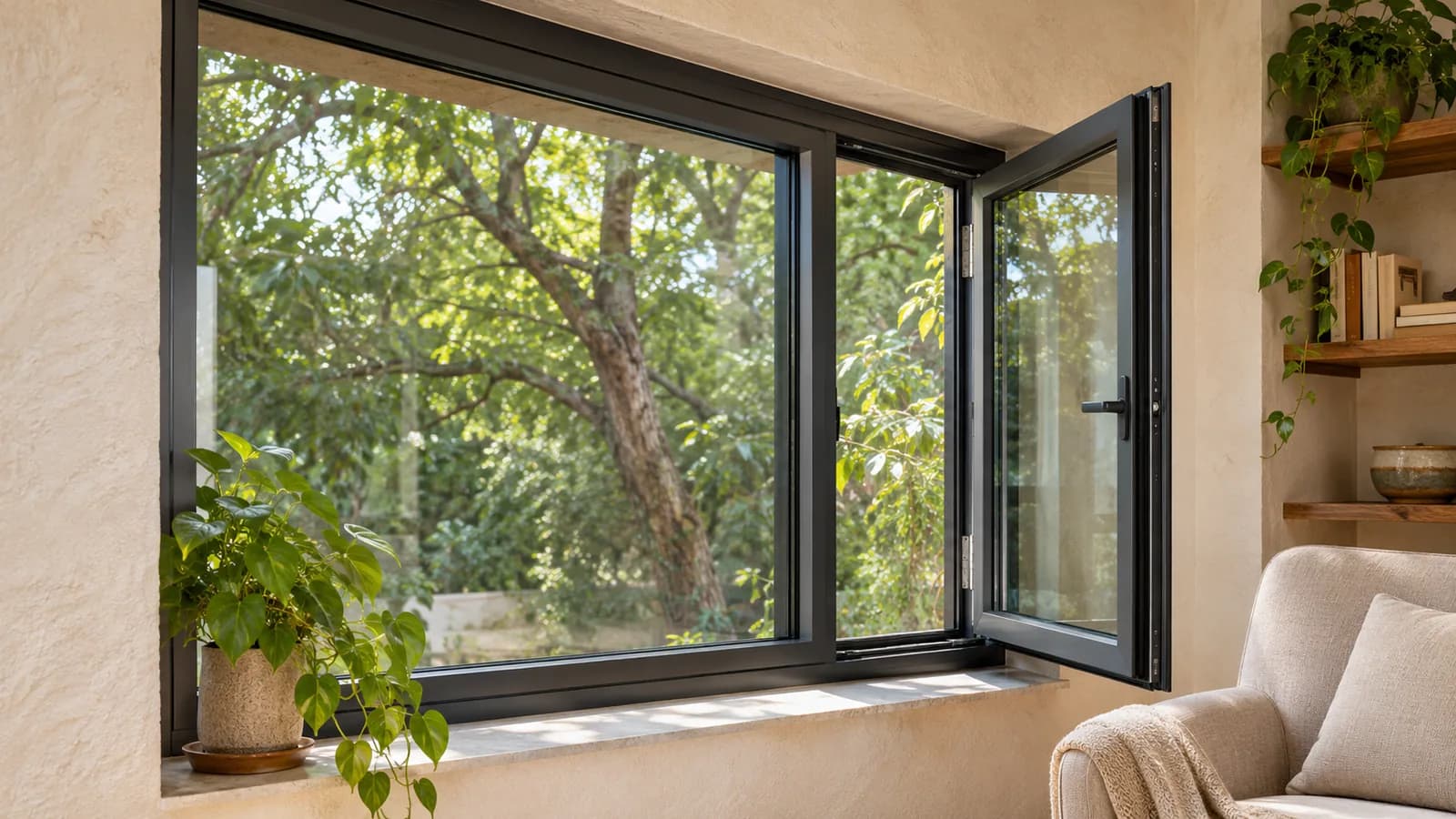
A window does five jobs at once: light, air, view, noise and heat. In an Indian city in 2027 the last two have become the hard ones. Roads are louder, summers are longer, and the windows most buildings came with were chosen for cost, not for any of these. The windows and doors you choose decide how a room sounds, how hot it gets and how much dust comes in, every day, for twenty years.
This guide compares the choices honestly: uPVC against aluminium, single against double glazing, sliding against casement, and the two newer products, switchable smart glass and automatic sliding doors. It also says when not to replace anything, because a lot of window problems are a repair.
uPVC vs aluminium: the honest comparison
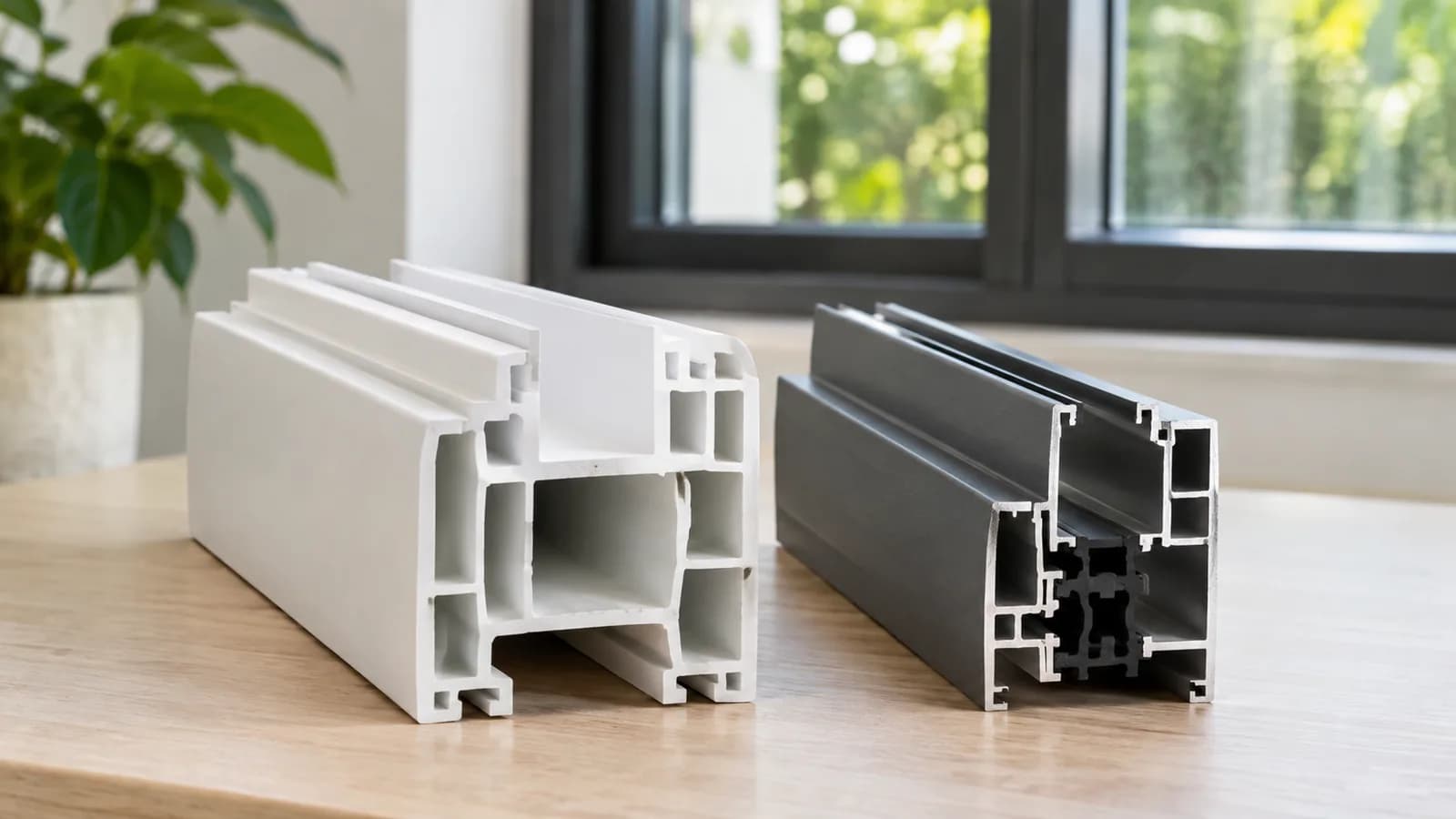
uPVC is a rigid plastic frame with steel reinforcement inside. It does not conduct heat, it does not rust or corrode, and its multi-chamber section with rubber gaskets seals very well. It comes mostly in white, with grey and woodgrain foils. Aluminium is a metal frame, strong for its size, so the sections can be slim and the glass large. It comes powder-coated in any colour and anodised in metallic finishes. Modern aluminium systems add a thermal break, a plastic strip inside the section, to stop heat crossing the frame.
| What matters | uPVC | Aluminium |
|---|---|---|
| Noise and air sealing | Excellent; multi-point locks and double gaskets | Good in a quality system; depends on gaskets and fit |
| Heat through the frame | Low; plastic does not conduct | Higher unless thermally broken |
| Frame thickness and glass area | Wider sections, less glass | Slim sections, more glass, bigger spans |
| Colours and look | White, grey, woodgrain foils | Any colour; black and bronze are the 2027 look |
| Coastal or salty air | Unaffected | Needs good coating; check the anodising |
| Strength in large openings | Limited; needs steel reinforcement | Strong; the choice for big sliders |
| Maintenance | Wipe clean; gaskets last years | Wipe clean; check the coating at edges |
The 2027 answer most people reach is simple. Choose uPVC where quiet and sealing matter most, such as bedrooms on a road; choose aluminium where you want a slim frame and a big view, such as a living room balcony door. Many homes use both, and that is not a compromise; it is choosing by the wall.
- See uPVC sliding windows and aluminium sliding windows for the sizes, glass options and where each is sold.
- See uPVC sliding doors and aluminium sliding doors for balcony and patio openings.
- The whole range, compared with a chooser, is on uPVC and aluminium windows and doors.
Single, double or laminated: choosing the glass
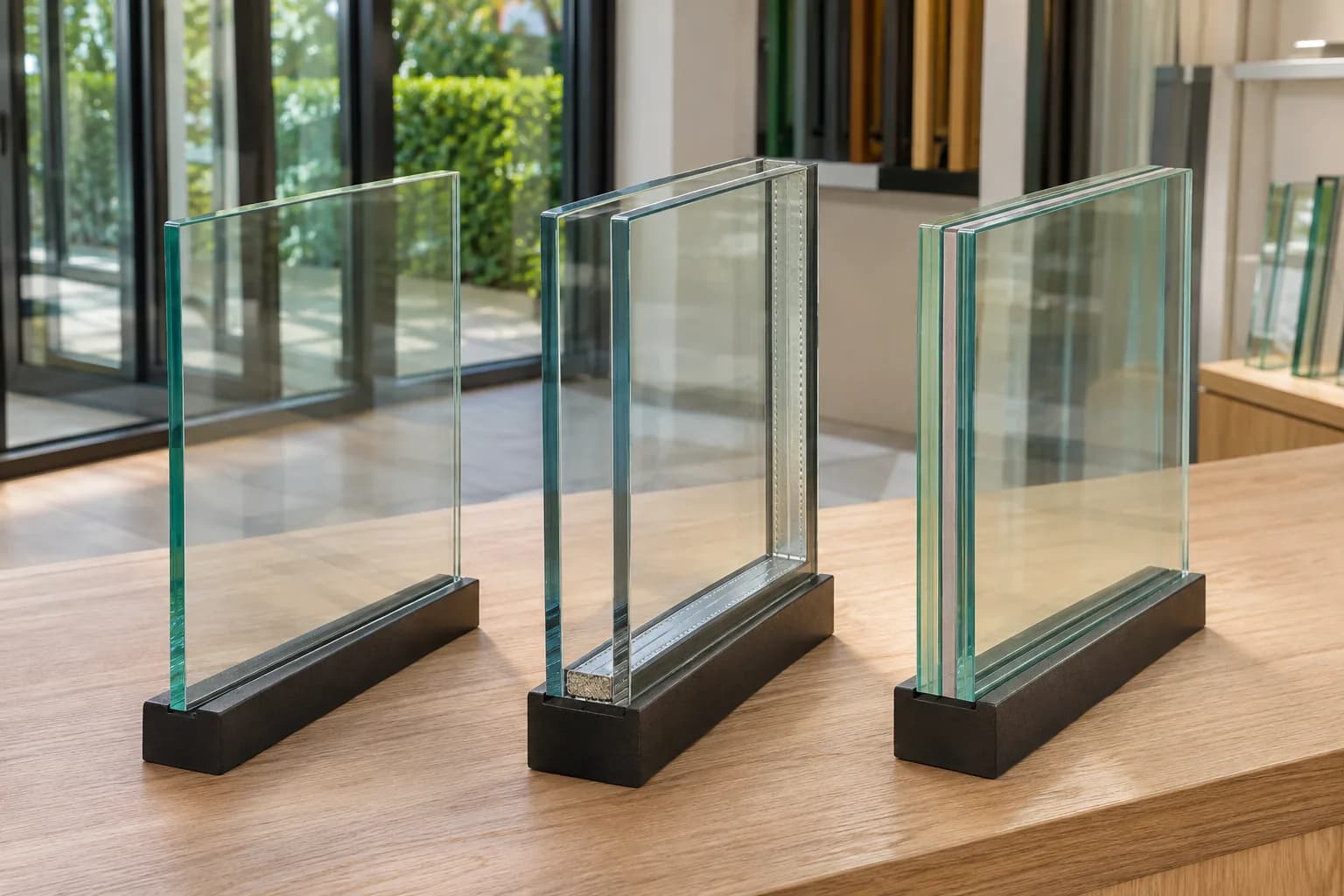
The frame is half the window. The glass is the other half, and in 2027 it is where the biggest improvement is available. Single glazing is one pane of glass, usually five or six millimetres thick. Double glazing is two panes with a sealed gap of dry air or gas between them. Laminated glass is two panes bonded with a plastic interlayer, which holds the glass together if it breaks and blocks more sound.
| The problem | What helps | Notes |
|---|---|---|
| Traffic noise through the glass | Double glazing, or laminated acoustic glass | The frame must seal too, or the gain is lost; see traffic noise through windows |
| Room heats up in the afternoon | Double glazing with a solar-control or reflective outer pane | A tint alone helps less than people expect; see heat coming through windows |
| Safety at height or near children | Laminated glass | Holds together when broken |
| Fog between the panes | Replace the sealed unit | The seal has failed; see double glazed window foggy inside |
The product most Indian buyers now search for is the soundproof window, which in practice means double glazing in a frame that seals well. Our soundproof double glazed windows page explains the glass combinations and what to expect. It is honest about one thing: no window makes a room silent. A good one makes a main road sound like a quiet street.
Sliding or casement: how the window opens
Indian homes mostly have sliding windows, because they do not swing into the room or over a grill. In 2027 casement windows, which open outward or inward on hinges, are gaining ground in new homes because they seal better: a casement presses against its gasket all round, while a slider has to leave a gap for the moving panel. Tilt-and-turn uPVC windows, which open two ways, are the premium version.
- Slider: best where there is a grill or a mesh outside, or where the window is wide. Choose a system with good brush seals and a well-designed track that drains.
- Casement: best for bedrooms that need to be quiet, and small openings. Needs clear space to swing.
- Tilt-and-turn: opens a little at the top for air, or fully for cleaning. Good for high floors where cleaning from outside is impossible.
The 2027 look: slim frames, dark colours, big glass
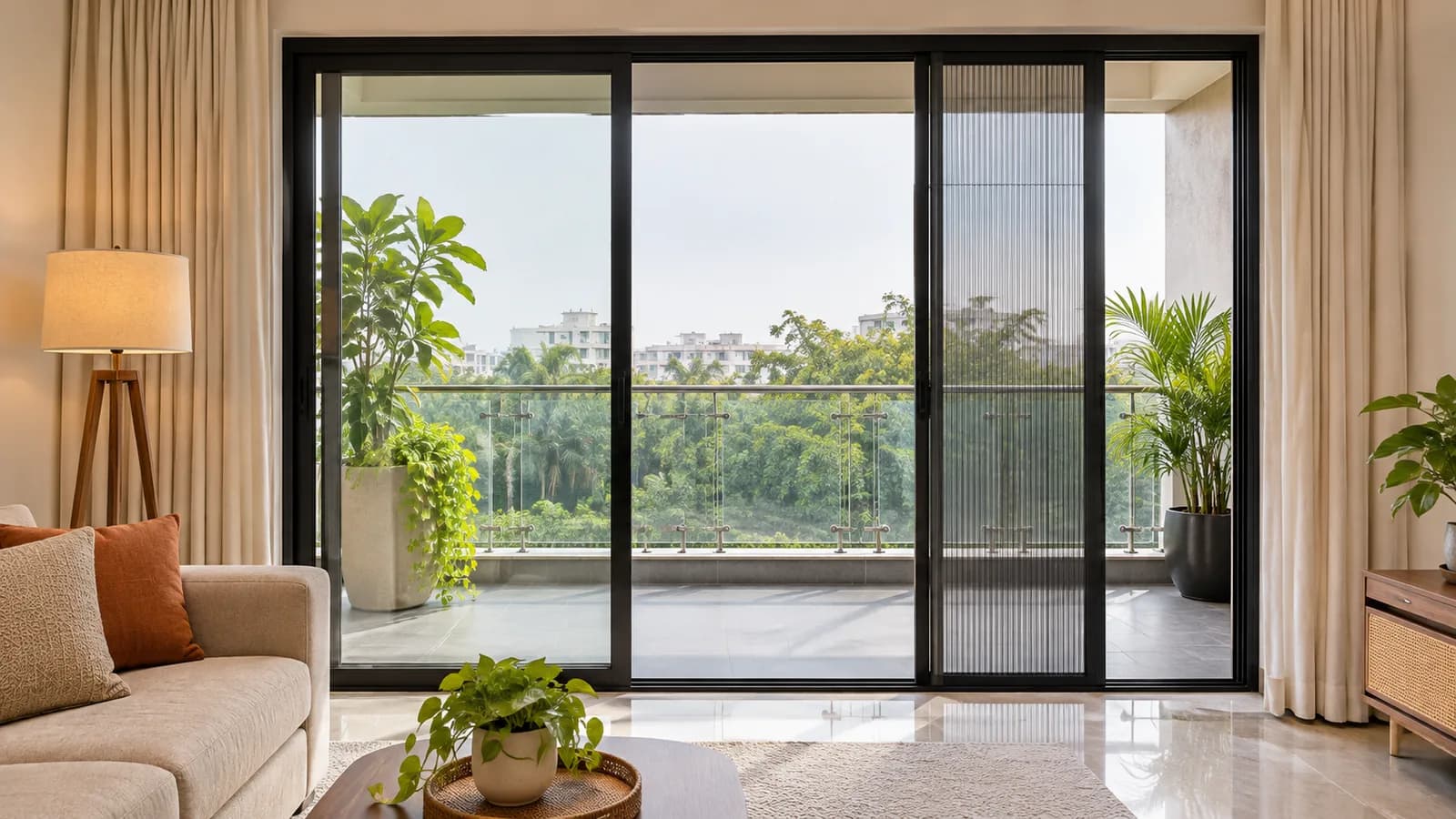
Ten years ago the new window was white uPVC with thick sections. The 2027 window is slimmer, darker and bigger. Black and bronze aluminium, anthracite grey uPVC, and frames that almost disappear so the glass does the talking. A full-height sliding door onto a balcony, with a slim black frame and a pleated mesh behind it, is the single most photographed home upgrade of the year.
Inside, the trend is to match the window frame to the other metal in the room: the shower enclosure frame, the partition profile, the kitchen handles. A black framed shower enclosure and black aluminium windows in the same flat read as one design. Our home design trends 2027 guide covers the whole look.
Switchable smart glass: privacy without blinds
Switchable smart glass, also called privacy glass or PDLC glass, is laminated glass with a film inside that is frosted when off and clear when powered. It began in boardrooms. In 2027 it is in bathrooms between the shower and the bedroom, in home offices, in clinic consultation rooms and in the glass walls of society clubhouses.
It needs a low-voltage supply and a switch, a sensor or an app. In a power cut it turns frosted, which is the safe state for privacy. It is not a window for the outside wall in most homes; it is an inside partition product. Our switchable smart glass page lists the sizes and the power it needs, and the office trends guide shows how offices use it.
Automatic sliding doors: from the mall to the lobby and the villa
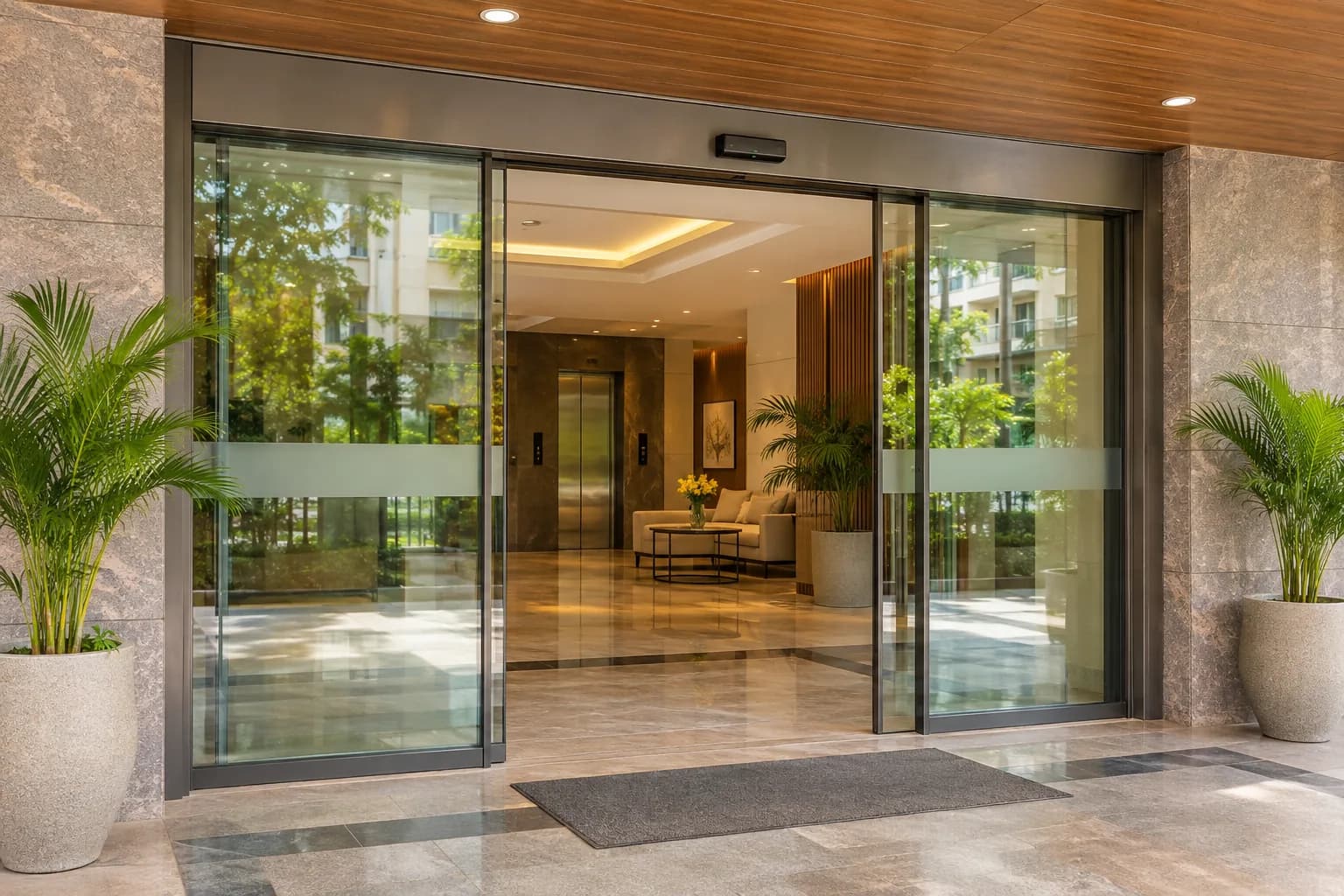
An automatic sliding door is a glass door on a motorised track that opens when a sensor sees you. For years it was a mall and hospital product. In 2027 it is at the entrance of apartment lobbies, clinics, offices, showrooms and the occasional villa. The reasons are access for wheelchairs and prams, hygiene, and simply that a door that opens itself makes a building feel finished.
A good system has safety sensors on both sides so the door never closes on a person, a manual release or battery for a power cut, a night lock, and the option to connect to access cards. See automatic sliding doors. For a society entrance, our societies guide covers where it fits in the plan.
Repair or replace? The question to ask first
Most people who think they need new windows do not. If the frame is sound and the glass is intact, almost every window problem is a repair: rollers, seals, handles, locks or the track. Replacement is for a frame that has warped or corroded, glass that is single and must be double, or a look you want to change.
| What is happening | Repair | Replace when |
|---|---|---|
| Slider is heavy or jumps the track | Roller replacement or uPVC roller replacement | The track itself is cracked or corroded through |
| Air, dust or whistling around the frame | Window gap sealing or seal replacement | The frame has pulled away from the wall |
| Rain comes in | Water leakage repair; clear the drain slots | The sill or frame joint has failed |
| Handle spins or lock will not catch | Handle replacement or lock replacement | The multi-point gear is obsolete and no part fits |
| Too much noise or heat through the glass | Nothing; the glass is the limit | Move to double glazing in the same or a new frame |
Our uPVC window repair and aluminium window repair pages cover the full list of parts we carry. A repair visit usually fixes several windows at once.
Book a visit. We check whether it is a repair or a replacement, and quote in writing either way.
A buying checklist for new windows and doors in 2027
- Decide by the wall. Bedroom on a road: uPVC, double glazed, casement if there is room. Living room balcony: aluminium slider, big glass, mesh track.
- Specify the glass, not just the frame. Thickness, double or laminated, any coating. The glass is half the result.
- Ask about the gaskets and the hardware. Multi-point locks, replaceable rollers, brush seals. These decide how the window feels in year five.
- Check the drainage. Every slider track and every sill should have a path for water to leave.
- Match the metal. Pick the frame colour with the shower enclosure, the partition profiles and the railing in mind.
- Plan the mesh. A pleated or sliding mesh track built into the frame is far neater than one added later.
- Get it measured. Every opening is measured on site and quoted in writing; the website shows each product's starting rate on its own page and the cities it is sold in.
Starting rates live on the service pages and move there, not here. The new windows and doors are currently fitted in Bengaluru; repairs, sealing and glass replacement cover Bengaluru and all of Delhi NCR. See where we work.
A window is the only part of a home you look through every day and never think about, until it is the wrong one. Choose it by the wall it sits in.
Common questions
Which is better for Indian homes, uPVC or aluminium windows?
It depends on the wall. uPVC seals tighter, insulates better and is quieter, so it suits bedrooms on busy roads. Aluminium is stronger and slimmer, so it suits large balcony doors and a modern look with big glass. Many homes use uPVC in bedrooms and aluminium in living rooms.
Are double glazed windows worth it in India?
Yes, where the problem is noise or heat coming through the glass itself: bedrooms on roads, west-facing rooms, flats near flyovers or metro lines. They are not worth it where the problem is air leaking around the frame; new seals fix that for much less.
What are the window trends for 2027?
Slim frames in black, bronze or anthracite, large glass areas, full-height sliding doors to balconies, double glazing as standard in noisy cities, casement and tilt-and-turn windows in new homes, built-in pleated mesh tracks, and frame colours matched to shower enclosures and partitions.
What is PDLC or switchable privacy glass used for at home?
As an inside partition: between a bathroom and a bedroom, around a home office, or in a clubhouse room. It is frosted when off and clear when powered, so it replaces blinds and frosted film. It is not usually used as an outside window.
How do I know if my window needs repair or replacement?
If the frame is straight and the glass is intact, it is almost always a repair: rollers, seals, handles, locks or the track. Replace when the frame has warped or corroded, when the sill or joints have failed, or when you need double glazing and the frame cannot take it.
Does Fabrockers fit uPVC and aluminium windows outside Bengaluru?
New uPVC and aluminium windows and doors are currently fitted in Bengaluru. Window and door repairs, gap sealing, seal and roller replacement and glass replacement are available in Bengaluru and across Delhi NCR. Each service page lists its cities.
Have a question this guide did not answer? Call us or send a photo on WhatsApp and we will tell you what it needs.
