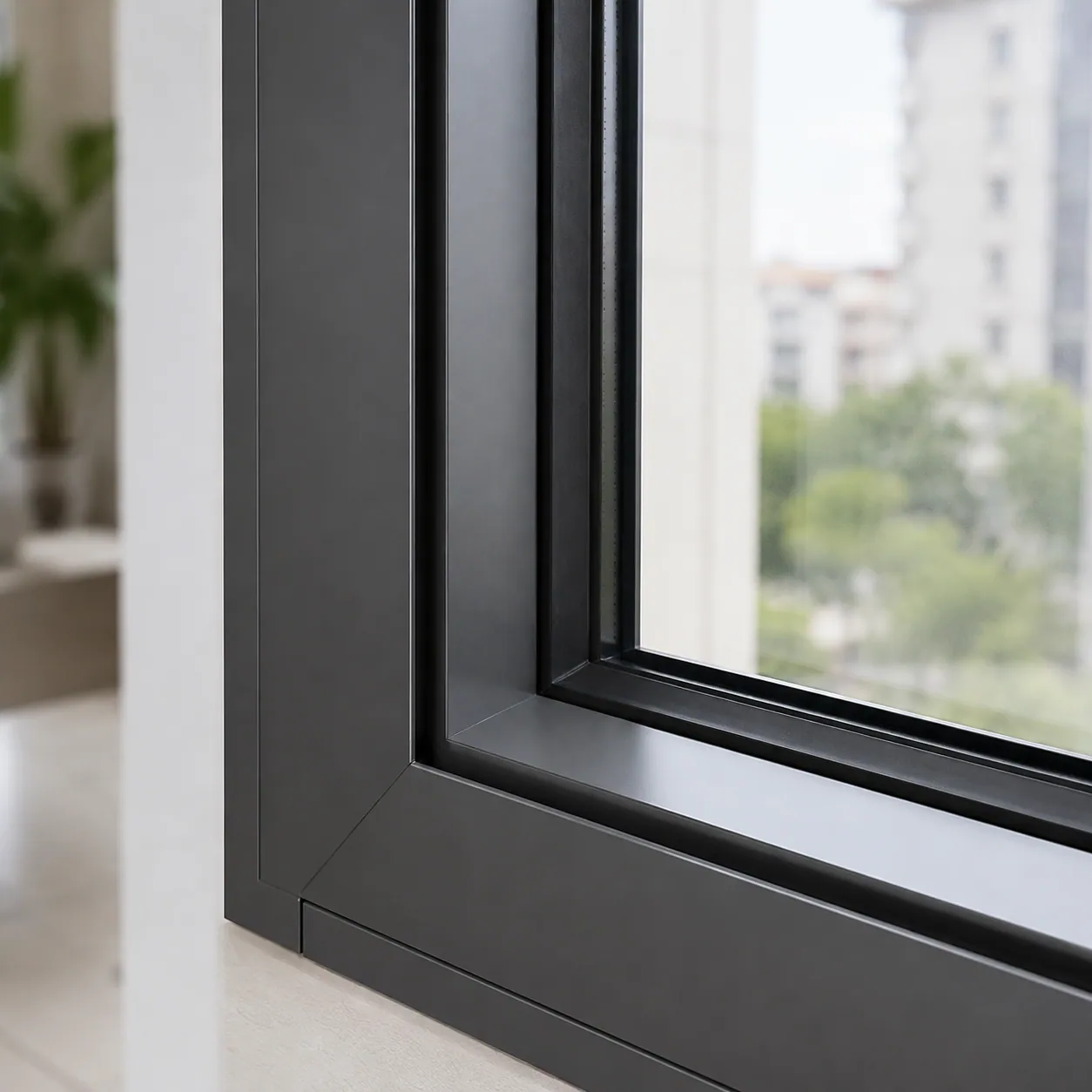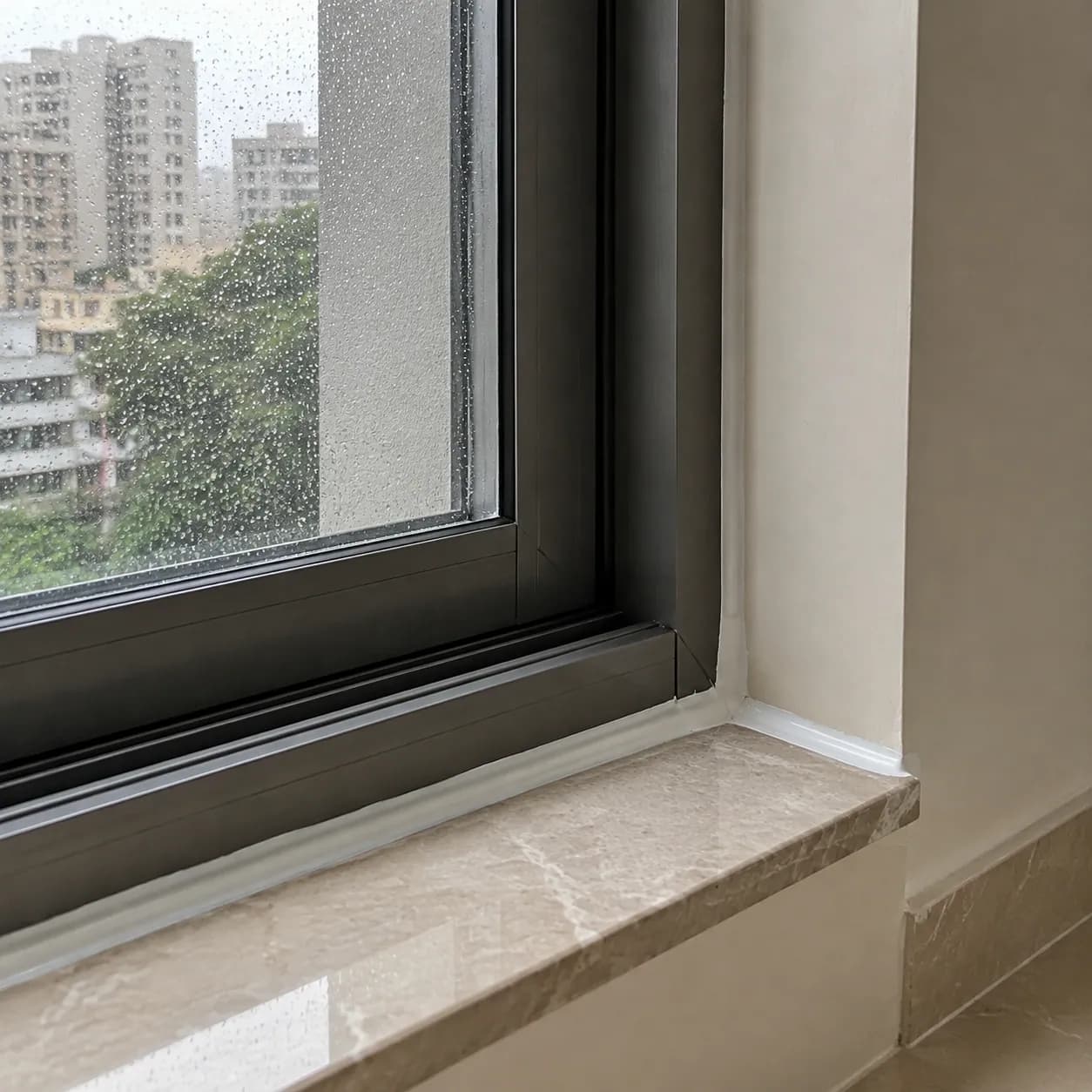
We stop windows leaking rainwater across Bengaluru. Every monsoon, the same story in thousands of flats: driven rain arrives, and a windowsill starts pooling, or a damp streak spreads down the wall below the frame. Window leaks are traced, not guessed. Water enters at one of a few known points, travels along the frame, and appears somewhere else, which is why random silicone rarely cures it. We find the real entry, seal it with the right material, and check the window's own drainage while we are there. From ₹1,900 per window.
The four ways rain gets past a window
Through the frame-to-wall joint. The sealant between the window frame and the masonry has aged, cracked or pulled away, and wind-driven rain pushes straight through the gap. The commonest entry of all.
Through blocked drainage. Sliding window tracks are designed to collect water and release it outside through small weep holes. Blocked holes turn the track into a tank that overflows inward. The second commonest, and the cheapest to fix.
Past dead seals and gaskets. Hardened shutter seals and shrunken glazing rubber let spray past during the sideways rain Bengaluru gets in a good storm.
From above. A failed sill or drip groove on the floor above sends water down the wall and behind your frame. This one is a building repair, not a window repair, and we say so honestly when we find it.
Tracing before sealing
Water lies about its origin. It enters high, runs along a frame member, and drips out low, so the wet spot you see is often half a metre from the hole that matters.
We trace properly: the frame perimeter inspected joint by joint, the weep holes probed, the seals checked, and where the entry is still ambiguous, a controlled hose test on the outside face while watching the inside. Minutes of water in the right places names the entry with certainty.
Sealing then means the right material at the proven point. Weather-grade silicone at the frame-wall joint, backer rod first where the gap is deep, new seals where seals failed. What we do not do is lay cosmetic beads of silicone along every visible line and hope, which is the repair most leaking windows have already survived once.
The repair visit, and the monsoon test
The old failed sealant is cut out, not covered over. New sealant over dead sealant peels with it, usually mid-monsoon.
The joint is cleaned and dried, packed where deep, and sealed with exterior-grade material tooled into the gap. Weep holes are drilled clear and the track flushed to prove they run. Failed shutter seals or gasket lengths are renewed at their own small prices where the trace showed them leaking.
Then the same hose test that found the leak, repeated on the finished work. Water outside, dry inside, watched for long enough to trust. You should not have to wait for the next storm to learn whether the repair worked, so we bring the storm.
Cost, and when to book
Tracing and sealing one window starts at ₹1,900, including the frame-joint work and drainage clearing. Seal and gasket renewals, where needed, add at their fixed prices, agreed during the visit.
Neighbouring windows on the same wall usually share the same failed sealant age, and doing the wall in one visit costs meaningfully less per window than three separate rainy-day emergencies.
The time to book is a dry week. Sealant wants dry surfaces and a day to cure, and monsoon gaps are workable but tighter. The best repairs happen in April on the leaks remembered from October, and calendar-wise, that is the cheap season for this work too.