

Is this the right service for your job?
Choose this when a failed closer or floor spring no longer controls the door.
- If the door only rubs or leaves an uneven gap, see the Glass Door Alignment. The door may need adjustment rather than a new closer.
- If the door closes properly but opens into a wall, see the Glass Door Stopper Installation. A stopper limits the opening travel instead of controlling closing speed.
How to tell the closer has failed
The door bangs shut instead of slowing down near the frame. That is the most common sign. The oil inside the closer controls the last part of the swing, and when the oil is gone, so is the control.
The door drifts open on its own, or stops at an odd angle. A good closer pulls the door back to the closed position every time.
The door has dropped a few millimetres and now scrapes the floor. The pivot inside the closer has worn, so the door sits lower than it did.
There is a dark oily patch on the floor around the cover plate. The closer is leaking. It will not get better, and it will fail soon.
If you see any of these, send us a short video of the door swinging. We can usually tell you what it needs from that.
Floor spring or overhead closer
There are two kinds of door closer, and they are not interchangeable.
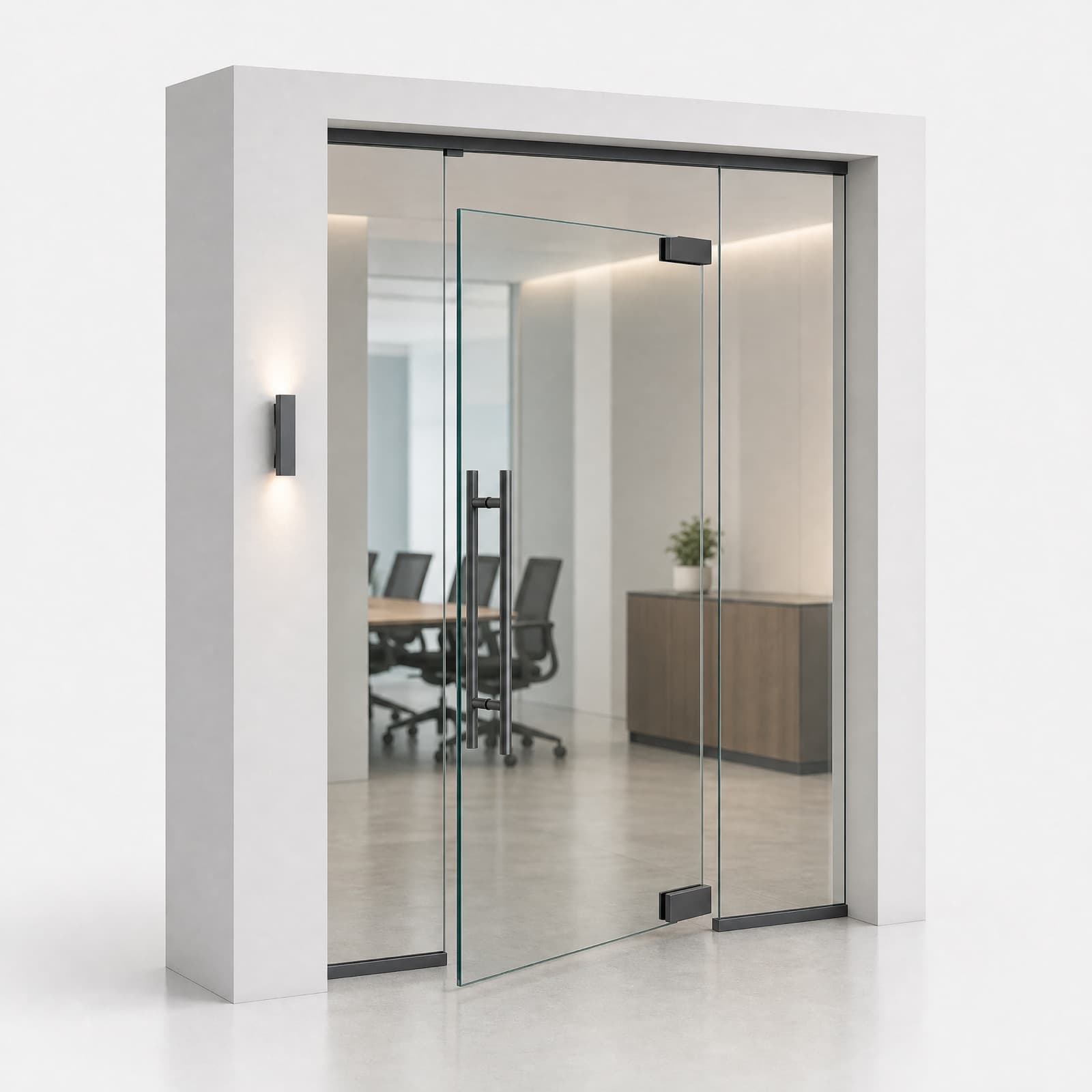
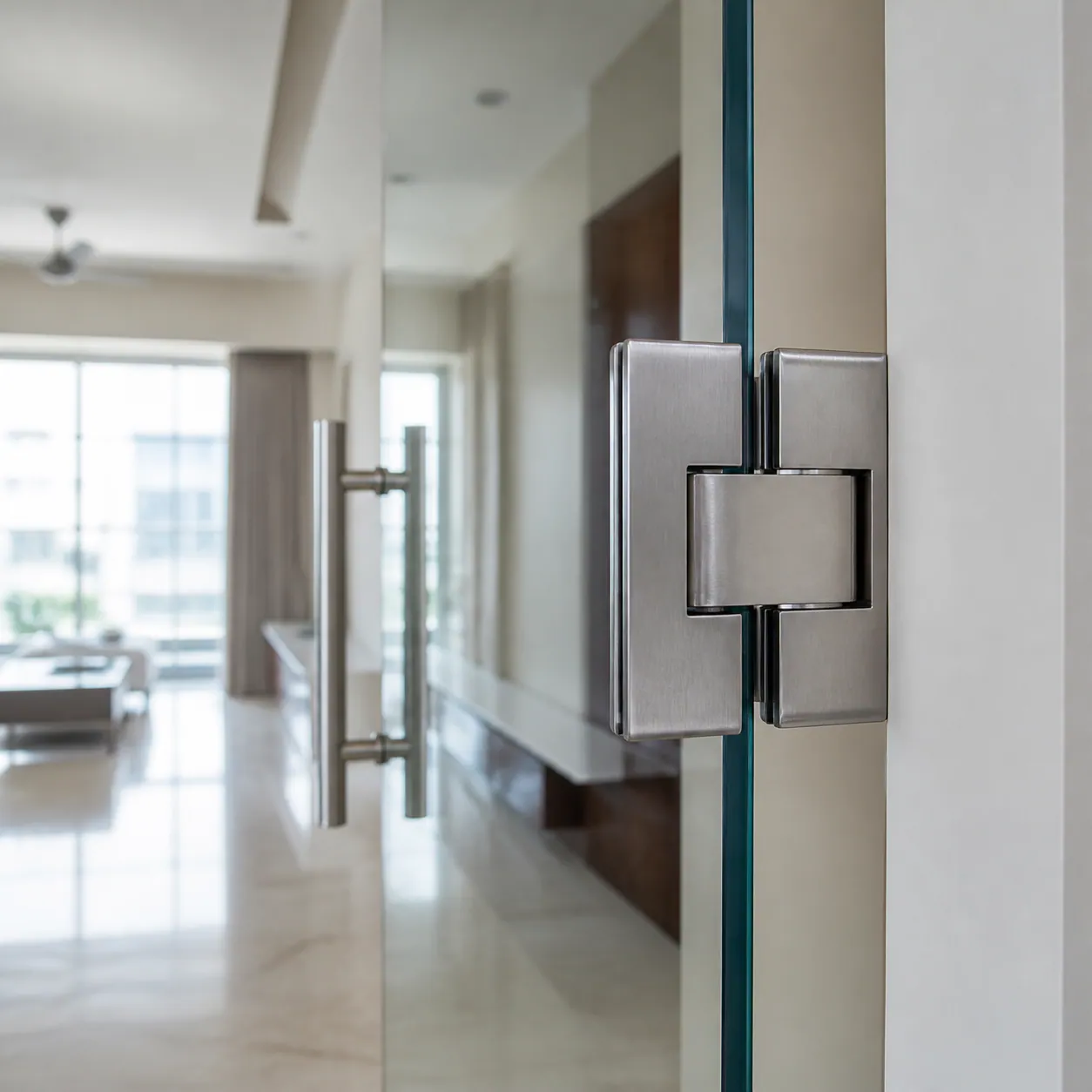
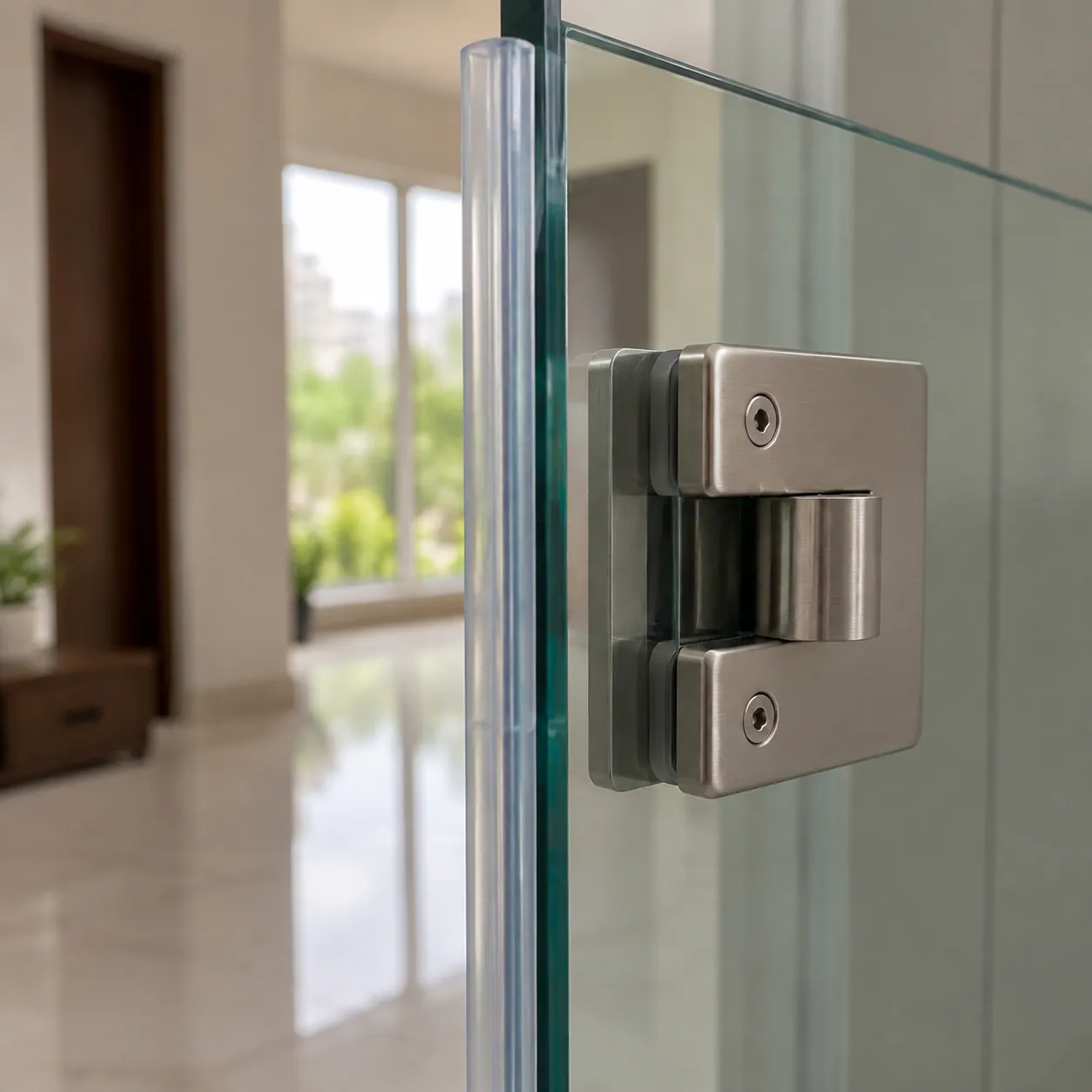
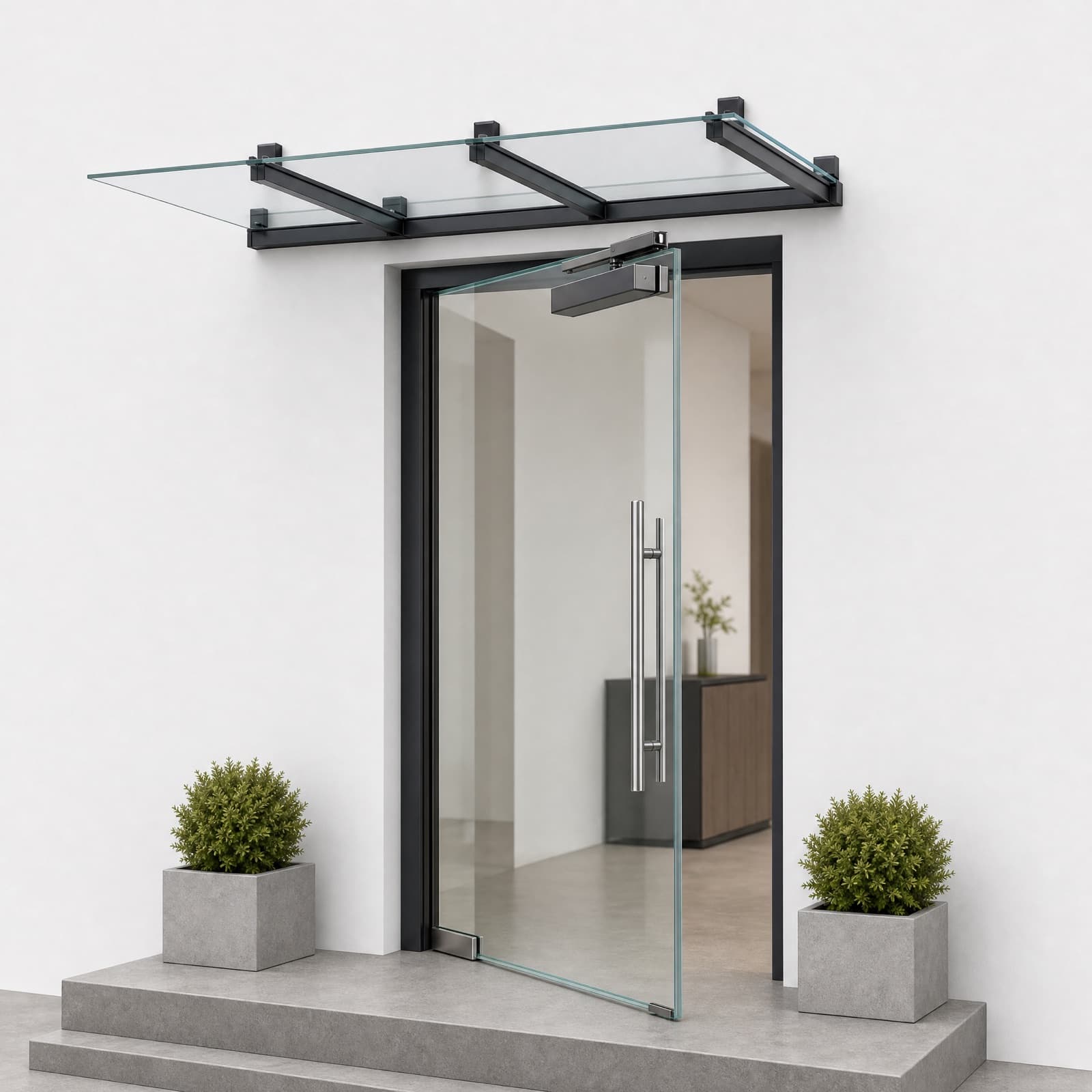
A floor spring sits in the floor. Frameless glass doors almost always use one, because there is no frame to hold anything else. The door pivots on it at the bottom and on a small pivot at the top. Shop doors, restaurant doors and most office cabin doors are built this way.
An overhead closer is the arm you see at the top of a framed door. Aluminium doors and some office doors use one. It fixes to the frame and to the top rail of the door.
We fit both. For a floor spring, the rating matters. A normal duty unit suits an office cabin door that opens a few dozen times a day. A public door on a busy street needs a heavy duty unit. We tell you which yours needs, and why.
What happens on the visit
First we lift the door off its pivots and set it aside safely. Two people do this. A 12mm glass door is heavy.
We take the old closer out of its floor box. We check the box itself. It is usually still good, and the new unit goes straight into it. If the box has rusted through or moved, we say so before we go on.
Then we fit the new closer, level it, and hang the door back on. The last part is the setting. We adjust the closing speed and the final latch, so the door closes fully without banging. That takes a few minutes, and it is the part most people skip.
The whole job usually takes two to three hours. If there is no box in the floor at all, we have to cut one into the finished floor. That takes about half a day, and the cement needs time to set, so we come back to hang the door.
What decides the price
A normal duty floor spring, supplied and fitted, starts at ₹3,510. A heavy duty unit for a shop or restaurant door is ₹5,500. Both prices include the visit, the fitting and the setting.
A few things add to that. If the top pivot has worn too, we change it at the same time, and it is a small extra line. A black finish costs a little more than chrome. Cutting a new floor box into a tiled floor is a separate charge, because it is half a day of work and a second visit.
One thing does not add to the price. If we arrive and find the closer only needs setting, not replacing, we set it and charge for the visit. We do not fit a part you do not need.