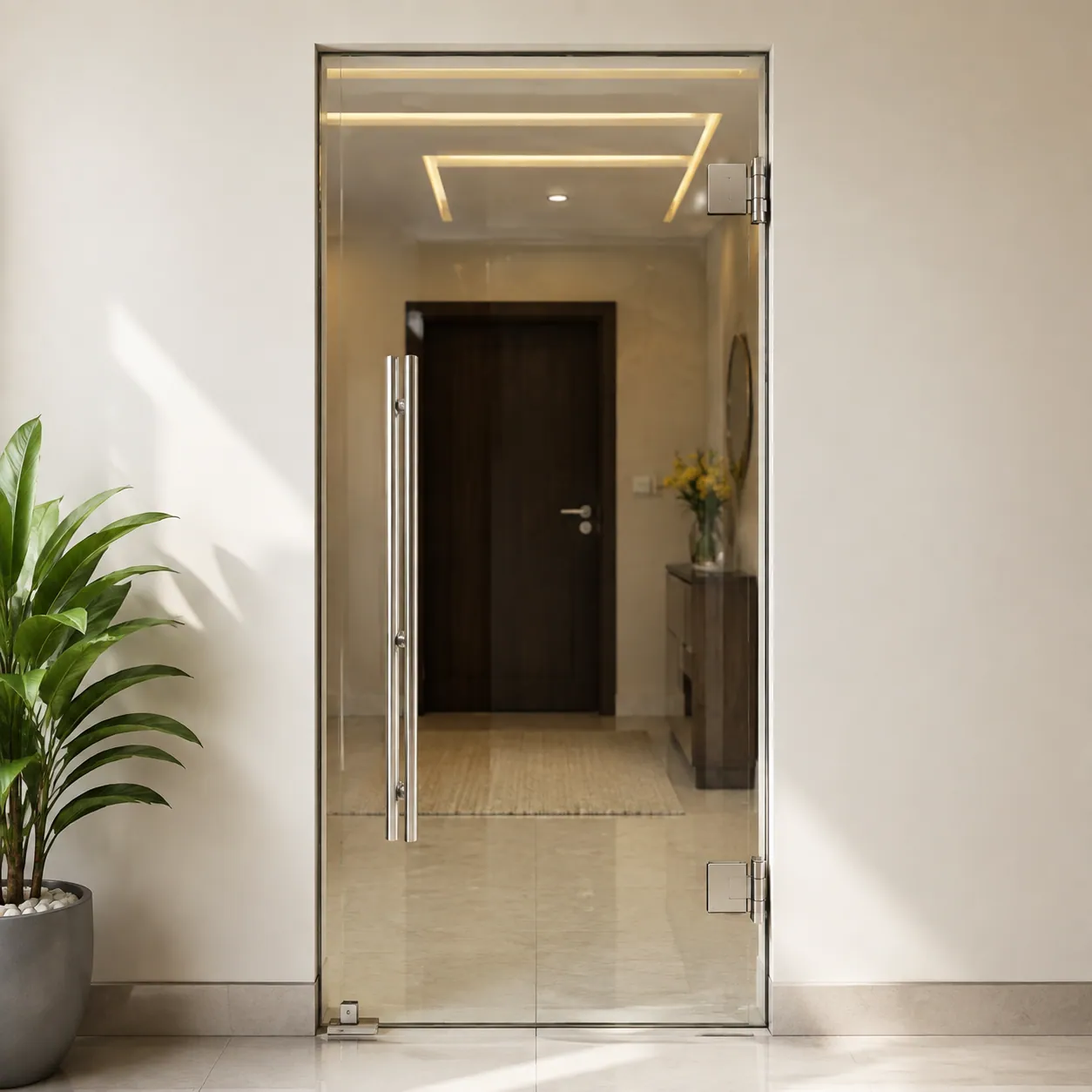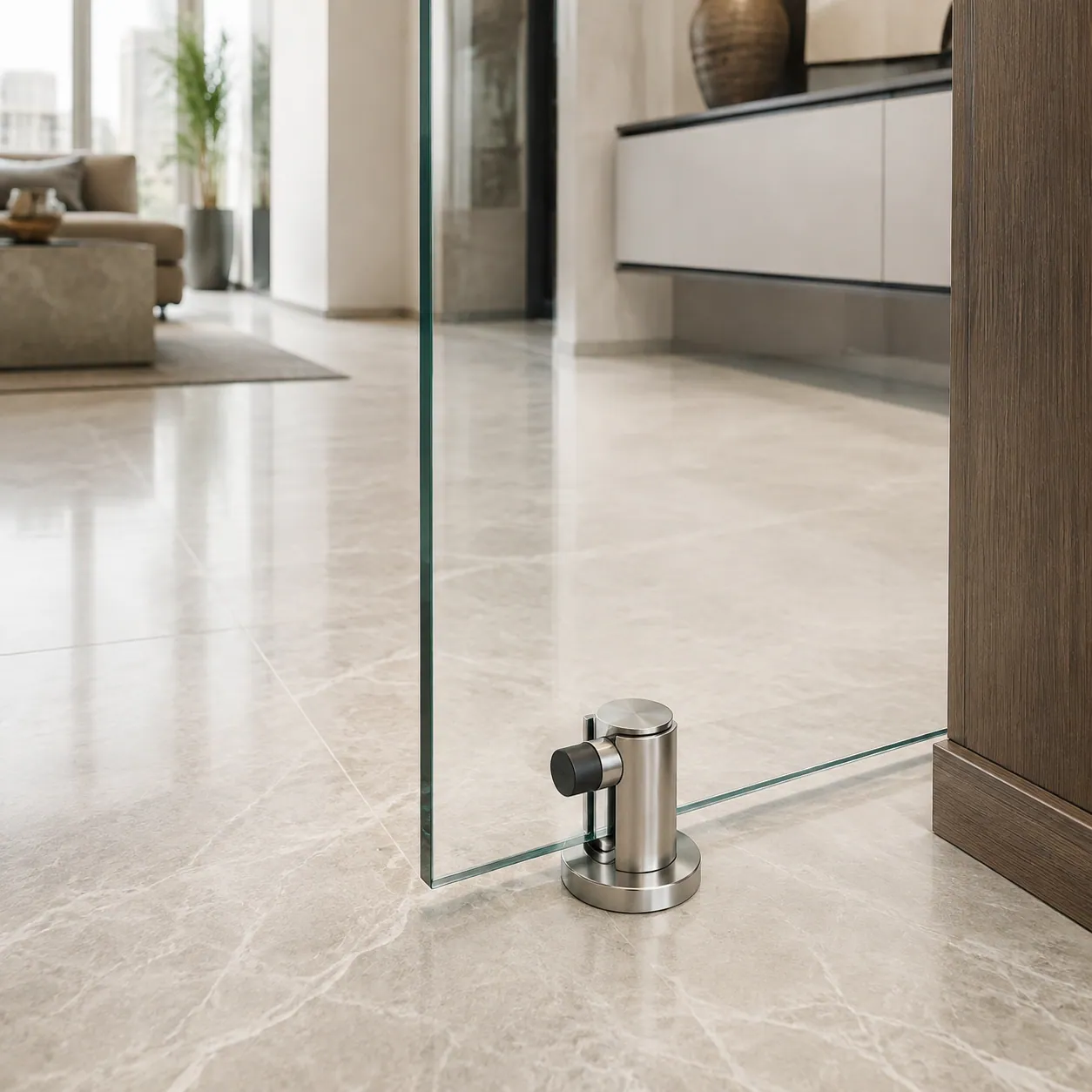
We fit door stoppers for glass doors across Bengaluru. A glass door swung by the wind, or by someone in a hurry, hits the wall behind it. The handle chips the paint, then the wall chips the handle, and the shock of every hit travels through the glass. A stopper is a small steel dome with a rubber face, fixed to the floor or the wall exactly where the door lands. It costs less than any part it protects. Fitted, from ₹650 each.
Why a glass door needs a stopper more than a wooden one
A wooden door hitting a wall dents paint. A glass door hitting a wall takes a shock into a toughened sheet, and toughened glass has one enemy: a hard knock near an edge or a corner.
Most glass doors that shatter without warning were not defective. They had been taking small knocks for months, from a wall, a handle, or another door, until an edge finally gave.
The cheapest insurance a glass door can have is a firm stop before anything hard. It also saves the wall, the handle, and the hinges, which take a wrench every time the door slams open past its natural swing.
Floor, wall or hinge stoppers, and which yours needs
A floor stopper is the standard: a low dome anchored into the floor, with a rubber ring where the door meets it. It works with every kind of glass door and does not care how hard the door arrives.
A wall stopper does the same job from the skirting or the wall, useful where the floor has underfloor services or marble nobody wants drilled.
Where neither surface can be drilled, a floor spring door has a third option: many floor springs can hold the door open at a set angle, which limits the swing itself. It is not as absolute as a physical stop, but it saves most of the hits.
We look at the door, the floor and what is behind the door, and fit the one that suits.
Fitting it in the right place, which is the whole job
A stopper in the wrong spot is worse than none. Too close to the hinge and the door levers against it, straining the fittings. Too far and the handle still reaches the wall.
We swing the door to its full natural travel, mark where its outer third lands, and set the stopper there. The rule is simple: stop the door in its outer third, where the leverage on the hinges is least.
The stopper is drilled and anchored, not glued. Stuck-on stoppers skid on the first serious hit, then the door meets the wall with the stopper lying beside it. Ours are bolted into the floor or wall, and they stay.
What stoppers cost
One stopper, supplied and fitted, is ₹650. Each additional stopper on the same visit is the same rate, so doing every swinging door in an office or a flat in one trip is straightforward.
Finishes follow the usual pattern: stainless and chrome from the van, black and brass-tone ordered in a few days.
If we are already at your site for any other door work, a stopper is fitted alongside without a second visit charge. It is the classic add-on to an alignment or closer visit, and the two together mean the door both closes properly and stops properly.