We replace the rubber seals on glass doors across Bengaluru. Every glass door carries soft strips along its edges. They close the small gaps a moving door must have, and they cushion glass against glass. Sun and age make them hard and yellow, then they crack and fall off. After that, the door rattles, the room leaks cooled air, dust walks in, and every closing sounds like a knock. New strips, cut on site from fresh rolls, start at ₹950 per door, fitted.
What the rubber on a glass door actually does
A glass door cannot touch its frame or its neighbouring panel, so every glass door has gaps built in. The rubber is what closes them without stopping the door.
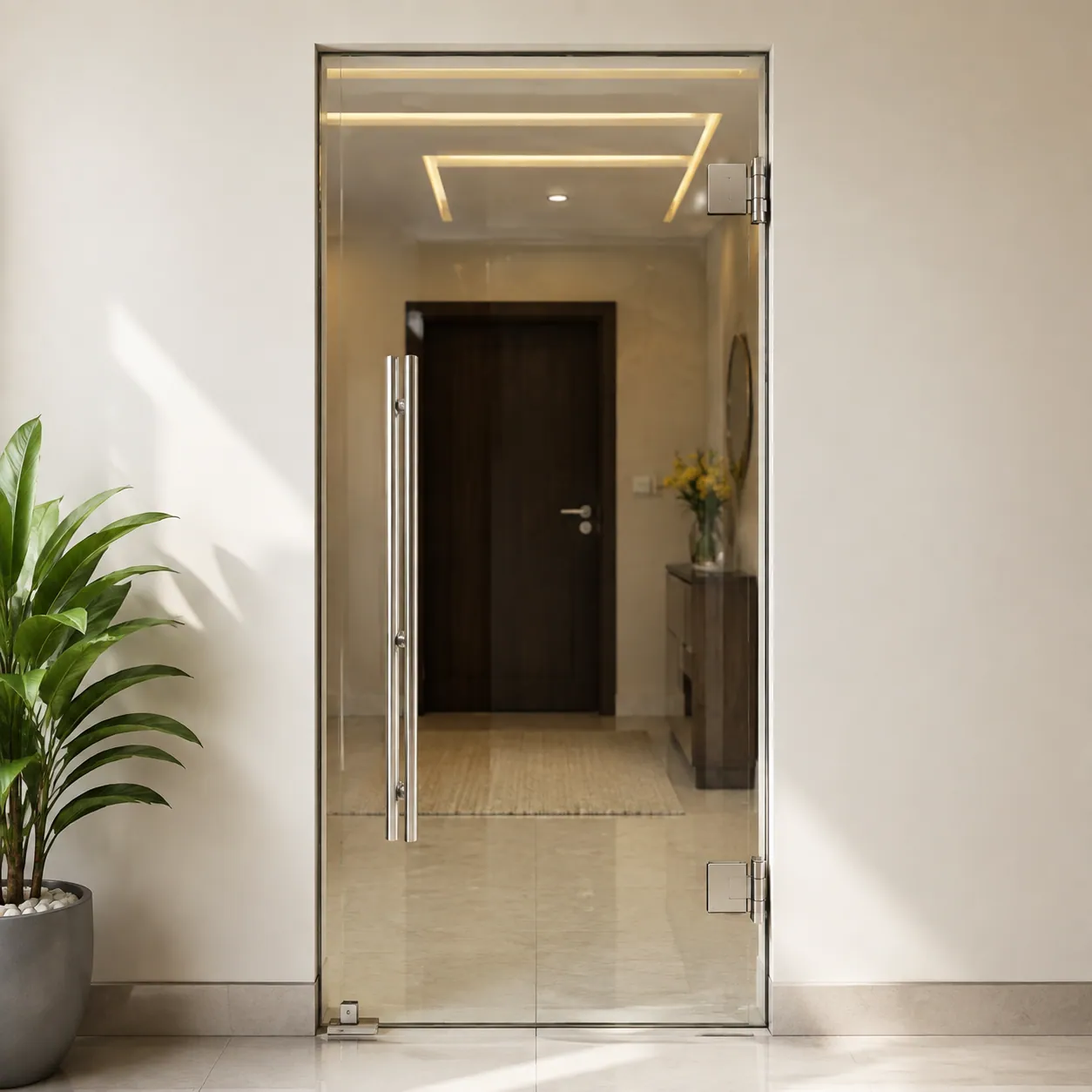
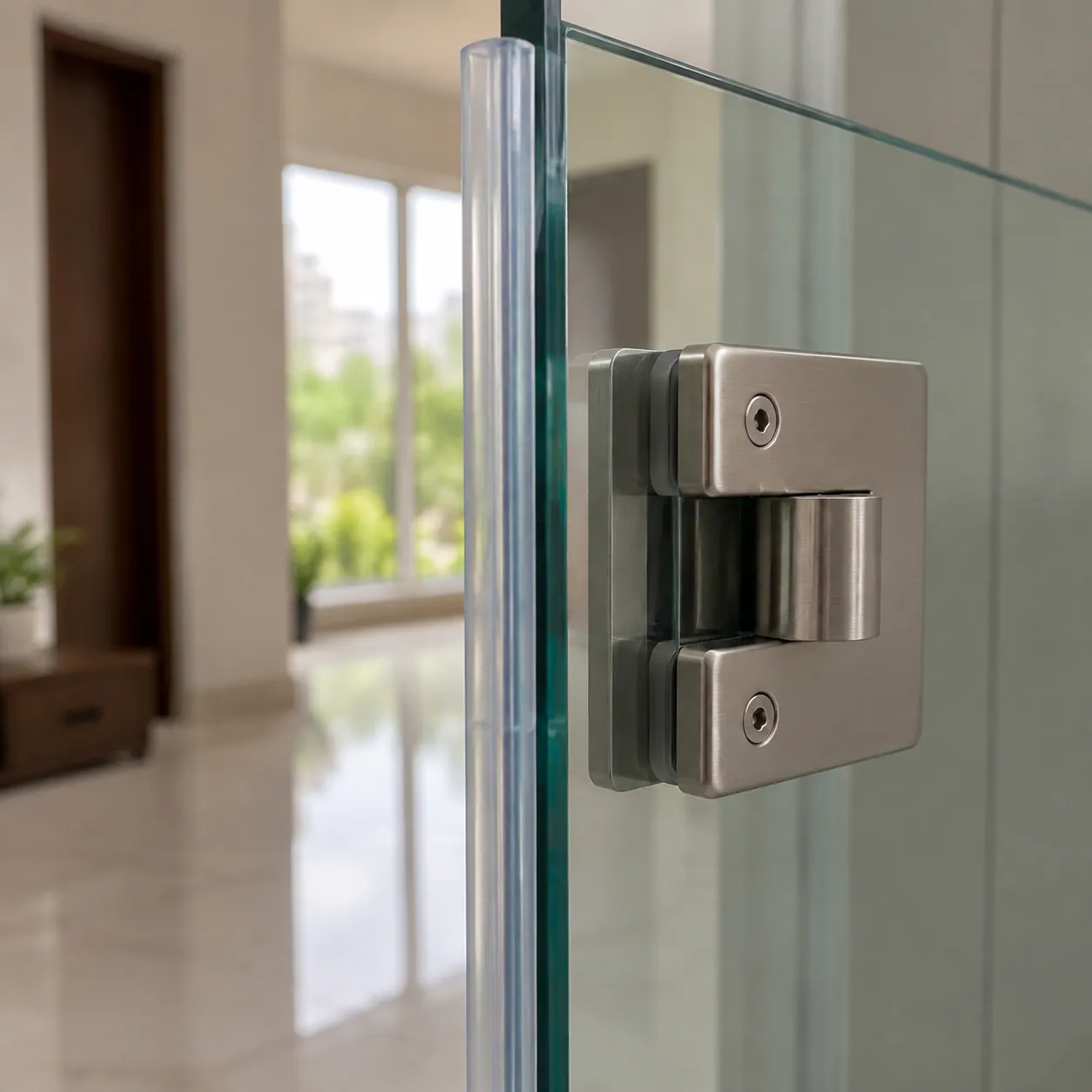
The closing edge carries a strip that meets the fixed panel or the wall. The hinge edge often carries a slim one too. An office door may have a brush or blade along the bottom. On double doors, a strip covers the meeting line between the two leaves.
When those strips fail, you feel it before you see it. The AC works harder. Traffic noise comes through a closed door. And the door claps glass on glass when it shuts, which is bad for both sheets.
How to tell the rubber has died
Look at the strip against the light. Fresh rubber is clear or evenly coloured, and soft to a fingernail. Dead rubber is yellowed, stiff, and shiny where it has glazed.
Run a finger along it. If pieces flake, or whole lengths have already dropped off and are lying by the door, it is gone.
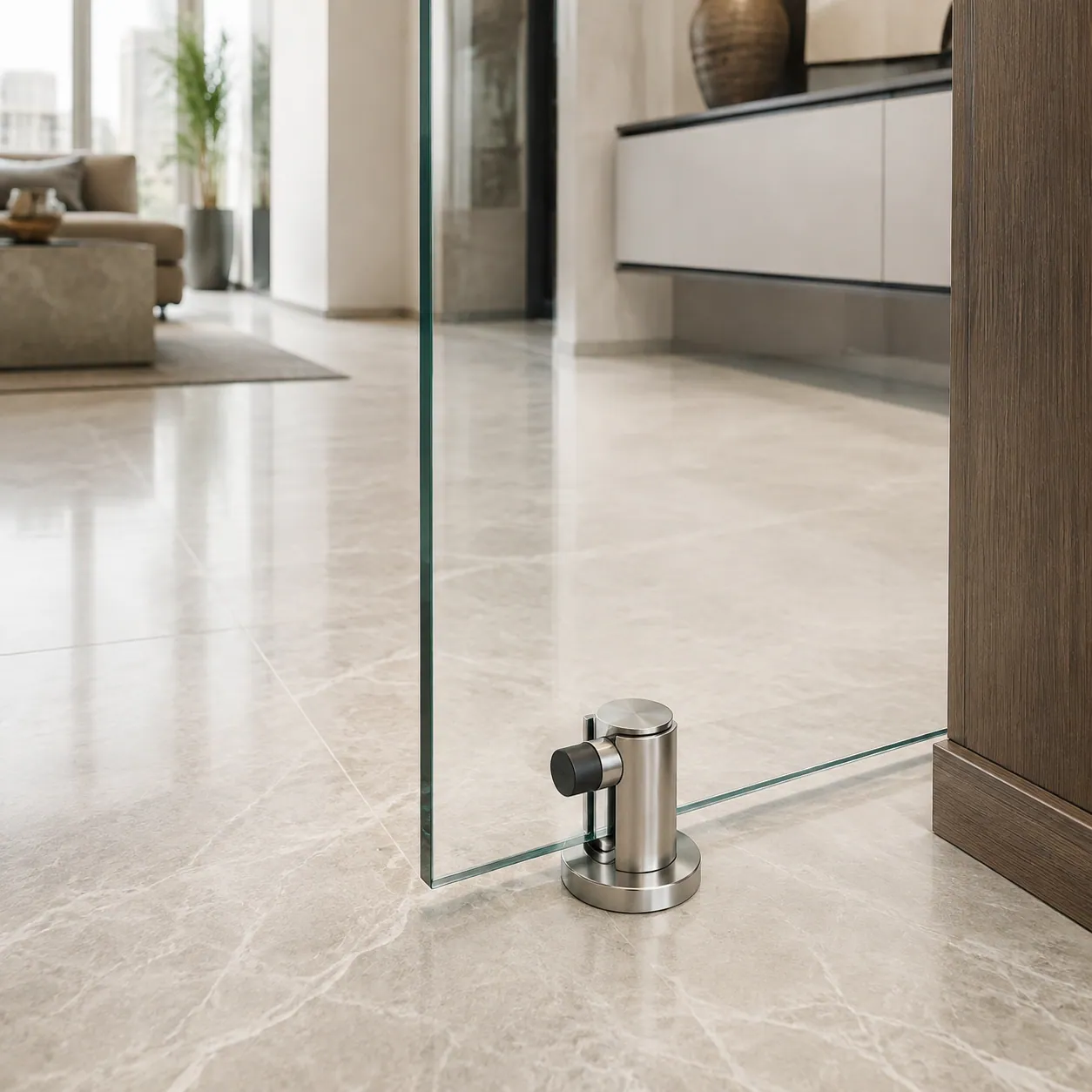
Listen to the door close. A soft thud is rubber doing its work. A hard clack is glass meeting glass or metal, with nothing between.
Bengaluru sun through west-facing glass ages seals fastest. Doors near a balcony or a window often fail years before the same door in an inner corridor.
How we renew the seals
We carry rolls of the common profiles: push-on edge strips in a few glass thicknesses, bottom sweeps, and meeting-stile strips for pairs of doors. The strip is cut to your door on site, so there are no short joins and no stretched corners.
The old strip comes off first, along with the hardened residue it leaves, because new rubber will not sit straight on old crumbs. The glass edge is cleaned, and the new strip is pressed on dry. No glue on the glass.
While we are at the door we check its alignment. A door that has tilted chews through one end of a seal in months, and there is no point fitting fresh rubber to a crooked door without saying so.
The price of a reseal
One door, resealed all round with standard clear strips, starts at ₹950. That is the strip, the cutting, the cleaning and the fitting.
A double door with a meeting strip costs a little more, because it carries more length. A magnetic closing strip, the kind shower doors use, is priced as its own part. Black and coloured rubber cost slightly more than clear and may need ordering.
Several doors share one visit well. Resealing every door on an office floor in one trip is the cheapest per door this job gets.