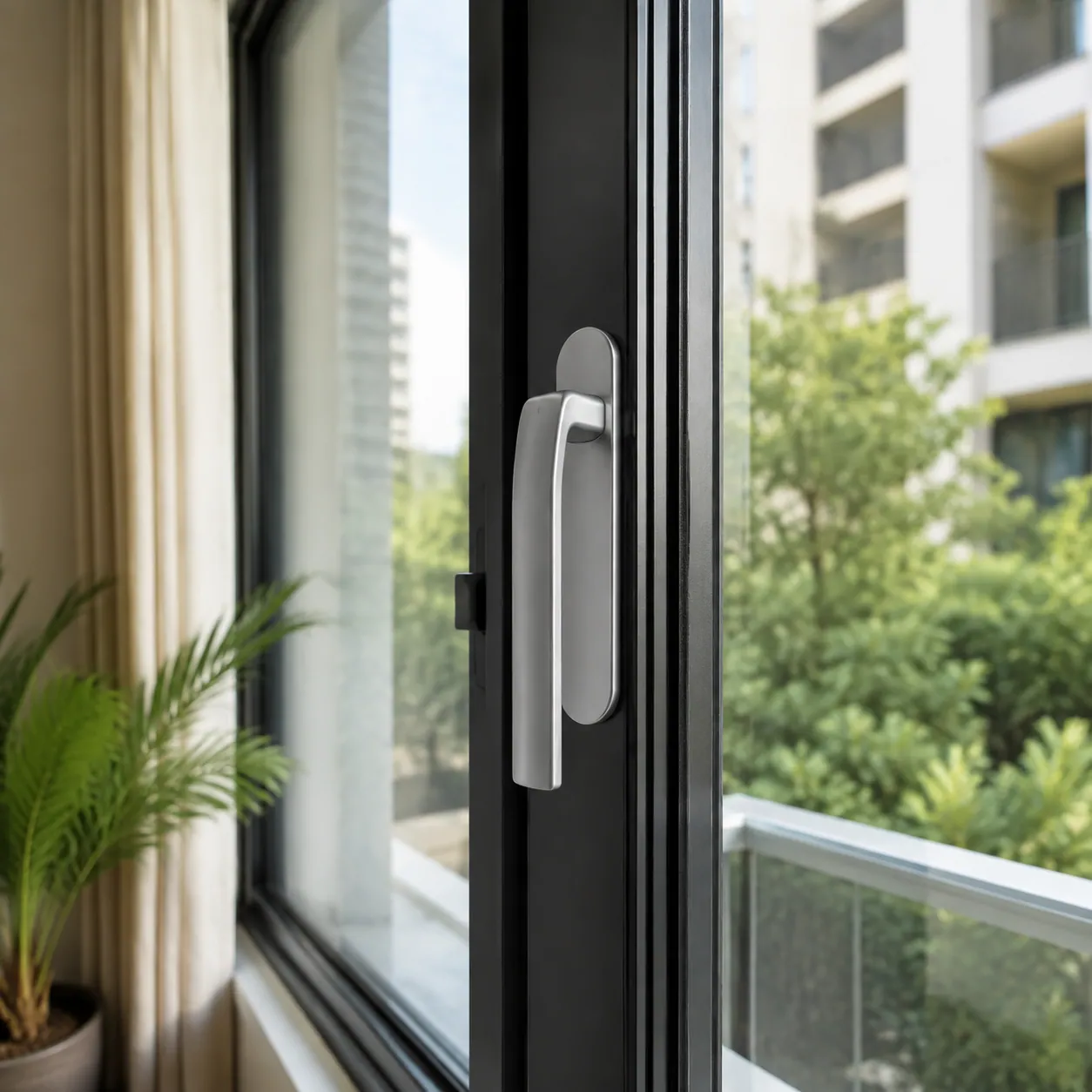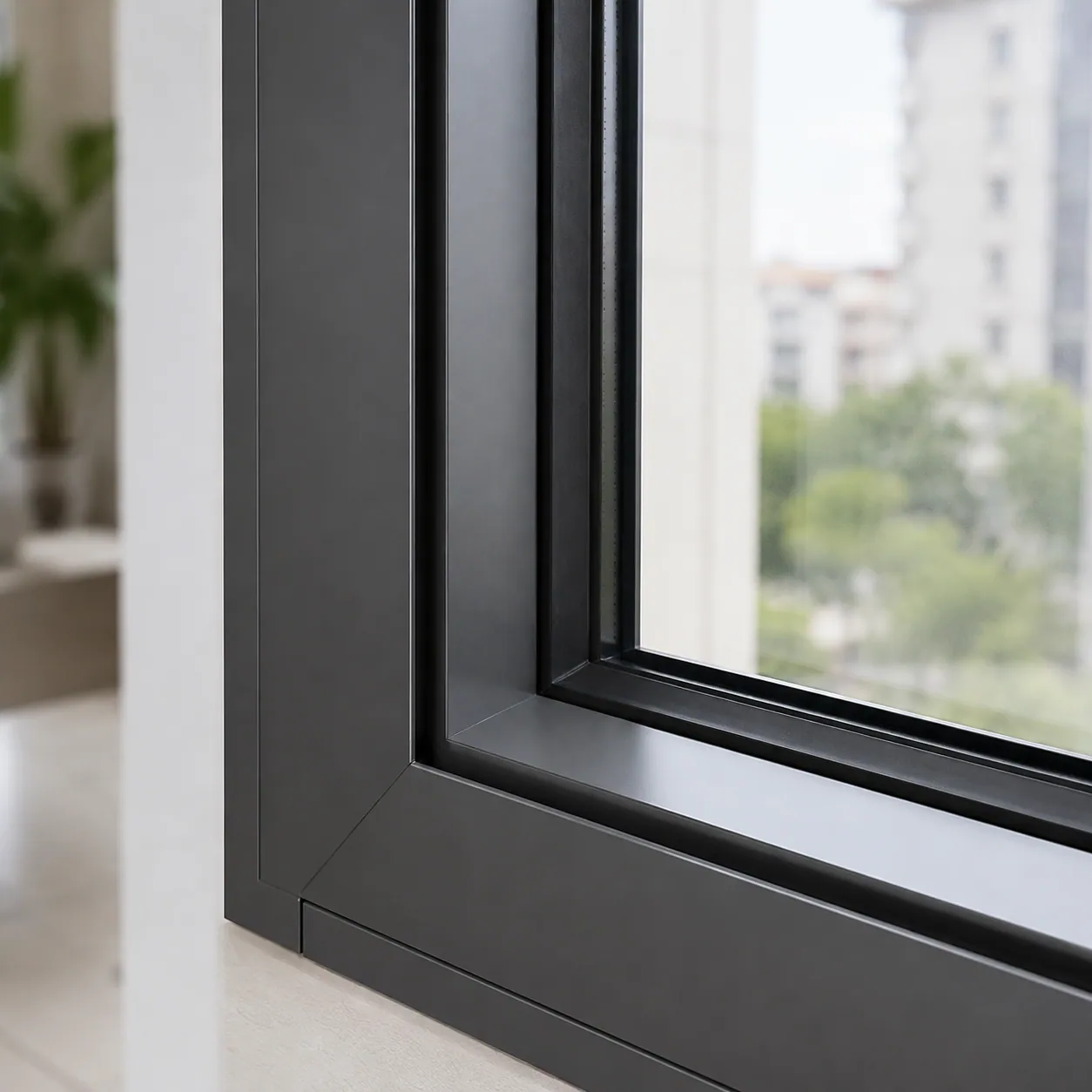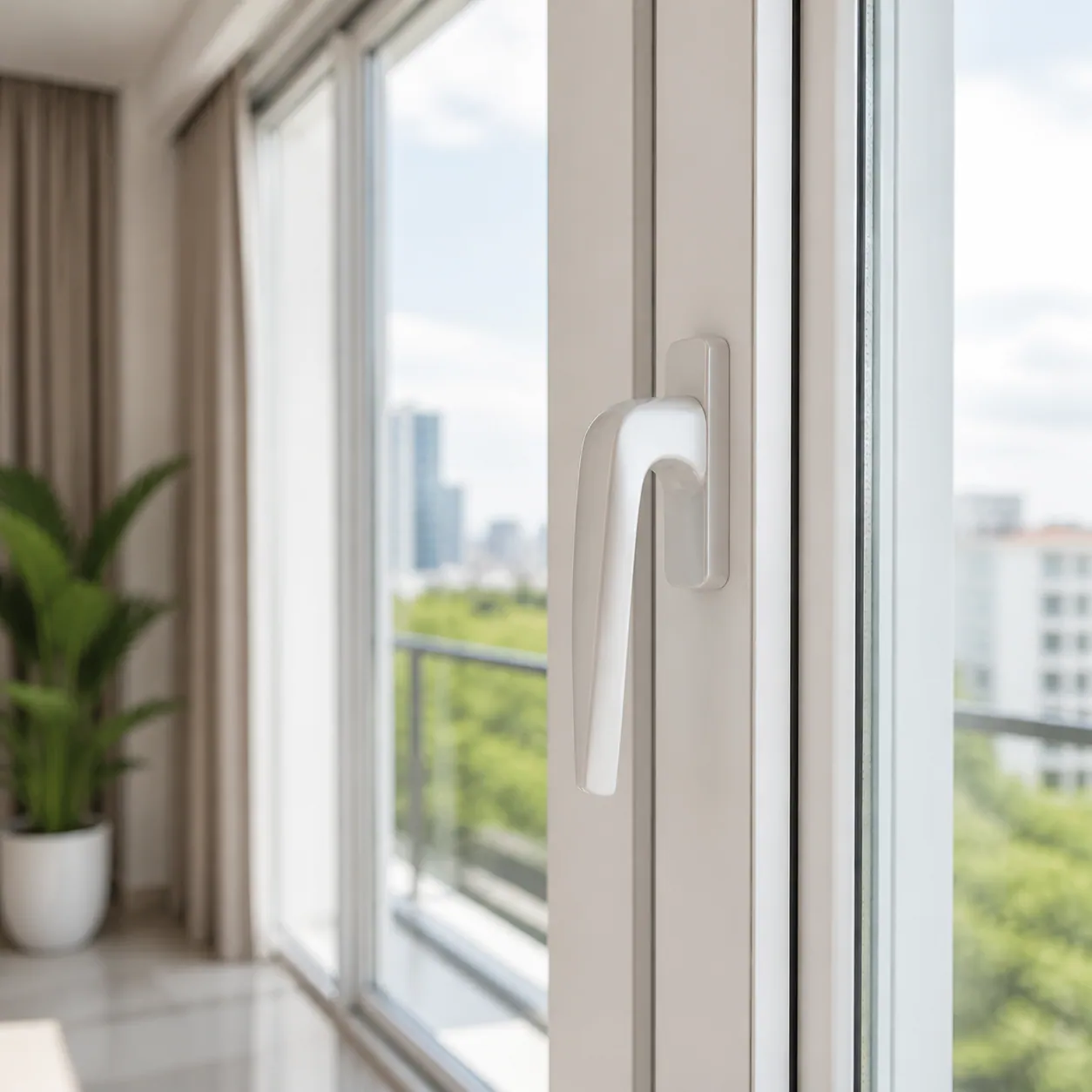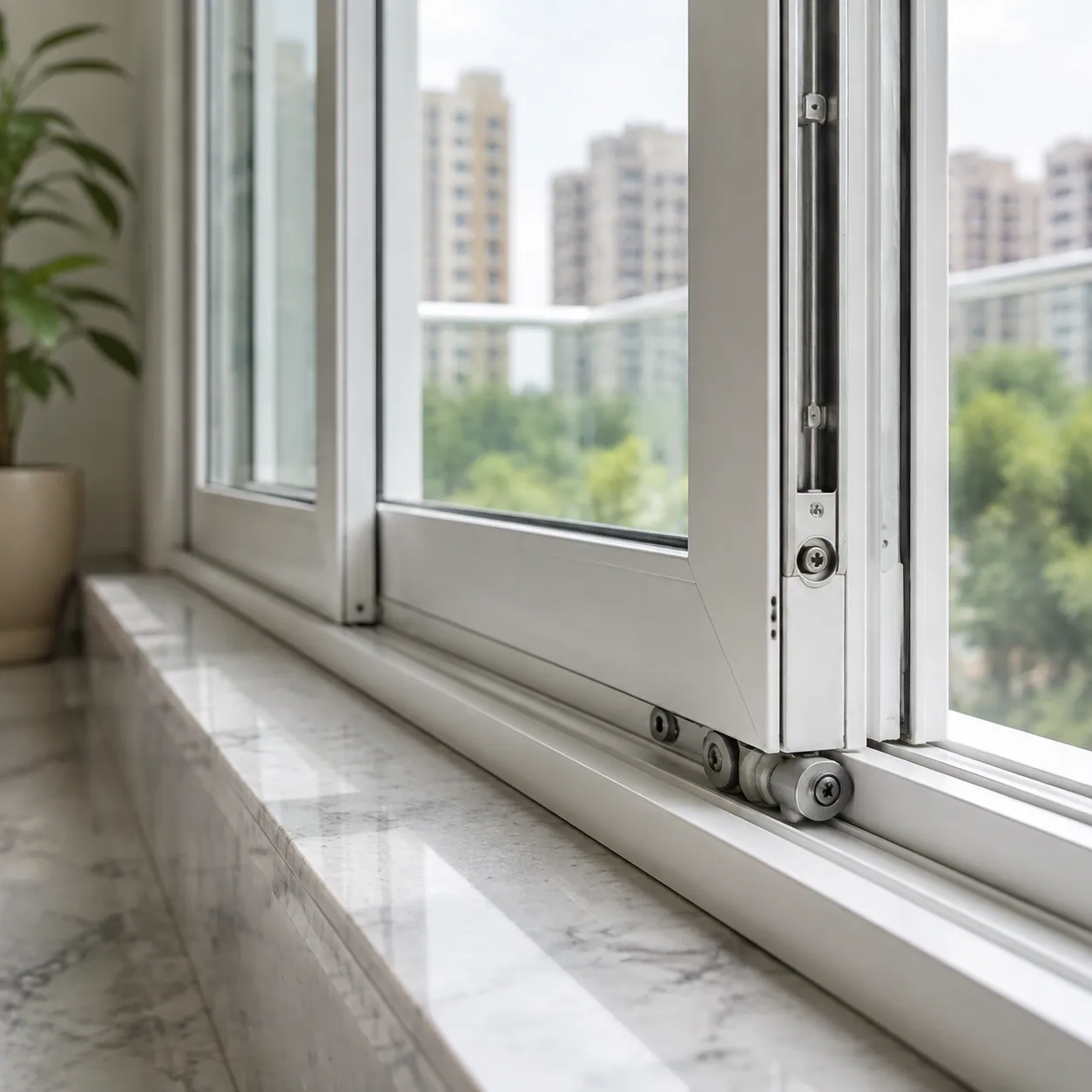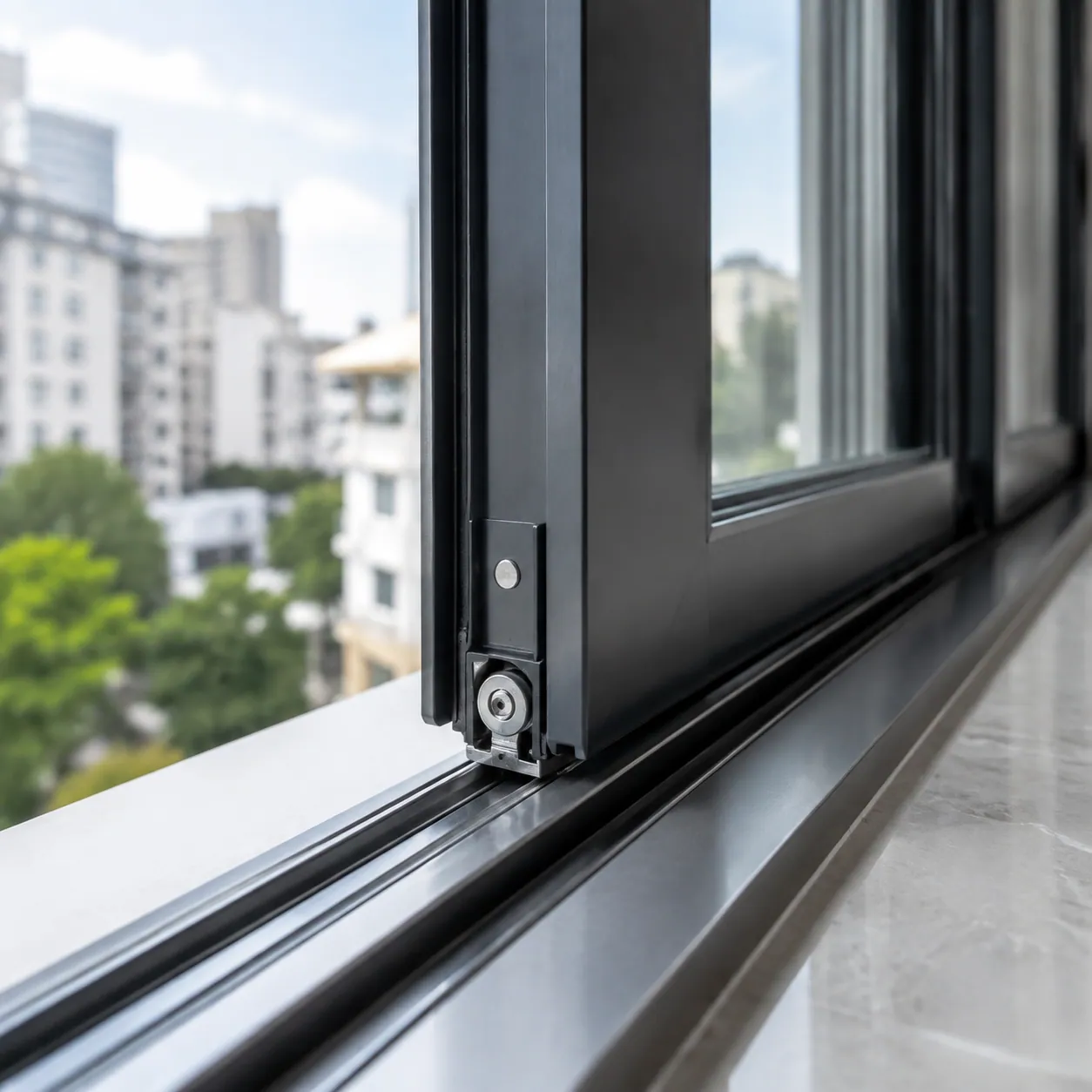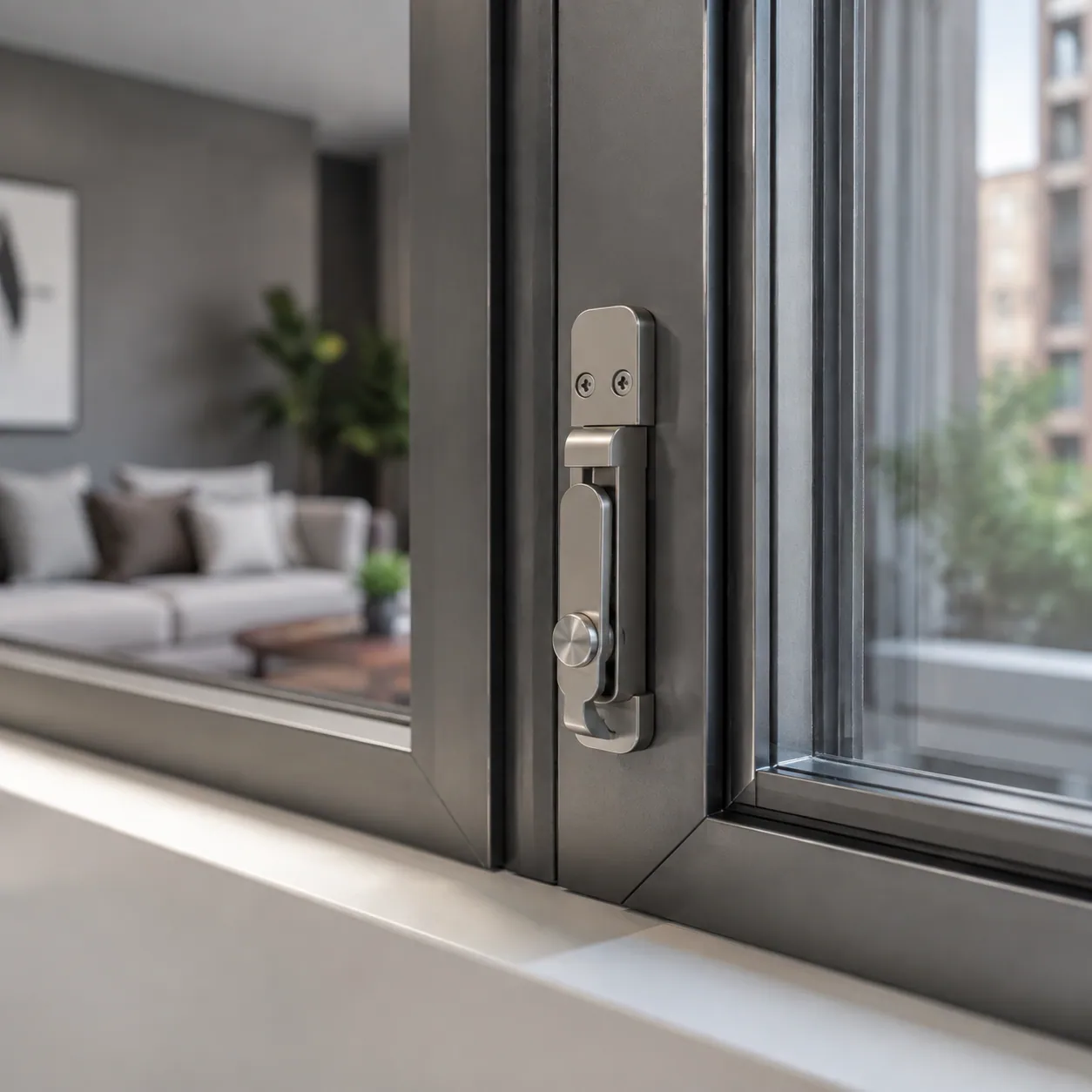
We replace aluminium window locks across Bengaluru. The lock on a sliding aluminium window is a small spring catch that snaps into the frame and holds the shutter shut. Springs tire, castings crack, and keepers wear round, and then the window can be slid open from outside with one hand. Most people discover this during a rainstorm or after a security scare, and most flats have at least one window quietly living like this. New locks, fitted and set to bite, start at ₹850 each.
The quiet failure of window catches
A window lock rarely announces its death. The spring weakens gradually, so the catch still clicks, just with less and less hold behind it. The window looks locked. It is resting shut.
The test takes five seconds: lock the window, then try to slide it open with a firm pull. A healthy catch stops you cold. A tired one gives a little, then lets go.
Worn keepers fail the same way. The notch the catch drops into wears round at its edge, and a round edge is a ramp. The catch rides up and out under a pull it should have resisted.
We suggest walking the whole house with that five-second test once a year. The windows that fail it are exactly the list for one repair visit.
Security, and what a window lock can honestly do
A standard window catch keeps a window closed against wind, rain and casual pulls. It is not a safe. Anyone determined enough to break glass will not be stopped by any catch.
What a good catch does stop is the silent entry: the slid-open window that leaves no broken glass and no noise. Ground floor windows, windows beside a drainpipe, and windows opening onto a shared corridor earn the upgrade to a key-locking catch, which cannot be flicked open even if someone reaches through a gap or cuts the mesh.
We fit both types. On the visit we will tell you plainly which windows in your home justify the keyed version and which are fine with standard. It is a few hundred rupees of difference on the windows that face the real world.
Fitting and setting the new lock
The old catch comes off, and the state of the frame under it tells the story: stripped screw holes get fresh fixing points or inserts, the same discipline as our handle work.
The new catch goes on, and then the part that separates a fitted lock from a working one: setting the keeper. The catch must land fully home when the shutter closes normally, without slamming, without lifting the shutter by hand. We adjust until it does.
Last, the pull test, from inside and, where reachable, from outside. The window has to refuse a real tug. That is the whole point of the part, and it is checked before we leave, window by window.
Cost per window, and doing the house at once
A standard catch, supplied and fitted, starts at ₹850. Key-locking catches cost more, priced as the part plus the same fitting. Every additional window on the same visit is the same per-window rate.
Because the failure is silent, the usual booking after the walk-around test is three or four windows, not one. They share the trip, and the whole house ends up actually locking, usually inside a single morning.
If a catch turns out to be healthy and only the keeper needed setting, that window costs you an adjustment, not a part. We fit what the window needs, not what the visit could bill.