In this guide
- Types of glass for a home: the short answer
- Float, toughened and laminated: the three strength types of glass
- Double glazed glass: two panes for noise and heat
- Frosted, fluted and switchable: the privacy types of glass
- Tinted and reflective glass: the sun-control types
- Lacquered glass and mirror: the decorative types of glass
- Which type of glass goes where: room by room
- How to choose a type of glass in four questions
- What changes the cost between types of glass
- Mistakes people make when choosing glass types for a home
- A checklist before you order any type of glass for your home
Key takeaways
- Most home glass is one base glass, treated differently. It is strengthened, layered, textured, coloured or coated to do a job.
- Toughened glass is the safe default wherever a person can fall against the glass: doors, showers, partitions, low windows and table tops.
- Laminated glass stays in place when it breaks. That is why it is usual on roofs and common on railings at height.
- Privacy has three answers: frosted, fluted or switchable glass. They differ in look, light and upkeep.
- For windows, start with clear toughened glass. Add double glazing only where road noise or afternoon heat is the real problem.
Types of glass for a home: the short answer
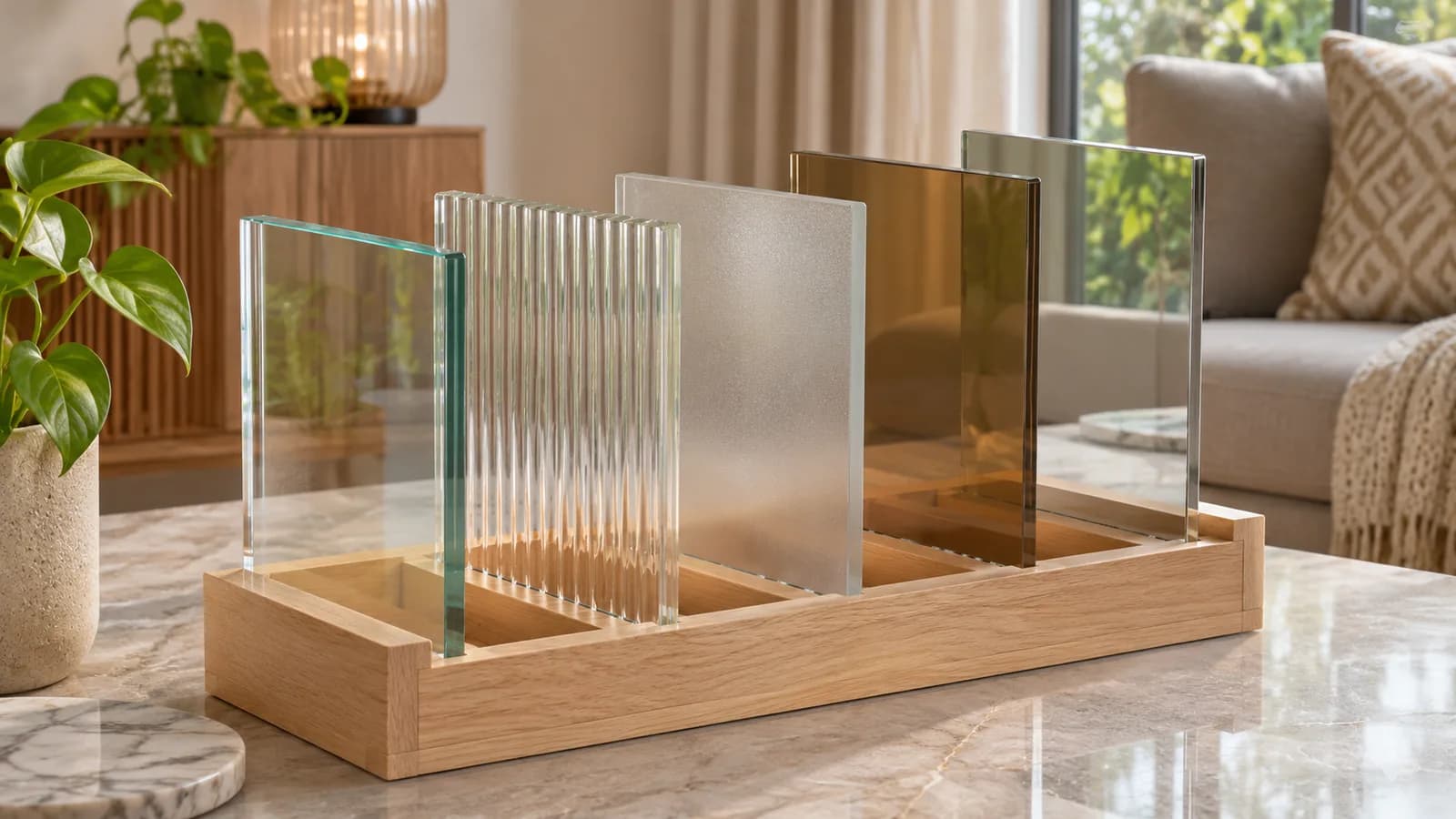
A glass shop will show you ten or more kinds of glass. That feels like a lot to learn. It is simpler than it looks. Almost every type of glass in a home starts as the same flat sheet. It is then strengthened, layered, textured, coloured or coated for one job. Once you know the job, the type usually picks itself.
Three questions sort most choices. Can a person fall against this glass, or can it fall on a person? Do you need privacy through it? Does strong sun or road noise hit it? The first question decides the strength type. The second decides the finish. The third decides whether you need a second pane or a coating.
This guide explains each type in plain words. Then it goes through an Indian home room by room: windows, wardrobes, kitchen cabinets, the pooja room, bathrooms and balconies. Where a topic needs more depth, we link the guide or the service page that owns it.
Float, toughened and laminated: the three strength types of glass
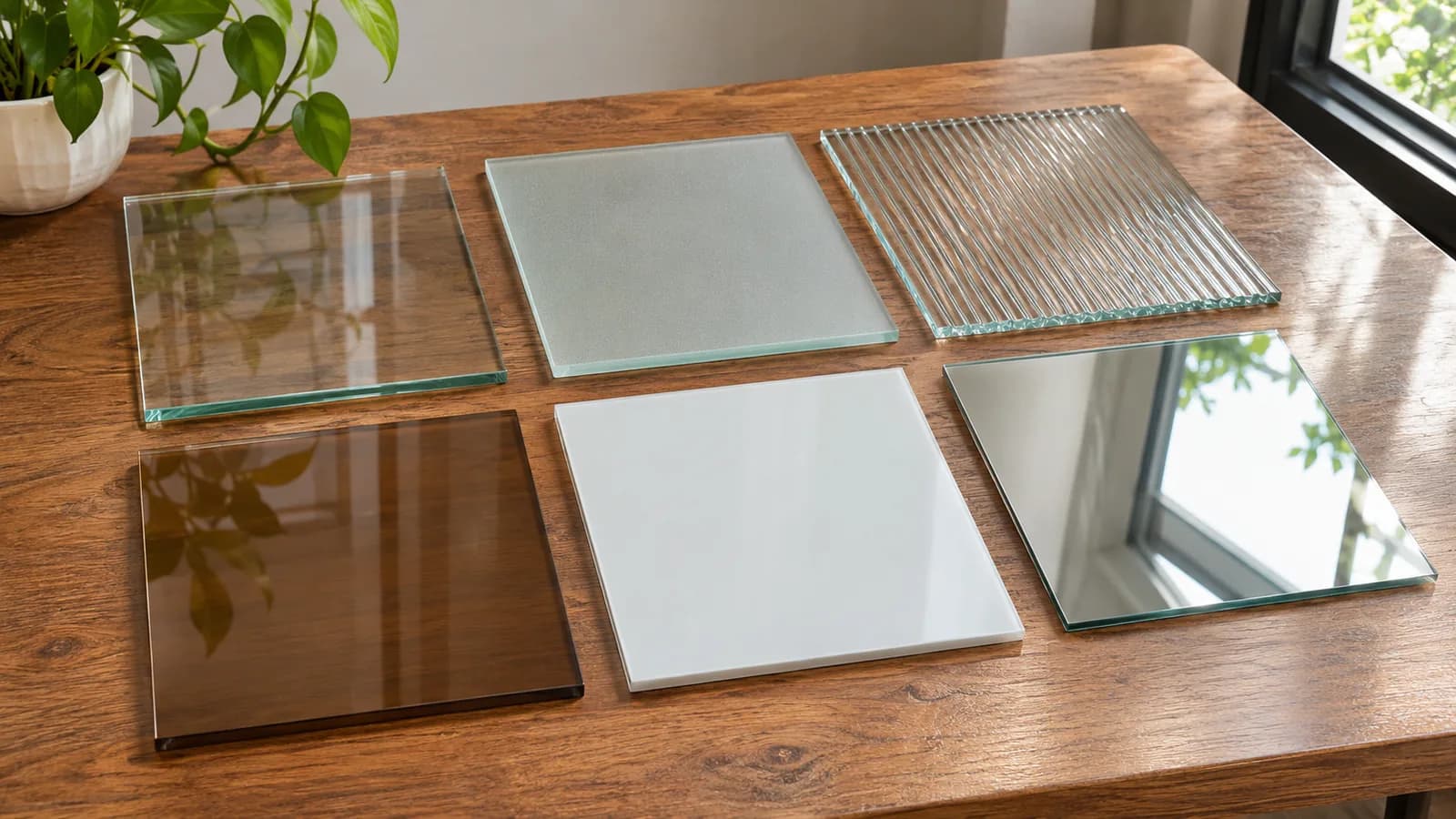
Float glass is ordinary flat glass. People also call it plain glass, normal glass or annealed glass. It is clear, flat and the cheapest of the three. Its weakness is how it breaks. Float glass breaks into long, sharp pieces that can cut deeply. So it belongs only where nobody can fall against it.
Toughened glass is float glass that has been heated and then cooled very fast. The trade also calls it tempered glass. It is commonly described as four to five times stronger than float glass of the same thickness. If it does break, it breaks into small blunt pieces. All cutting and drilling happens before toughening, because the finished sheet cannot be cut. Our guide on toughened glass vs normal glass explains the difference in full.
Laminated glass is two sheets bonded together with a clear plastic layer between them. A car windscreen is laminated glass. When it breaks, the pieces stay stuck to the layer, so the panel stays in its place. The two sheets can be float glass or toughened glass. Laminated toughened glass gives both benefits: strength first, and a panel that holds together afterwards.
| Type | How it breaks | Where it belongs at home |
|---|---|---|
| Float (plain, annealed) | Long sharp pieces | Small framed panes out of reach, picture frames, the base sheet for mirrors |
| Toughened (tempered) | Small blunt pieces that fall away | Doors, showers, partitions, table tops, shelves, large or low windows |
| Laminated | Cracks, but stays in one sheet | Glass overhead, and windows where security or sound matters |
| Laminated toughened | Cracks into small pieces that stay in place | Roofs, skylights, and railings where extra margin at height is wanted |
Thickness is a separate choice from type. A shower door, a railing and a window can all be toughened, yet each needs a different thickness. Our toughened glass thickness guide gives the common ranges for each use.
Double glazed glass: two panes for noise and heat
Double glazed glass is two panes with a sealed gap of dry air or gas between them. The trade calls one sealed piece a double glazed unit, or DGU. The gap slows heat and sound passing through the glass. It is the glass behind most windows sold as soundproof.
Two things decide whether it is worth the money. First, the noise or heat must be coming through the glass itself. If it comes through gaps around the frame, new seals do more for less. Second, the frame must be made for the thicker unit. A normal single-glass frame usually cannot hold it.
- We fit soundproof double glazed windows in Bengaluru, in a new uPVC or aluminium frame.
- If an existing unit has mist between the panes, its seal has failed. See double glazed window foggy inside.
- For noise, read how to soundproof windows before you spend on glass.
Frosted, fluted and switchable: the privacy types of glass
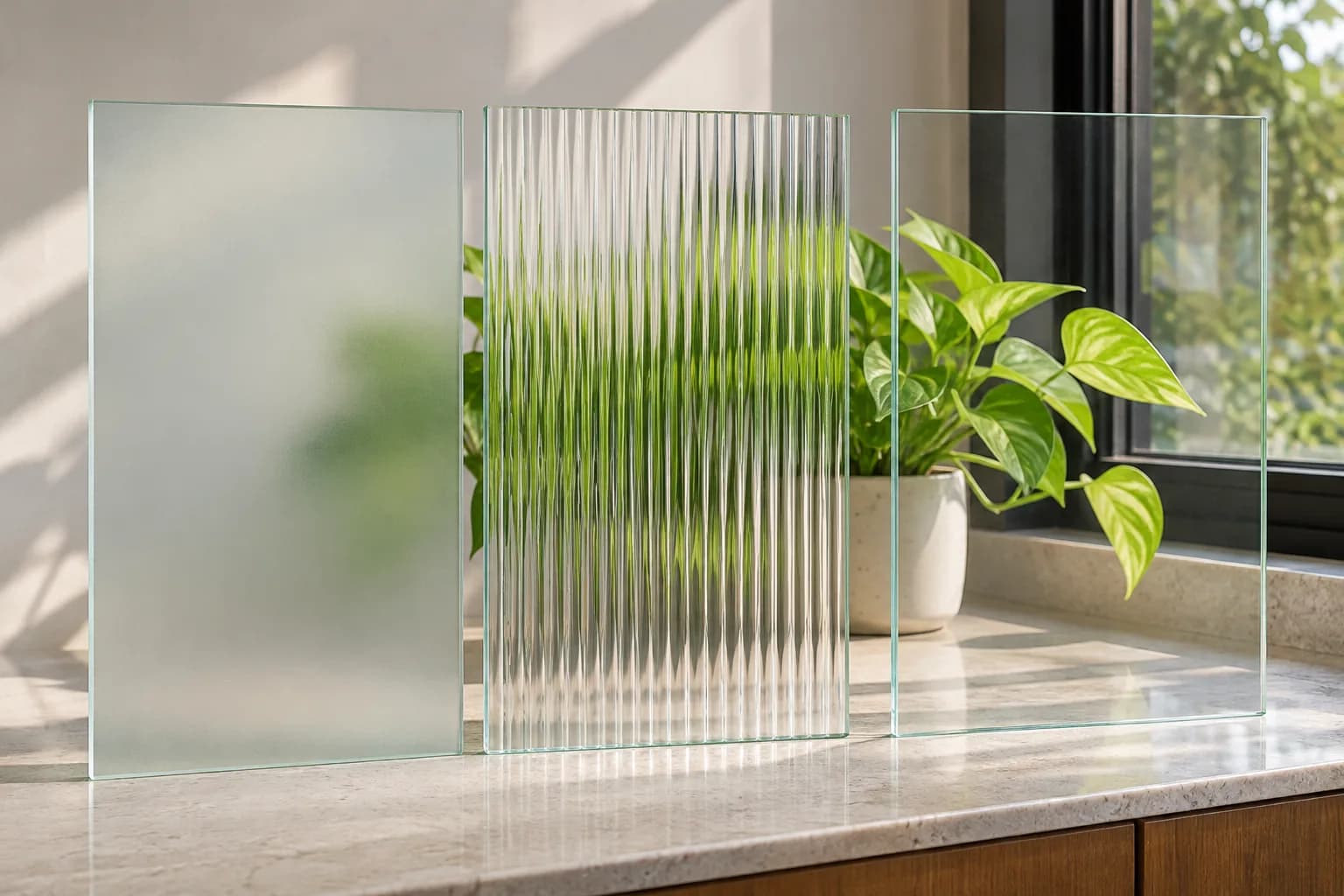
Frosted glass has a surface that scatters light, so you see a white blur instead of a view. The frosting can be etched into the glass with acid, sandblasted, or added as a film. Etched and sandblasted frosting is permanent. Film costs less and can be changed, but it may lift at the edges in a wet room over the years.
Fluted glass has vertical ribs formed into the glass itself. It is also called reeded or ribbed glass. The ribs bend the view into soft vertical bands. Light still comes through, and there is nothing on the surface to peel. Our fluted glass guide covers partitions, doors, wardrobes and showers.
Switchable glass, also called smart glass or PDLC glass, changes from frosted to clear when you switch its power on. It needs a low-voltage supply. It suits a bathroom wall facing a bedroom, a home office or a meeting room. See switchable smart glass for how it is fitted.
Not sure which privacy level a bathroom needs? Our guide on frosted or clear glass for a bathroom compares them for that one room.
Tinted and reflective glass: the sun-control types
Tinted glass has colour through its whole body. Grey, bronze, green and blue are the common tints. It cuts glare and some of the sun's heat, and it adds a little daytime privacy. It also makes the room darker all year, including in the monsoon. The glass itself absorbs heat and can feel warm to touch.
Reflective glass has a thin metallic coating that sends part of the sunlight back. By day it looks like a mirror from outside, so people cannot see in. At night the effect reverses. With lights on inside, the room is visible from the street and you need curtains.
Be honest with yourself about heat. A tint or a reflective coating alone usually helps less than people hope, because hot air also enters through gaps around the frame. For a west-facing room, read heat coming through windows and our guide on reducing heat from windows. Where the outside look of a flat will change, ask your society first.
Lacquered glass and mirror: the decorative types of glass
Lacquered glass has a coat of colour on its back face. It is also called back-painted glass. From the front you see a deep, glossy, solid colour. It is used for wardrobe shutters, kitchen splashbacks, wall panels and the back wall of a pooja unit. It wipes clean and holds its colour well.
A mirror is clear glass with a reflective silver coating on the back. In a bathroom, steam and splashes can reach that coating at the edges and turn it black. A copper-free mirror with sealed edges resists this better, so ask for it in damp rooms. See mirror turning black at the edges for the cause.
Mirrors, table tops, shelves and back-painted panels are all made to measure. Our mirror and custom glass installation page covers these pieces in Bengaluru, Mumbai, Pune and Delhi NCR.
Which type of glass goes where: room by room
Types of glass for windows and uPVC windows
Most home windows hold clear glass in an aluminium or uPVC frame. Small panes that sit high are often plain float glass, and that is acceptable. A large pane, a low sill or a window a child can reach should be toughened. The best glass for most home windows is clear toughened glass. Add double glazing only where road noise or afternoon heat is the real problem.
A uPVC window takes the same glass types as any other frame. That means clear, toughened, tinted or reflective glass, frosted glass for a bathroom, or a double glazed unit. The frame decides how thick the glass can be, so the glass and the frame are chosen together. We fit new uPVC sliding windows and aluminium sliding windows in Bengaluru. Glass replacement in an existing window is available in every city we serve. Still choosing the frame? See uPVC vs wooden windows and doors.
Types of glass for wardrobe shutters
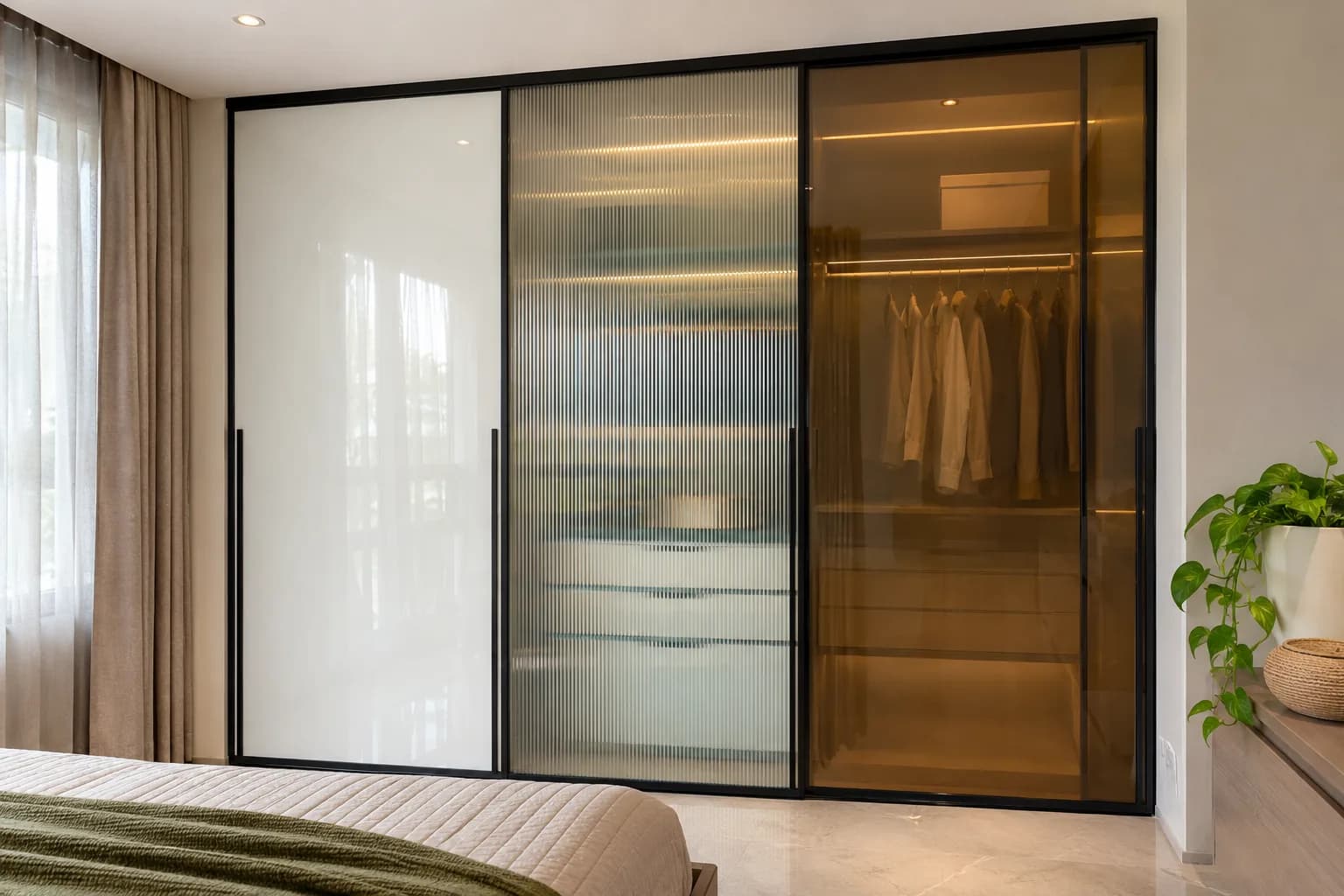
A wardrobe shutter is the door of the wardrobe. Glass shutters come in five common finishes. Lacquered glass gives a solid colour and hides everything. Fluted glass blurs the contents and glows with inside lights. Tinted bronze or grey glass shows a dark outline. Clear glass shows everything, so it suits a tidy display. Mirror shutters save wall space in a small bedroom.
Whichever finish you choose, ask for toughened glass, or a safety backing on a mirror. A sliding shutter that jumps its track can hit something hard. In Bengaluru, our premium range Luxy builds glass wardrobes with these finishes. If a shutter you already have drags or has broken glass, see wardrobe sliding door repair.
Types of glass for kitchen cabinets and splashbacks
Kitchen cabinet shutters usually use clear, fluted, frosted or tinted glass in a slim aluminium frame. Clear glass shows your crockery. Fluted glass forgives a busy shelf. All of them should be toughened. Keep glass shutters away from the space right above the hob, where oil and steam are heaviest.
A splashback is the wall panel behind the counter. In glass, it is back-painted toughened glass, because plain glass will not take the heat behind a hob. The colour is chosen before the glass is toughened. Luxy builds glass kitchen cabinets in Bengaluru. If you are dividing the kitchen from the dining area, see kitchen glass partition design.
Types of glass for a pooja room
A pooja room or pooja corner usually wants soft light and a little privacy. Frosted and fluted glass both give that. Many families choose a frosted door with an etched symbol or border. Bronze tinted glass gives a warm tone with brass lamps. For the back wall, lacquered glass in white or a warm colour reflects the lamp light and wipes clean of oil and soot.
Use toughened glass for any pooja door or partition. It handles the warmth of a lamp better than plain glass. Still, keep a diya or incense a clear distance from the glass, and never leave a flame unattended. Custom etched motifs are specialist work and are not our trade. A pooja enclosure itself is built like a small glass partition with a door.
Types of glass for bathrooms, balconies and stairs
A shower partition is toughened glass, usually clear, fluted or frosted. See the shower cubicles page for every build. A balcony or stair railing is thicker toughened glass. Laminated toughened glass is used where a society asks for it, or where you want extra margin at height. We build new balcony glass railings in Bengaluru and across Delhi NCR. A glass roof over a balcony or terrace is usually specified as laminated toughened glass, so ask which glass is quoted. See pergola installation for covered terraces.
| Where | Usual type of glass | Why |
|---|---|---|
| Bedroom and living room windows | Clear, toughened where large or low | Light and safety; add double glazing for a noisy road |
| Bathroom window | Frosted or fluted | Privacy with daylight |
| Shower partition and door | Toughened: clear, fluted or frosted | People slip in bathrooms; the glass must break safe |
| Wardrobe shutters | Lacquered, fluted, tinted or mirror | Hide or show the contents; all on a safe base |
| Kitchen cabinets | Clear, fluted or frosted, toughened | Easy to wipe; fluted hides clutter |
| Kitchen splashback | Back-painted toughened | Takes heat; wipes clean |
| Pooja room door or screen | Frosted, fluted or bronze tinted, toughened | Soft light and a calm look |
| Balcony and stair railing | Thick toughened, or laminated toughened | It is a barrier at height |
| Glass roof or skylight | Laminated toughened | Broken glass must not fall on people |
| Room divider or study partition | Toughened: clear, fluted or switchable | Light for both sides, privacy on demand |
How to choose a type of glass in four questions
- Can someone fall against it, or can it fall on someone?If yes, plain glass is out. Use toughened glass at body height. Use laminated toughened glass overhead, and consider it for barriers at height.
- Do you need privacy?Choose frosted for a full blur, fluted for texture and light, lacquered or mirror to hide completely, and switchable glass when you want both clear and private.
- Does sun or noise hit it?For noise or heat through the glass, look at double glazing. For glare, a light tint helps. Check the frame seals first, because gaps undo good glass.
- What will hold it?The frame, clamps or hinges decide the thickness and the edge finish. Decide the glass and its fixing together, at the measuring visit, not from a catalogue.
Book a measuring visit. We suggest the type of glass for the spot and give you the price in writing.
What changes the cost between types of glass
We print no figures in this guide, because rates move. What stays true is the order. Plain clear glass costs the least. Each treatment adds to it: toughening, then tint or frosting, then fluting, lamination or lacquer, then double glazing, with switchable glass at the top.
- Thickness and area. More glass and thicker glass cost more, and thick panels need stronger fittings.
- Processing. Holes, notches, polished edges and shaped corners are all done by hand or machine before toughening.
- Made to order. Toughened, laminated and double glazed pieces are made for your sizes and cannot be reused elsewhere.
- Access. A large panel that will not fit the lift has to be carried up the stairs, or made in two pieces.
Live starting rates are on the pages that own them: door, window and glass repair cost, glass partition cost and shower cubicle cost.
Mistakes people make when choosing glass types for a home
- Choosing by look alone. A tinted panel that looks rich in a showroom can make a north-facing room gloomy.
- Using plain glass for a table top or shelf. These take knocks at the edge. Toughened is the right base.
- Expecting reflective glass to give privacy at night. It works by day only.
- Buying double glazing for a leaking frame. Seal the gaps first. See window gap sealing.
- Fitting a normal mirror in a steamy bathroom. Ask for copper-free mirror with sealed edges.
- Changing the outside look without asking the society. Tinted and reflective glass change the building's face.
A checklist before you order any type of glass for your home
- Write down what the glass must do: safety, privacy, heat, noise or looks.
- Ask which strength type is being quoted: float, toughened or laminated.
- Ask the thickness, and why that thickness suits your span and fixing.
- See a real sample of the finish in daylight, at your home if possible.
- Confirm every hole and cut-out before the order, because nothing changes after toughening.
- Check the frame, seals and fittings, because good glass in a poor frame still leaks and rattles.
- Get the type, thickness and finish written on the quotation, panel by panel.
Glass work across the range is available in Bengaluru, Mumbai, Pune and Delhi NCR. New windows and the Luxy products are fitted in Bengaluru only. Each service page lists its cities, and where we work shows the areas.
Common questions
Which glass is best for windows in an Indian home?
Clear toughened glass suits most home windows, especially large panes and low sills. Small panes placed high are often plain float glass, and that is acceptable. Add double glazing only where road noise or afternoon heat comes through the glass itself. Use frosted or fluted glass for a bathroom window.
Which type of glass is used for uPVC windows?
A uPVC window can hold clear, toughened, tinted, reflective or frosted glass, or a double glazed unit. The frame decides how thick the glass can be, so both are chosen together. For a large or low window, ask for toughened glass.
Which glass is best for wardrobe shutters?
It depends on how much you want to hide. Lacquered glass hides everything, fluted glass blurs the shelves, tinted glass shows a dark outline and mirror saves wall space. Whichever you pick, ask for a toughened base, or a safety backing on a mirror.
Which glass is good for a pooja room door?
Frosted or fluted toughened glass is the usual choice, because it gives soft light and some privacy. Bronze tinted glass gives a warmer tone. Keep lamps and incense a clear distance from the glass, and never leave a flame unattended.
What type of glass is used for kitchen cabinets?
Kitchen cabinet shutters usually use clear, fluted, frosted or tinted toughened glass in a slim aluminium frame. Fluted glass hides a busy shelf better than clear glass. A glass splashback behind the hob should be back-painted toughened glass, because plain glass will not take the heat.
How many types of glass are used in homes?
About eleven are common: float, toughened, laminated, double glazed, frosted, fluted, tinted, reflective, lacquered, mirror and switchable glass. Most are the same base glass with a different treatment. The first three describe strength, and the rest describe the finish or the build.
Is tinted or reflective glass better for a sunny window?
Both cut glare, and reflective glass sends back more of the sun. Tinted glass darkens the room all year, and reflective glass gives no privacy at night with lights on. For real heat control, also check the gaps around the frame and consider double glazing.
Have a question this guide did not answer? Call us or send a photo on WhatsApp and we will tell you what it needs.
