In this guide
- uPVC vs wooden windows and doors: the short answer
- What a uPVC window is, and what a wooden window is
- uPVC vs wooden windows compared for Indian weather
- How wooden windows behave in monsoon, sun and termite country
- The weak points of uPVC windows that sellers skip
- uPVC vs wooden doors: main door, bathroom door, balcony door
- uPVC vs wooden windows cost in India: what moves each price
- Replacing old wooden windows with uPVC: what happens on site
- When a repair beats replacing a wooden or uPVC window
- uPVC or wood: a decision list by room
Key takeaways
- uPVC wins on upkeep and sealing. It does not swell, rot or need paint, and it closes onto rubber seals.
- Wood wins on look, feel and repairability. A carpenter can fix or refinish it for decades, if somebody keeps doing so.
- For windows in Indian weather, uPVC is the lower-effort choice. Monsoon, sun and termites all work against wood.
- For the main door, wood is still the usual choice. uPVC suits balcony and utility doors better.
- Do not replace what a repair can fix. Loose hinges, worn rollers and failed seals are small jobs.
uPVC vs wooden windows and doors: the short answer
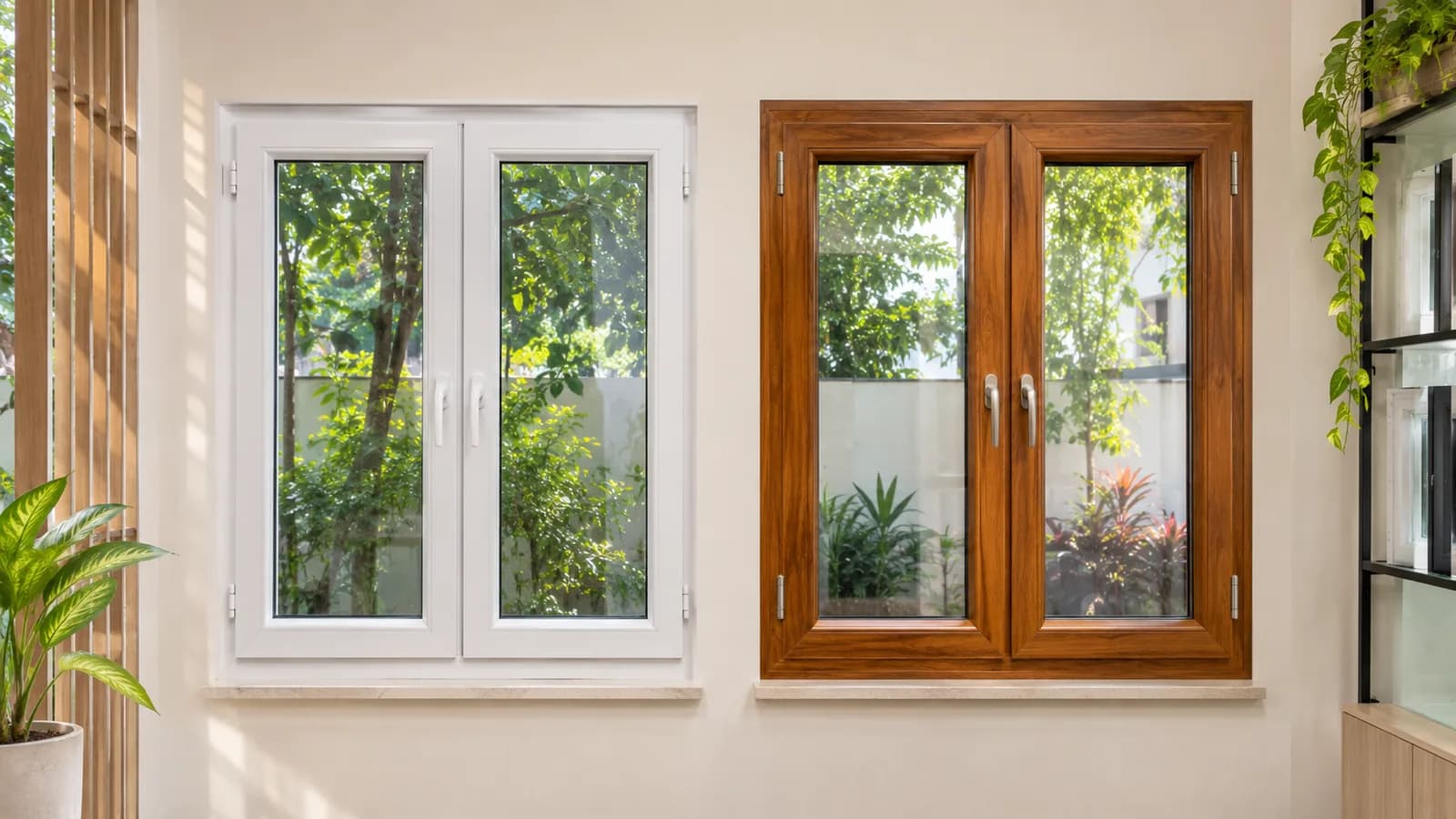
Both can be good. They fail in different ways. A wooden window fails slowly when nobody maintains it: the paint cracks, rain gets in, the wood swells and the shutter sticks. A uPVC window fails when it was a poor product or was fitted badly: it bows, leaks at the corners or loses its hardware. Choose uPVC if you want a window that seals well and needs almost no care. Choose wood if the look matters most and you will keep up the polish and repairs.
For doors the answer splits by place. A balcony or utility door faces rain, so uPVC suits it. A main door carries the look of the home, and most Indian families still choose wood there. Bathroom doors are a case of their own, covered below.
One note before we start. We fit new uPVC sliding windows and doors in Bengaluru, and we repair uPVC, aluminium and wooden door hardware. We do not make wooden windows or doors, and we do not do carpentry. So this guide has no reason to favour either side.
What a uPVC window is, and what a wooden window is
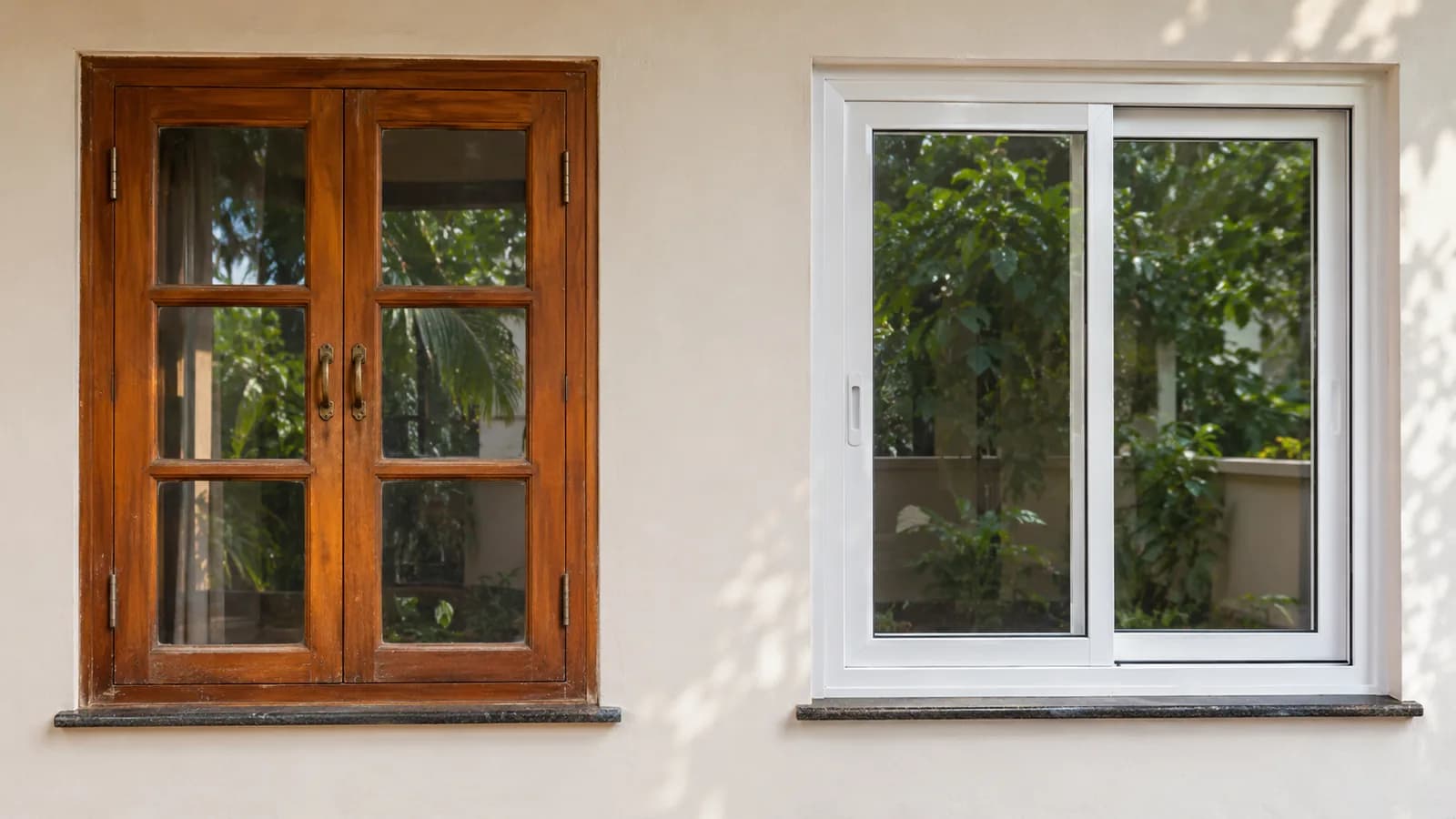
uPVC is a rigid plastic. The frame is a hollow section with several chambers inside, and steel is usually placed in it for strength. The corners are joined in a factory. The shutter closes onto soft rubber seals called gaskets. Most uPVC is white. Wood-look finishes exist, as a printed layer bonded to the surface.
A wooden window is made by a carpenter from sawn timber. Teak, sal and other hardwoods are the traditional choices, and cheaper softer woods are also used. The quality depends on the timber, on how well it was dried, which is called seasoning, and on the joints. Most wooden windows in India are casement windows, which swing open on hinges.
There is a third common material, aluminium. We compare it with uPVC in our guide to windows and doors: uPVC, aluminium and glass, so this guide stays with uPVC and wood.
uPVC vs wooden windows compared for Indian weather
| What matters | uPVC windows | Wooden windows |
|---|---|---|
| Monsoon | Does not absorb water or swell | Swells when damp; shutters stick and paint lifts |
| Strong sun | Good profiles hold colour; poor ones can yellow or go chalky | Polish and paint fade and crack; needs redoing |
| Termites and rot | Not affected | A real risk, more so near damp walls |
| Sealing against dust and rain | Closes onto rubber gaskets | Usually wood on wood, with small gaps |
| Noise | Good, because of the seals | Depends on the gaps; often poor in old windows |
| Upkeep | Wipe clean; hardware service now and then | Polish or paint every few years |
| Repair | Rollers, handles, locks and seals are replaceable | A carpenter can repair almost anything |
| Look and feel | Clean and plain; wood-look foils are a copy | Warm, natural, can be carved and matched |
| Colours | Mostly white, some greys and wood-look | Any stain, polish or paint, and it can be changed |
| Insulation | Good; plastic does not carry heat easily | Good; wood is a natural insulator |
Read the table with your own house in mind. A flat on a high floor, with driving rain and nobody who wants to repaint, suits uPVC. A heritage bungalow with carved frames suits wood, and uPVC would look wrong there. Many homes sit in between.
How wooden windows behave in monsoon, sun and termite country
Wood moves with the weather. It takes in moisture and gives it back. In the monsoon a wooden shutter swells and rubs on its frame. In summer it shrinks and leaves a gap. Good, well-seasoned hardwood moves little. Cheaper or poorly dried timber moves a lot, and may twist.
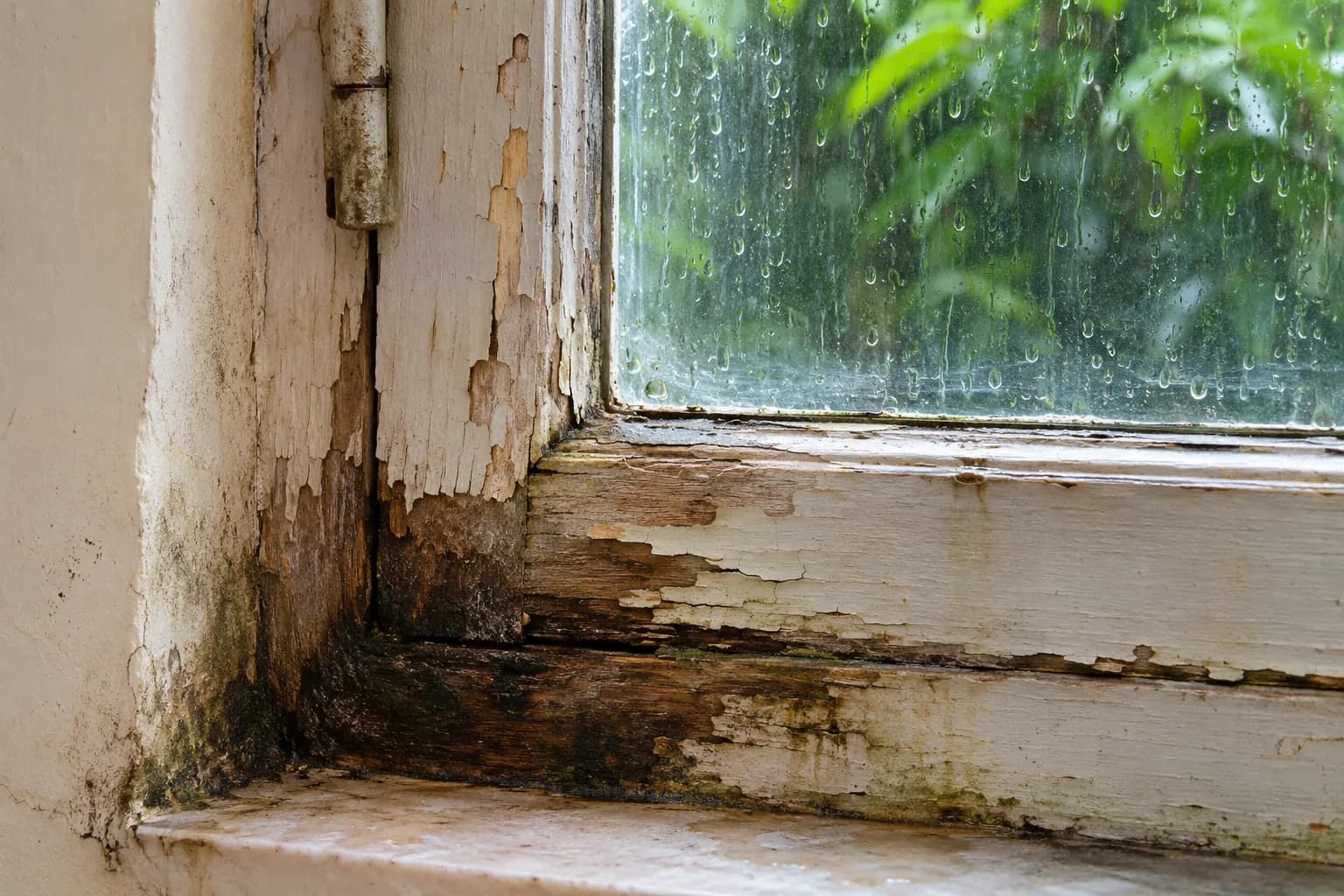
Paint and polish are what keep water out. Once the coat cracks, usually on the bottom rail and the outside face, rain soaks in. The wood stays damp, the paint lifts further, and rot or termites can follow. This is the slow failure of most old wooden windows. It is not a fault of wood. It is a fault of upkeep.
- What wood asks of you: a fresh coat of polish or paint every few years, sooner on a sun-facing or rain-facing wall.
- What you get back: a window that can be planed, patched, re-hung and refinished by any good carpenter.
- The honest catch: in a rented flat or a busy household, the upkeep often does not happen.
The weak points of uPVC windows that sellers skip
uPVC is low-care, not no-care, and it is not all the same quality. Know its limits before you sign.
- Profile quality varies. A good profile is made to stand strong sun. A poor one can yellow or turn chalky over the years. Ask what the profile is made for, and see an older job if you can.
- It moves with heat. uPVC grows a little when hot. A frame fitted too tight, or a very dark one in full sun, can bow and bind.
- Frames are wider. uPVC sections are thicker than wood or aluminium, so a small opening loses some glass.
- Colour is fixed. You cannot repaint it to suit a new wall colour.
- Damage is harder to patch. Hardware is replaceable, but a cracked frame section usually means a new shutter or frame.
- Fitting decides everything. A frame that is not level, or not sealed to the wall, leaks and rattles whatever it is made of.
Most complaints about uPVC are fitting and hardware problems, and they can be repaired. See uPVC window repair, or the symptom pages for a uPVC window not closing properly and a uPVC window leaking.
uPVC vs wooden doors: main door, bathroom door, balcony door
A door is judged differently from a window. It is touched, slammed and locked every day, and one of them is the first thing a visitor sees.
| Door | Usual choice | Why |
|---|---|---|
| Main entrance | Wood | Look, tradition, a solid feel and strong lock fixing; a steel door is the other common choice |
| Bedroom and room doors | Wood or wood-based boards | Privacy, sound and matching the interiors |
| Bathroom door | A water-resistant door; often plastic-based | The bottom of a wooden door swells and rots from wet floors |
| Balcony and terrace door | uPVC or aluminium, sliding, with glass | Faces rain and sun; needs seals and a wide view |
| Utility and wash area door | uPVC or aluminium | Wet, rough use and little need for looks |
Main door. uPVC main doors exist, but they are uncommon in Indian homes. A solid wooden door takes heavy locks and looks right at an entrance. If yours has dropped, will not latch or has a failing lock, that is usually hardware and not the wood. See wooden door repair for what we fix. Note the limit: we reset hinges, locks and closers, and we do not plane or polish timber.
Bathroom door. Water sits at the floor, and the bottom edge of a wooden door soaks it up. Many homes now use a plastic-based or other water-resistant door there. New hinged bathroom doors are a door shop's or carpenter's supply, not ours. Inside the bathroom, the glass shower door is our work: see bathroom glass doors.
Balcony door. This is where uPVC is strongest. A uPVC sliding door seals against rain and dust and holds a large pane of glass. We fit these in Bengaluru. For a slimmer frame on a very wide opening, aluminium is the other choice.
uPVC vs wooden windows cost in India: what moves each price
People want a simple cheaper-or-dearer answer. There is not one, because wood has a very wide range. A window in good teak, made and polished by a skilled carpenter, usually costs more than a standard white uPVC window. A window in cheap softwood can cost less at the start, and more later. We give no figures here, because they move and depend on your openings.
- What moves a wooden window's price: the species of timber, how well it is seasoned, the thickness of the sections, the carpenter's skill and time, the polish or paint, and the hardware.
- What moves a uPVC window's price: the size, the number of tracks or shutters, a mosquito mesh track, toughened or double glazed glass, a wood-look finish and a safety grill.
- What people forget: wood has a running cost in polish and repairs. uPVC has almost none, but its hardware will need service after years of use.
Compare the cost over ten or fifteen years, not on the day of fitting: wood adds repainting and carpentry, uPVC adds very little. Our starting rate for new uPVC windows is on the uPVC sliding windows page. The wider range is on uPVC and aluminium windows and doors. For wooden windows, ask two local carpenters to quote the same timber and section.
Replacing old wooden windows with uPVC: what happens on site
This is the most common reason people read a guide like this. The old wooden window sticks every monsoon, and the question is whether to change it. Here is how the change goes when we do it in Bengaluru.
- Each opening is measuredWidth and height are taken at the wall, with the wall depth and the level of the sill. Every window is made to its own opening.
- Mesh, grill and glass are decidedA mesh track makes the frame deeper, so the wall depth is checked. If you want a safety grill, say so now, because the grill and the frame are planned together.
- You get a written priceEach window is listed by size, with the mesh, the grill and the glass on their own lines.
- The old window comes outOn fitting day the old shutters and the wooden frame are removed and carried away. This marks the plaster at the edges.
- The new frame is fixed and sealedThe uPVC frame is set level in the opening, fixed, and sealed to the wall all round. Shutters are hung and checked for sliding and locking.
- Your painter comes lastWe fill and seal the edges. Replastering and painting are not our work, so plan the painter for after the windows.
Book a visit. We check whether your windows need a repair or a replacement, and quote in writing either way.
When a repair beats replacing a wooden or uPVC window
Replacement is the expensive answer. Check for the cheaper one first.
| What is happening | Likely cause | Who fixes it |
|---|---|---|
| Wooden door will not latch or has dropped | Loose or worn hinges, shifted latch plate | Us: wooden door repair |
| Wooden door or window swollen and rubbing | Damp timber | A carpenter, to plane and reseal it; see wooden door not closing properly |
| Peeling paint, soft or rotten wood | Water in the timber | A carpenter and a painter |
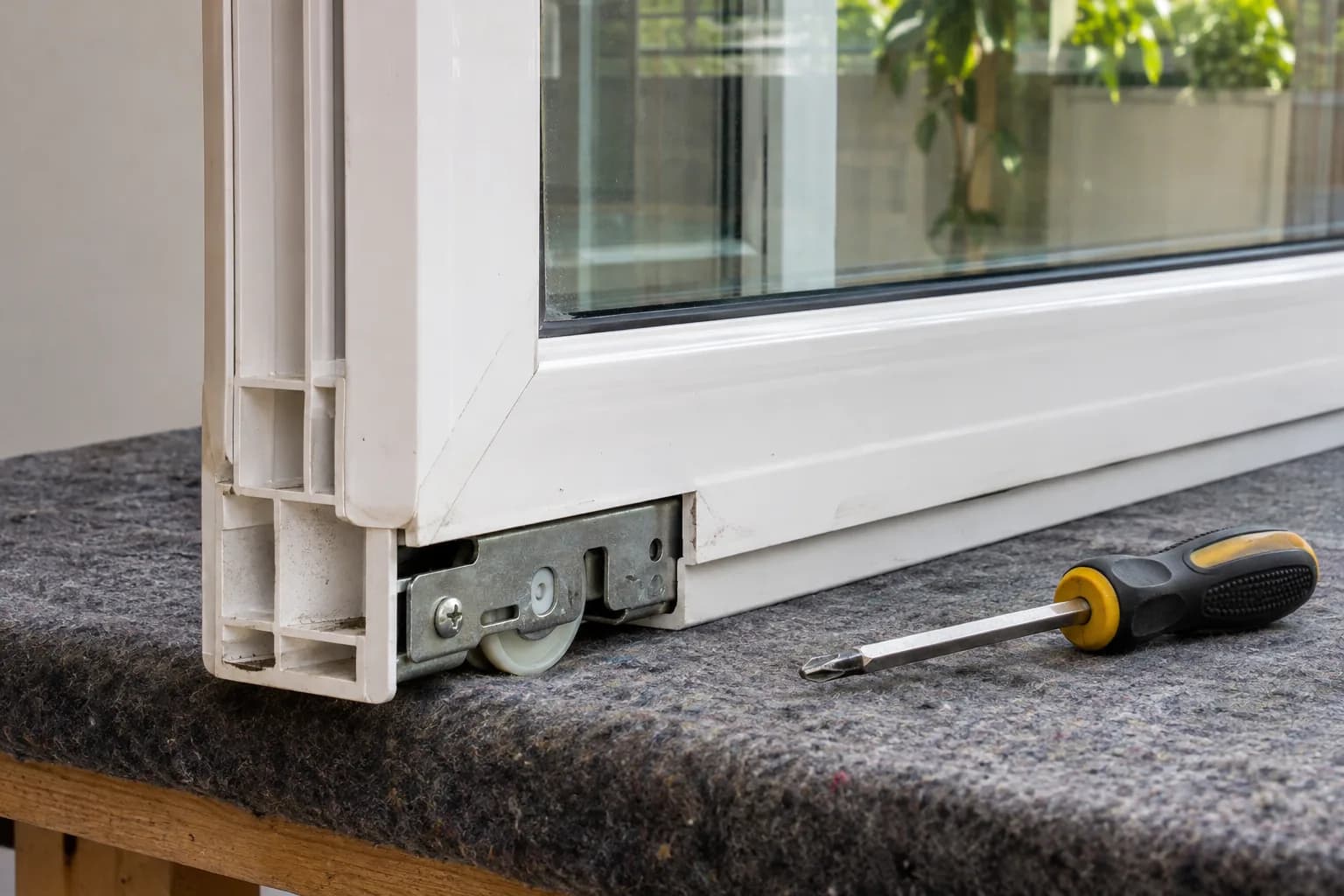
| uPVC window stiff or dragging | Worn rollers or a dropped shutter | Us: uPVC window roller replacement |
| uPVC handle loose or spinning | Worn handle or lock gear | Us: uPVC window handle replacement |
| uPVC door hard to lock | Door has settled out of line | Us: uPVC door repair |
| Draught, dust or rain at any frame | Worn seals or an open joint at the wall | Us: window gap sealing and door gap sealing |
Our repairs page takes jobs in glass, aluminium, uPVC, wood and steel. Send a photo and we will say plainly whether it is our work or a carpenter's.
uPVC or wood: a decision list by room
- Bedroom window on a road: uPVC, for the seals. Add double glazing if the noise is through the glass.
- Window on the rain-facing wall: uPVC.
- Front window of a traditional house: wood, if you will maintain it.
- Kitchen and bathroom windows: uPVC, because of steam and water.
- Balcony door: uPVC or aluminium sliding door with a mesh.
- Main door: wood, with good hinges and a good lock.
- Bathroom door: a water-resistant door, not plain wood.
- A window that only sticks: repair it first.
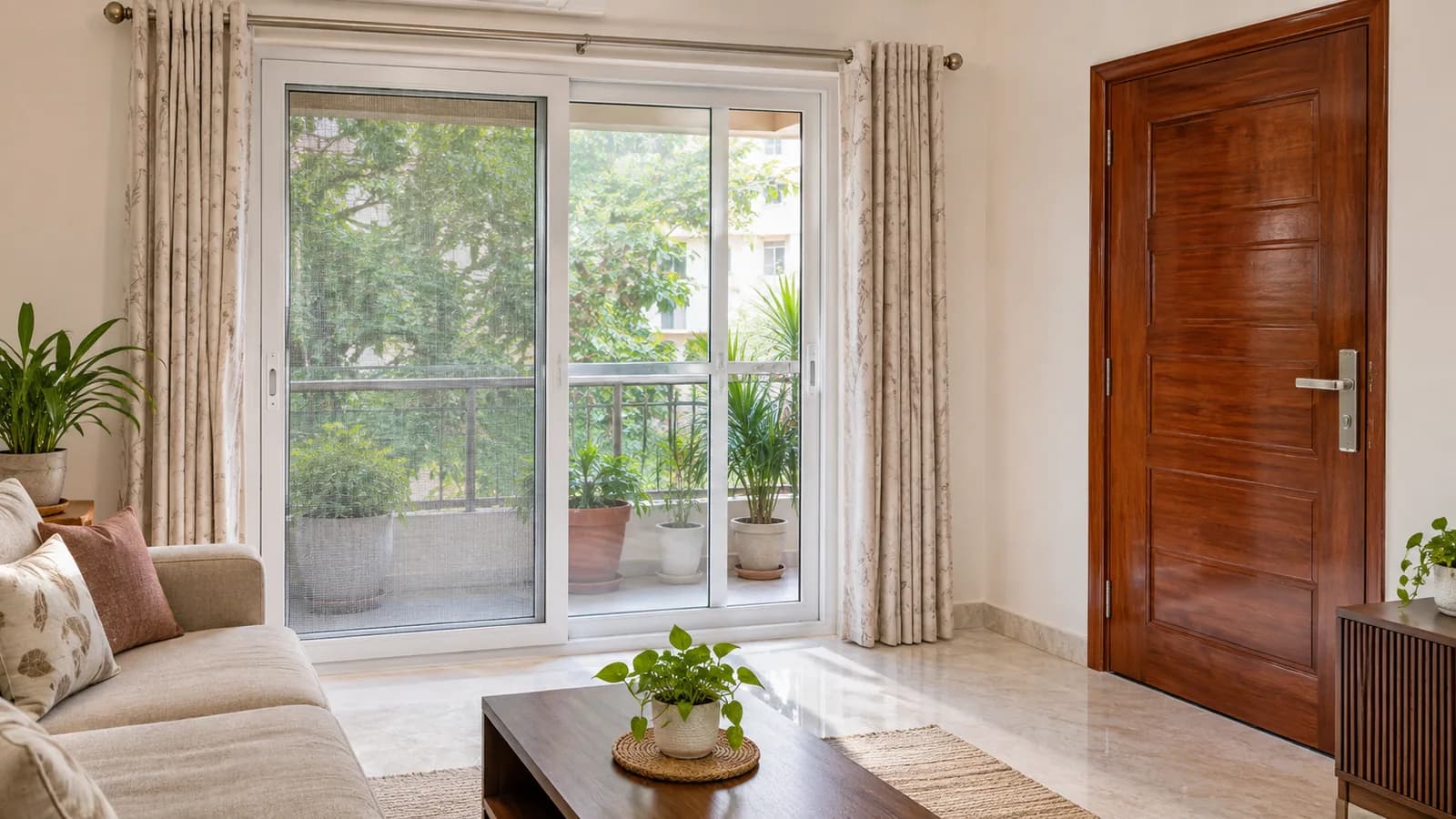
New uPVC windows and doors are fitted in Bengaluru. Repairs to uPVC, aluminium and wooden door hardware cover Bengaluru, Mumbai, Pune and Delhi NCR. To choose the glass that goes in the frame, read our guide to the types of glass for homes. For common opening sizes, see standard window and door sizes in India.
Common questions
Which is better, uPVC or wooden windows?
It depends on what you value. uPVC seals better, does not swell or rot and needs almost no care, so it suits most flats and rain-facing walls. Wood looks warmer and can be repaired for decades, but it needs polish or paint every few years. Choose wood only if that upkeep will really happen.
Are uPVC windows cheaper than wooden windows in India?
Compared with good teak made by a skilled carpenter, a standard uPVC window usually costs less. Compared with cheap softwood, it may cost more at the start. Over the years wood adds repainting and repairs, and uPVC adds very little. Size, glass, mesh and finish move a uPVC price.
Can a uPVC door be used as a main door?
It can, but it is uncommon in Indian homes. Most families choose a solid wooden or steel main door for its look, feel and lock fixing. uPVC is better suited to balcony, terrace and utility doors, where rain and dust are the main problem.
Do uPVC windows last longer than wooden windows?
A well-made, well-fitted uPVC window lasts for many years with little care. A good hardwood window can last even longer, but only with regular polish or paint. A neglected wooden window fails much sooner than either. Fitting quality matters as much as the material.
Can old wooden windows be changed to uPVC without breaking the wall?
Usually the old wooden frame is taken out and the new uPVC frame is fixed in the same opening. The wall is not broken, but the plaster at the edges gets marked. The edges are filled and sealed. Replastering and painting are a separate job for your painter.
Does Fabrockers make wooden windows or wooden doors?
No. We do not make wooden windows or doors, and we do not do carpentry. We repair hinges, locks, closers and alignment on wooden doors. We fit new uPVC sliding windows and doors in Bengaluru, and repair uPVC and aluminium in Bengaluru, Mumbai, Pune and Delhi NCR.
Is a uPVC or wooden door better for a bathroom?
Plain wood is a poor choice, because the bottom edge swells and rots on a wet floor. A plastic-based or other water-resistant door lasts better. Inside the bathroom, a glass shower partition keeps water off the door and the floor.
Have a question this guide did not answer? Call us or send a photo on WhatsApp and we will tell you what it needs.
