
In this guide
- How to stop mosquitoes entering the house: the short answer
- How mosquitoes get into a house or flat
- Mosquito mesh for windows: the types compared
- Mosquito mesh for doors and the balcony
- Gaps under doors and around frames that let mosquitoes in
- Standing water at home: where mosquitoes breed
- Habits that keep mosquitoes out of the house in the evening
- What mosquito mesh cannot do
- Looking after mosquito mesh so it keeps working
- A room-by-room plan to mosquito-proof a flat
Key takeaways
- Mesh every opening you keep open. Windows, the balcony door and bathroom ventilators are the main ways in.
- Pick the mesh by the opening. Framed mesh for windows, sliding or pleated mesh for balcony doors, magnetic mesh where you cannot drill.
- Close the small gaps. The gap under the door, torn mesh and the space beside a window AC undo good mesh.
- Remove standing water. Mosquitoes breed in still water, often on your own balcony.
- This guide stays on the building side. We make no claims about sprays, coils or repellents, and we do not do pest control.
How to stop mosquitoes entering the house: the short answer
A mosquito needs an opening to get in. In most homes that opening is a window or a balcony door left open for air. Stop mosquitoes entering the house in three steps: mesh every open window and door, close the small gaps, and remove still water.
Those are three separate jobs, and all three matter. Mesh with a gap under the door still lets them in. A sealed flat with a bucket of old water on the balcony breeds its own. Do the three together and the difference is clear.
This guide is about the building: mesh, gaps and water. Sprays, coils, vaporisers, plants and pest control are outside it. We fit mesh and seal gaps, so that is what we can speak about honestly.
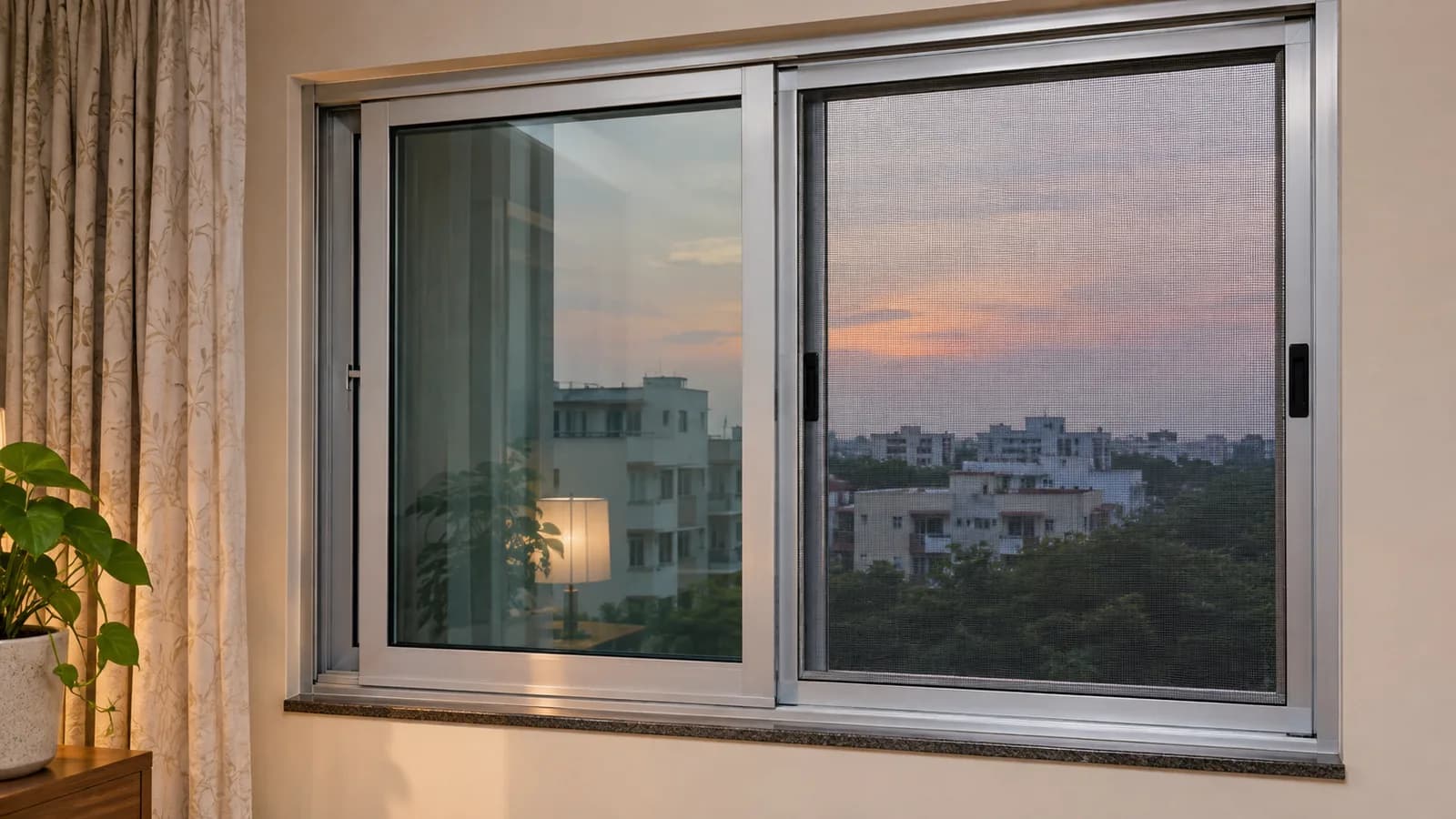
How mosquitoes get into a house or flat
| Way in | Why it is missed | What closes it |
|---|---|---|
| Open windows with no mesh | The window is opened for air, most often in the evening | Window mosquito net and mesh |
| The balcony door | It is wide, and people walk through it all evening | A sliding or pleated mesh door |
| Torn or loose mesh | A small tear at a corner is easy to overlook | Mesh replacement in the same frame |
| The gap under a door | It is always there, so nobody sees it | Door gap sealing |
| Gaps around a window frame or AC | The window looks shut | Window gap sealing |
| Bathroom and kitchen ventilators | They are high up and out of sight | A fixed mesh over the opening |
| The main door | It stands open while people talk or carry things in | A habit: shut it quickly at dusk |
Walk through your home at dusk with this list. Most flats have two or three of these, not all seven. Our page on mosquitoes coming inside the house helps you find which openings are yours.
Mosquito mesh for windows: the types compared
A mosquito net for a window is a fine mesh held in a frame or on a strip. People also call it a mosquito mesh, a net or a jali. What differs most between the types is how the mesh is held, and how you open it.
| Type | How it works | Best for | Watch for |
|---|---|---|---|
| Fixed framed mesh | Mesh in an aluminium frame, fixed over the opening | Ventilators and windows you never reach through | You cannot reach the outside to clean or to hang anything |
| Openable framed mesh | The framed mesh swings open on hinges | Windows where you need to reach out | Needs clear space to swing |
| Sliding mesh shutter | A mesh panel that slides on its own track beside the glass | Sliding windows, the most common kind in flats | Its track and brush strips need cleaning |
| Magnetic mesh | Mesh on a magnetic strip that snaps onto a steel band on the frame | Rentals and odd-shaped windows; usually no drilling | Peel it off with care, not in a hurry |
| Pleated mesh | Mesh that folds like a fan into a slim side rail | Wide openings and windows with no room for a shutter | The floor rail must be kept free of grit |
| Velcro net | A loose net stuck on with velcro tape | A short-term, low-cost stopgap | The tape lets go in sun and wind; we do not fit these |
Our mosquito mesh comparison shows the systems we fit side by side. The mosquito net price guide explains the rates. Four things move the cost: the type, the mesh material, the size of each opening and the number of openings.
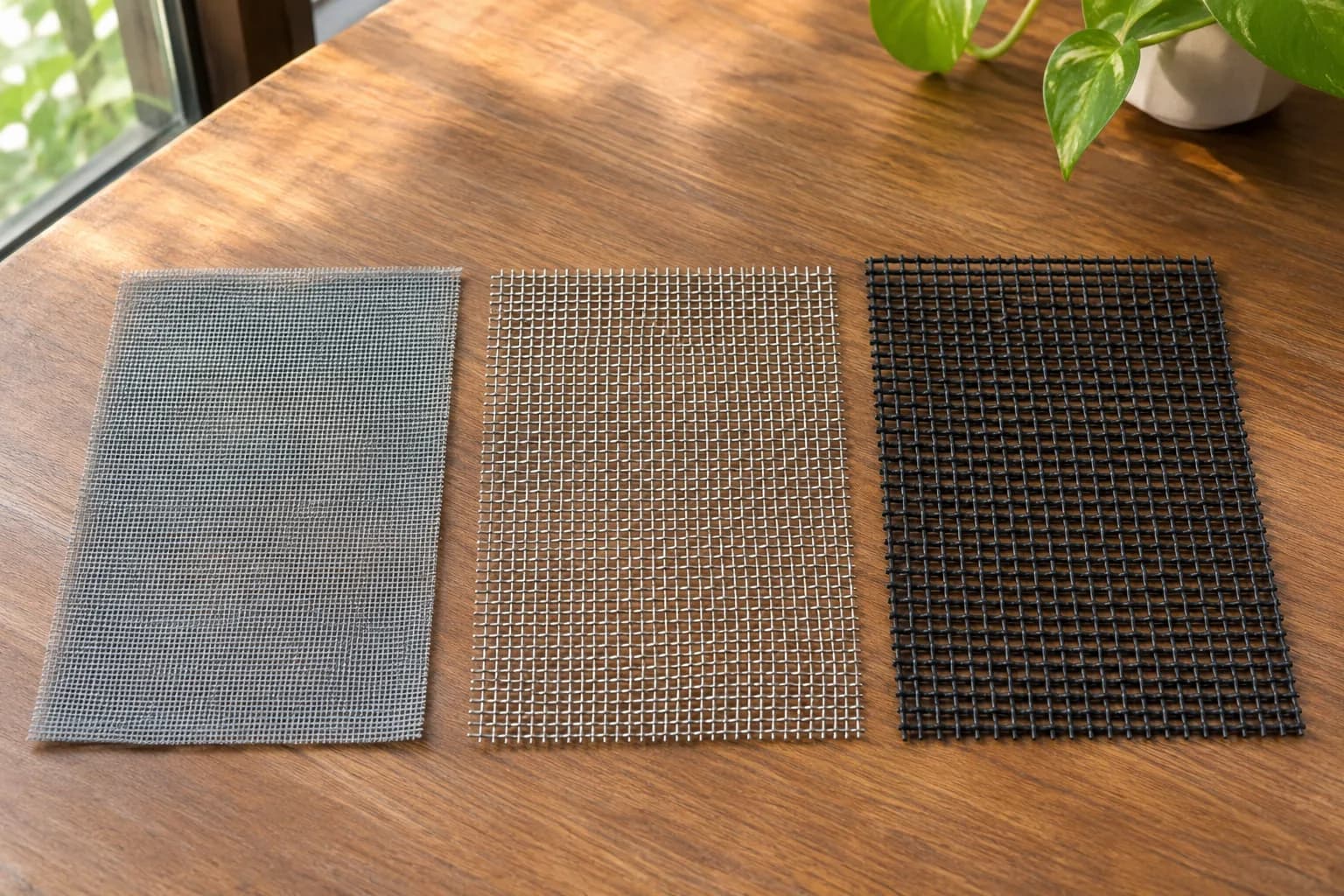
Mosquito mesh material: fibreglass, stainless steel or pet mesh
- Fibreglass mesh is the light grey net most people know. It is soft, easy on the eye and the lowest in cost. Strong sun makes it brittle over the years, and claws tear it.
- Stainless steel mesh is a fine woven metal. It is stronger, keeps its shape and lasts longer. It costs more.
- Pet mesh is a thicker, coated polyester. It stands up to a cat that climbs or a dog that scratches. See dog or cat tearing the mosquito net.
If you already have mesh frames and only the net is torn, you may not need new frames. A straight, sound frame can take new mesh. See mosquito net torn.
Mosquito mesh for doors and the balcony
The balcony door is the biggest opening in most flats, and the one used most in the evening. It needs a mesh that people will actually close behind them. There are three ways to do it.
- A sliding mesh door. A full-height mesh panel that slides beside your glass door. It suits sliding balcony doors with room for one more track. See sliding mosquito net door.
- A pleated mesh. The mesh folds into a slim rail at the side and pulls across when needed. It suits wide openings, French doors and places where no shutter fits. See pleated mosquito net.
- Mesh across the balcony itself. The whole open side of the balcony is meshed, so the balcony becomes an insect-free space. See balcony mosquito net.
Which one depends on how you use the balcony. If you sit there in the evening, mesh the balcony opening. If you only want the room clear, mesh the doorway. Our page on mosquitoes in balcony compares the two. A mesh door only works when it is closed. Choose the type your family will find easy to shut every time.
A balcony mesh also keeps out other visitors. If pigeons are your problem as well, read invisible grill vs pigeon net. One caution: mesh is not a safety barrier. It will not hold a child or an adult who leans on it.

Gaps under doors and around frames that let mosquitoes in
A mosquito does not need an open window. A gap the width of a pencil is enough. These are the gaps to check once the mesh is in place.
- Under the main door and the balcony door. Most doors are hung with a gap at the bottom. A seal fitted to the door's lower edge closes it. See gap under door.
- Between the mesh shutter and the frame. A sliding mesh closes against brush strips. When the brush wears flat, insects walk through the line of light.
- Where two sliding shutters overlap. If the glass shutter is left half open, a gap can open between the glass panels that the mesh does not cover. Slide the glass fully open behind the mesh.
- Around the window frame. Cracked sealant between the frame and the wall leaves a path. Window gap sealing closes it.
- Beside a window AC. The packing beside the unit shrinks with age. See gap around window AC.
- A mesh door that no longer closes. Worn wheels or a twisted frame leave a gap at one end. See mosquito net door not closing.
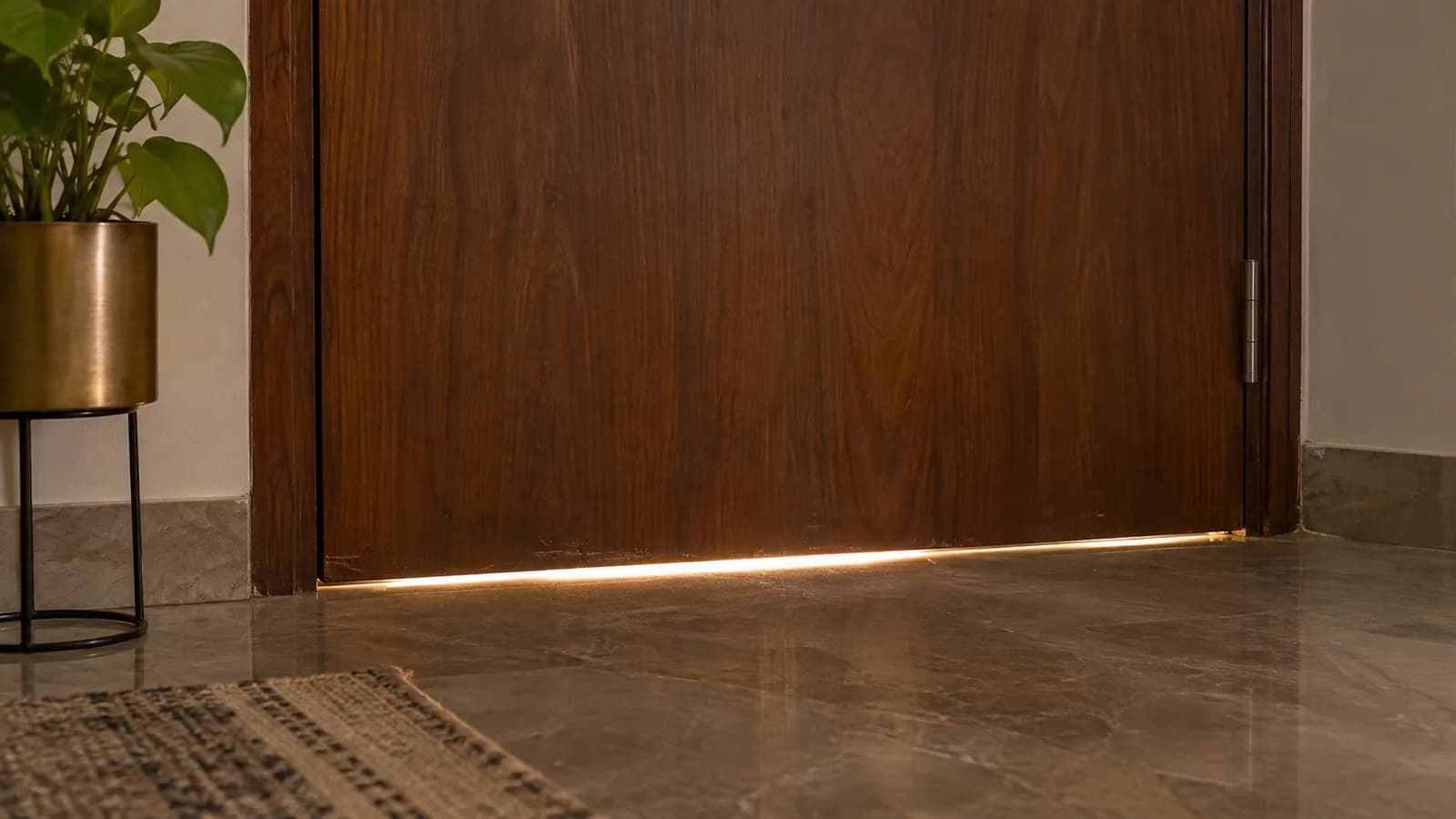
The same gaps let in lizards and other insects. If that is part of your problem, see lizards coming inside the house.
Standing water at home: where mosquitoes breed
Mosquitoes lay their eggs in still water. A small amount is enough, and it does not need to be dirty. Civic bodies in Indian cities commonly ask residents to empty such water about once a week. A lot of it sits in places people do not think of as water.
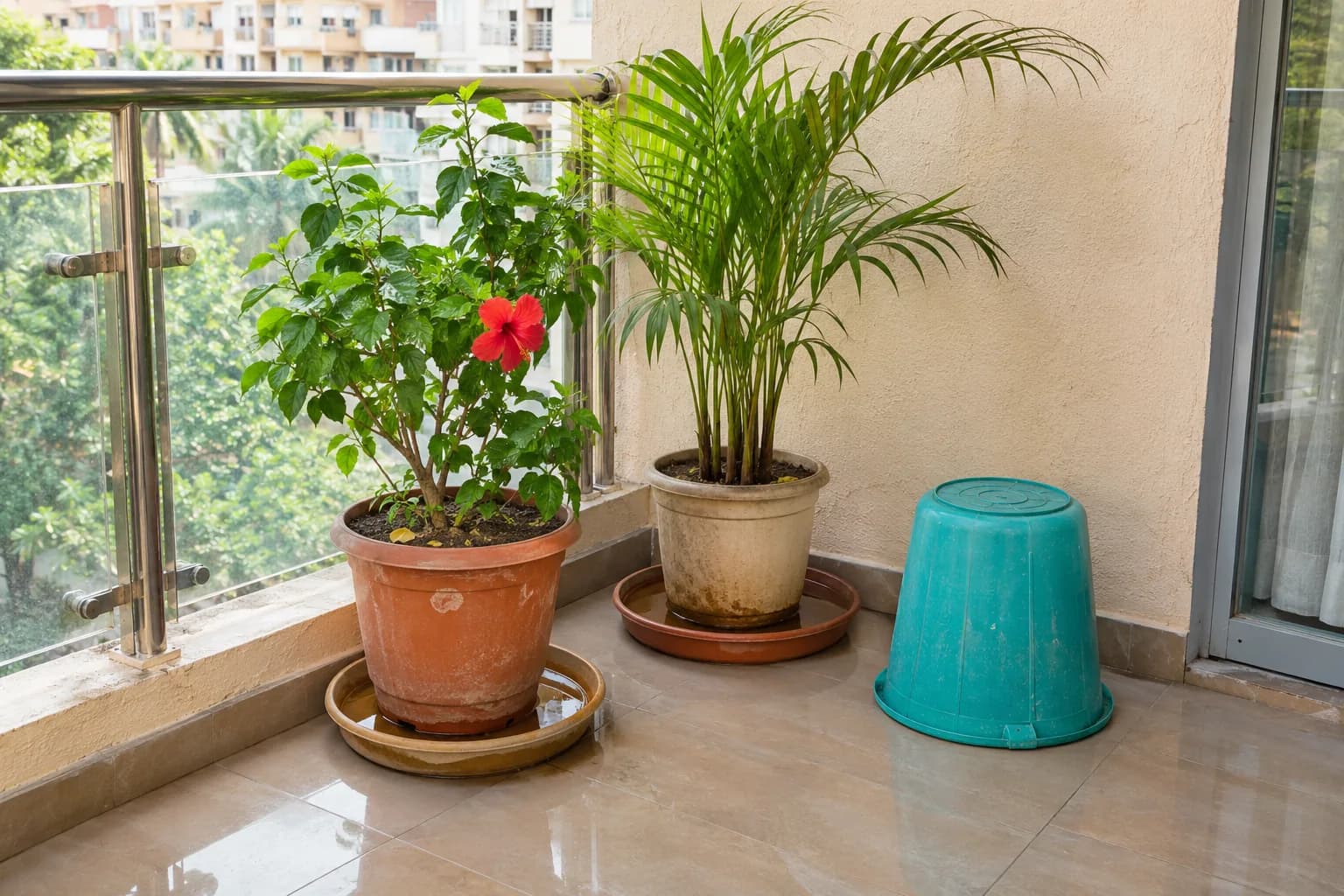
- Plant saucers and pots on the balcony and window ledges.
- Buckets, mugs and tubs left with a little water in the bathroom or the utility area.
- Desert cooler tanks, common in Delhi NCR, when the cooler is not in daily use.
- The bucket or tray under an AC drain pipe.
- The drip tray behind the fridge.
- A blocked balcony floor drain, which leaves a shallow pool after rain or after washing.
- Window and door tracks with blocked drain slots, which can hold rain water for days.
- Overhead and sump tanks with a missing or broken lid.
Empty, scrub and dry these regularly. Turn unused buckets upside down. Keep tank lids shut. A blocked floor drain is a plumber's job, not ours. A window track that holds water is something we do fix. See water in sliding window track.
Habits that keep mosquitoes out of the house in the evening
- Close the mesh before dusk. Many people notice mosquitoes most around sunset. Shut the mesh first and open the glass afterwards.
- Do not prop the main door open. A door held open for a few minutes at dusk undoes the mesh on every window.
- Slide the mesh shut behind you. Make it a house rule for the balcony door, as you would for a fridge door.
- Check the mesh when you clean. Look at corners and edges for small tears or a strip that has come out of its groove.
- Keep balcony lights off when you are not there. Many insects gather near lights, and they wait by the door.
What mosquito mesh cannot do
Mesh is the main building-side answer, and it has limits. It is better to know them before you buy.
- It takes a little air and light. Any mesh slows the breeze slightly and dims the view a little. Finer and thicker meshes do so more.
- It does not stop dust. Fine dust passes through, and the mesh itself needs washing.
- It may not stop the tiniest insects. Very small flies can pass through ordinary mesh.
- It does nothing about mosquitoes already inside, or about water where they breed indoors.
- It is not a safety barrier. Mesh will not stop a fall, and it is not a grill.
- It is not pest control. We do not fog, spray or treat drains, and this guide does not judge those methods.
Book a measuring visit. We look at each opening, show the mesh types that fit it, and quote in writing.
Looking after mosquito mesh so it keeps working
A mesh is a moving part of the house, and it needs a little care.
- Wash it gently. Use a soft brush and mild soapy water, then rinse. Do not press hard, because pressure stretches the mesh.
- Clean its track. A sliding mesh runs on small wheels. Grit in the track makes it stick, and people then stop closing it.
- Do not lean on it or push it with a foot. Mesh doors often tear where they are pushed open at the bottom.
- Replace torn mesh early. A small tear grows. New mesh in the old frame costs less than a new frame.
- Retire velcro nets that keep falling. We do not re-stick them. See velcro mosquito net coming off for what replaces one.
A room-by-room plan to mosquito-proof a flat
- Balcony door first. It is the largest opening. Choose a sliding or pleated mesh, or mesh the balcony itself.
- Bedroom windows next. These are the windows you want open at night. A sliding or openable framed mesh suits most.
- Living room and kitchen windows. Mesh the ones you really open. A window that always stays shut can wait.
- Bathroom ventilators. A small fixed mesh closes an opening that is open all day and night.
- Door gaps. Fit a seal under the main door and the balcony door.
- Water. Walk the balcony, bathrooms and utility area once a week and empty what you find.
In a rented flat, magnetic mesh is usually the easiest start, because it usually needs no drilling. See magnetic mosquito net. Mesh is fitted by our own teams in Bengaluru and across Delhi NCR. Mosquitoes are one of five things that come in at a window. Our quiet, cool and dry home guide covers noise, heat, rain and dust as well.
Common questions
How do I stop mosquitoes coming into my house in the evening?
Close the mesh on windows and the balcony door before dusk, and keep the main door shut. If an opening has no mesh, that is the first thing to fix. Then check the gap under each outside door and empty any standing water on the balcony.
Which mosquito net is best for windows in India?
It depends on the window. A sliding mesh shutter suits a sliding window. An openable framed mesh suits a window you reach through. A magnetic mesh suits a rental or an odd shape. Stainless steel mesh lasts longer than fibreglass and costs more. The comparison page shows each type we fit.
How are mosquitoes getting in when all my windows have mesh?
Usually through a small gap, not through the mesh. Check for a torn corner and for worn brush strips where the mesh shutter closes. Check the gap under the balcony and main doors, and the space beside a window AC. Also check for still water inside the home, where they can breed without coming in at all.
Can mosquitoes come in through the gap under the door?
Yes. Most doors have a gap at the bottom so they clear the floor, and it is wide enough for insects. A seal fitted to the bottom edge of the door closes it. The same seal keeps out dust and keeps cool air in.
What is the best mosquito mesh for a balcony sliding door?
A sliding mesh door is the usual choice where the frame has room for another track. A pleated mesh suits wide openings and doors with no space for a shutter, because it folds away at the side. If you sit on the balcony in the evening, meshing the balcony opening itself may suit you better.
Can I fit mosquito mesh in a rented flat without drilling?
Often, yes. Magnetic mesh snaps onto a thin steel band stuck to the window frame, so it usually needs no holes. It pulls off for cleaning and comes away when you move. Ask the owner before fitting anything that does need screws.
Have a question this guide did not answer? Call us or send a photo on WhatsApp and we will tell you what it needs.
