We seal air-leaking windows across Bengaluru. An air conditioner cools a room against everything the room leaks, and in most flats the biggest leak is the window: worn brush seals on sliding shutters, gaps at the meeting rail, shrunken gaskets, and a frame-to-wall joint that was never sealed on the inside. The AC runs longer, the bill climbs, and the room goes warm minutes after switch-off. We find where a window leaks air and close it, from ₹1,500 per window. Most rooms feel the difference the same evening.
How to feel where your window leaks
On a hot afternoon with the AC running, move the back of your hand slowly around the closed window: along the shutter edges, the meeting rail where the two shutters overlap, the frame's junction with the wall, and the sill line. Warm threads of incoming air mark the leaks, and the back of the hand feels them better than the palm.
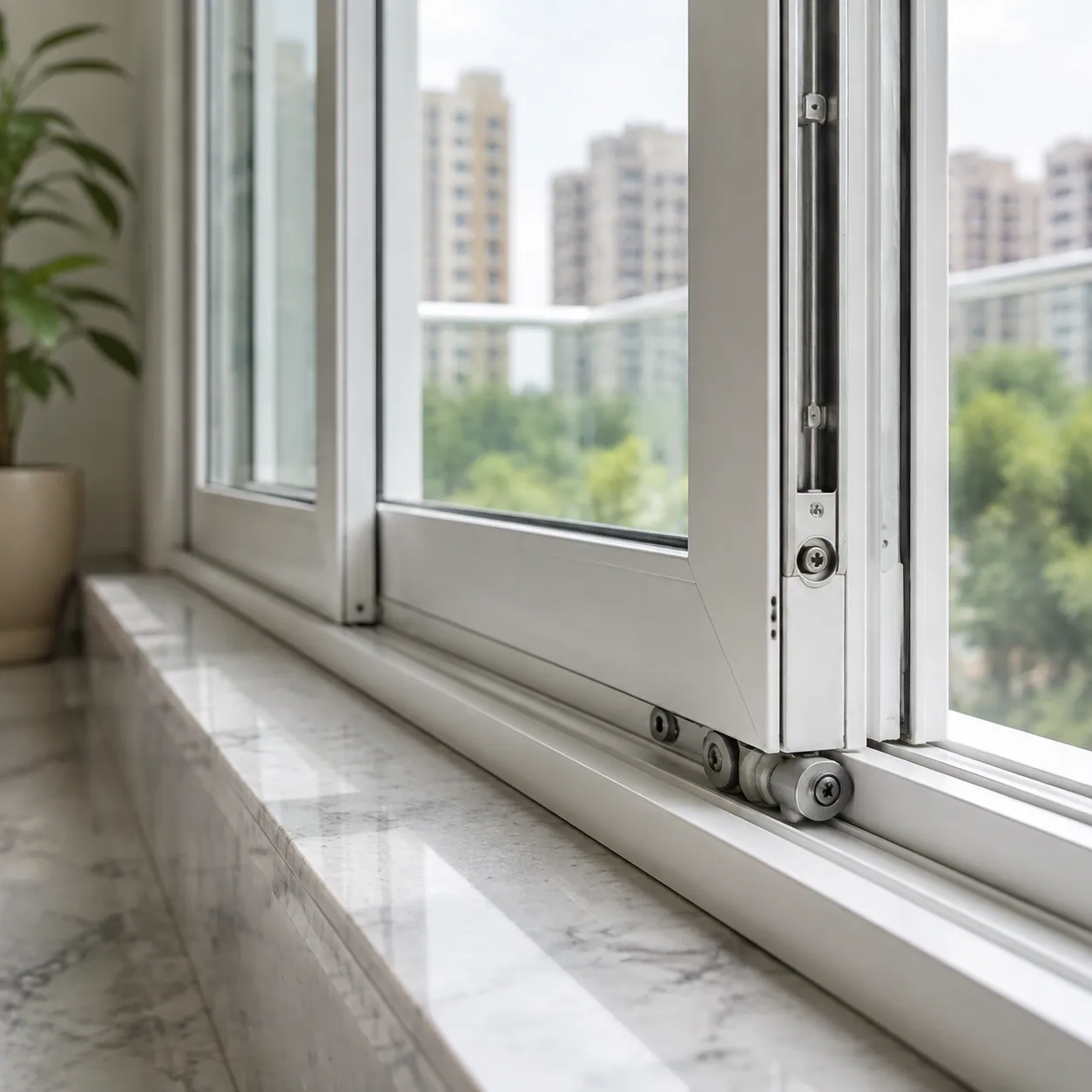
Sliding windows leak in known places. The brush seals along the shutter edges flatten with age. The interlock at the meeting rail loses its grip when shutters drop on worn rollers. And the four corners of the shutter, where seals meet, open first.
A sheet of paper closed in the shutter makes the same test: where it slides out without tearing, air walks through freely.
Why sliding windows leak more as they age
A sliding window cannot press its seals the way a casement does. It relies on brush pile, fine bristle strips along every edge, sweeping against the frame. Pile flattens with years of sliding, and flattened pile seals like a worn toothbrush.
Age also moves the geometry. Rollers wear and the shutter drops, so the interlock, the paired hooks at the meeting rail that pull both shutters into line, stops engaging. That vertical line between the shutters becomes the room's biggest single gap, and it runs full height.
Neither of these is visible from a distance, which is why air leakage sneaks up on rooms. The window looks shut. The AC knows better.
What we do to an AC room's windows
New brush seals in every shutter groove, in the right pile height, because too-tall pile makes the window heavy and too-short seals nothing. This alone transforms most older sliders.
The interlock restored: shutter height set on its rollers so the meeting rail hooks engage full length, closing the tall middle gap.
The frame-to-wall joint sealed from the inside with a clean line, the leak everyone forgets because it hides behind the curtain.
Hardened glazing gasket renewed where the panes themselves whistle. Then the hand test repeated around the whole window, with the AC on, as the handover: the warm threads should be gone.
The price against the electricity
Sealing one window starts at ₹1,500, with brush seals, interlock setting and the inside frame line inside that figure. Gasket renewal, where the trace demands it, is its own small addition.
Against that, an AC compensating for a leaky window works extra hours every single evening, and Bengaluru's power tariff climbs with usage slabs. A bedroom window sealed properly tends to pay for itself across one summer, and the comfort arrives immediately: the room cools faster, holds its temperature after switch-off, and lets in less of the road's dust and noise as a bonus.
Bedroom windows are the common booking, all of them in one visit, before summer if you are planning ahead.