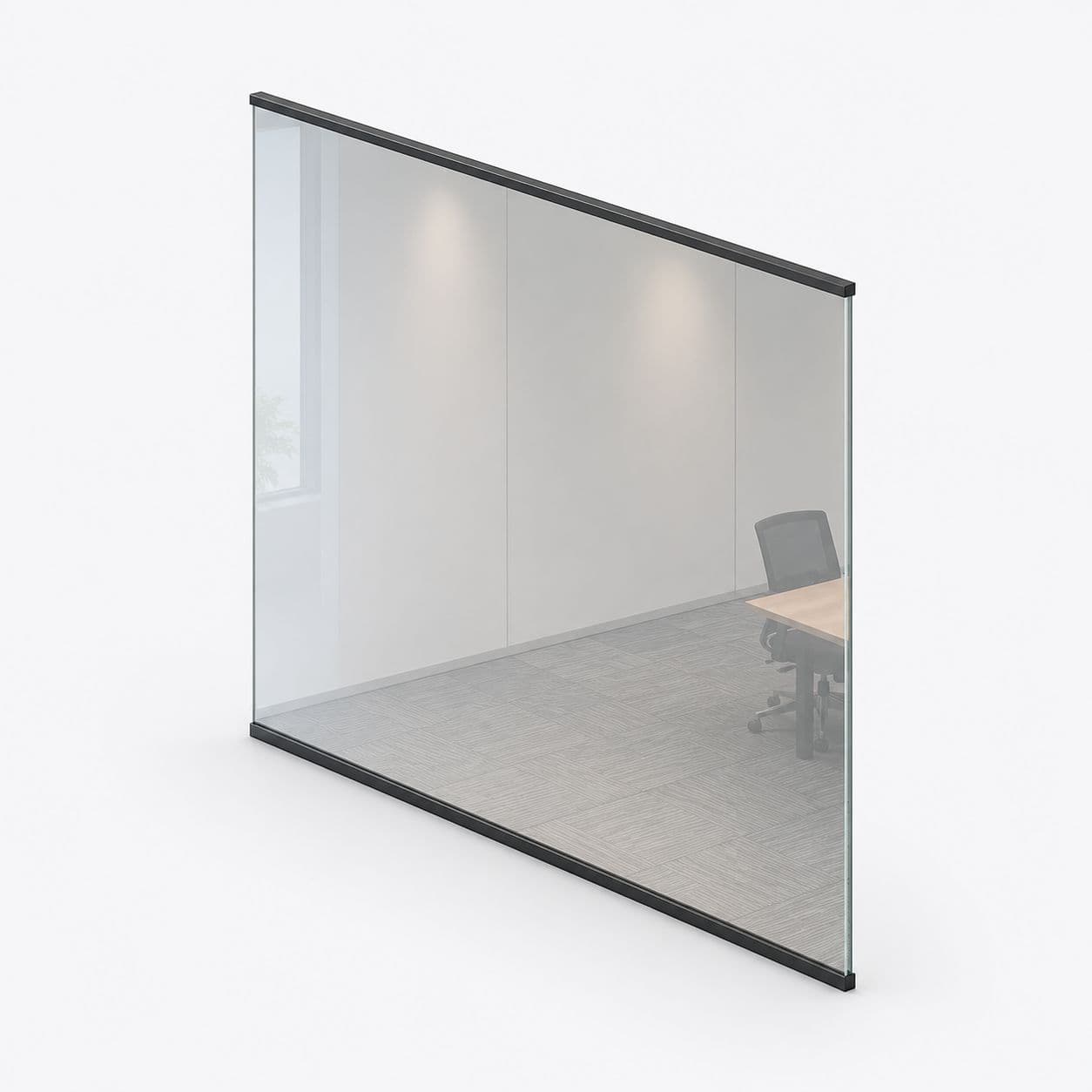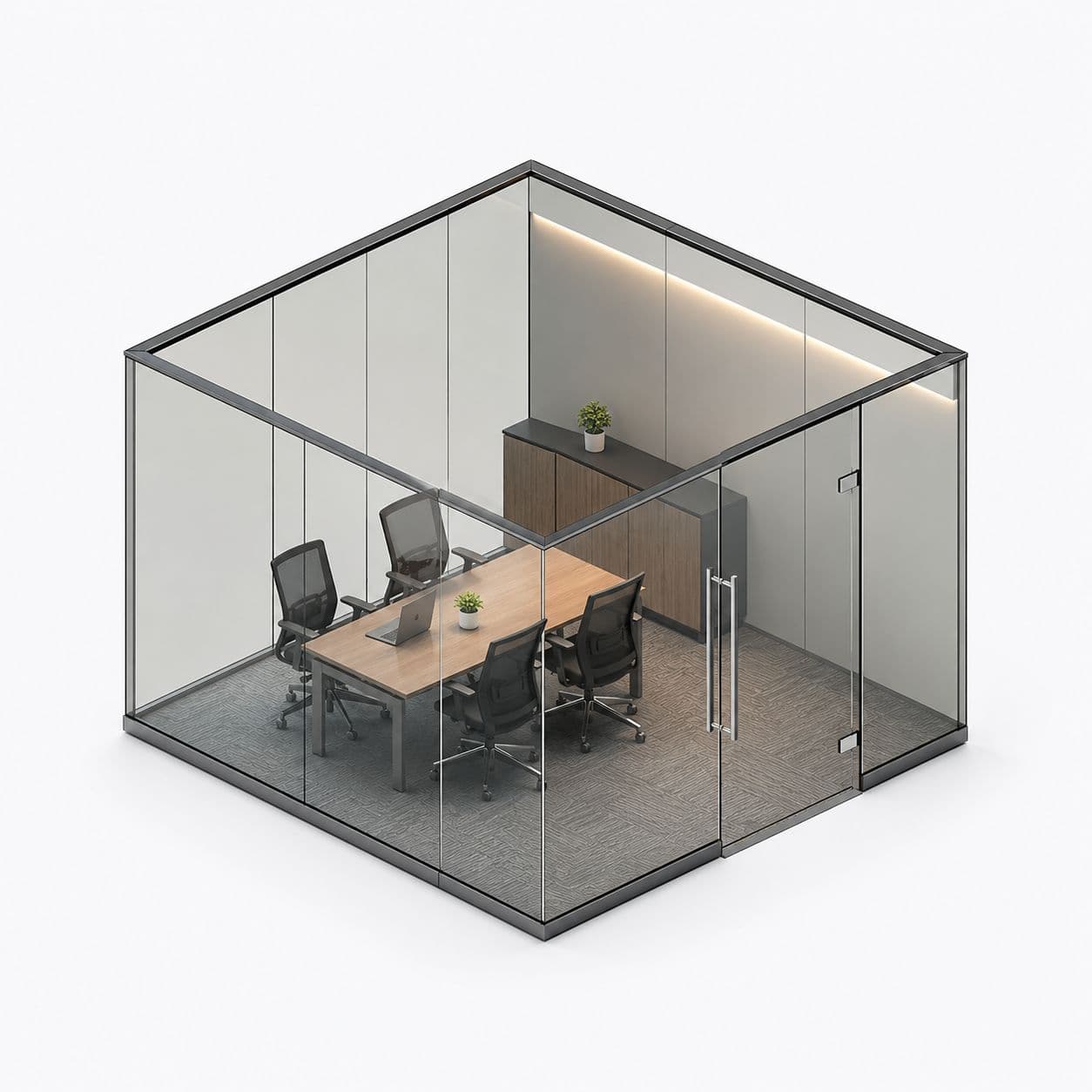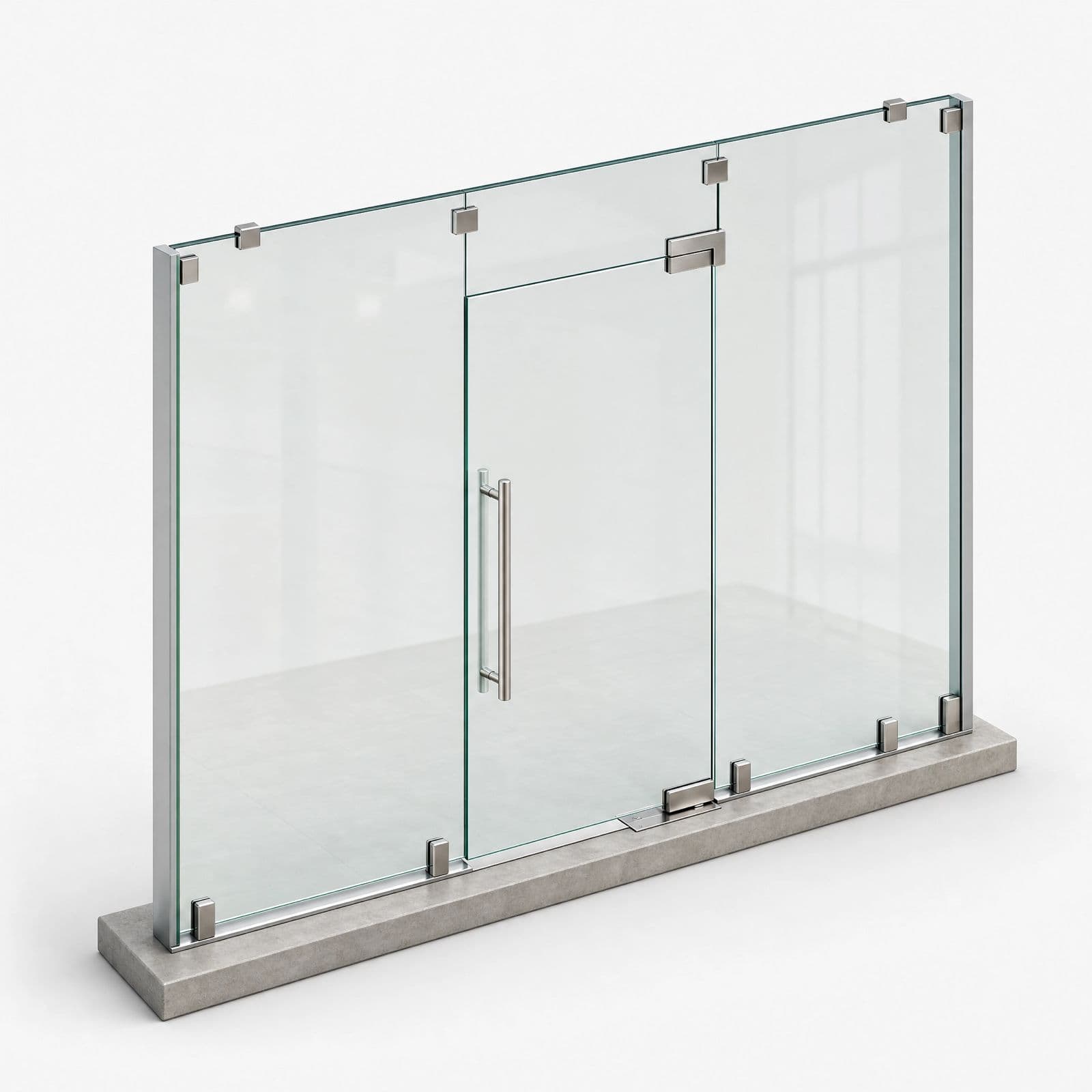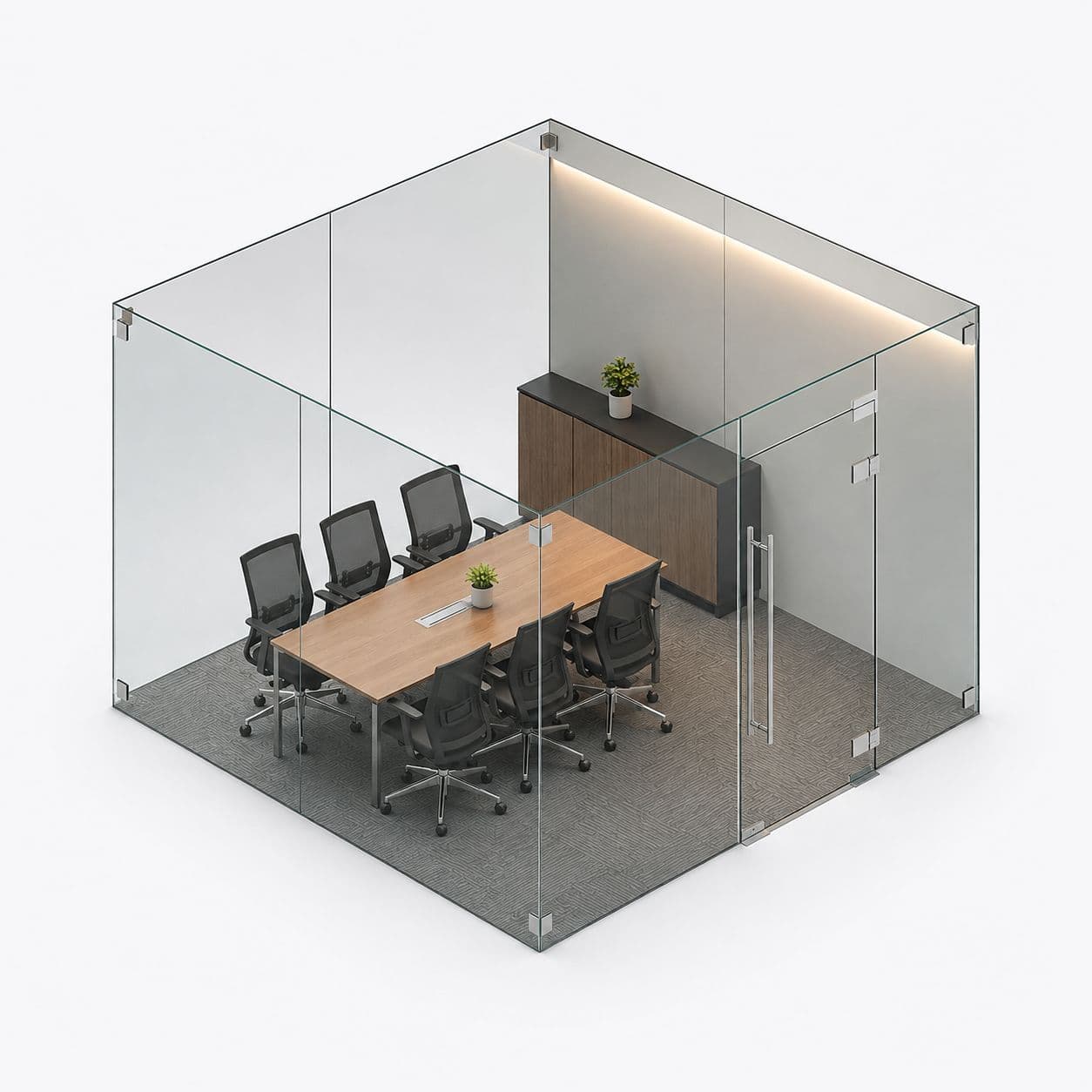
The offices here sit inside working warehouses, and the hazard is not dust or noise but traffic. Forklifts, pallet trucks and trolleys move constantly, and they hit things. A glass cabin in that environment needs protecting at the height where impacts actually happen, which is lower than people expect.
Protecting glass at forklift height
Impacts in a warehouse happen low — at pallet and fork height, roughly the bottom half metre — and almost never at eye level.\n\nToughened glass is strong across its face and vulnerable at the edge, and a fork catching a panel edge takes the whole panel.\n\nSo we build these cabins with a solid lower section rather than glass to the floor, and a steel kerb or barrier in front of any exposed corner. It costs far less than the glass it protects and it is the difference between a cabin that survives and one that is repaired twice a year.
Where a cabin should not be put
The most common mistake is placing an office cabin at the end of an aisle or beside a loading door, which are exactly the places with the most traffic.\n\nA cabin in a corner out of the traffic flow is hit far less, for no loss of function.\n\nSo we look at how vehicles actually move through the building before agreeing a position. It is a free improvement, and it is usually available because the first position suggested was chosen for convenience rather than for traffic.
Seeing the floor from inside the cabin
A warehouse office exists so somebody can watch the operation, so the glazing has to give the right sightlines without exposing the whole cabin to impact.\n\nThe practical answer is glass above the impact zone and solid below it, which still gives a standing person a clear view of the floor.\n\nThat combination is what these cabins should be, and it is rarely what gets drawn. We would rather build it that way and explain the reasoning than glaze to the floor and be back within the year.
How the job works
- Tell us about the jobSend a few photos, rough sizes and what you need. Use WhatsApp or the form. For a repair, a short video of the door moving helps a lot.
- We call you back in about 2 minutesWe confirm what you need and a time to visit. Where we can, we give you a rough price on the call.
- We come and measureWe measure the opening and check the walls, floor and ceiling around it. Anything made to size is made to these measurements, so they must be right.
- You get a written priceIt lists each item, with GST as its own line. If anything about the job changes, we tell you before we go ahead.
- We fit itYou approve the price and pay the advance. Our own team fits the work, checks that every door and window opens and closes properly, and clears up. Most jobs are done in 3 to 4 days.