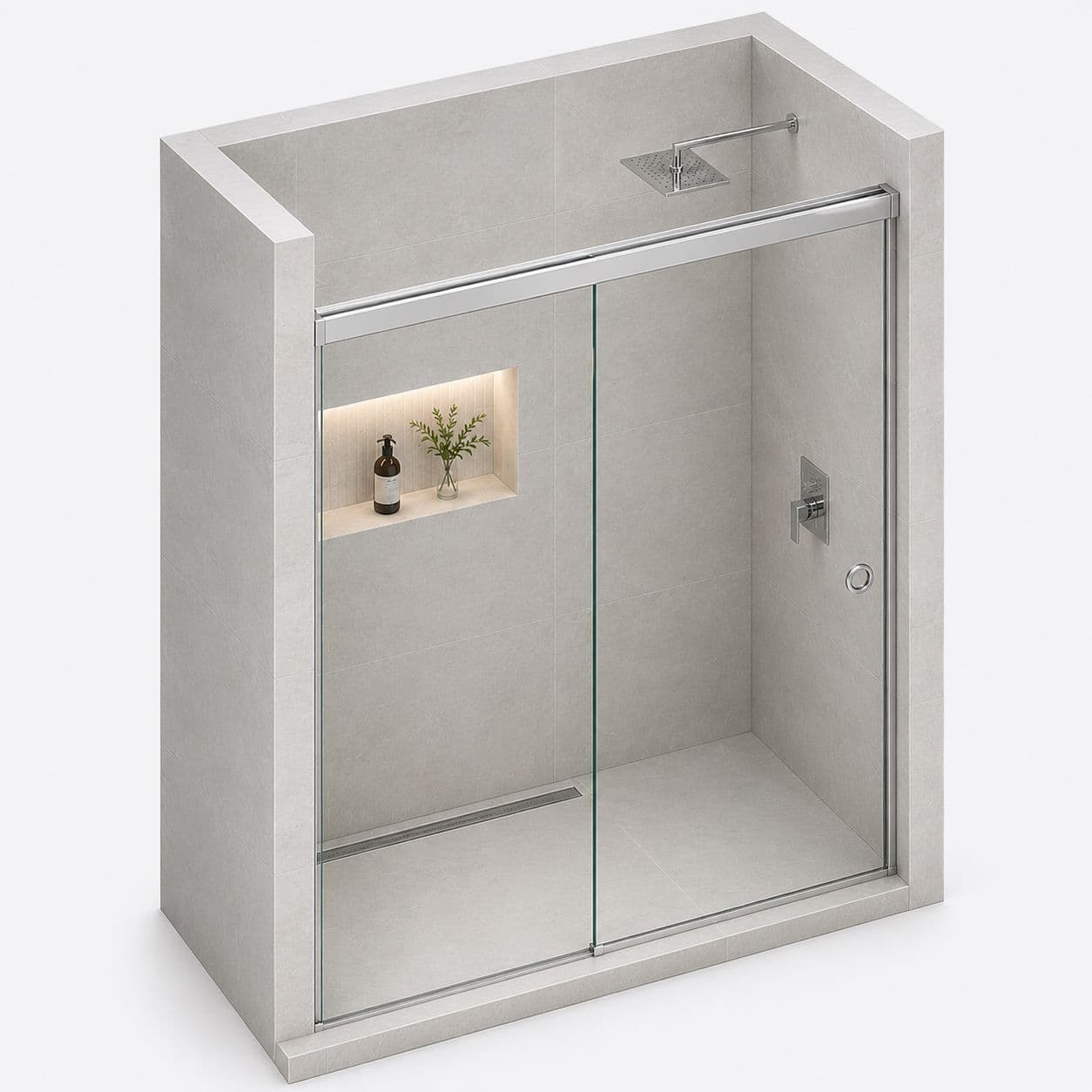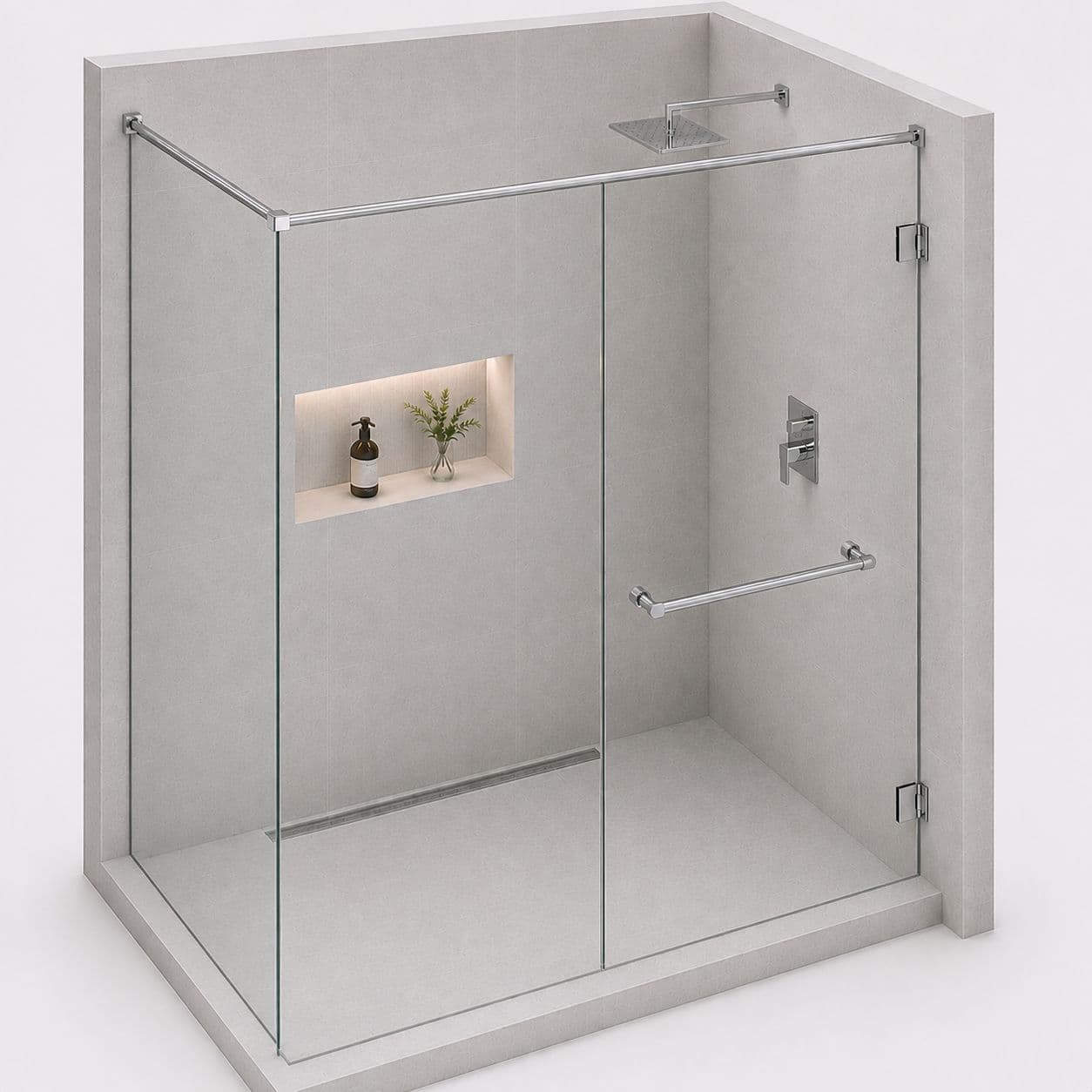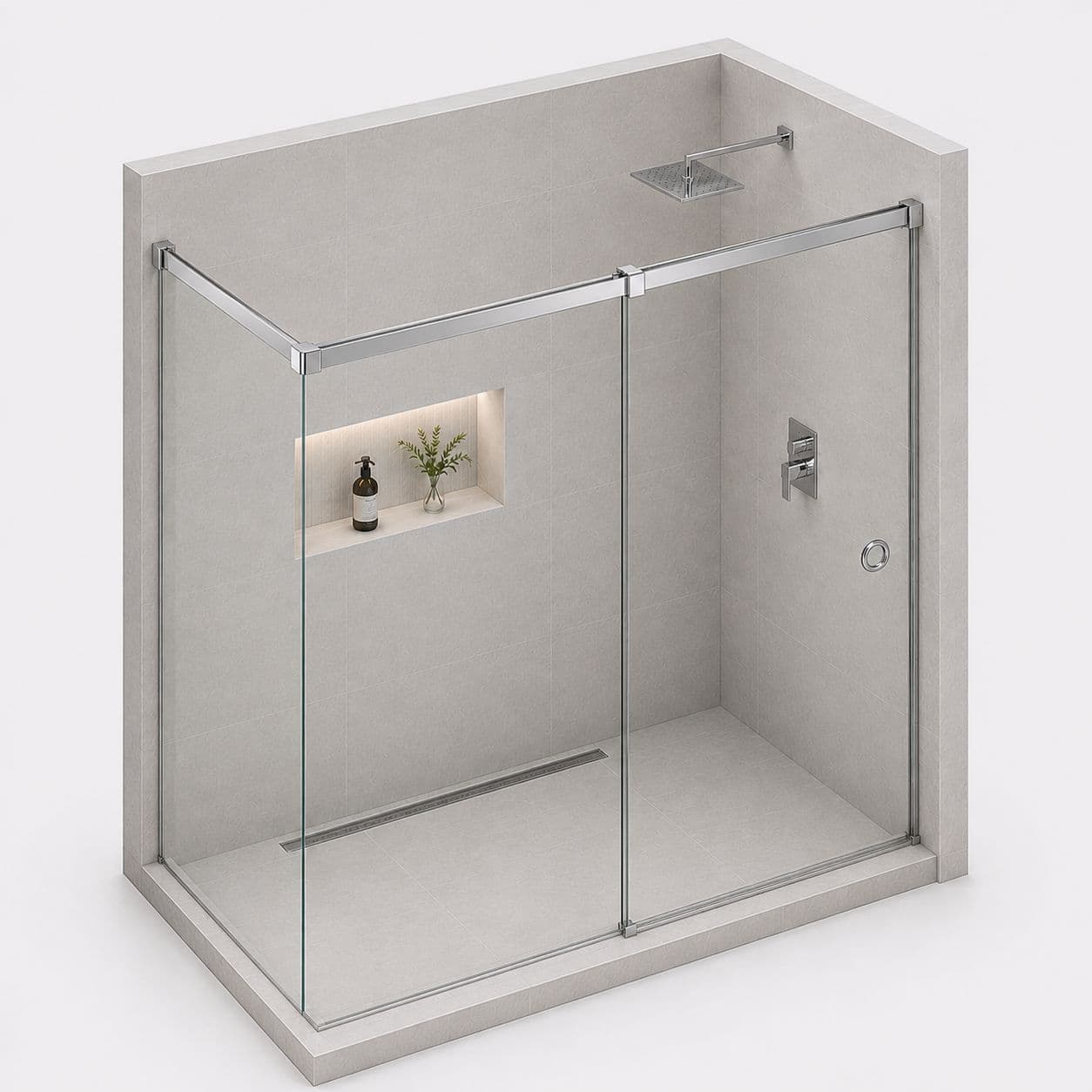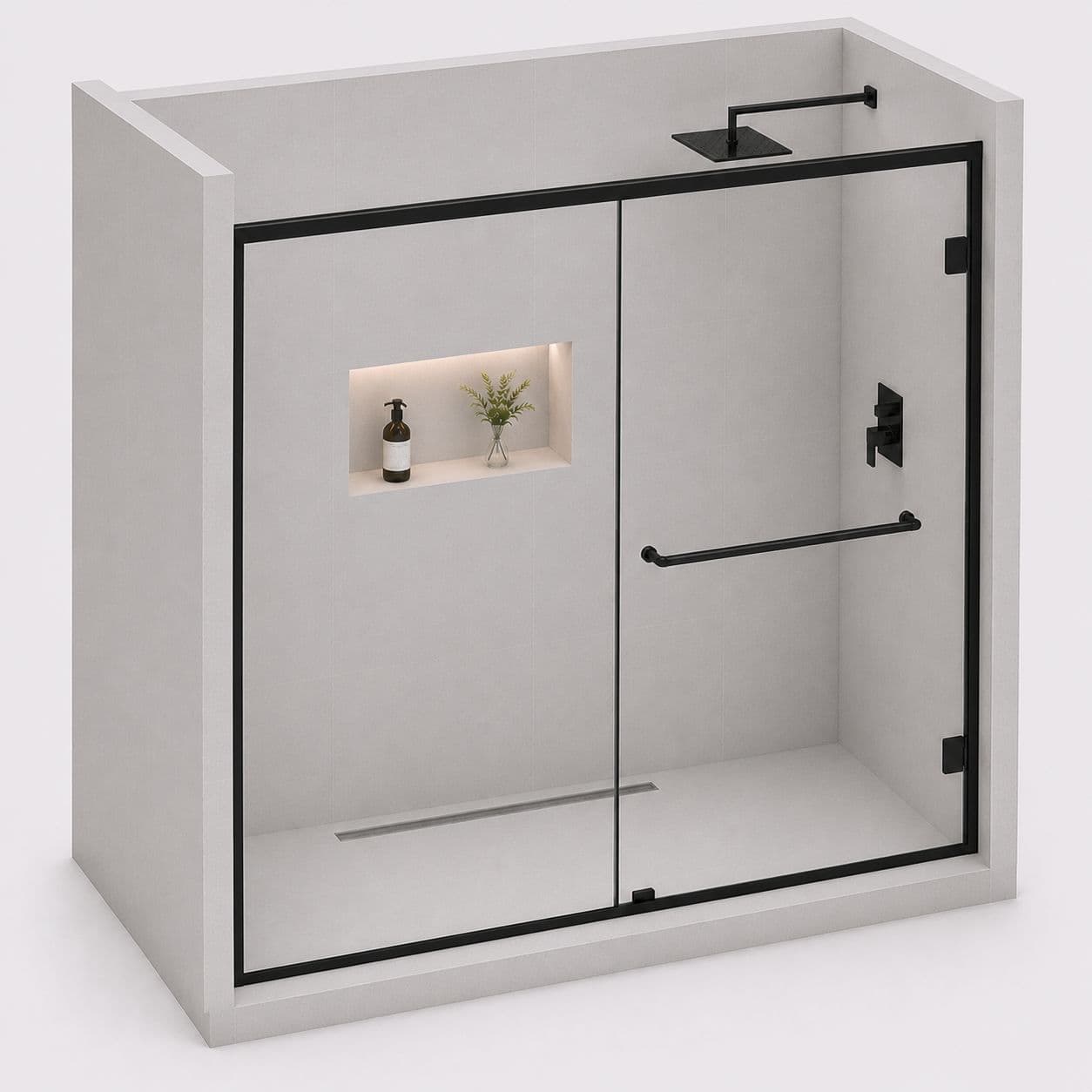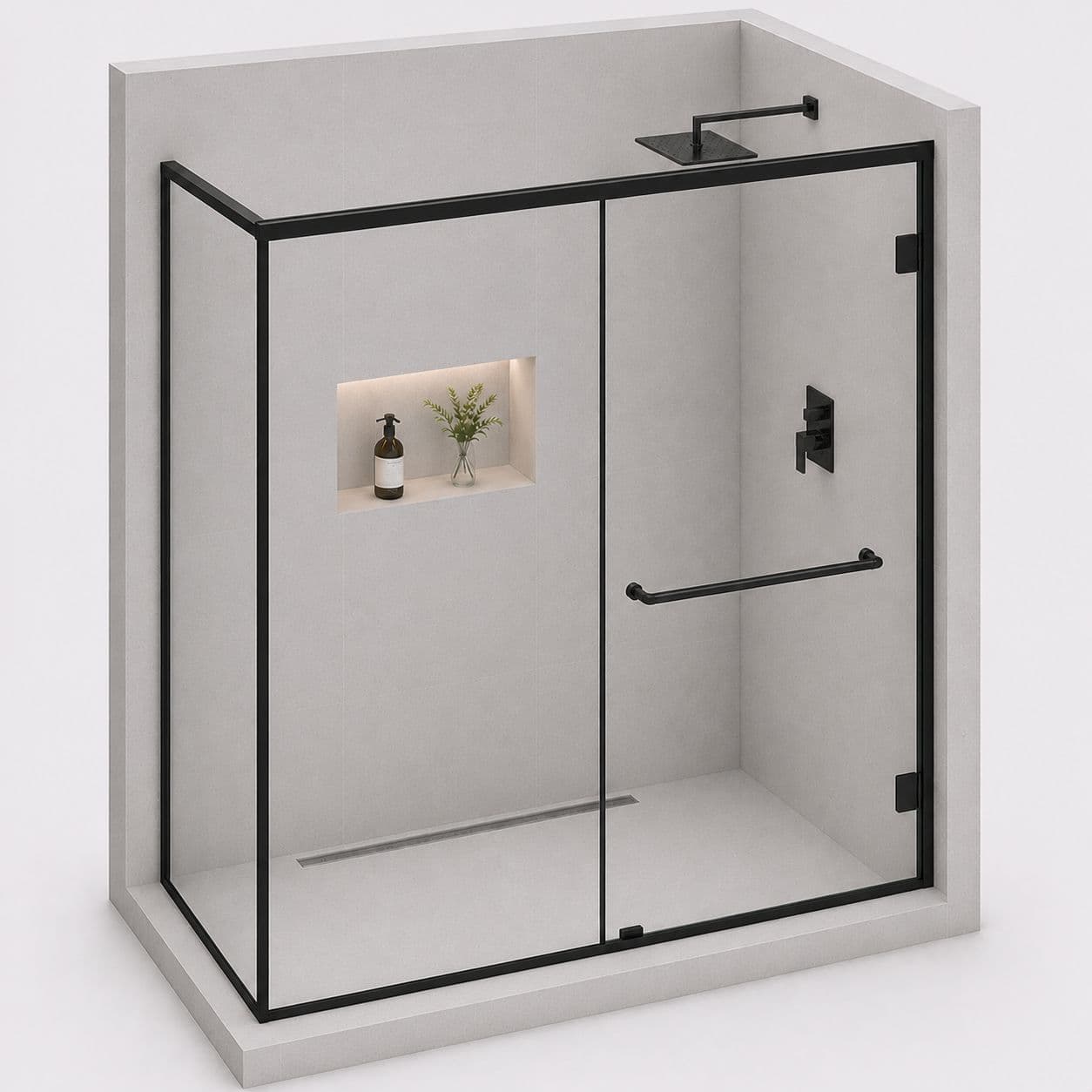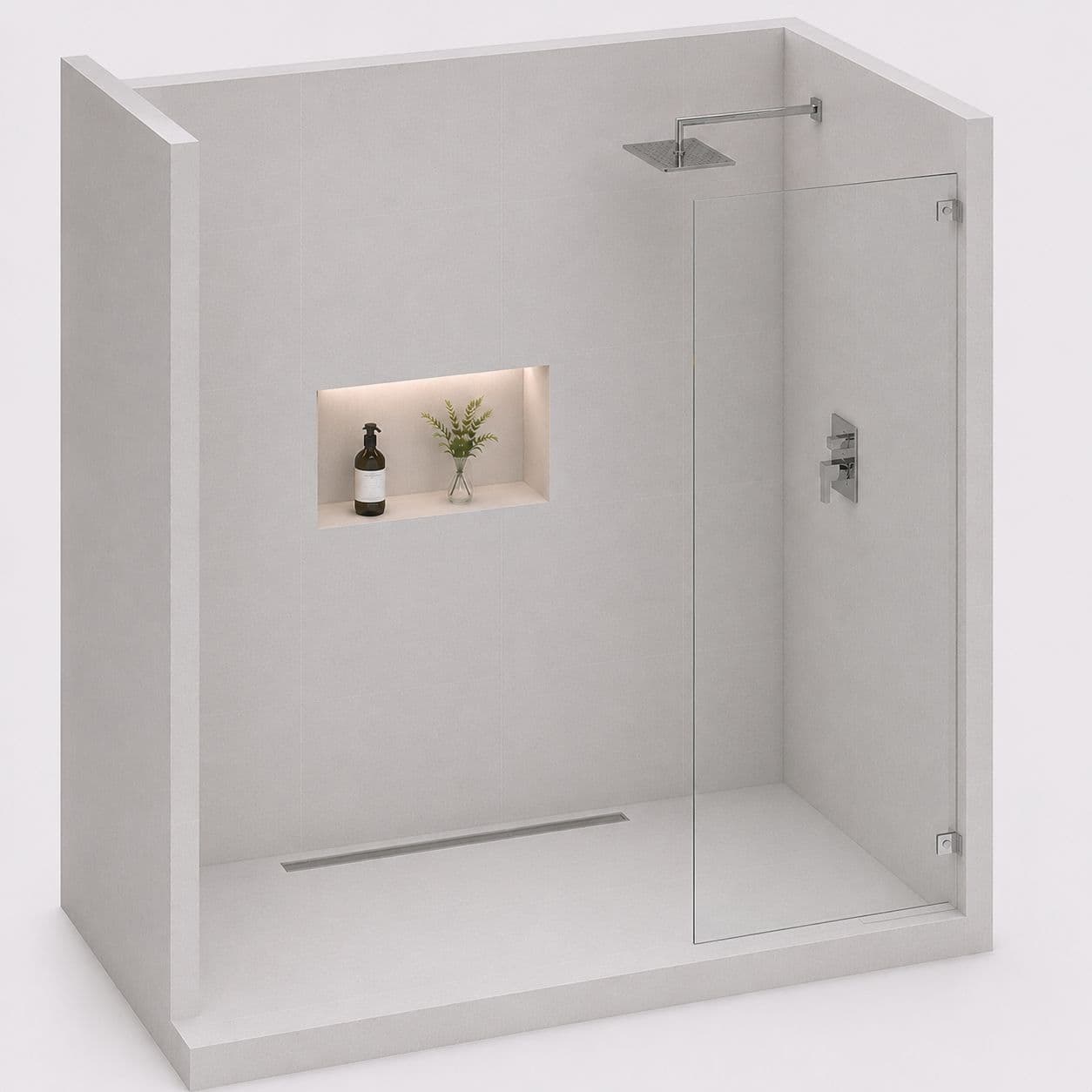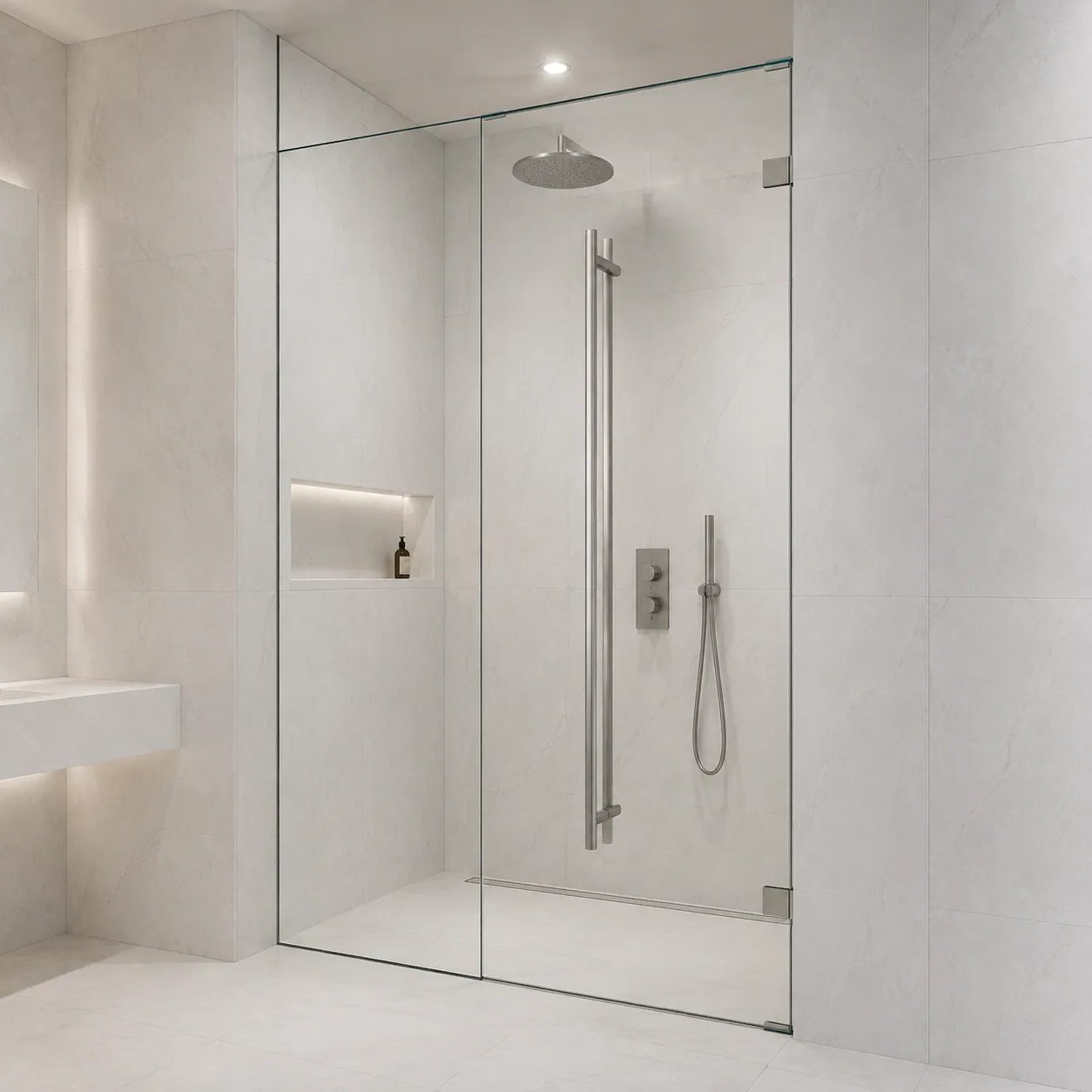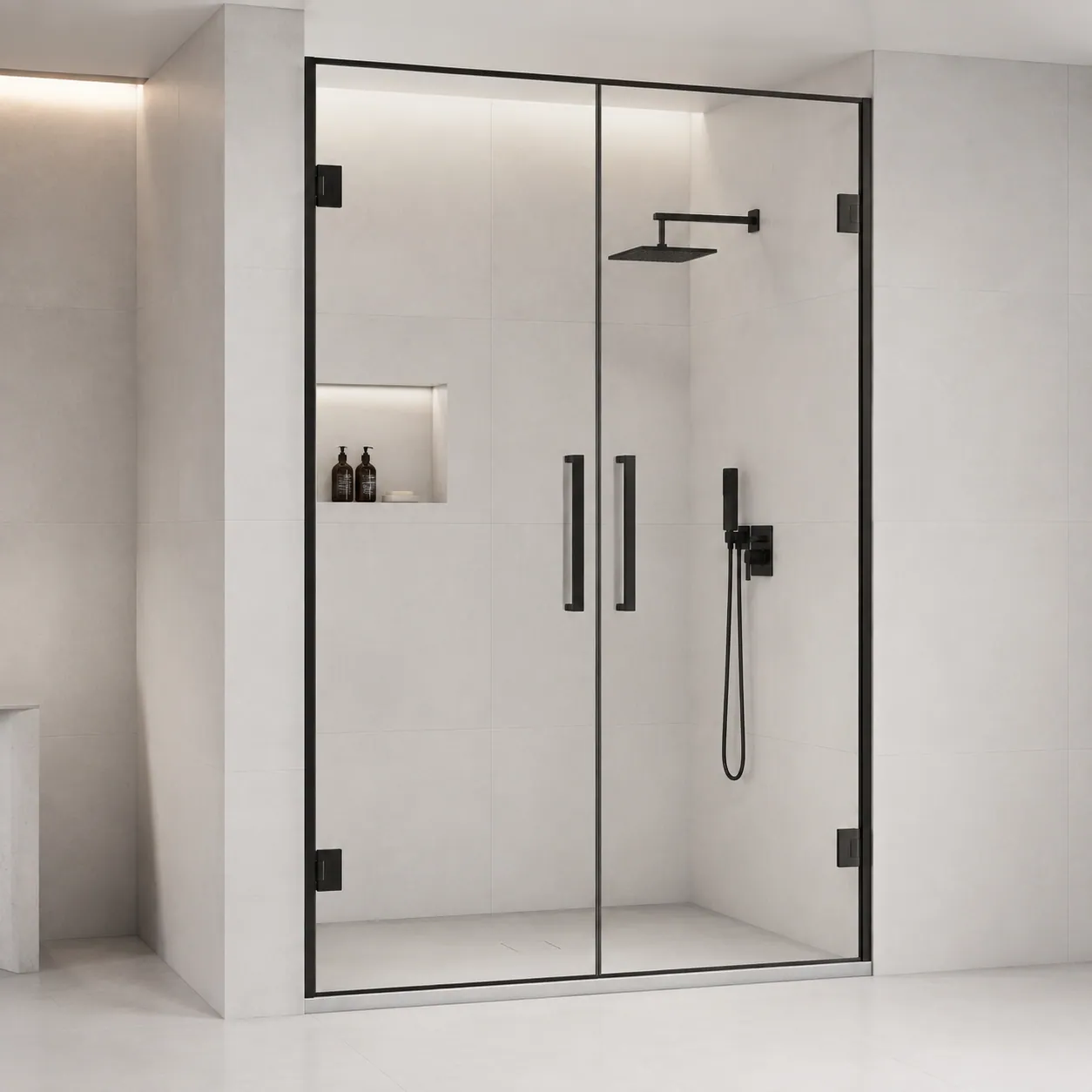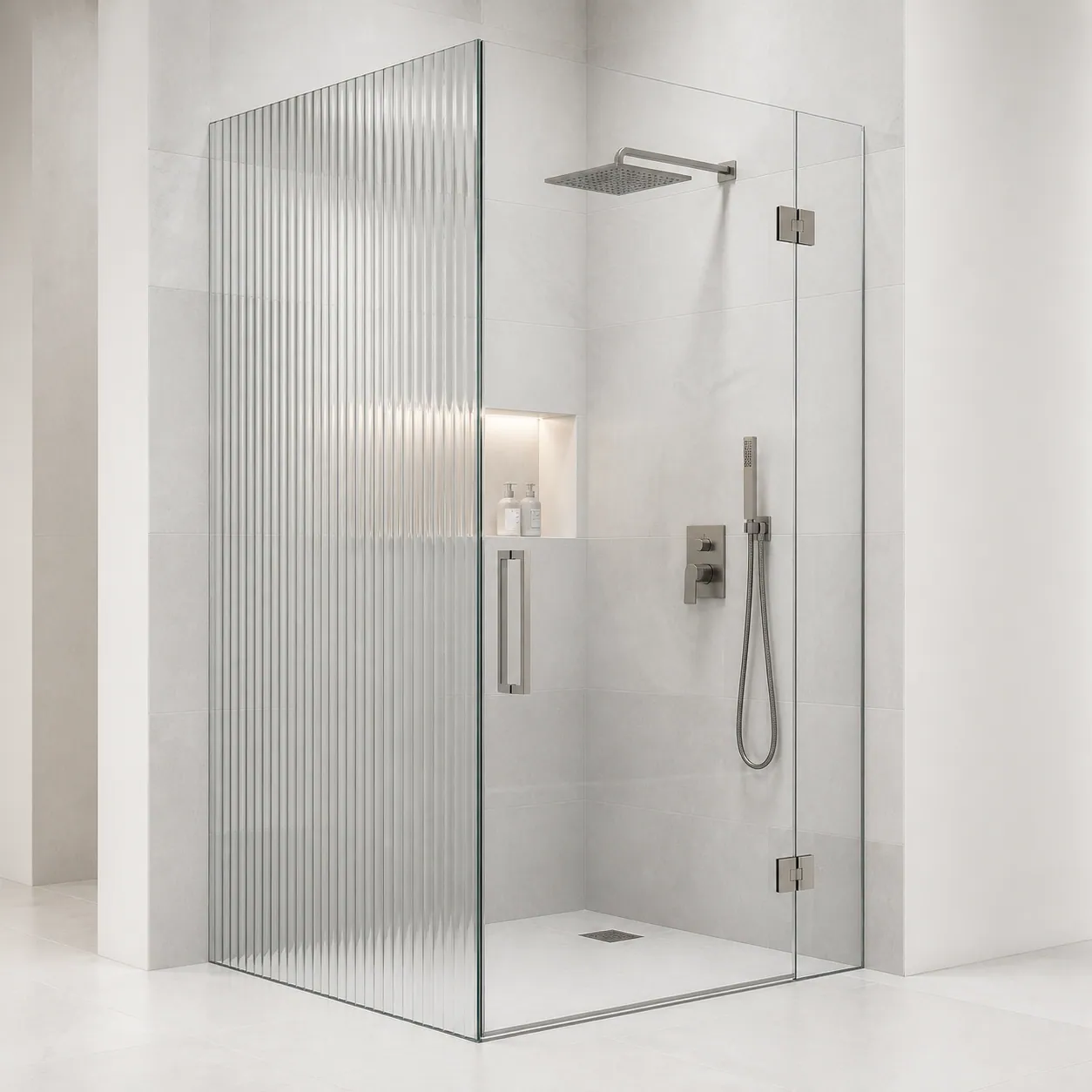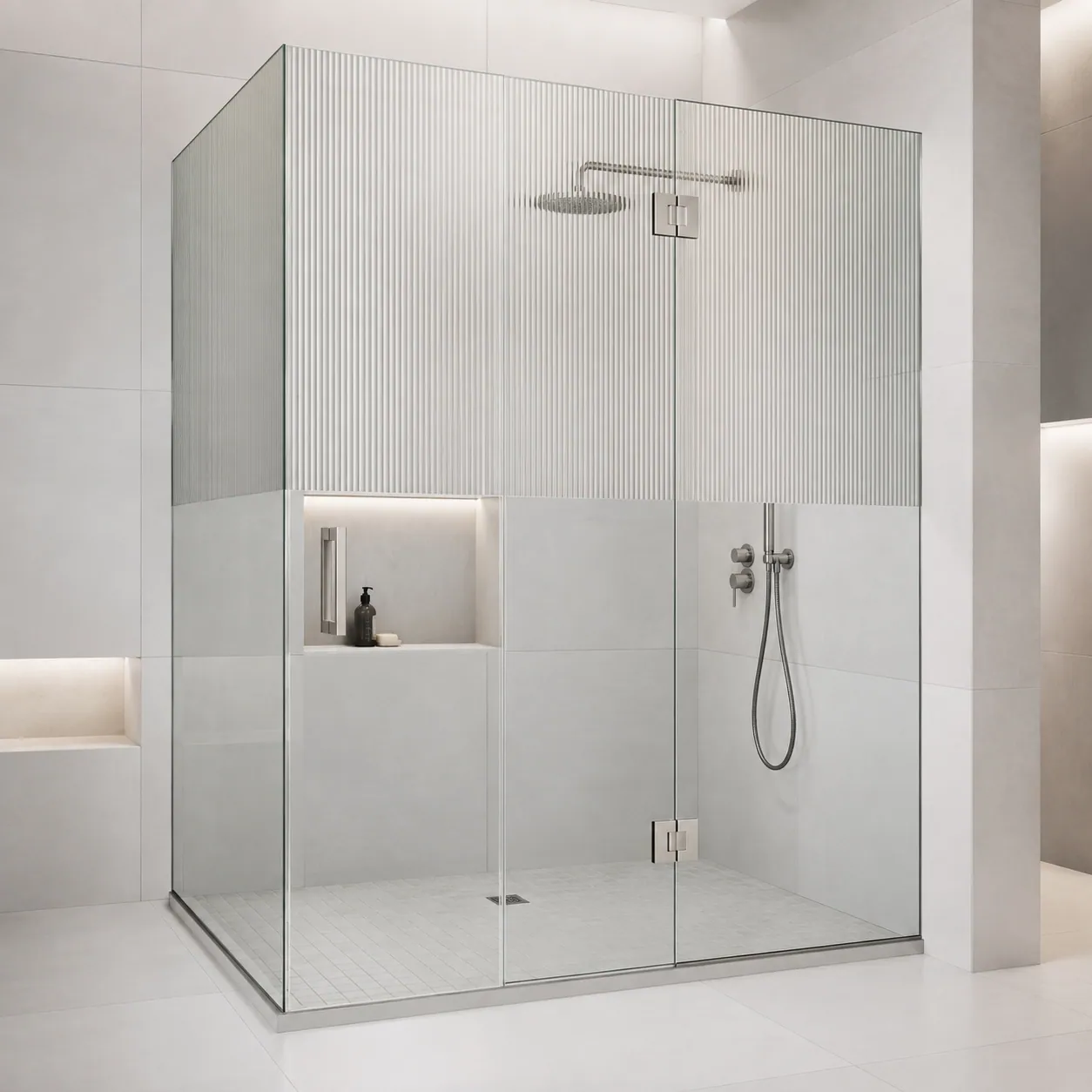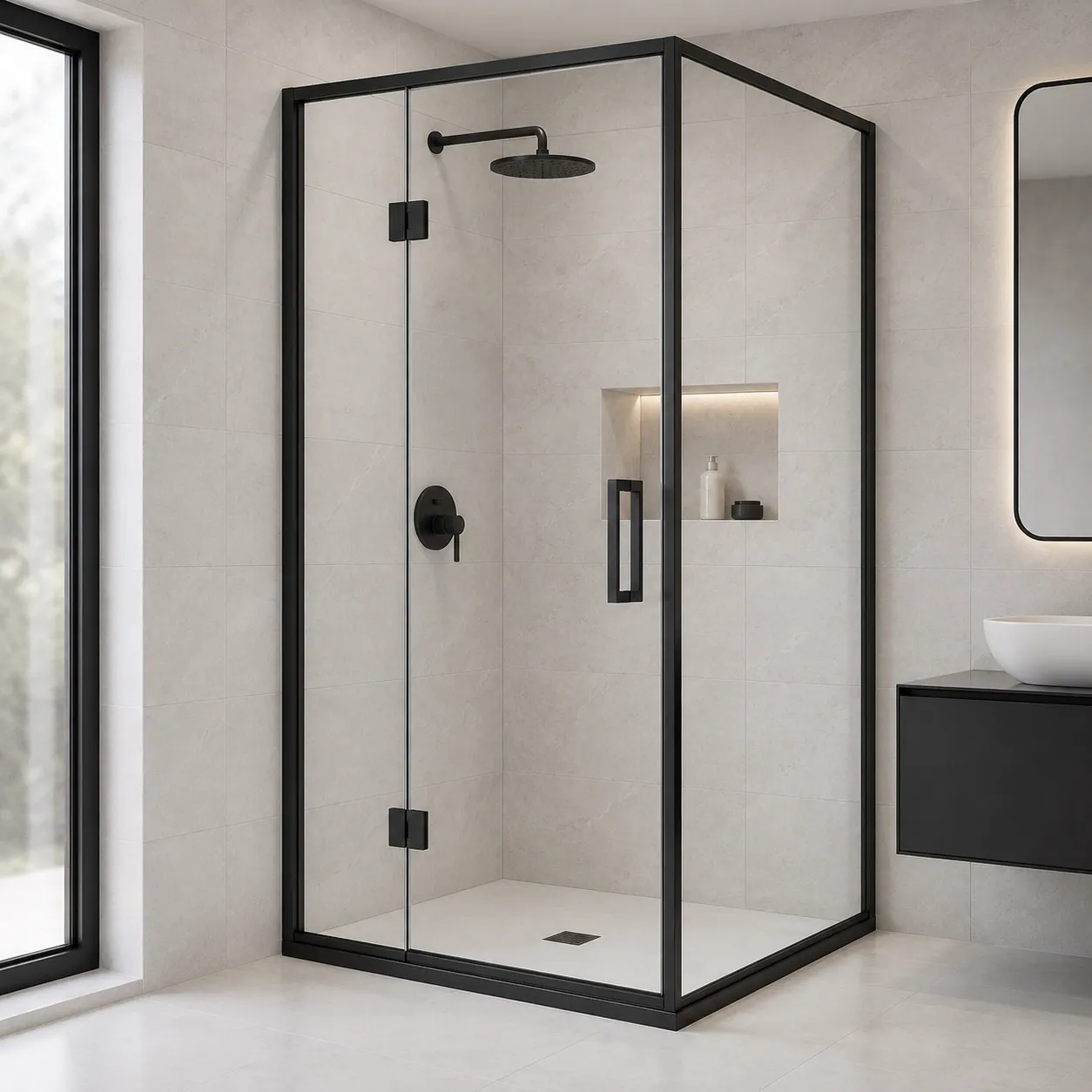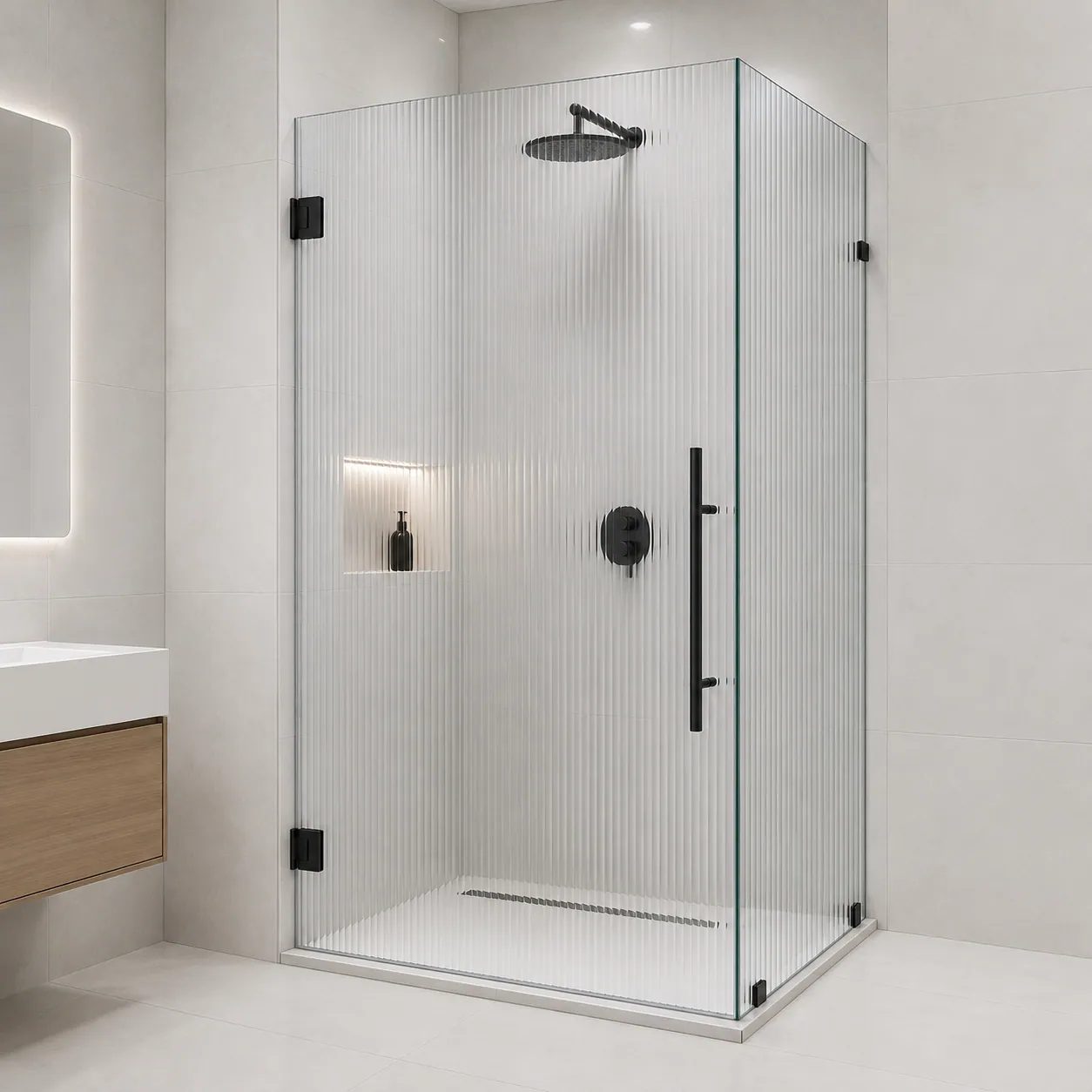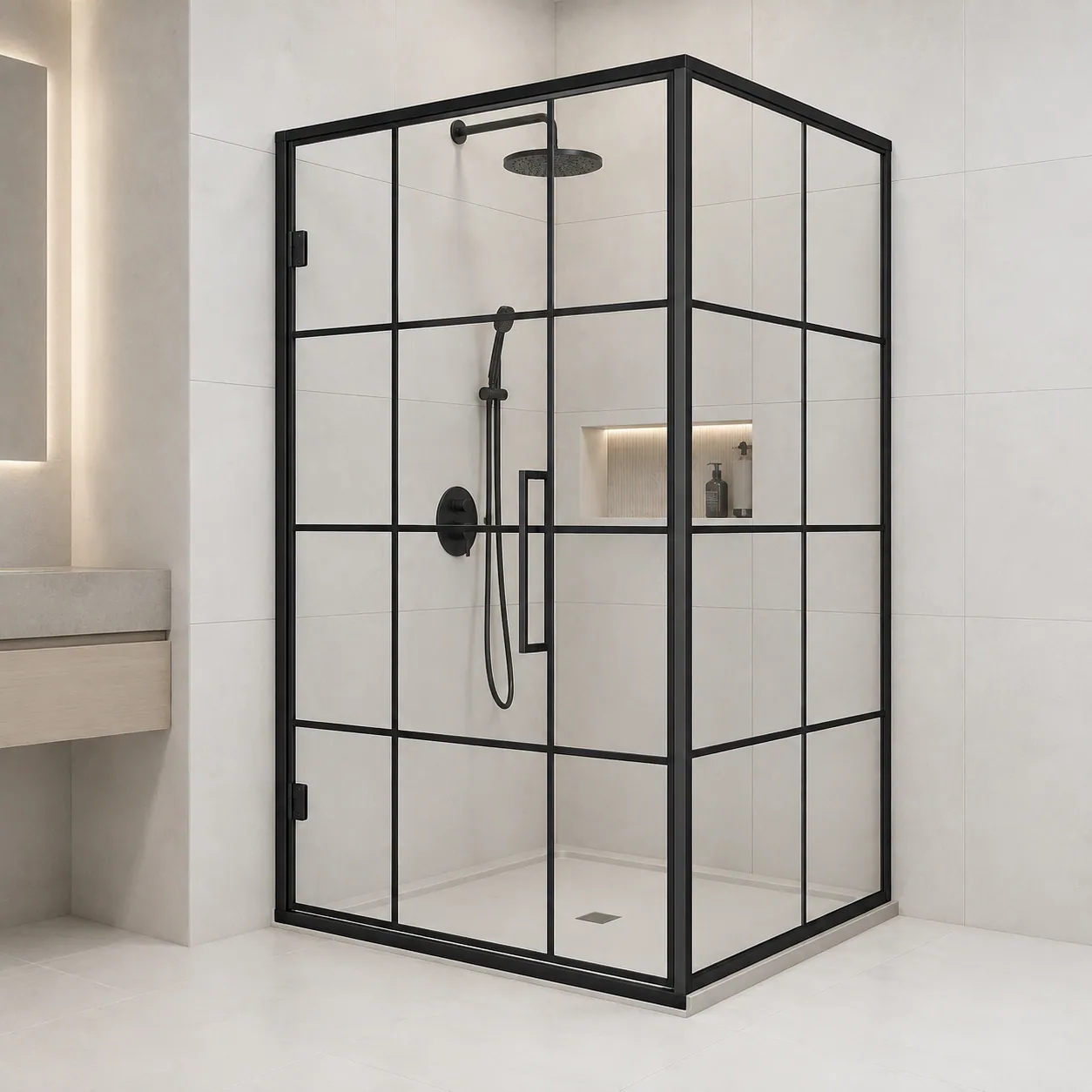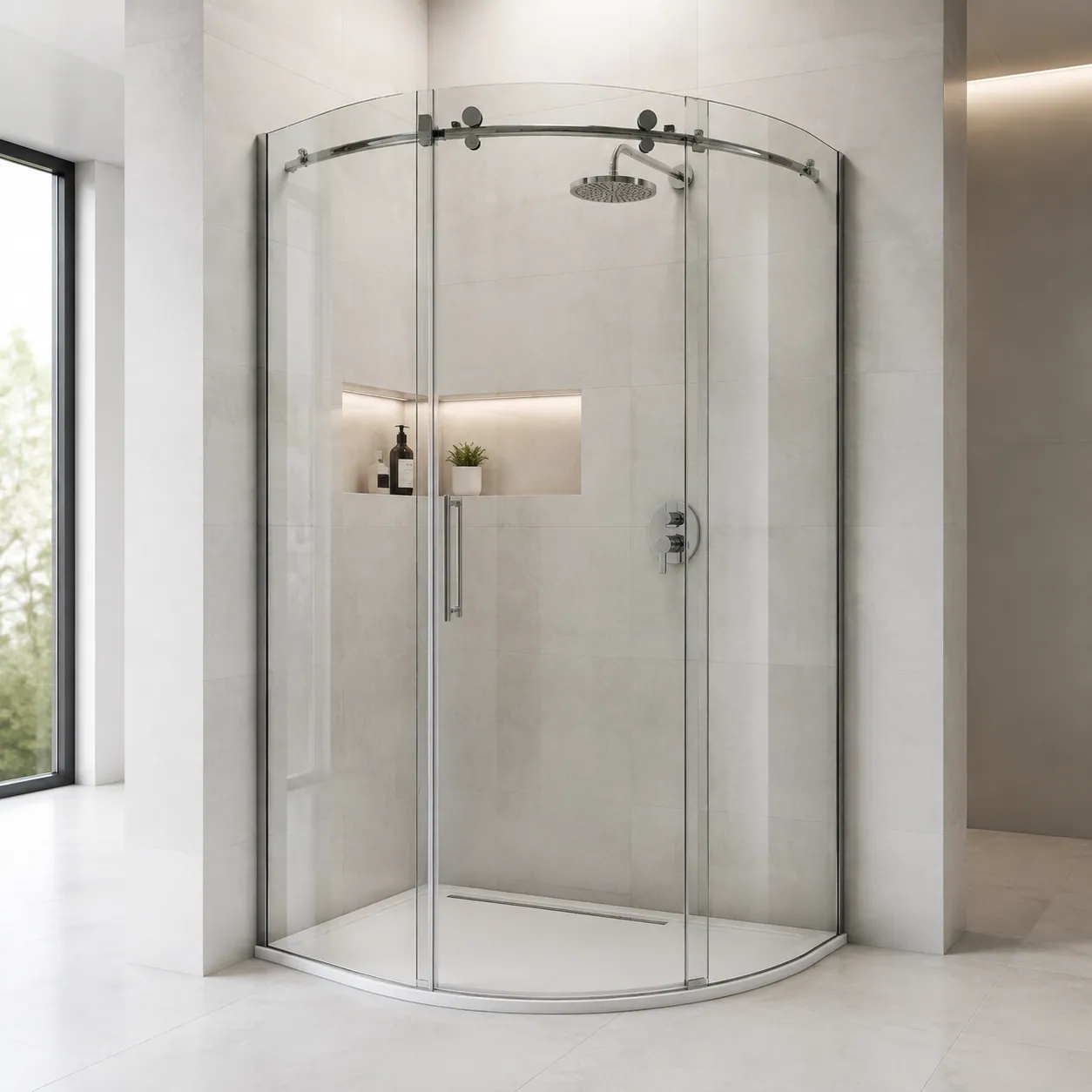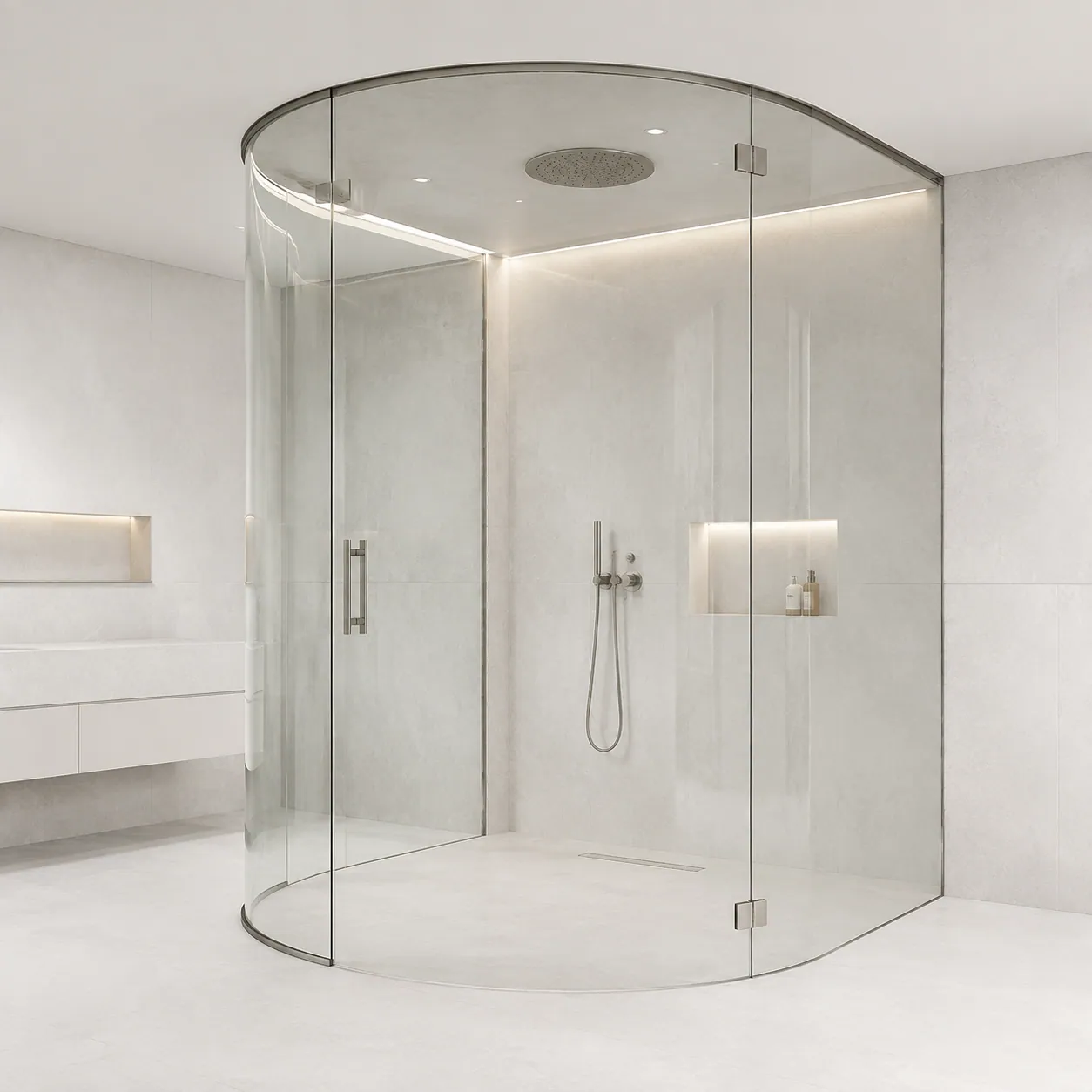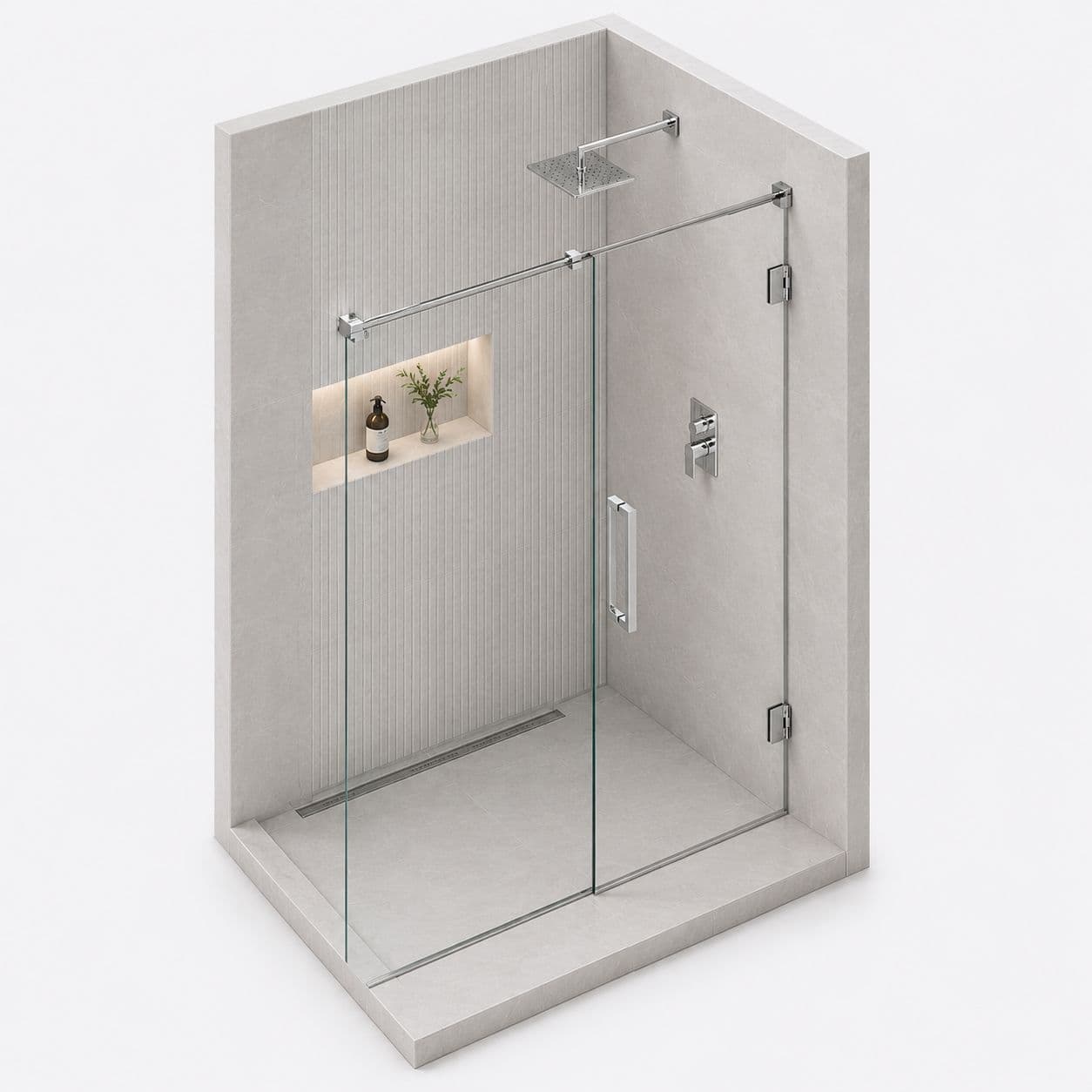
These plots were built individually over a long period, each to its own plan. So bathrooms vary considerably even between neighbouring houses, and the useful thing we can offer is measuring properly rather than working from what somebody else on the street had done.
Why a neighbour's price is not yours
People reasonably ask for the price their neighbour paid, and on a plotted street it is usually wrong.
Glass is priced by area, and bathrooms on these plots genuinely differ in size — a foot of extra width is a real difference in cost.
So we measure yours rather than quoting from the last one. It takes twenty minutes and the figure we give is the figure at the end, which a phone quote based on a neighbour's job cannot be.
Checking the wall, in every house
How square a wall is has very little to do with how good a house looks, and frameless glass cannot take up any error at all.
So the level goes on all three walls in every bathroom we measure, even where the finish is excellent.
It is a two-minute check and it decides whether frameless will seal or whether a slim frame is the honest answer. It is also the reason we will not quote a made-to-measure enclosure without seeing the room.
Put measurements and fixing zones on one sketch
The survey sketch shows more than width and height. It marks tile joints, wall deviation, taps, shelves, towel fittings and the full door arc. We also mark where solid fixing support was found.
That drawing becomes the reference for glass production and installation. A fitter can see why the panel moved away from a tile edge. The owner can see how the entrance stays clear. If the bathroom changes before fitting, the changed dimension is obvious and the glass order can stop. One shared sketch is safer than several measurements scattered across messages.
Fixings set out against the tiles that are there
In an existing bathroom the tiling sets the limits, because the enclosure has to land on it sensibly.
A fixing that lands on a tile edge or a grout line is weaker and much more likely to crack the tile.
So we set the fixing positions against the actual tile layout rather than at a standard spacing. Sometimes that moves the enclosure an inch from where it was drawn, and it is worth it — a cracked tile at a fixing is both a weak point and permanent.
How the job works
- Tell us about the jobSend a few photos, rough sizes and what you need. Use WhatsApp or the form. For a repair, a short video of the door moving helps a lot.
- We call you back in about 2 minutesWe confirm what you need and a time to visit. Where we can, we give you a rough price on the call.
- We come and measureWe measure the opening and check the walls, floor and ceiling around it. Anything made to size is made to these measurements, so they must be right.
- You get a written priceIt lists each item, with GST as its own line. If anything about the job changes, we tell you before we go ahead.
- We fit itYou approve the price and pay the advance. Our own team fits the work, checks that every door and window opens and closes properly, and clears up. Most jobs are done in 3 to 4 days.