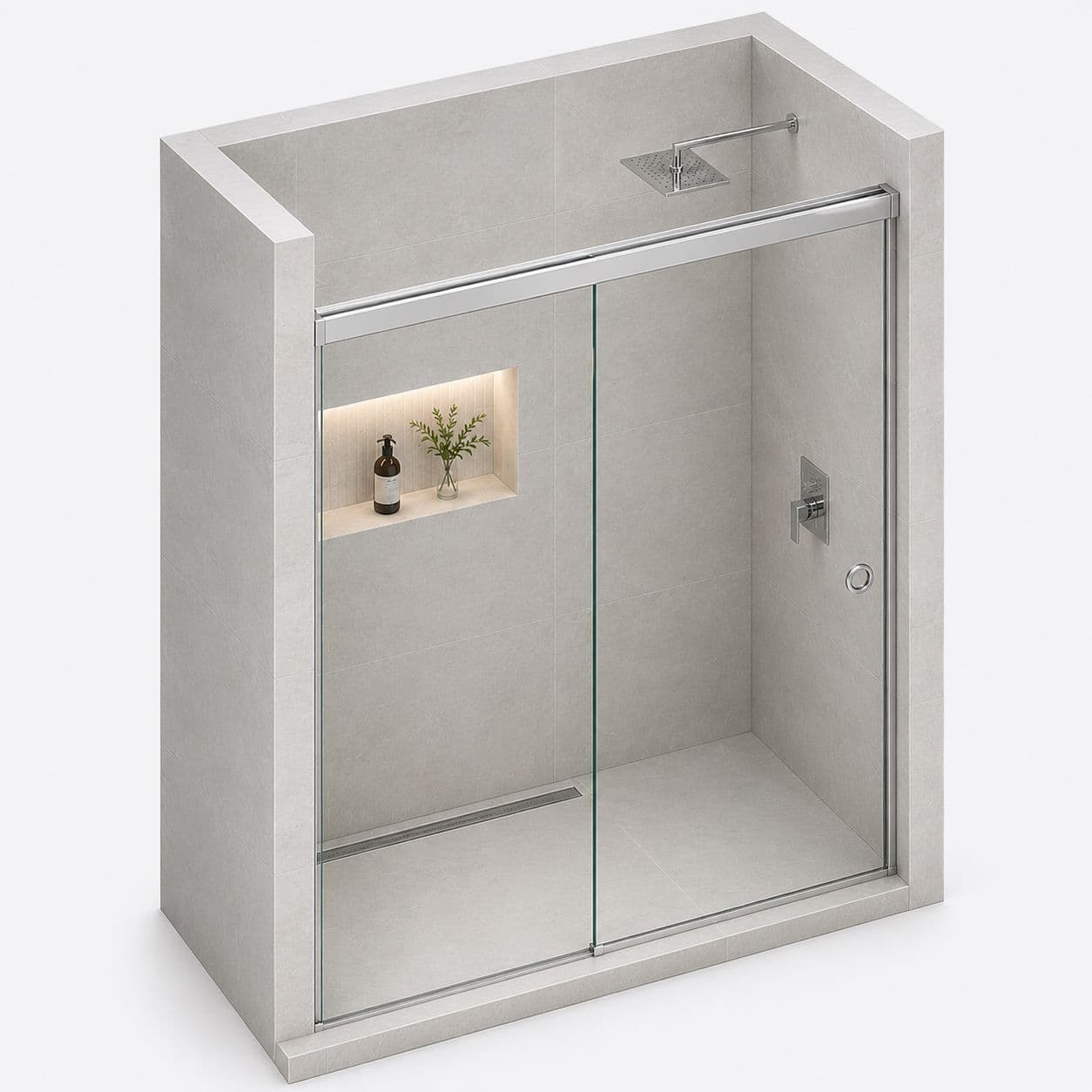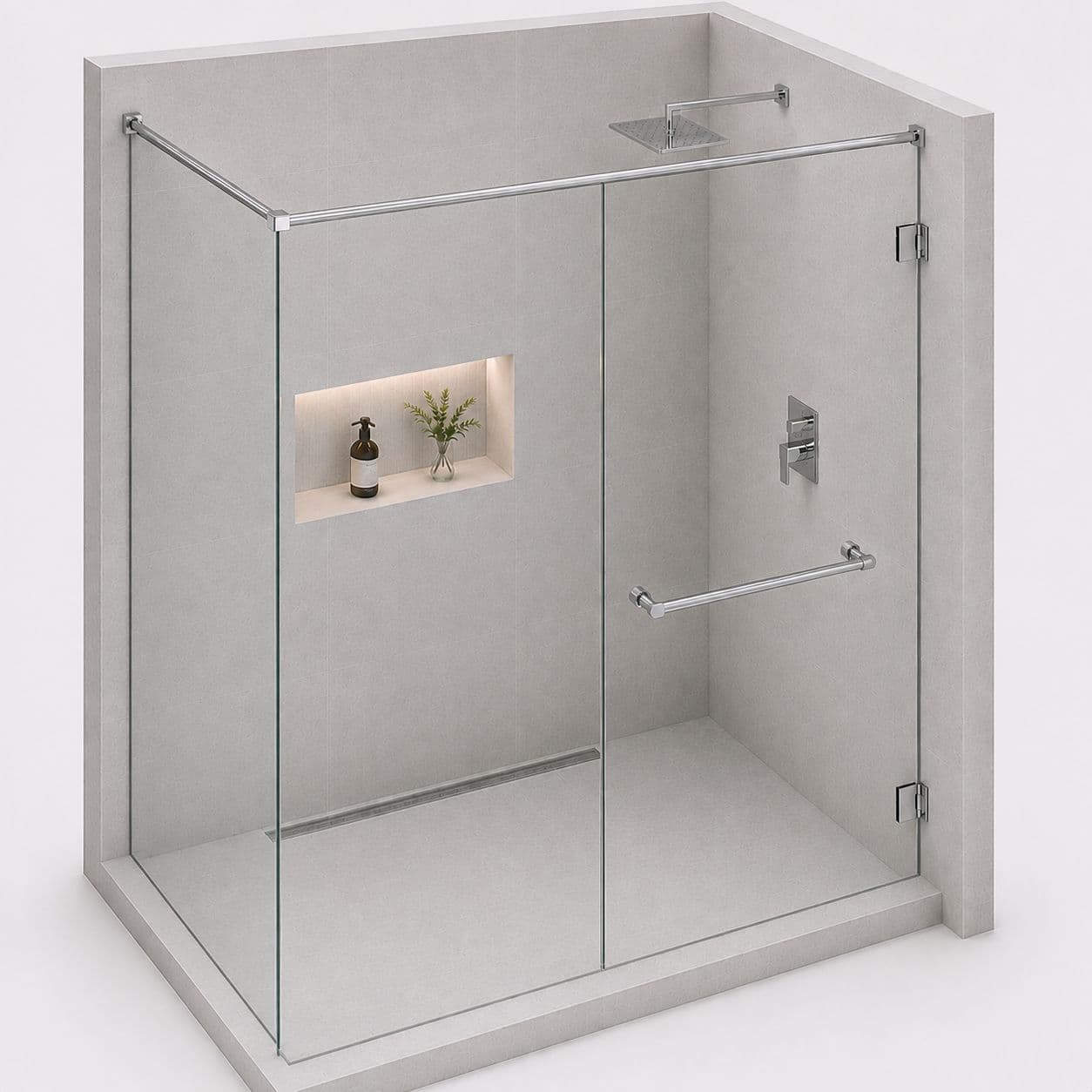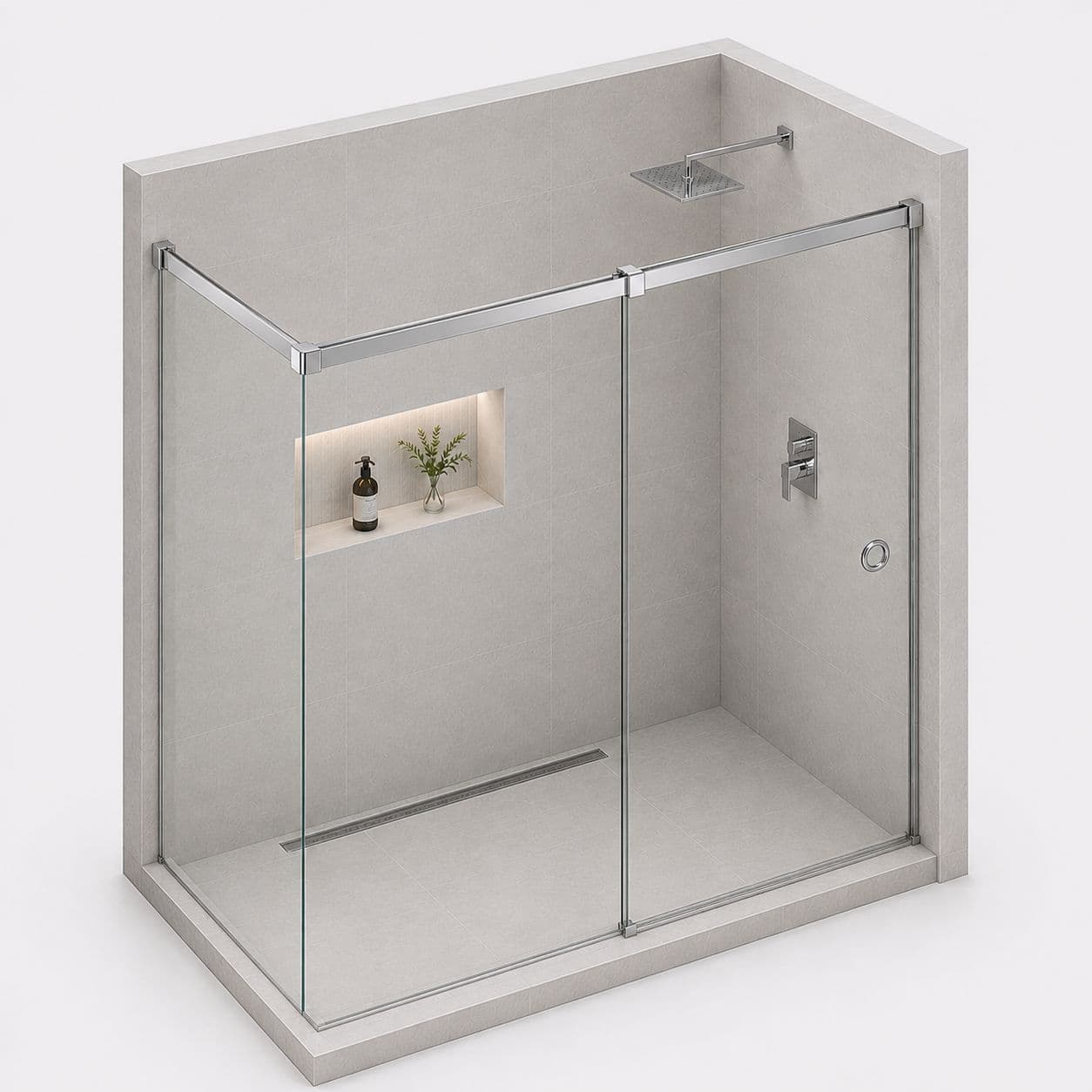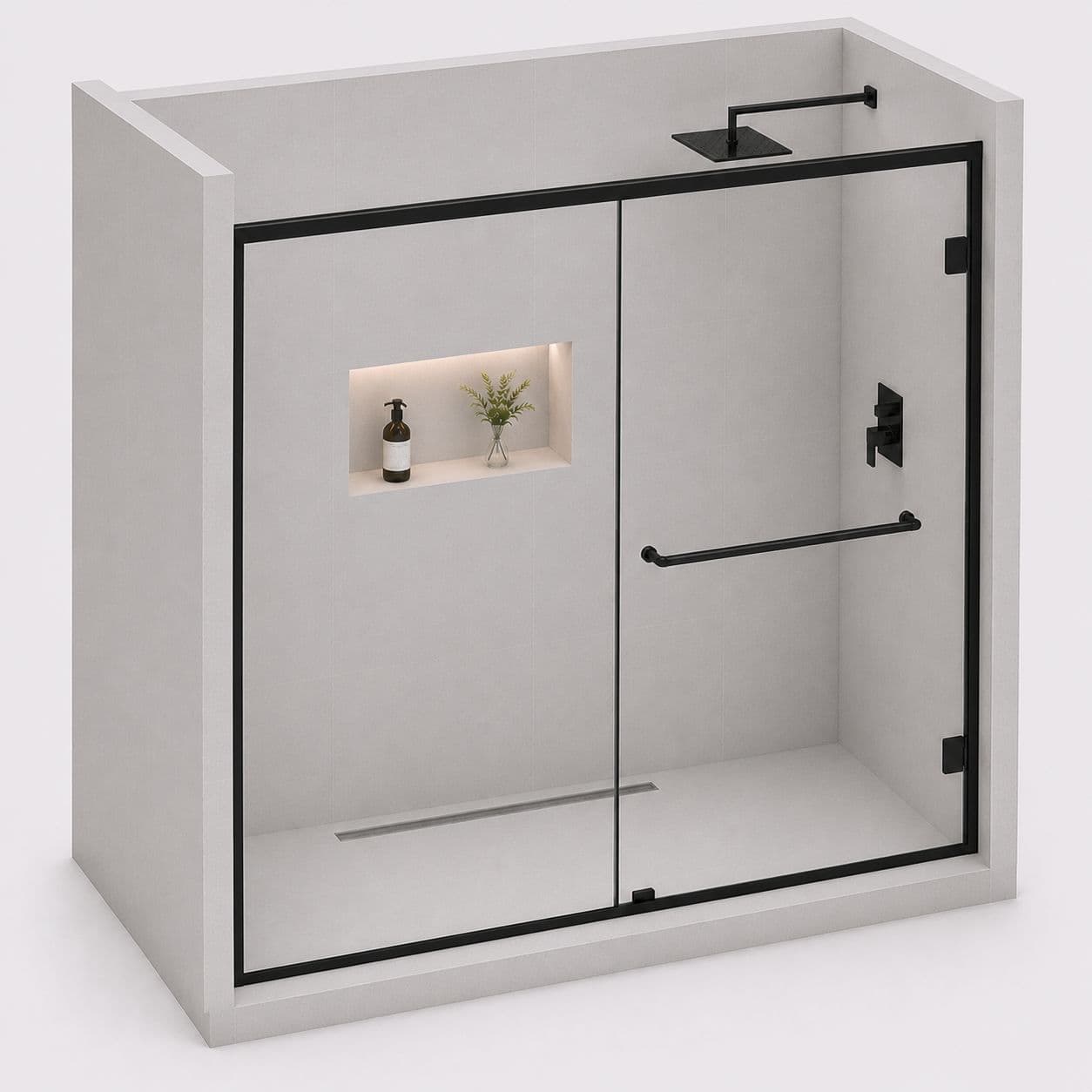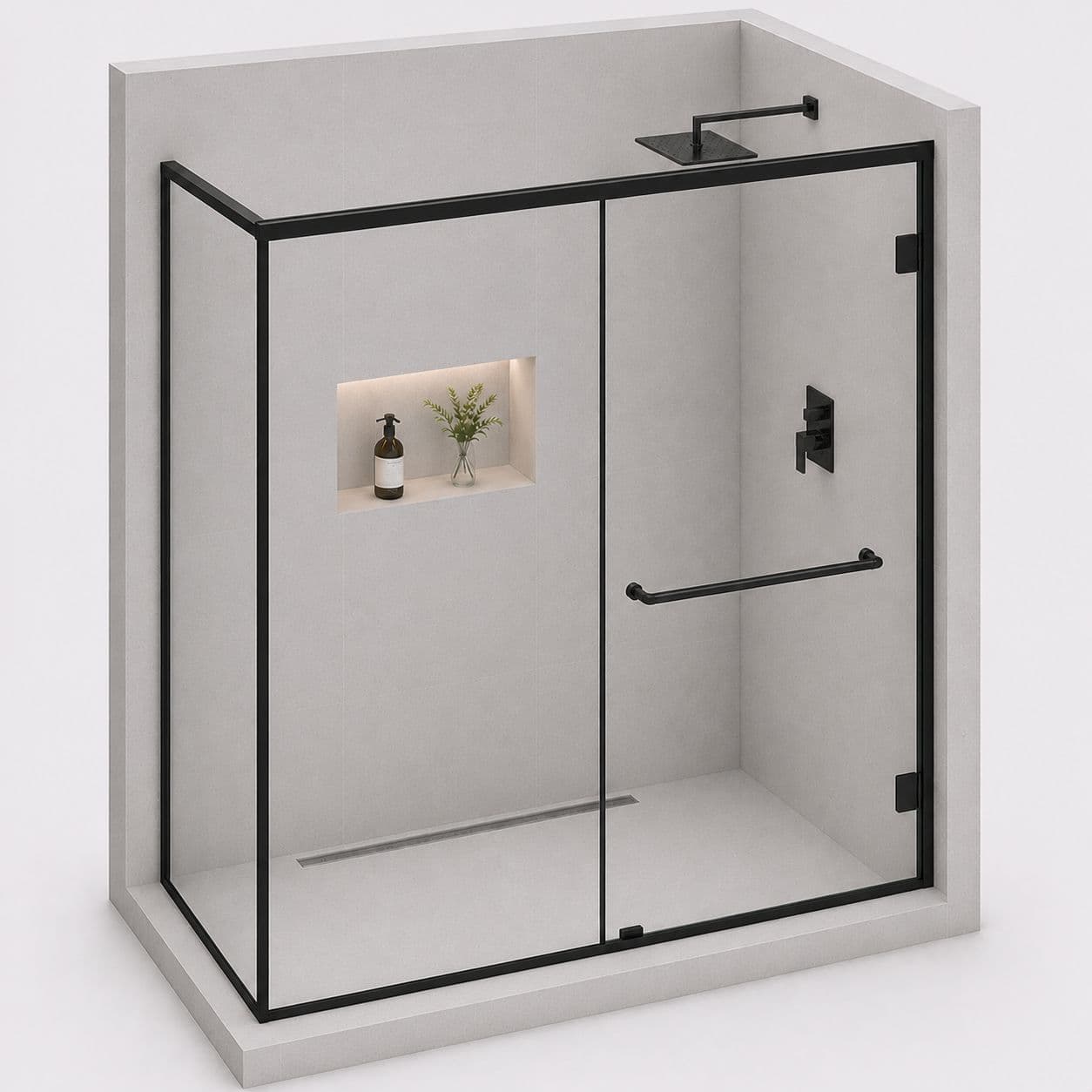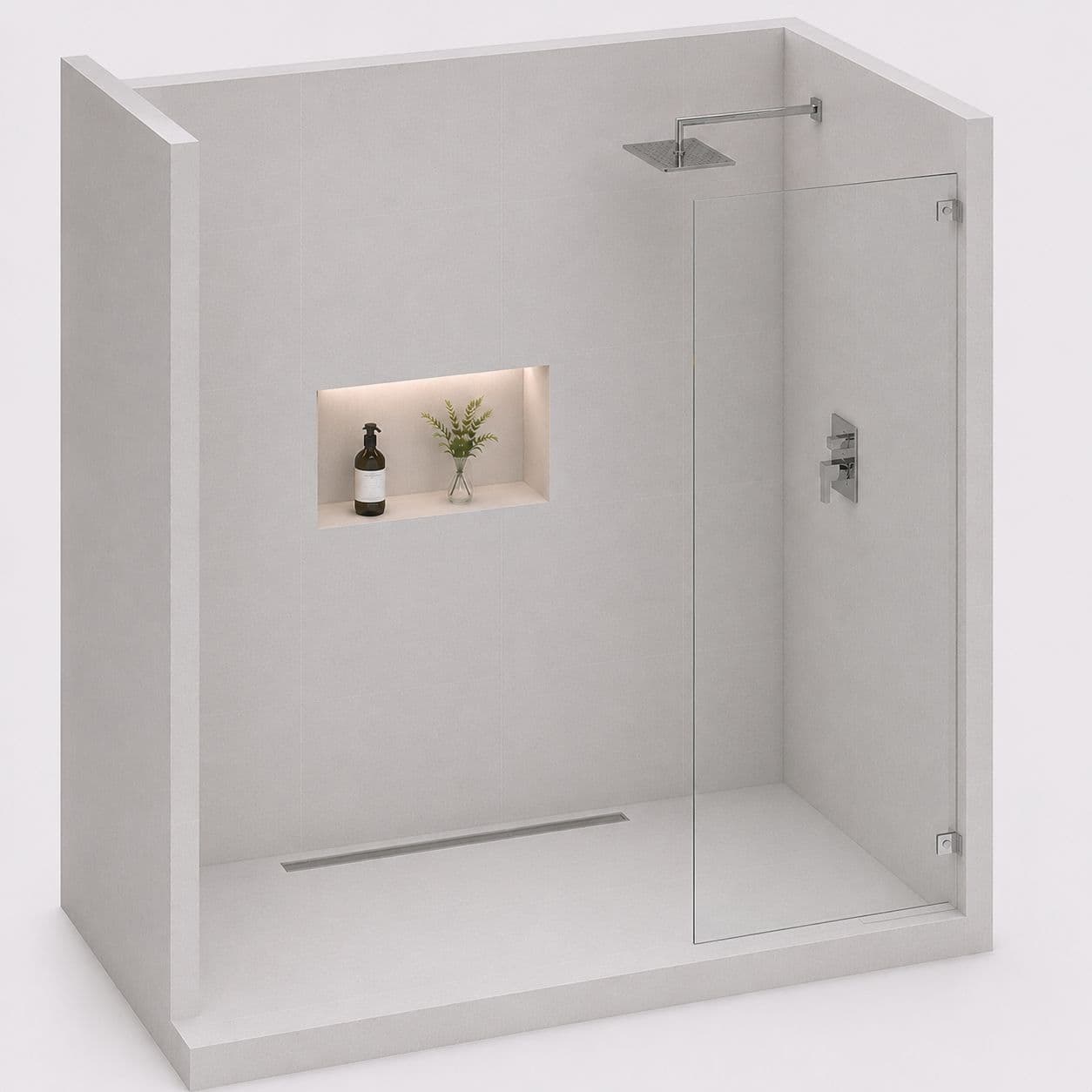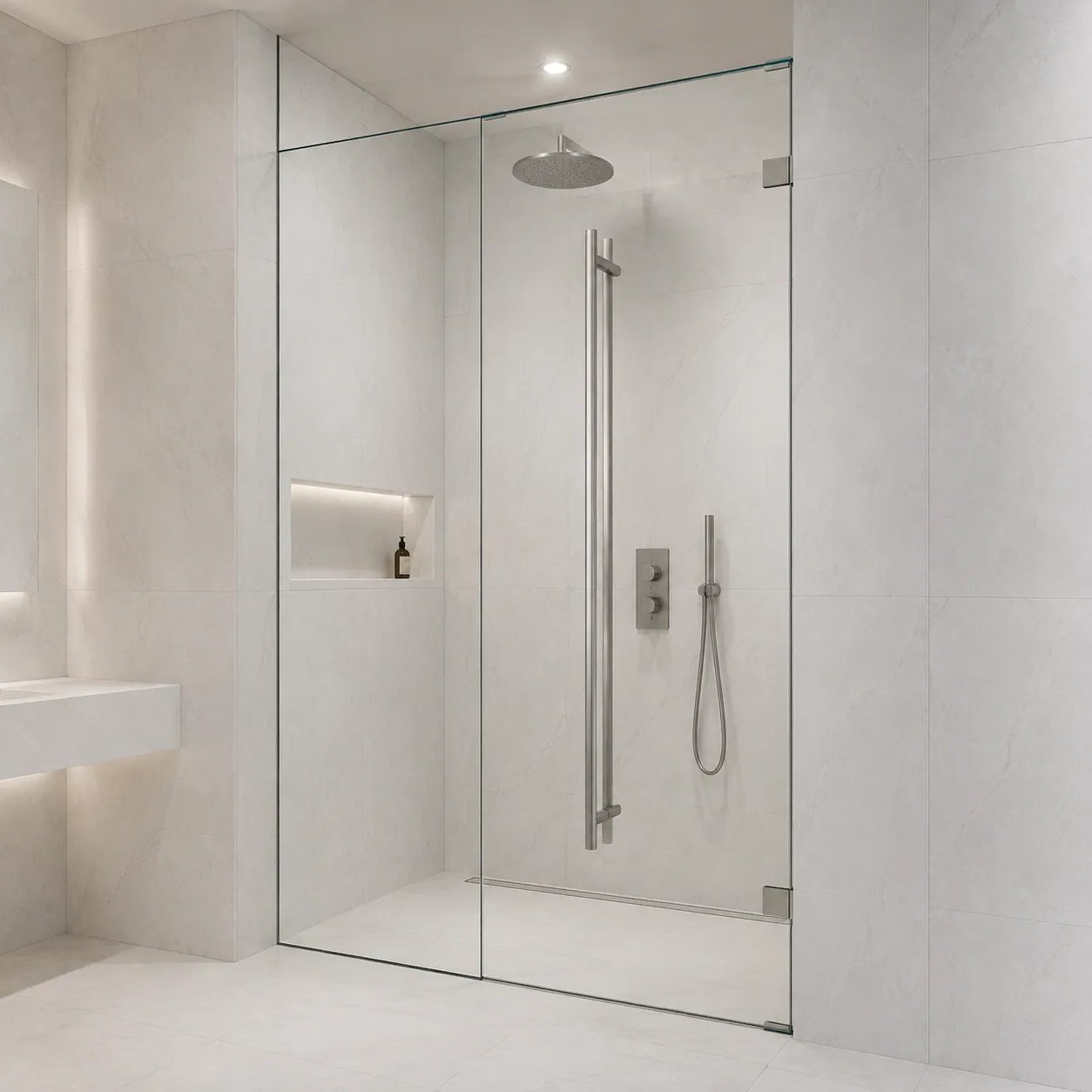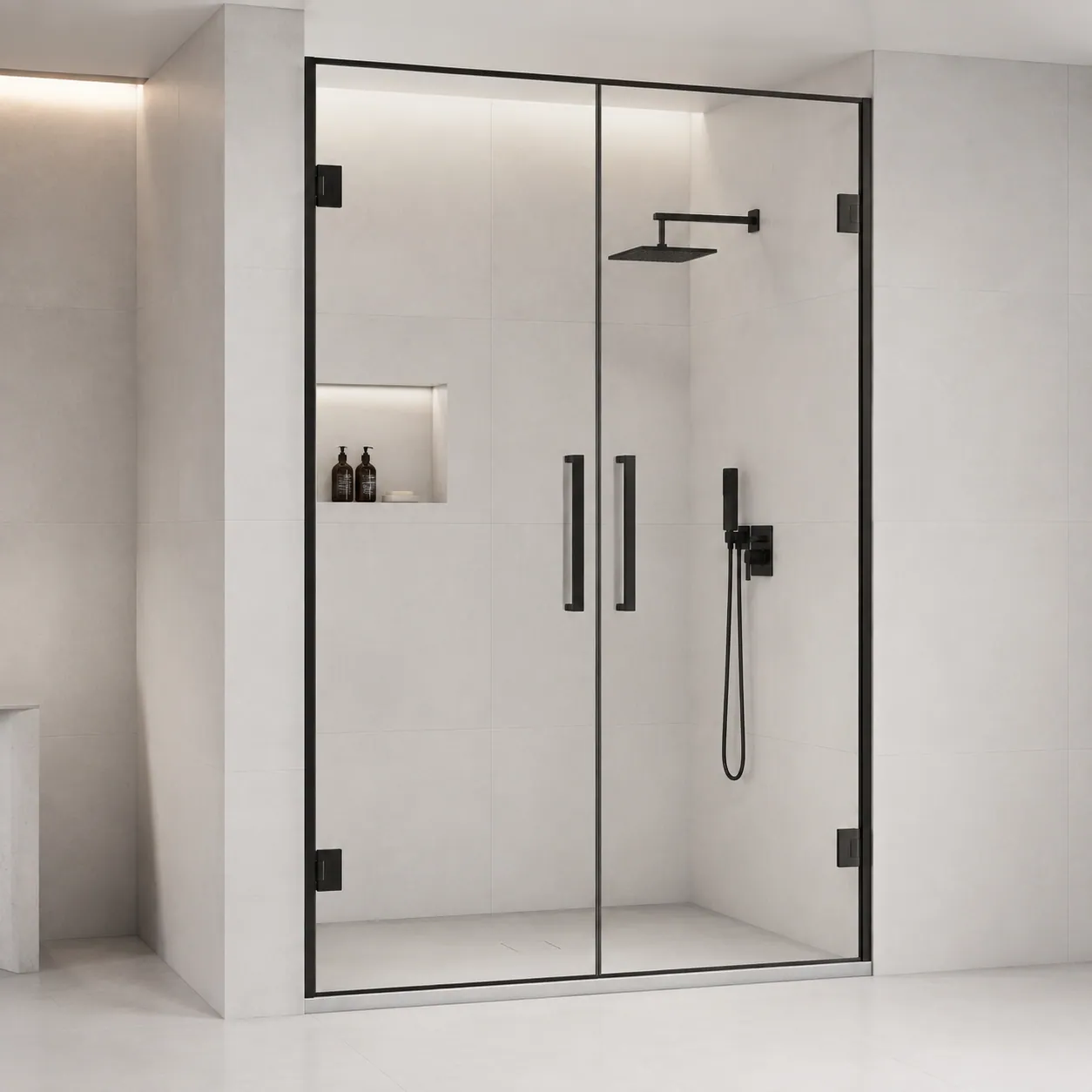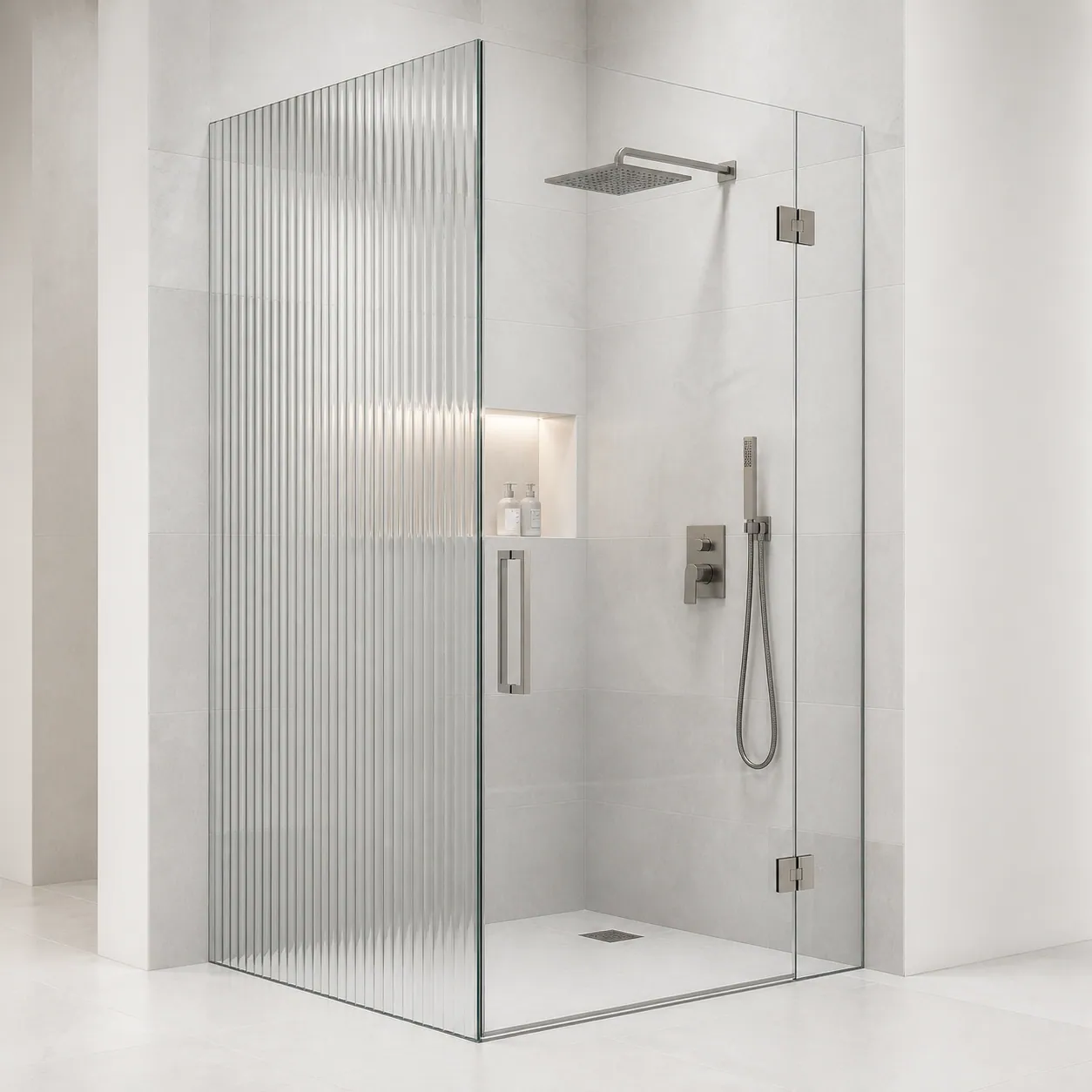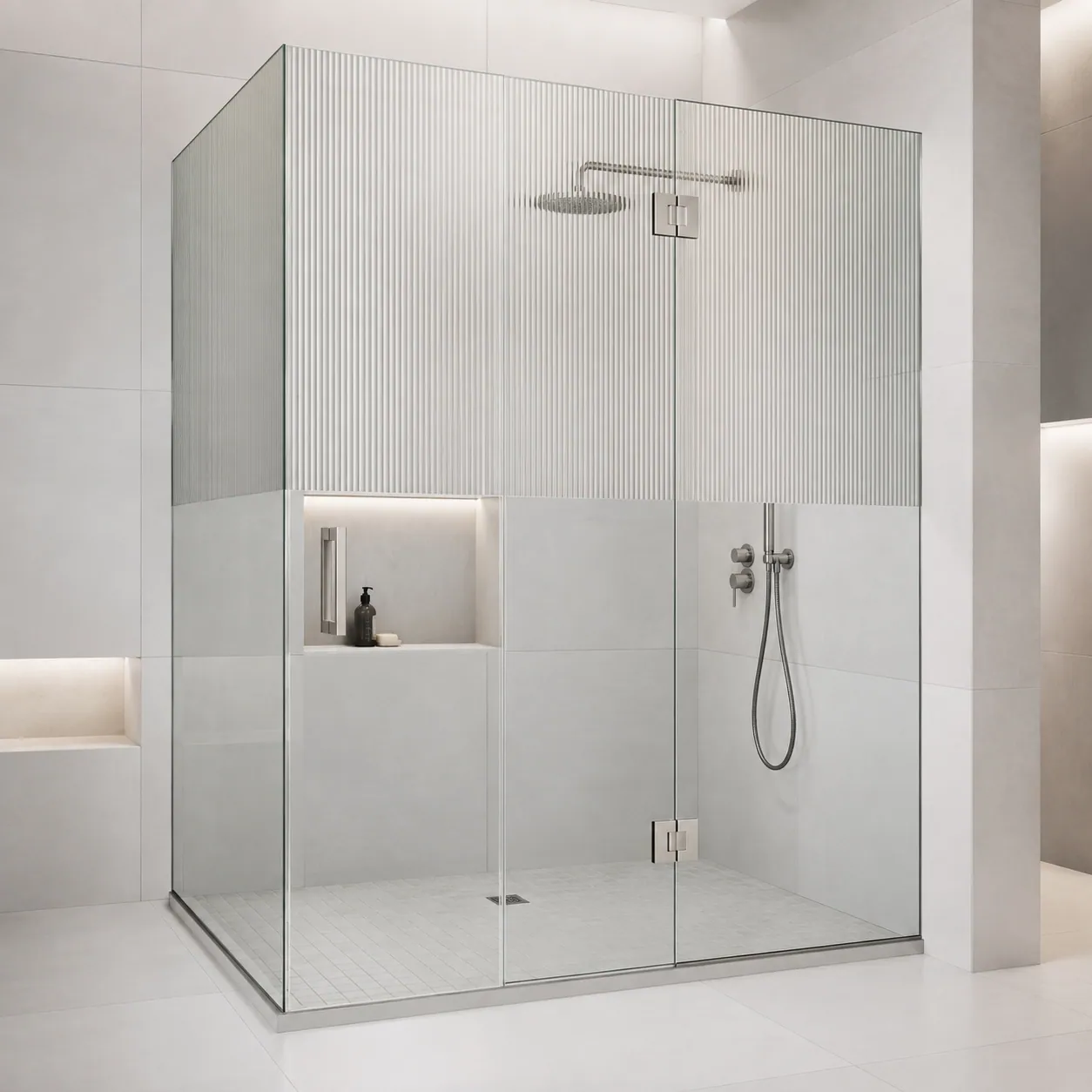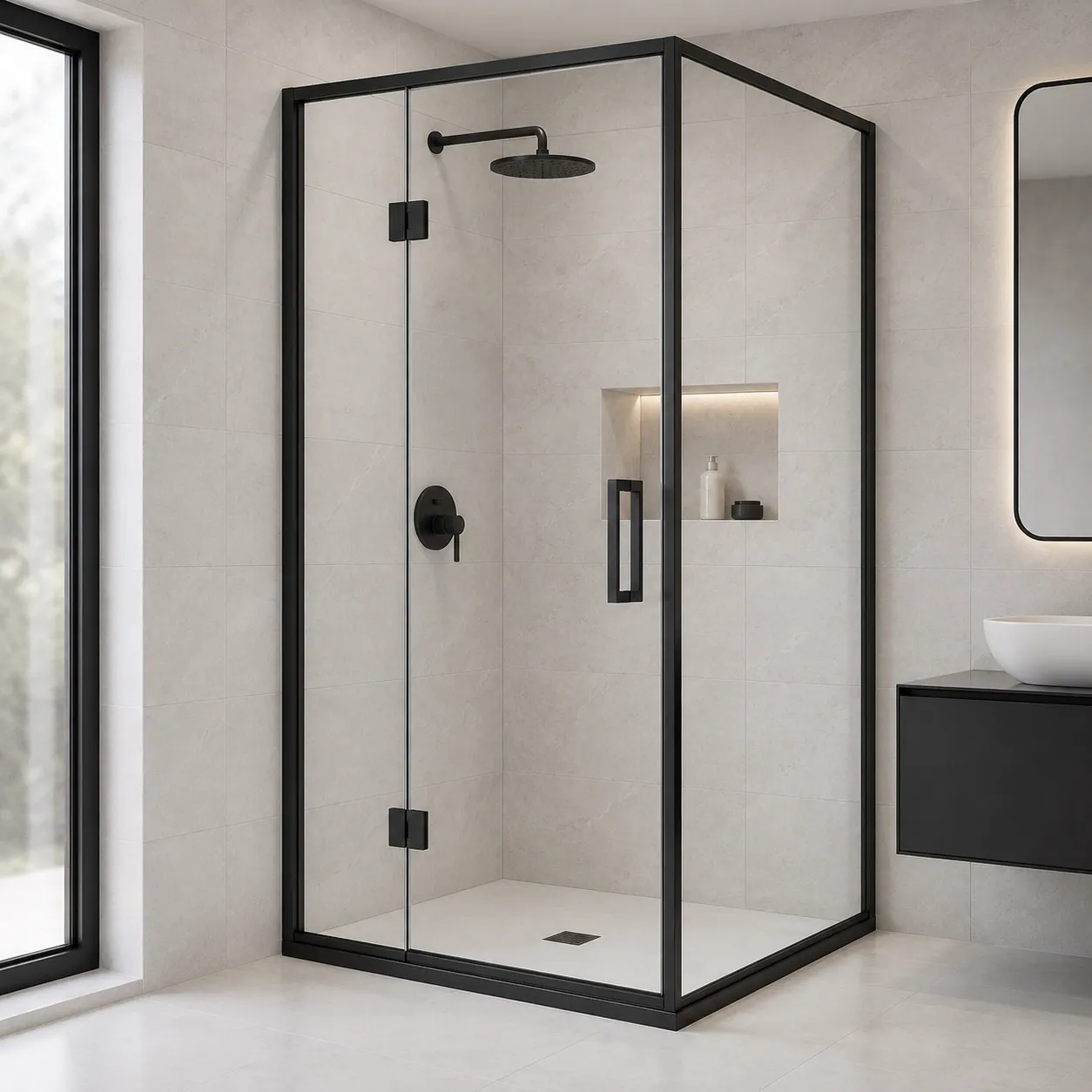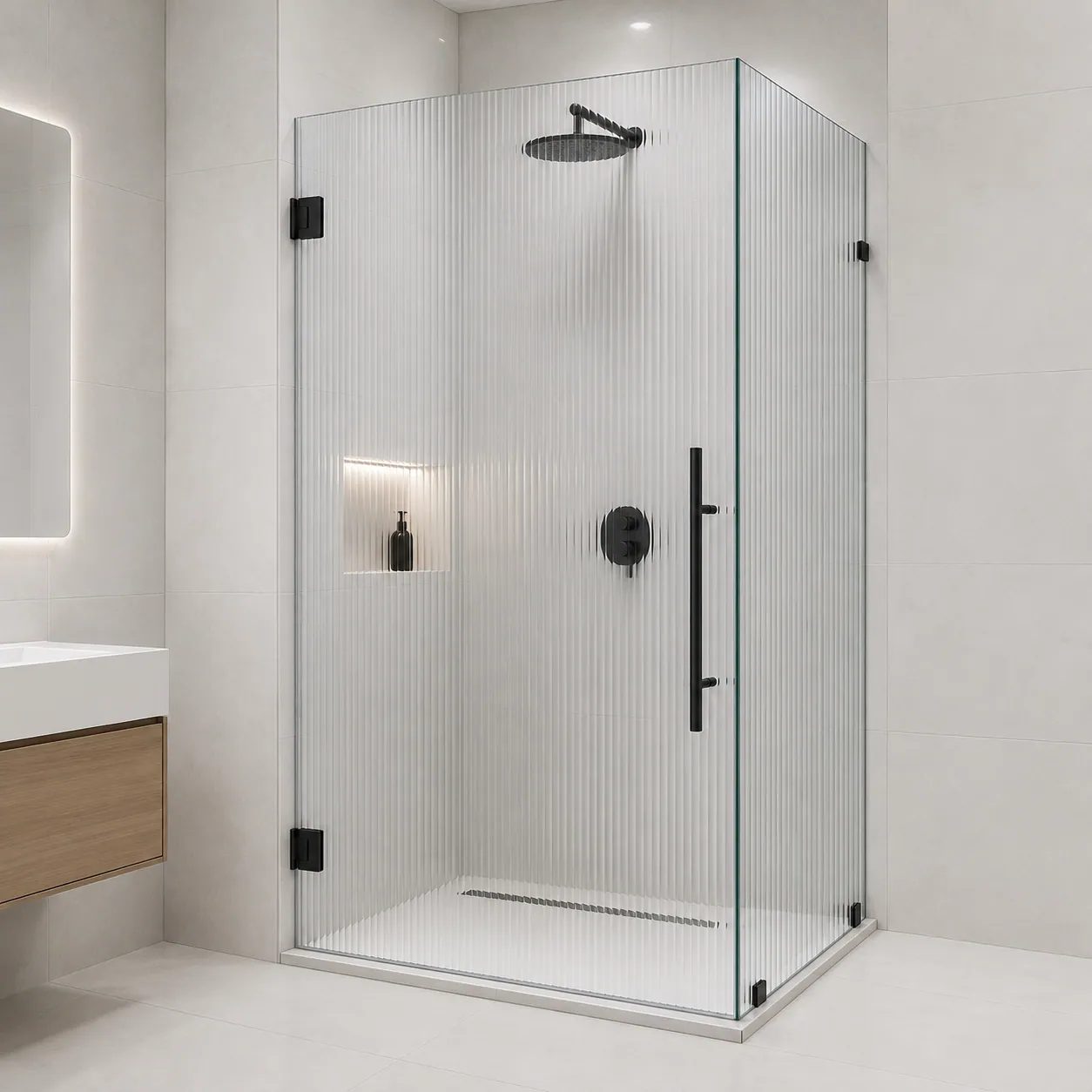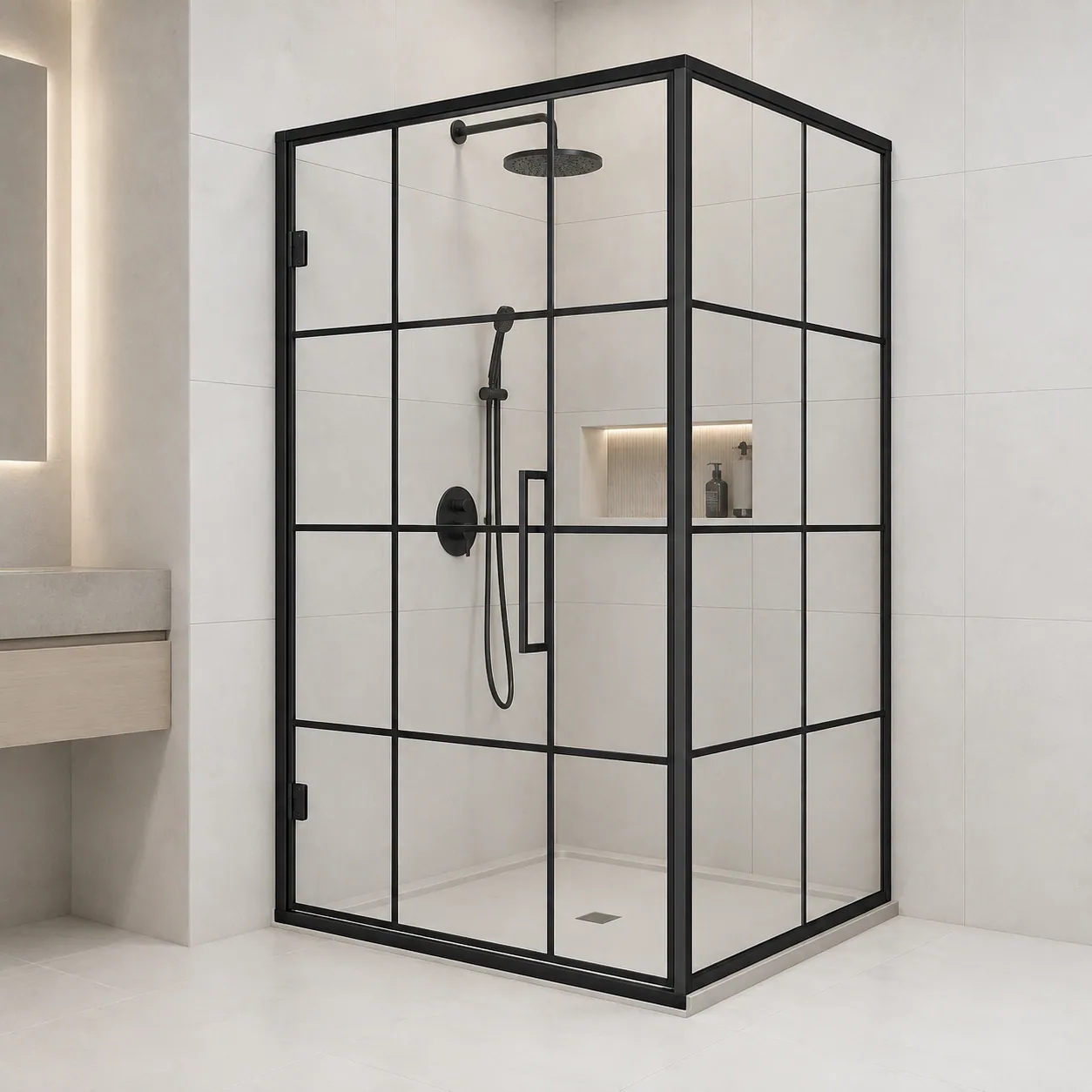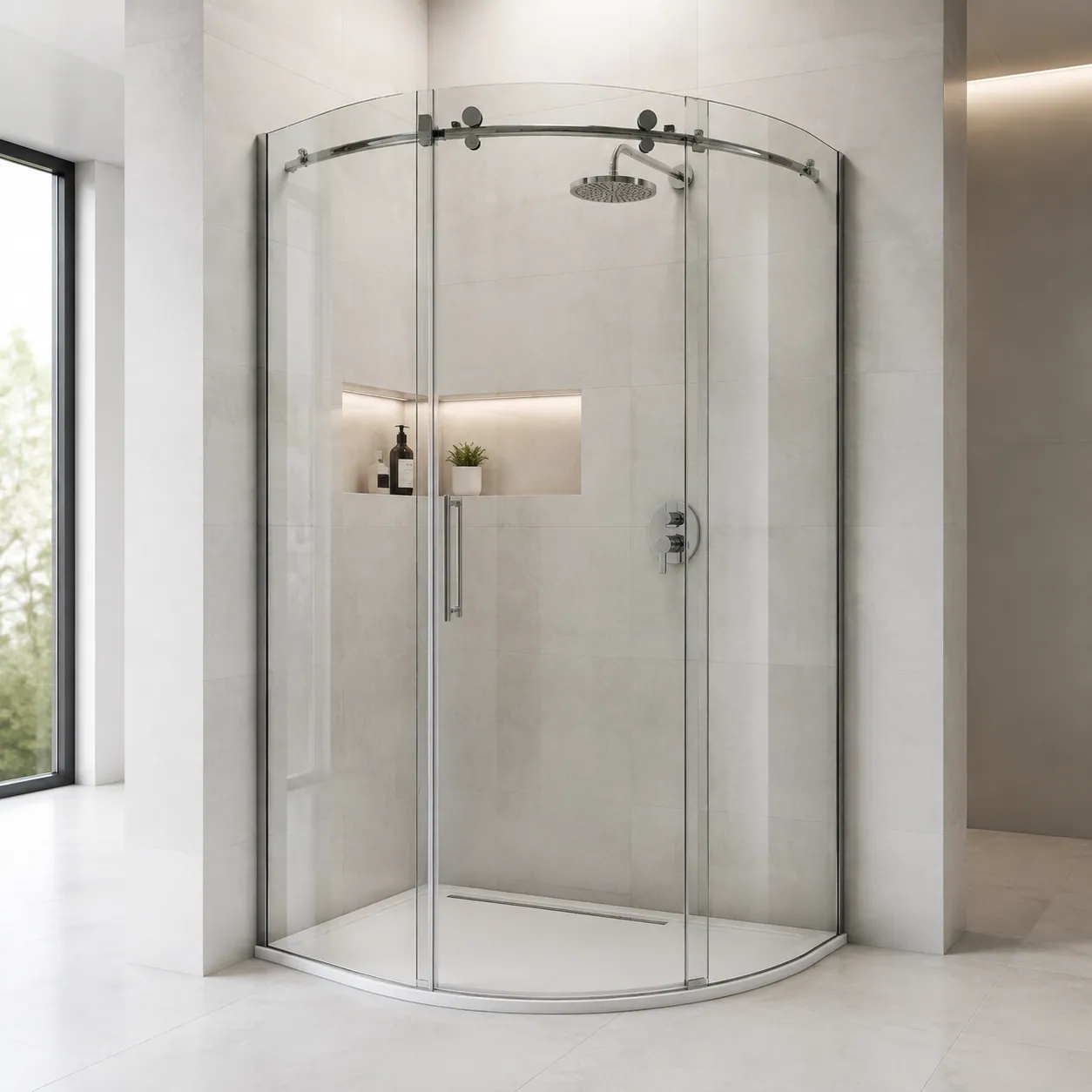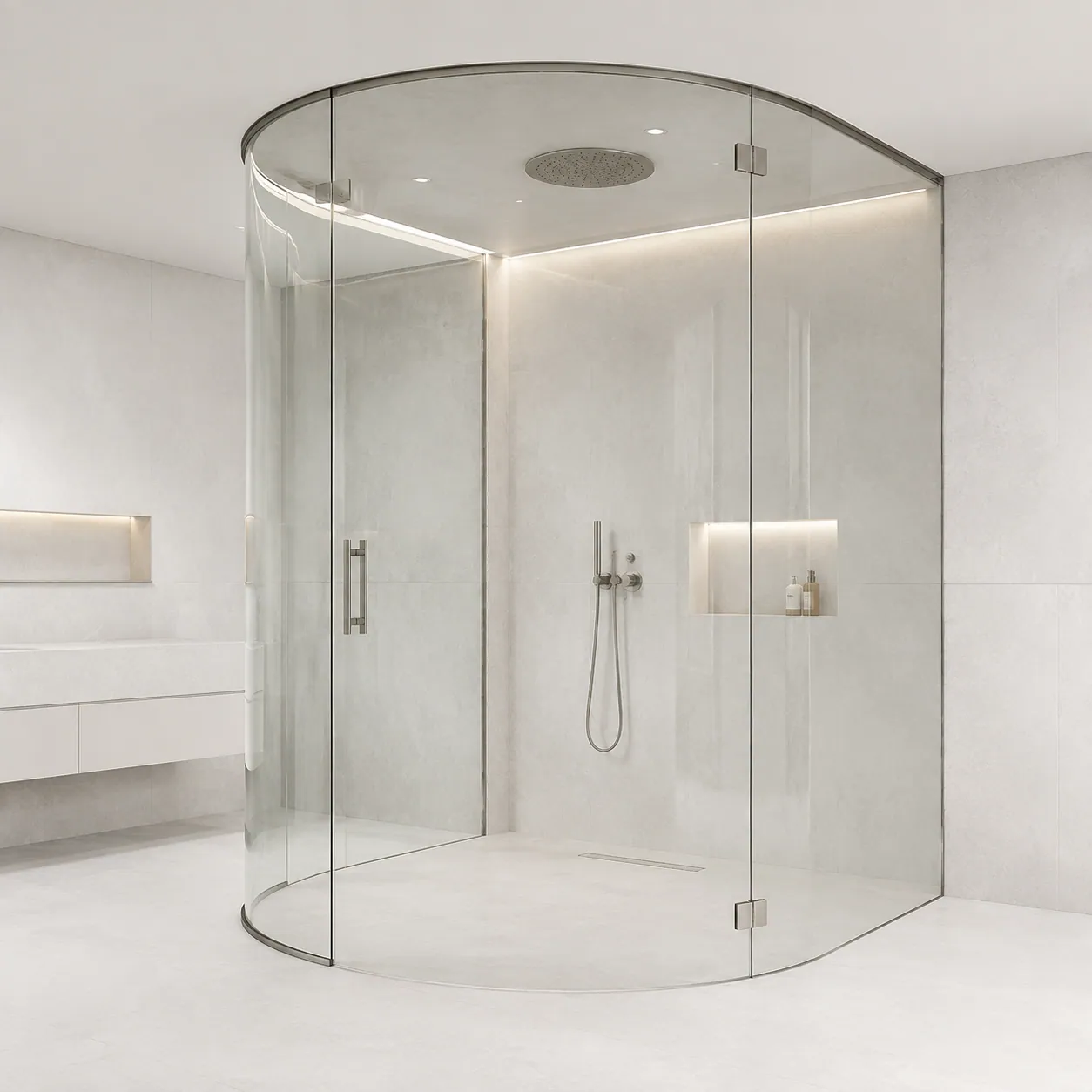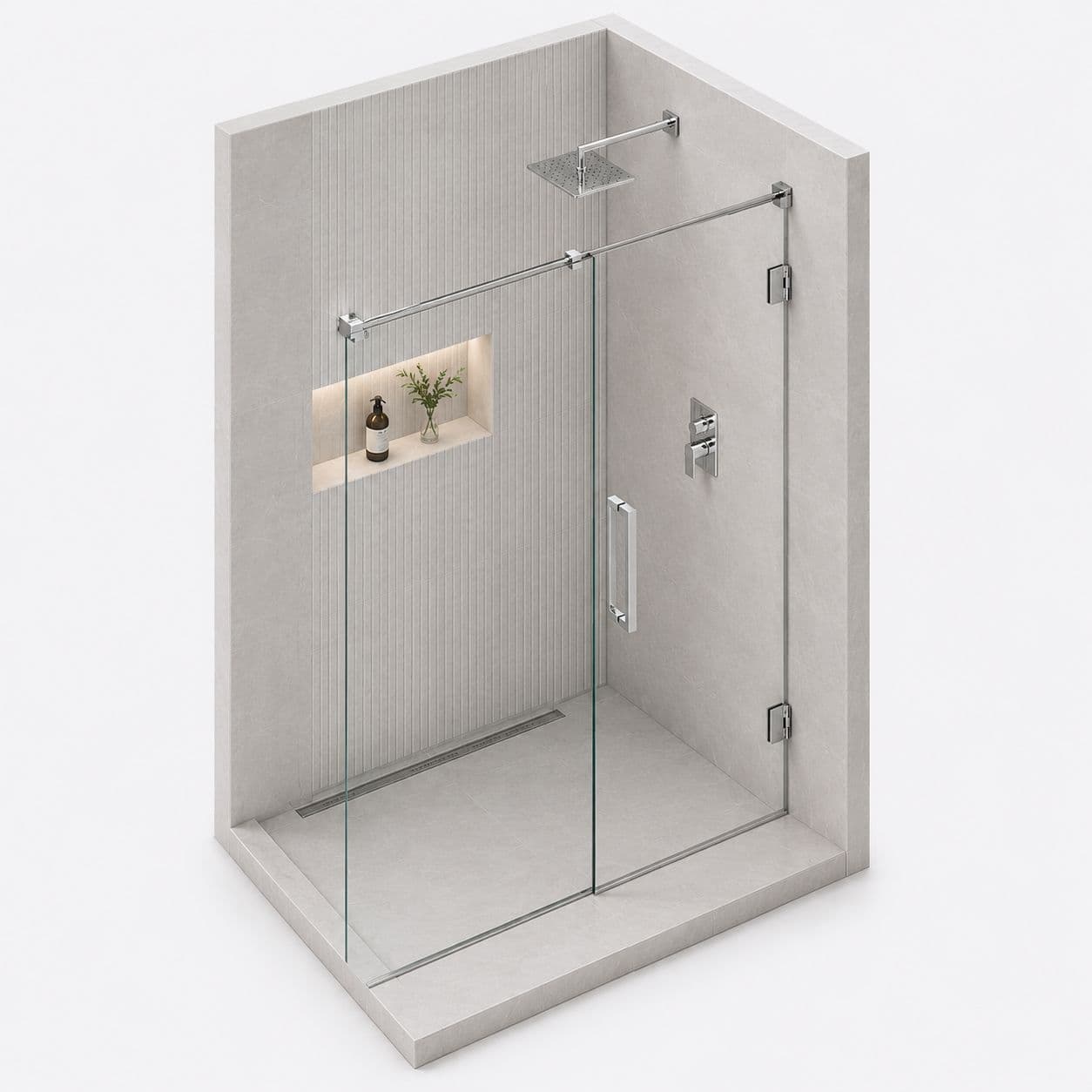
Most of these bathrooms have never had an enclosure, and the flat is often not yet lived in. That is an unusual amount of freedom — the wet area can still go where it makes sense rather than where it was forced. It is worth using properly, because it closes as soon as the bathroom is in daily use.
Deciding the layout while nothing is fixed
In an empty bathroom the enclosure position is genuinely open, and the decision affects how the room works for years.
What matters is where the door swings, whether you walk past wet glass to reach the basin, and whether the towel ends up inside the splash.
So we tape the footprint on the floor and ask you to walk it. People change their mind at that point more often than not, and at that moment it costs nothing to change.
Checking what the builder left before covering it
Once glass is fixed to a wall, whatever is behind it becomes difficult to reach.
So this is the moment to check three things: that the floor genuinely falls to the drain, that no tile sounds hollow, and that the wall is straight where the glass will land.
All three are handover items and much easier to raise with a builder before something has been fitted over them. We check them as part of the survey and tell you what we find either way.
Two bathrooms that should not get the same enclosure
Most of these flats have a generous master bathroom and a compact second one, and they want different things.
The master usually has room for a walk-in or a frameless enclosure with a proper door. The second rarely does, and a full enclosure there makes the room harder to use.
So we would fit a fixed screen in the smaller one and spend the difference on the master. Quoting one specification for both is the most common way money gets spent in the wrong room.
Leave one record before the flat is occupied
We record the finished opening, door swing and drain position after fitting. The same sheet names the glass thickness, seal profile and hinge model. Keep it with the flat's handover papers.
That record removes guesswork when a wear part needs changing later. A caretaker can send the part reference instead of arranging another survey. If the bathroom changes before occupation, the difference is also visible before it causes a fitting problem.
How the job works
- Tell us about the jobSend a few photos, rough sizes and what you need. Use WhatsApp or the form. For a repair, a short video of the door moving helps a lot.
- We call you back in about 2 minutesWe confirm what you need and a time to visit. Where we can, we give you a rough price on the call.
- We come and measureWe measure the opening and check the walls, floor and ceiling around it. Anything made to size is made to these measurements, so they must be right.
- You get a written priceIt lists each item, with GST as its own line. If anything about the job changes, we tell you before we go ahead.
- We fit itYou approve the price and pay the advance. Our own team fits the work, checks that every door and window opens and closes properly, and clears up. Most jobs are done in 3 to 4 days.