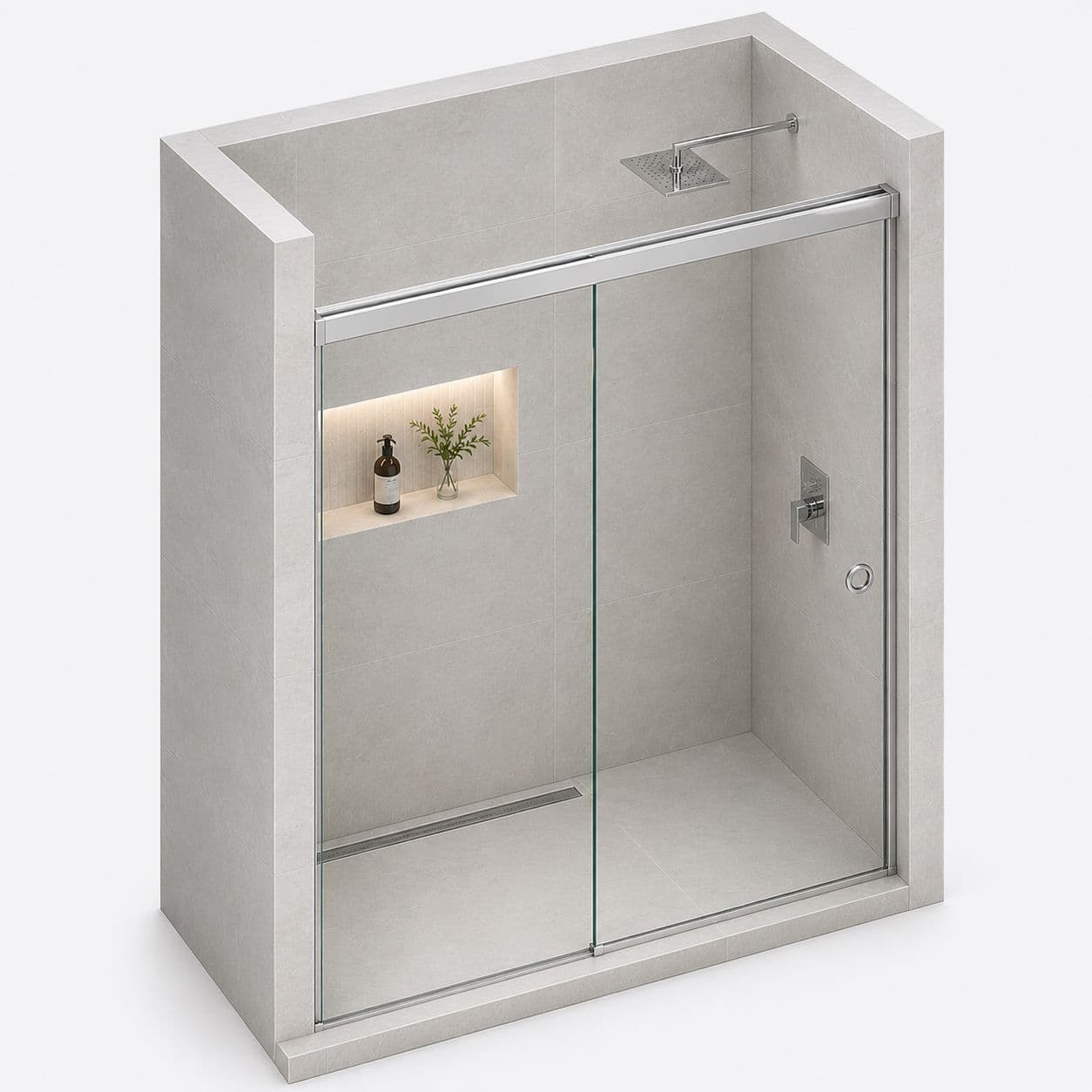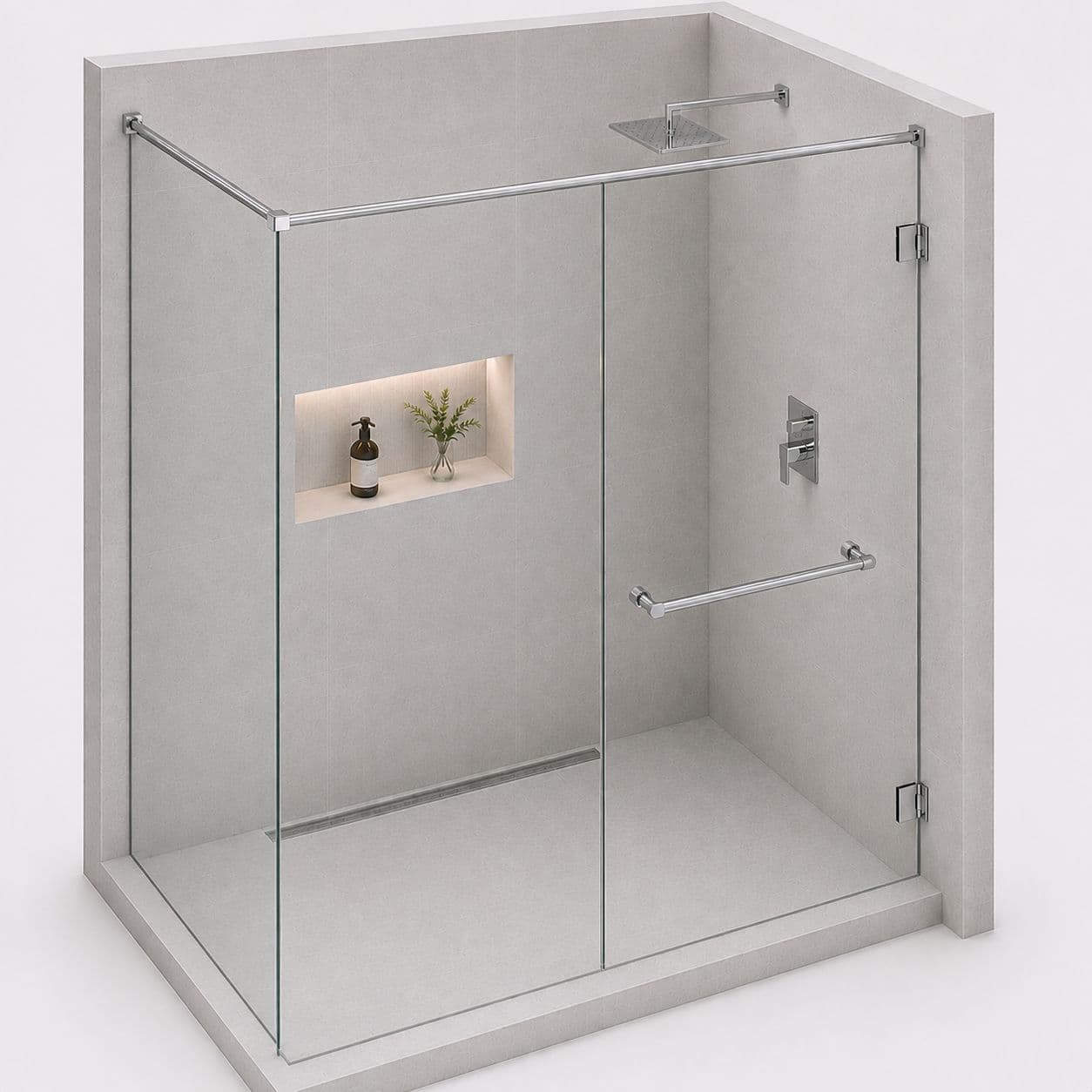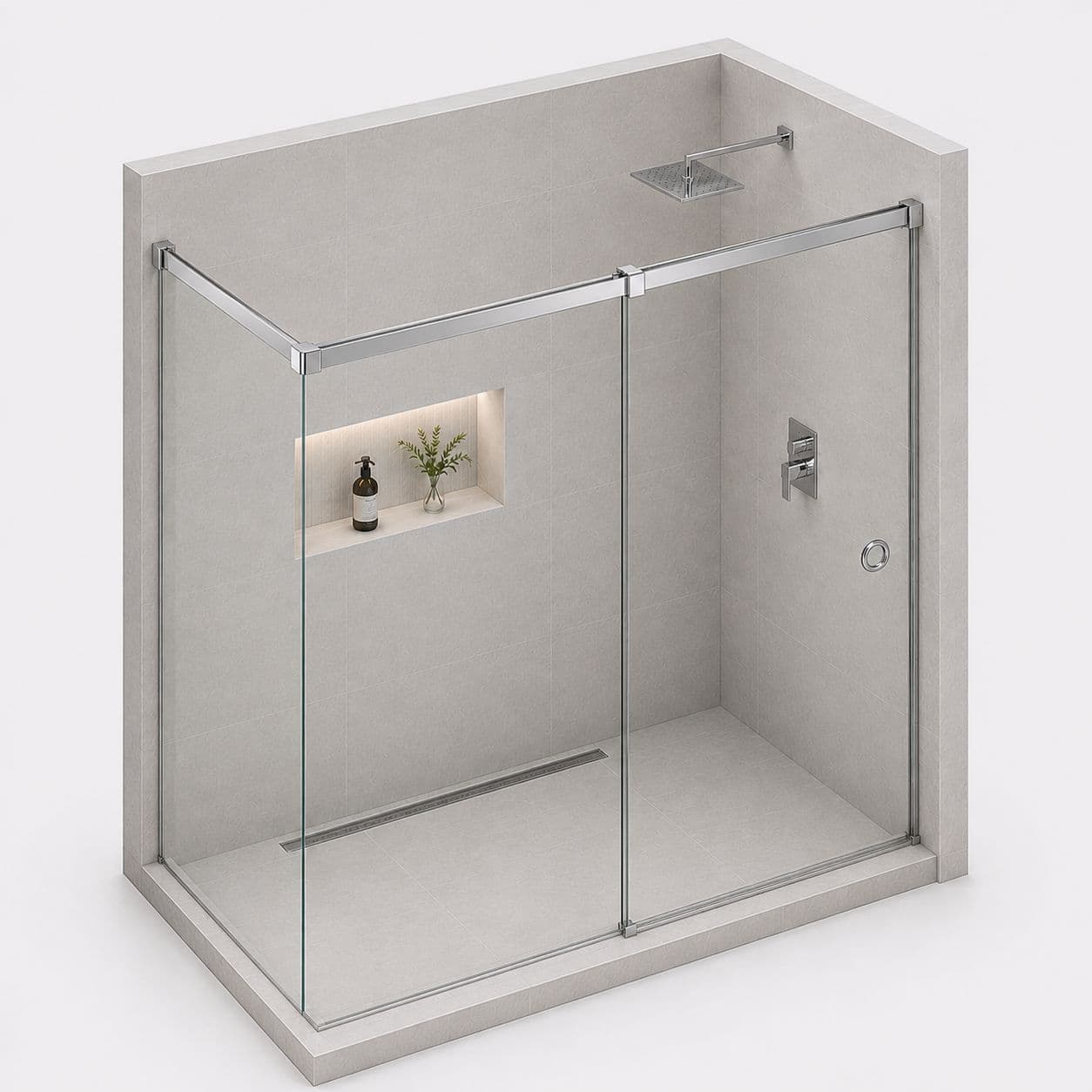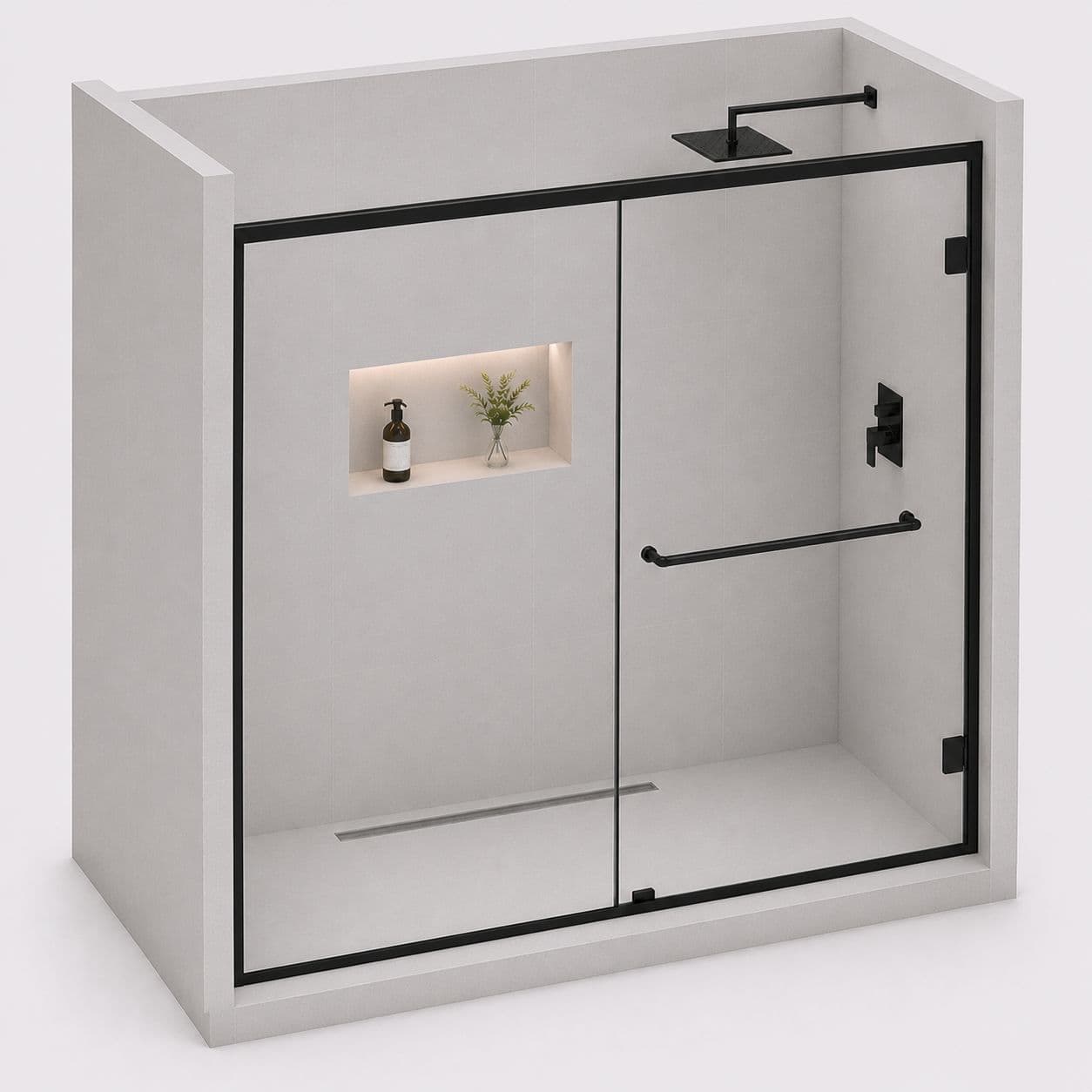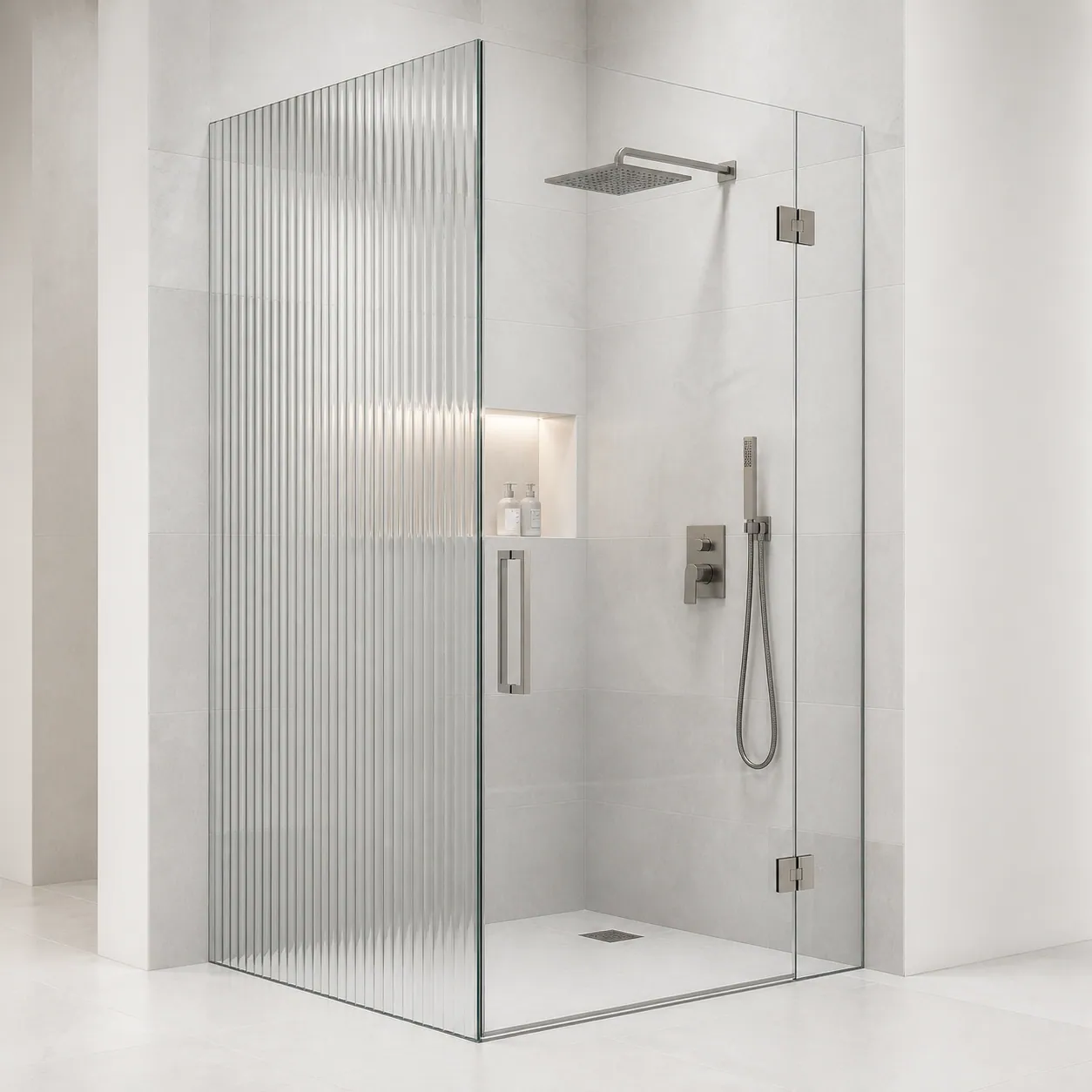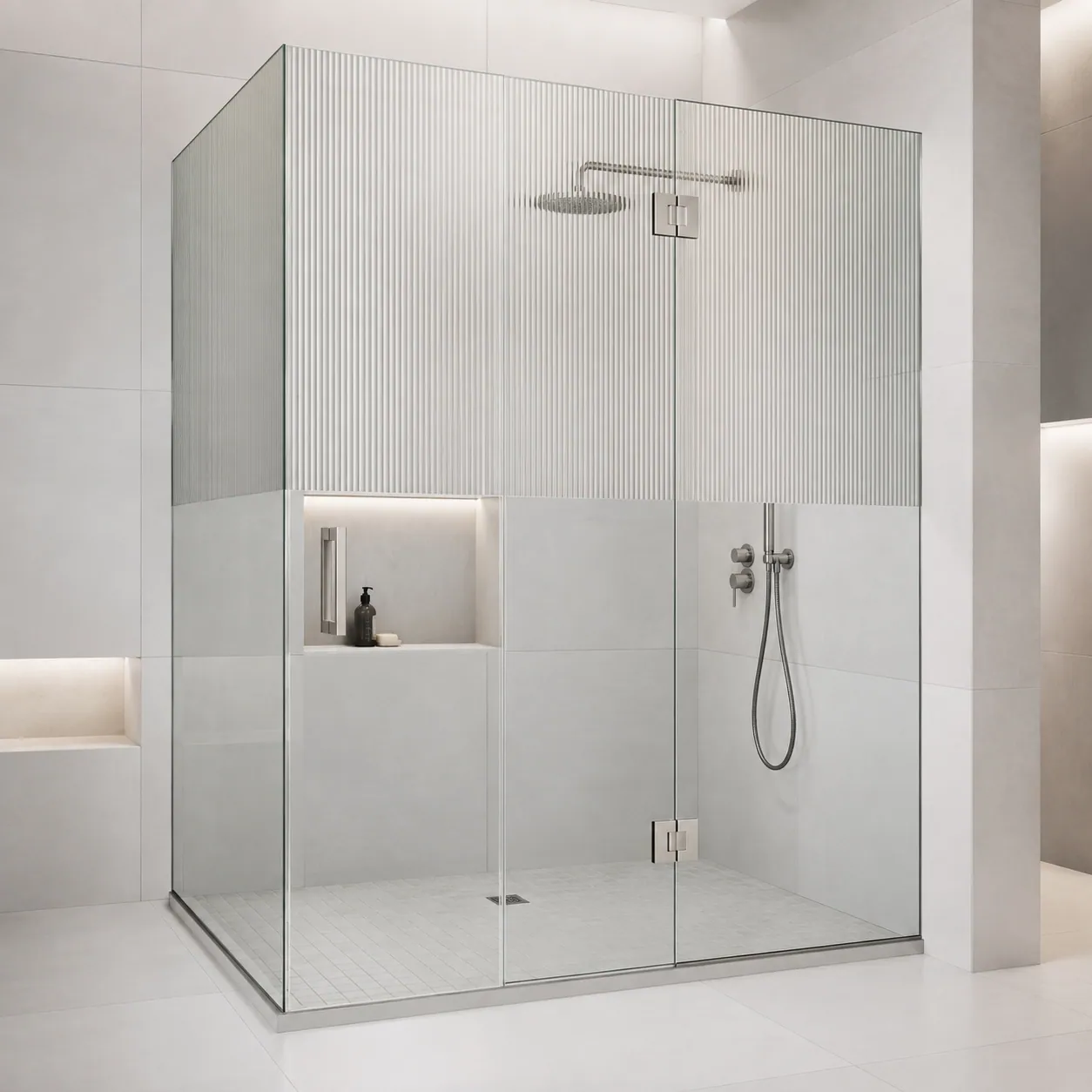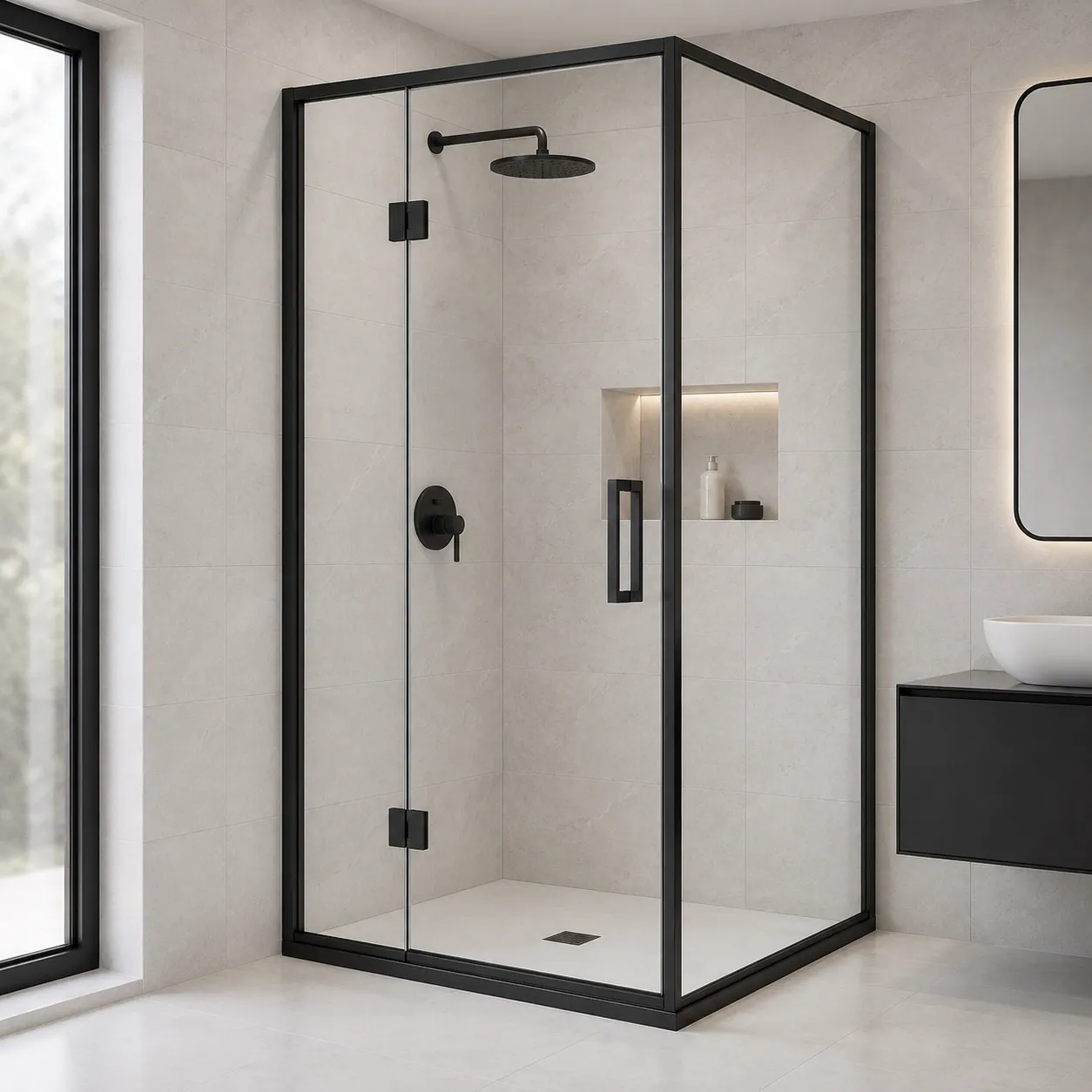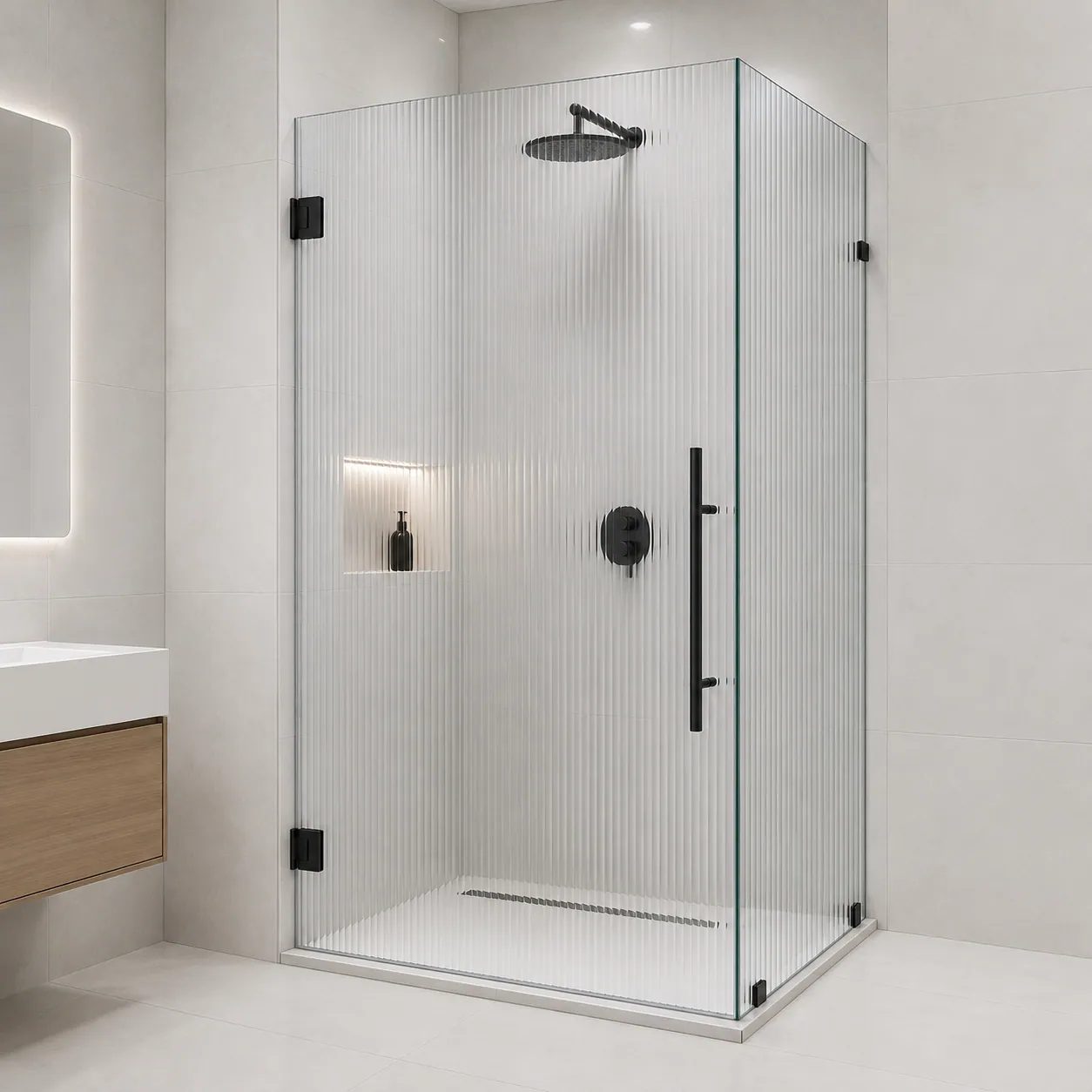
These floors have been lived in long enough that the original enclosures are failing, and the bathrooms around them are usually still perfectly good. So the job is a straight replacement, and the useful question is how much of the existing installation can be kept.
Keeping the glass and changing what holds it
Toughened glass does not wear out. Hinges, seals and fixings do, and in a builder-specified enclosure those are where the cost was taken out.
So where the panels are undamaged, re-hanging them on proper hardware costs a fraction of a new enclosure.
The limit is the drilled holes: toughened glass cannot be re-drilled, so new hinges must match the existing centres. We measure those before recommending it, and where they do not match we say so rather than fitting something that only nearly lines up.
The bottom seal, which is usually the actual complaint
When an older enclosure suddenly starts letting water onto the floor and nothing else has changed, it is nearly always the clear strip along the bottom of the door.
That strip is a wear part. It goes hard, then brittle, then splits, and stops directing water back inside.
It is an inexpensive part and a short job, and it is worth trying before assuming anything larger is wrong. A good proportion of the enclosures we are asked to replace here need a seal and nothing else.
Working in an occupied floor with neighbours above and below
In a builder floor the households above and below hear everything, particularly drilling.
So we do all the drilling in one block rather than returning to it through the day, and it is worth telling both neighbours beforehand.
We also check the base waterproofing properly rather than trusting it, because a leak here lands in somebody else's ceiling. Where damp has been reported below before, there is a reason still present and the new enclosure will otherwise be blamed for it.
Make a reuse sheet before buying replacement hardware
We mark every existing panel as keep, replace or inspect after removal. The sheet records glass size, thickness, hole centres and any edge damage. It also names each seal, hinge, channel and handle that can safely return.
That record turns reuse into a measured decision instead of a promise. Undamaged glass may stay while tired hardware is replaced. A chipped edge or incompatible hole pattern sends that panel to replacement. The owner sees both prices before choosing. The fitter then has one approved list, so reusable parts are not discarded and unsafe parts do not return by mistake.
How the job works
- Tell us about the jobSend a few photos, rough sizes and what you need. Use WhatsApp or the form. For a repair, a short video of the door moving helps a lot.
- We call you back in about 2 minutesWe confirm what you need and a time to visit. Where we can, we give you a rough price on the call.
- We come and measureWe measure the opening and check the walls, floor and ceiling around it. Anything made to size is made to these measurements, so they must be right.
- You get a written priceIt lists each item, with GST as its own line. If anything about the job changes, we tell you before we go ahead.
- We fit itYou approve the price and pay the advance. Our own team fits the work, checks that every door and window opens and closes properly, and clears up. Most jobs are done in 3 to 4 days.