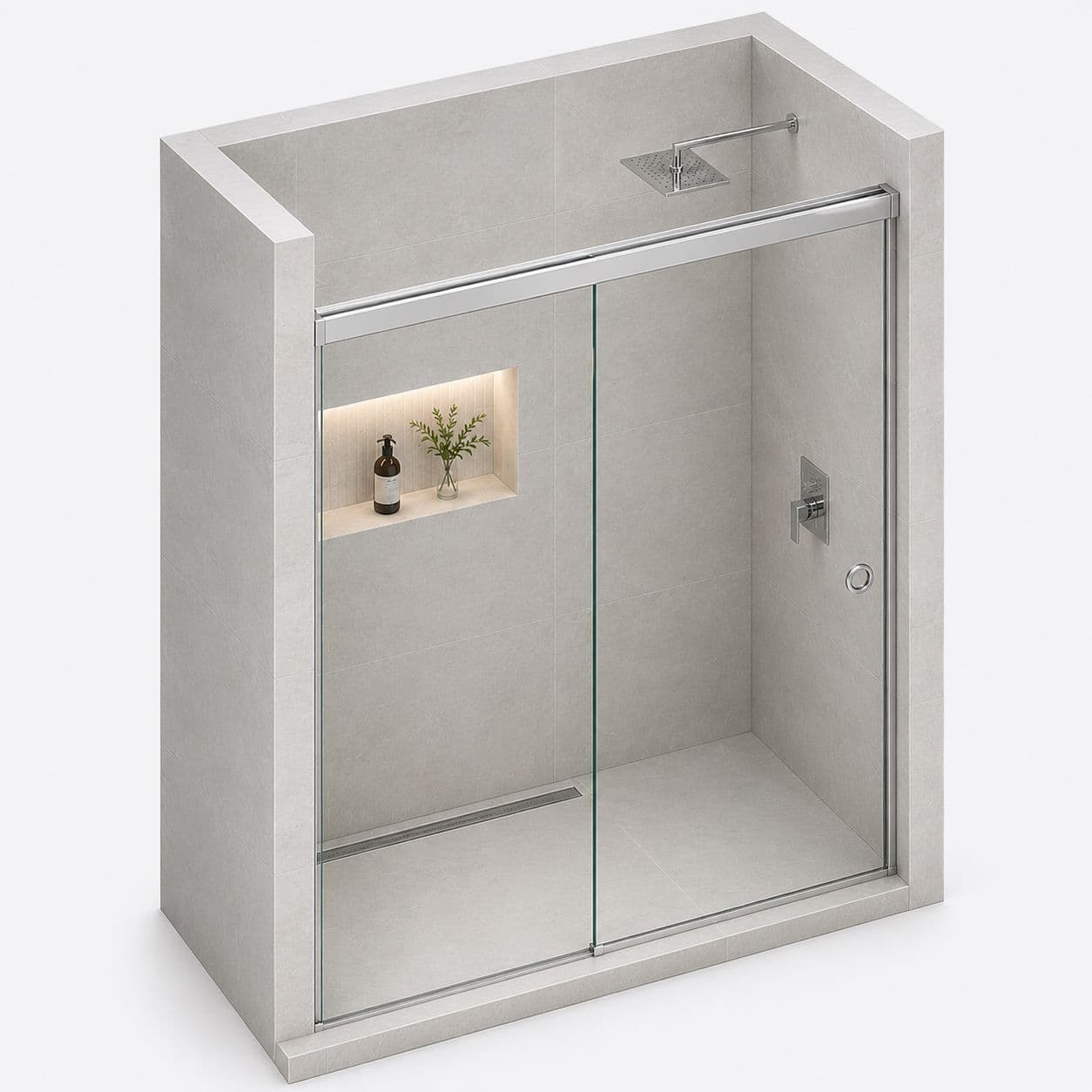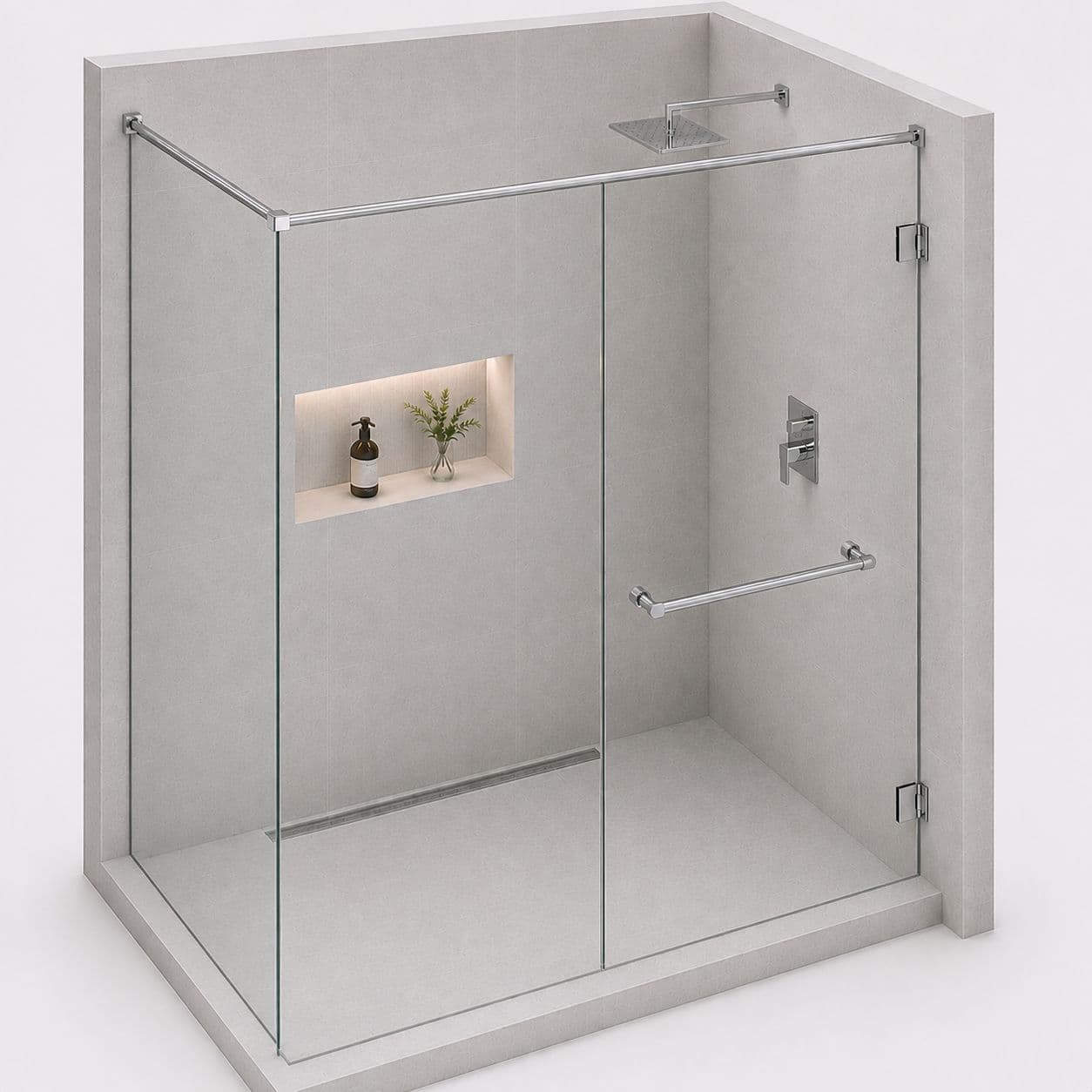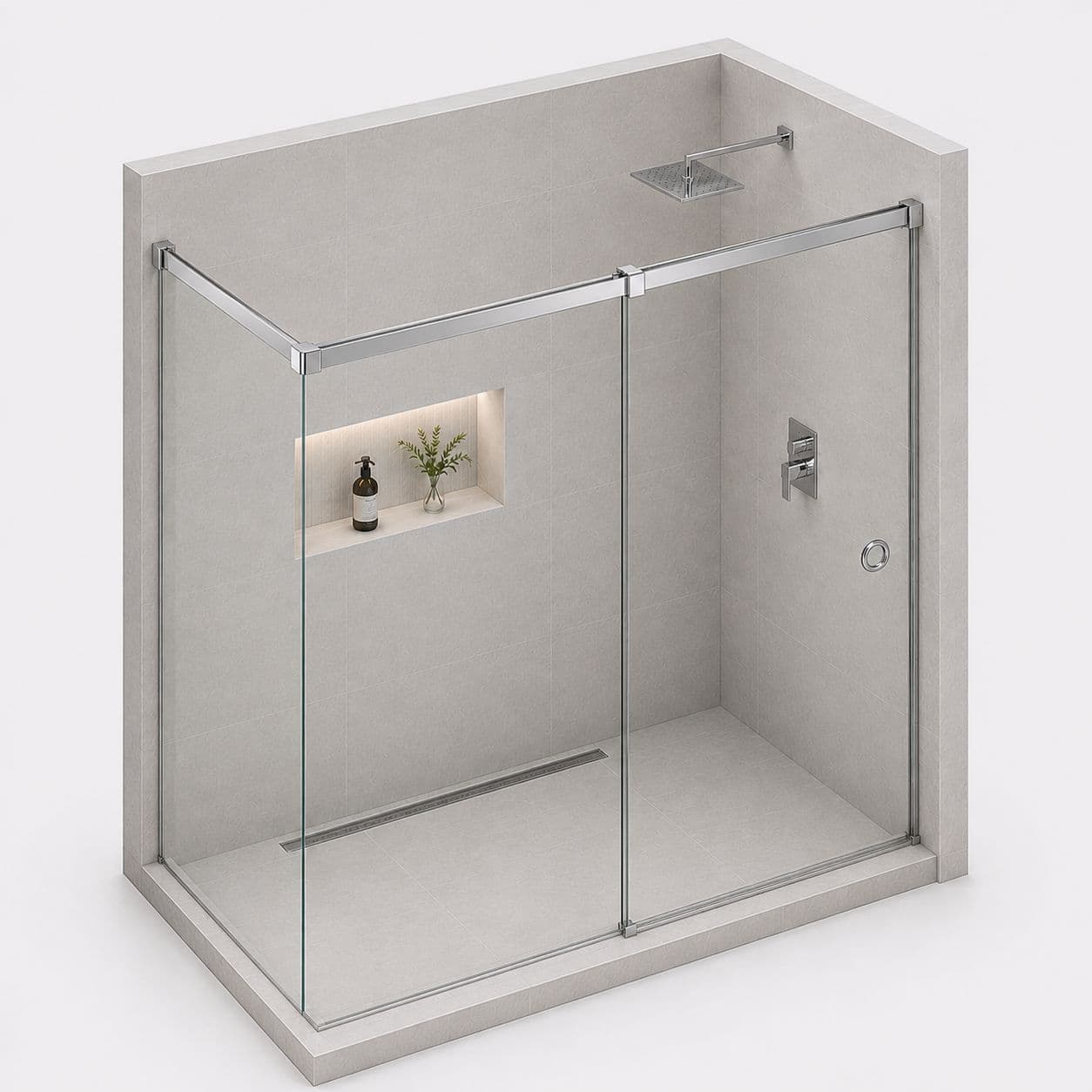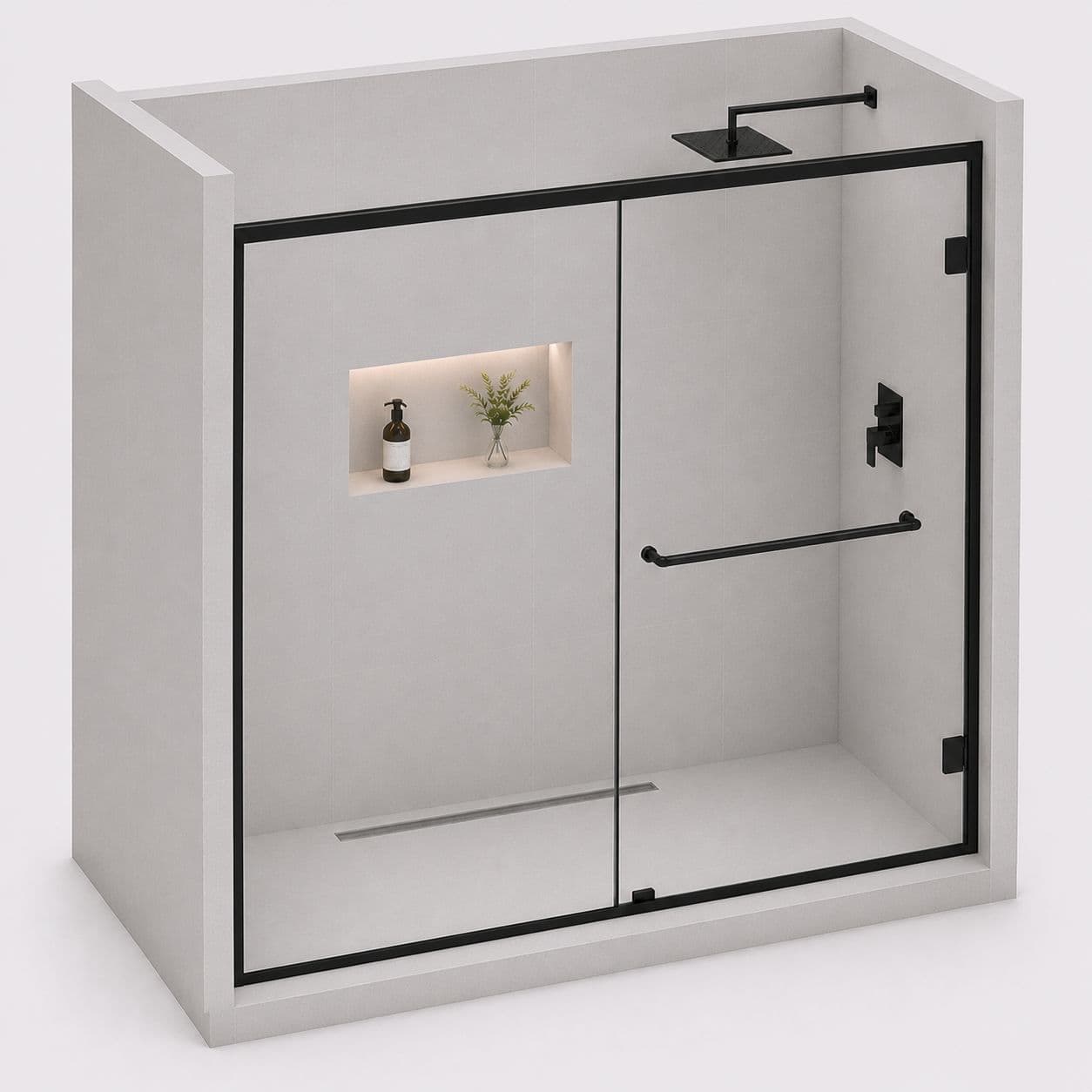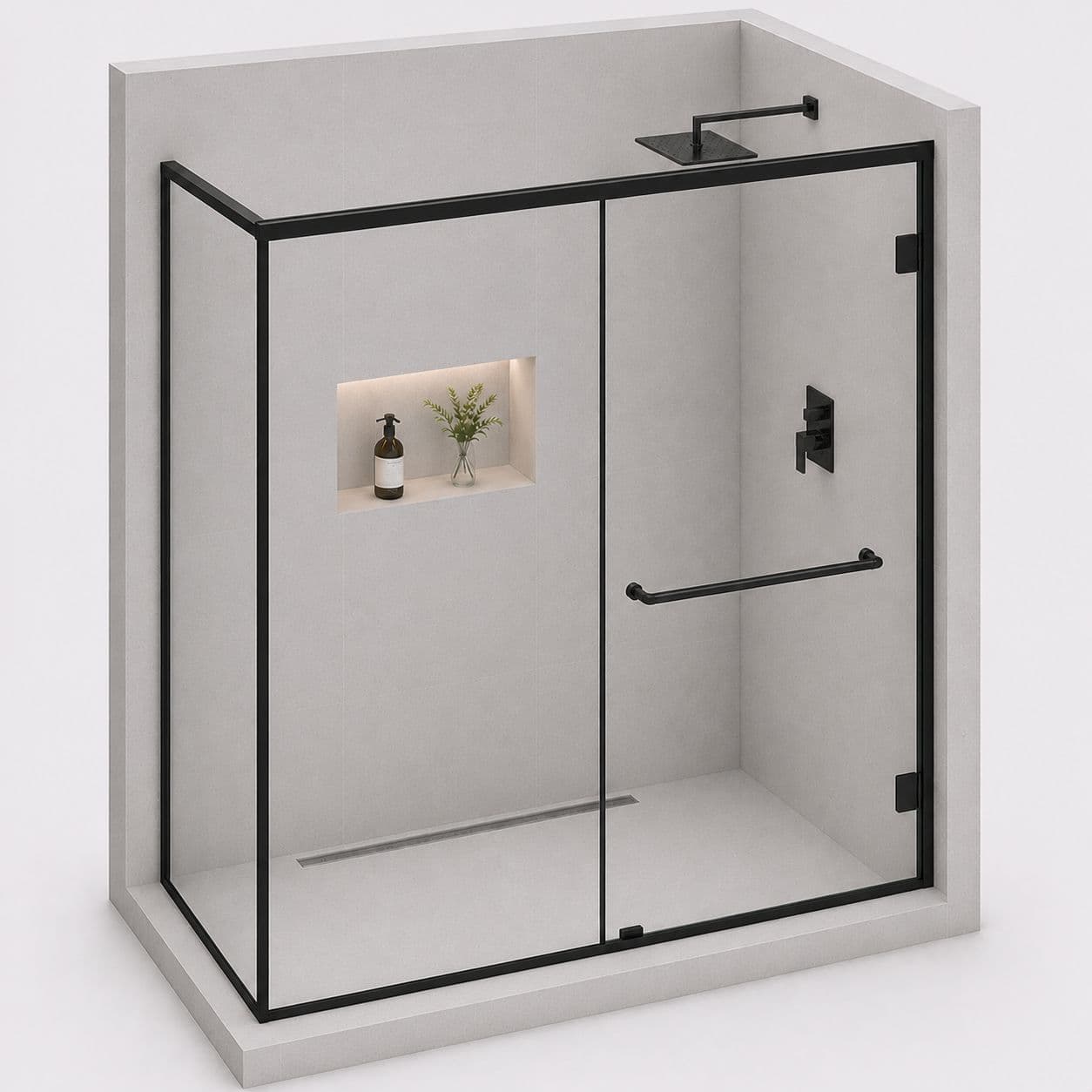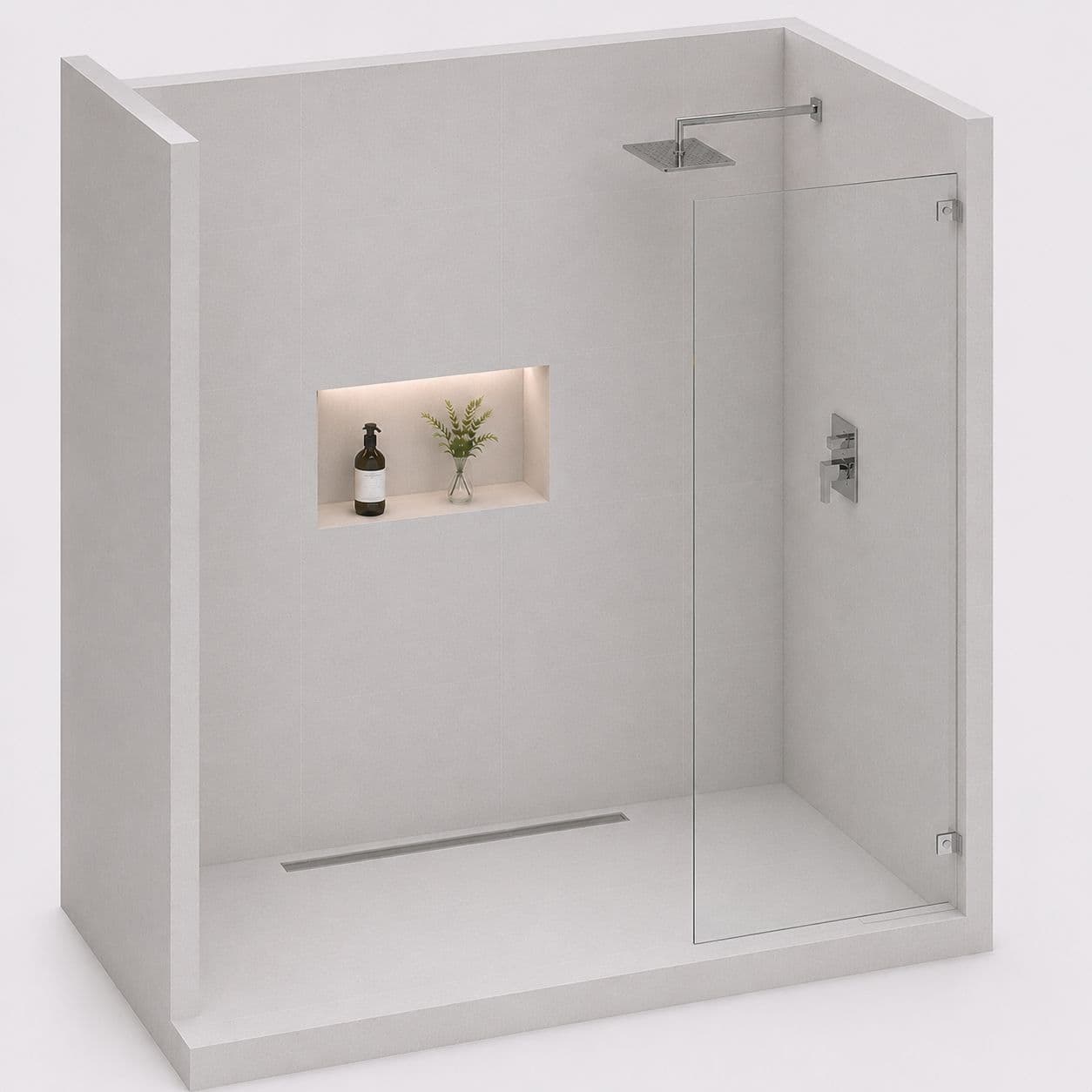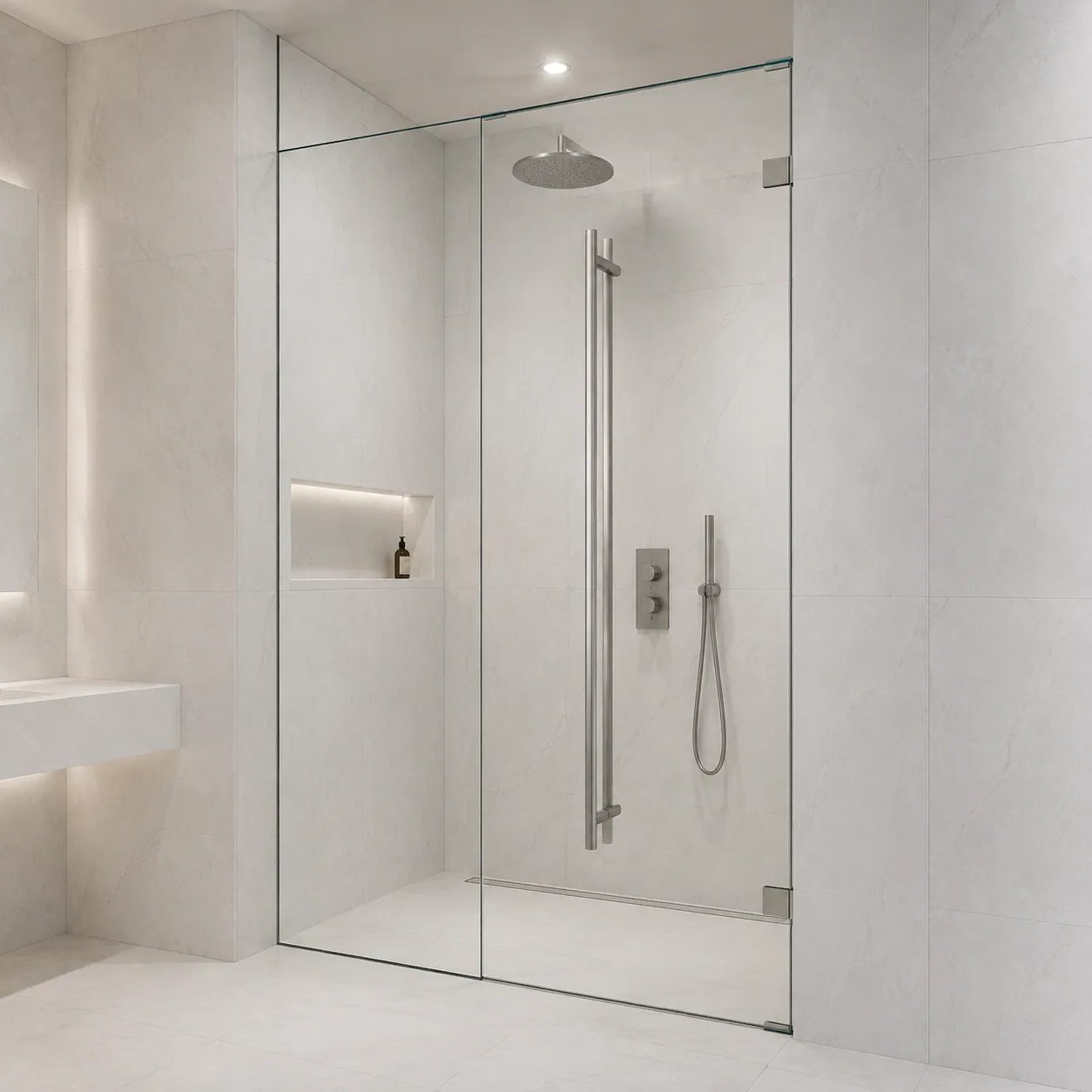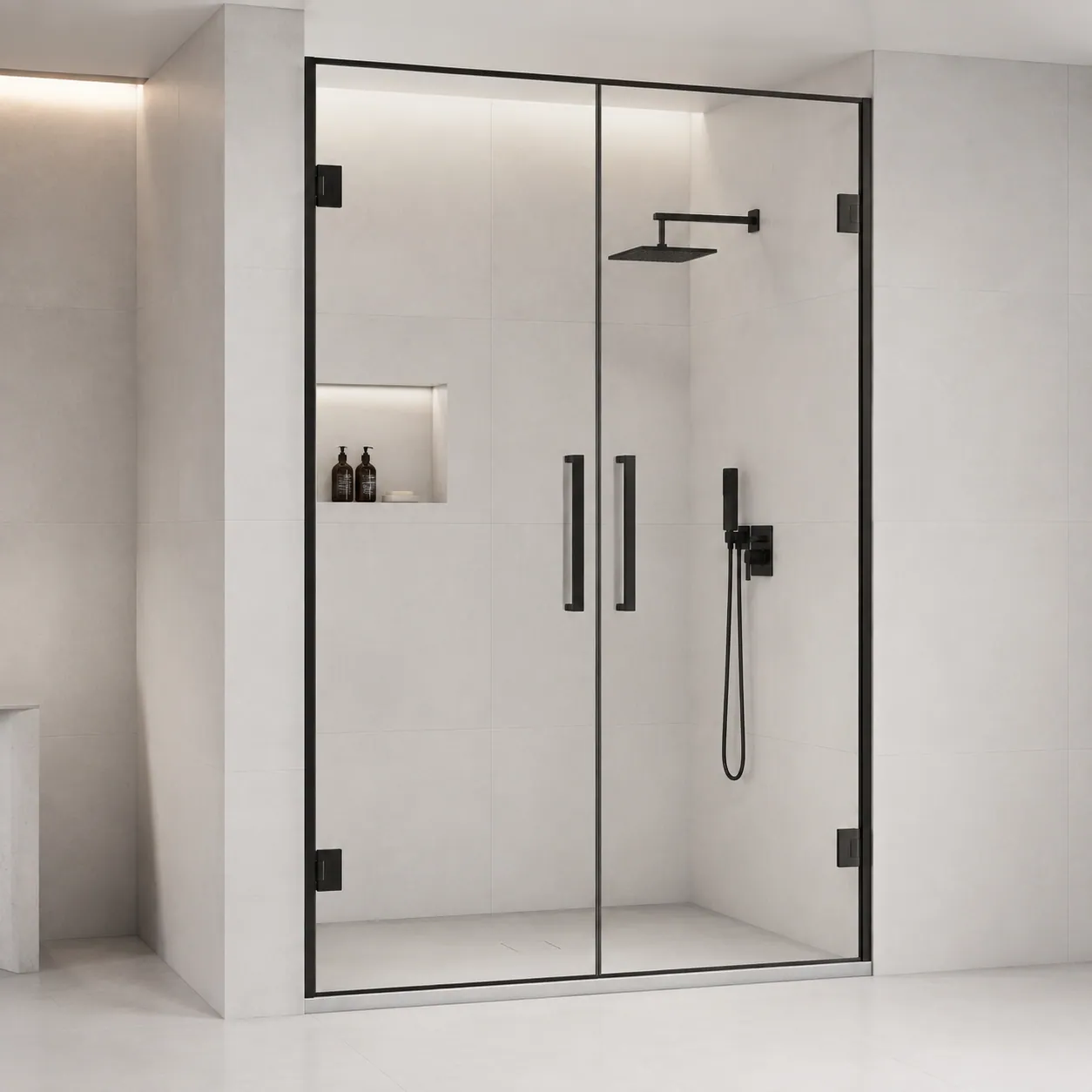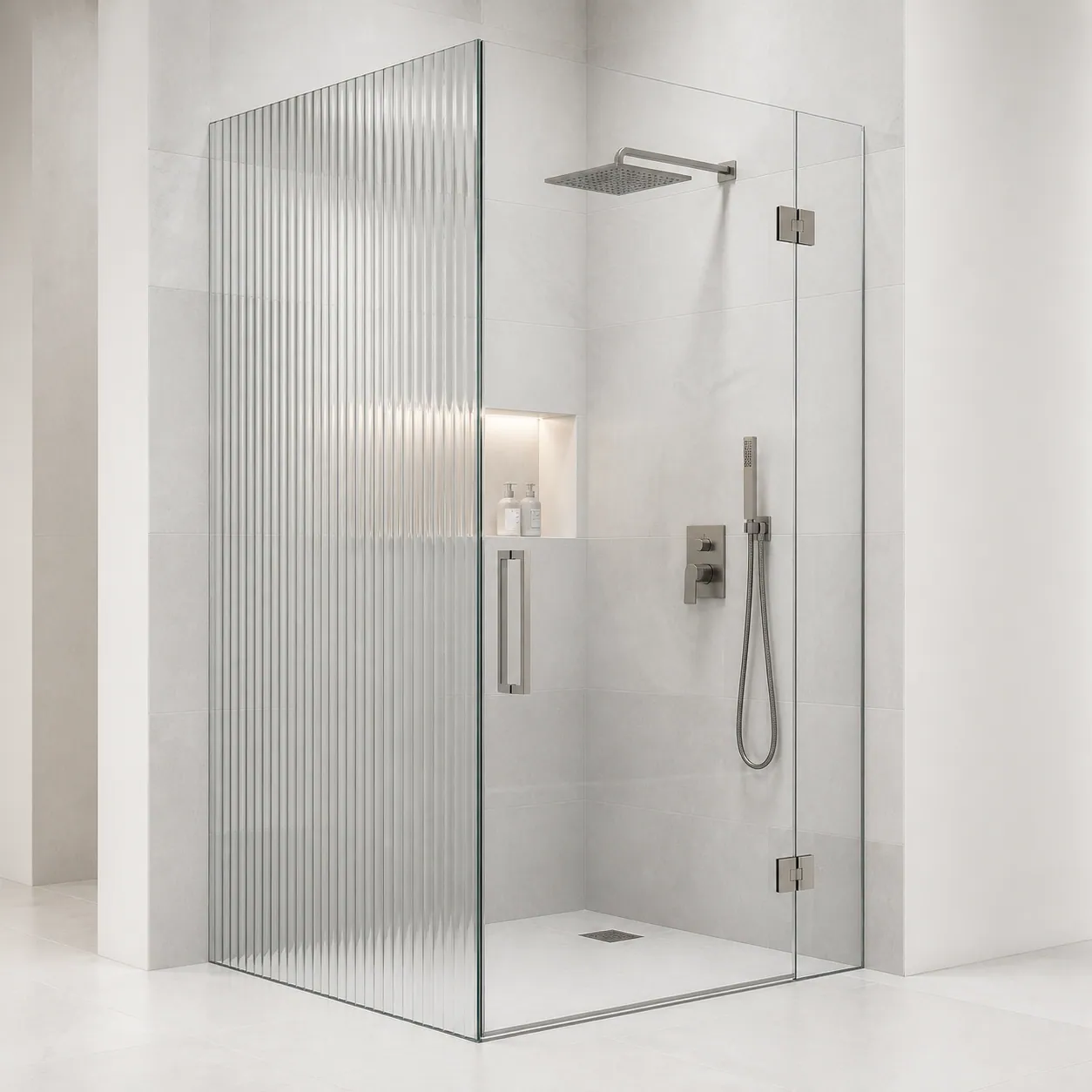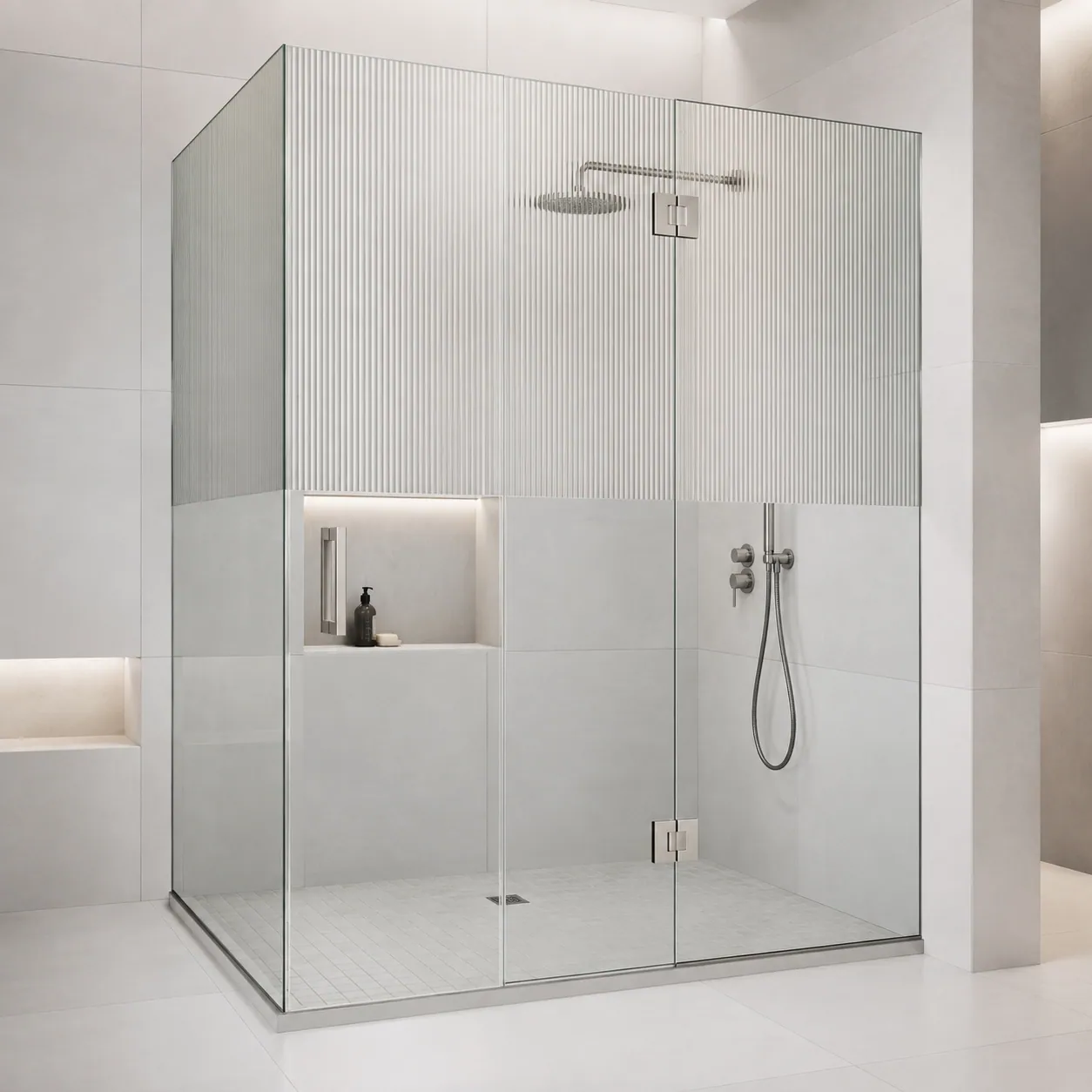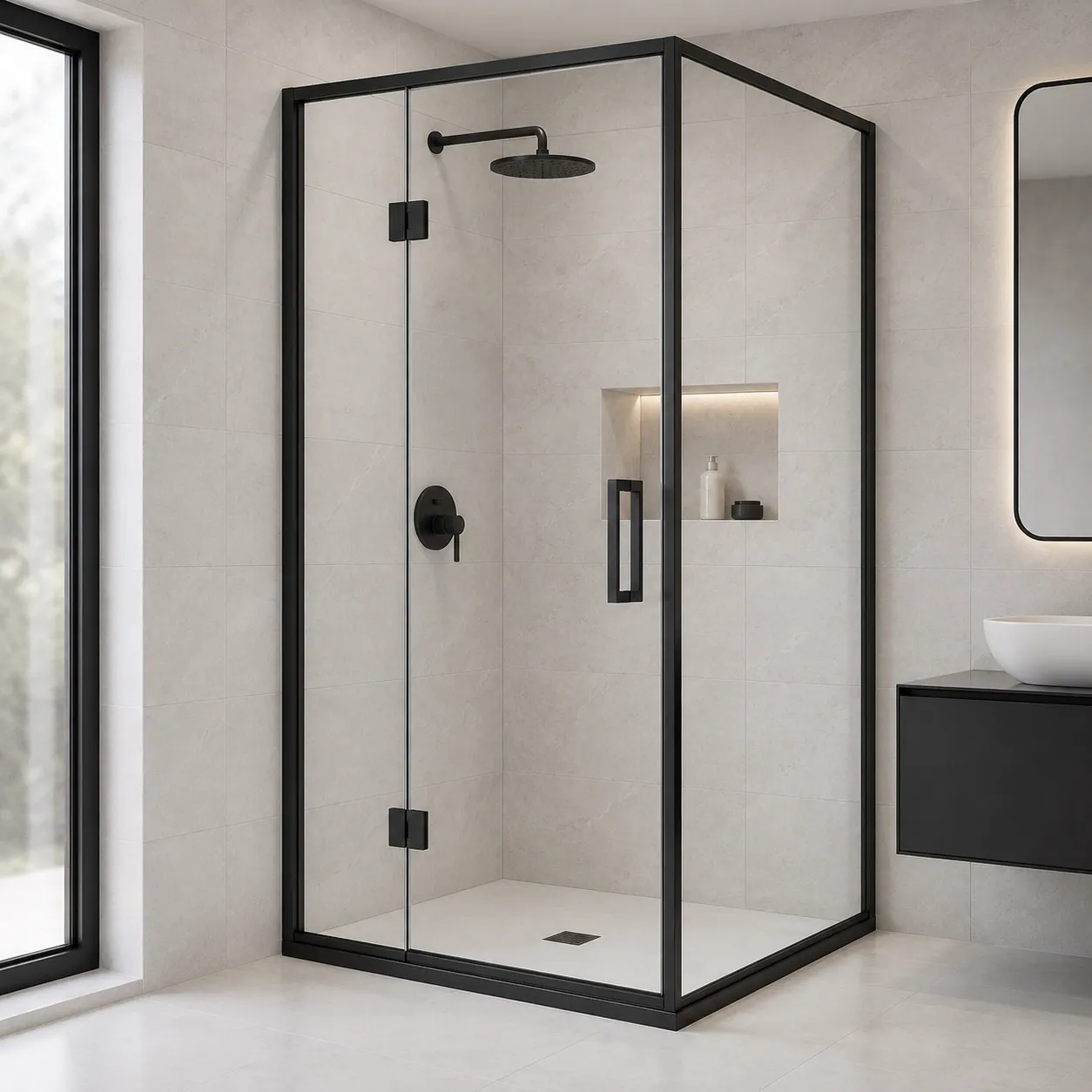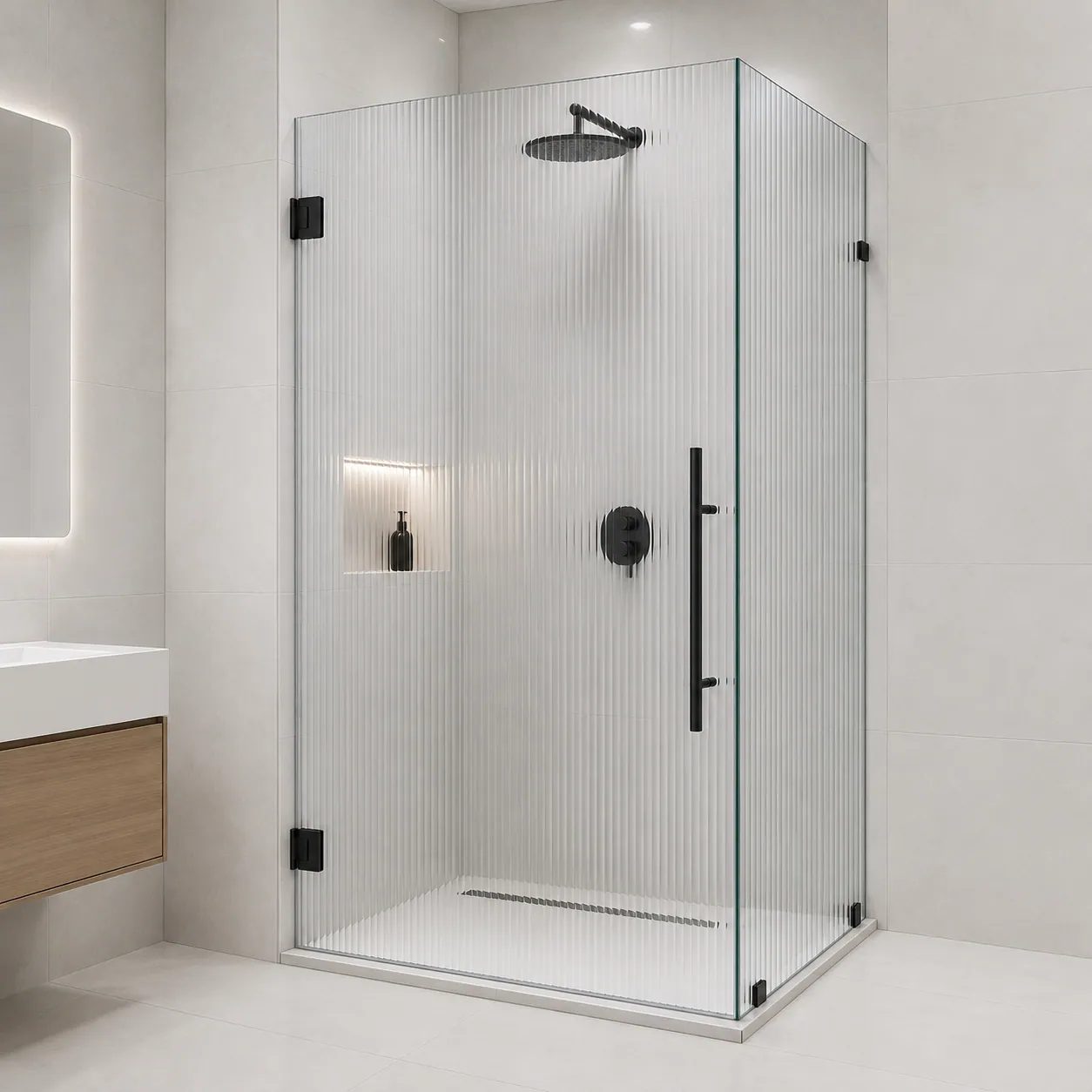
The homes here are established enough that most bathrooms have had an enclosure before, and what is being replaced usually failed for a reason worth understanding. Fitting an identical replacement into the same position is the most common way of getting the same outcome again a few years later.
Finding out why the last one failed
There are three usual answers and they need different responses.
If the glass came loose, the fixings went into something that could not hold them. If it leaked, the seal or the floor fall is wrong. If the door dropped, it was too heavy for its hinges.
So we ask what actually went wrong before quoting. It takes a minute and it changes the specification, which is the whole point of asking rather than simply measuring the opening.
Why a door drops, and what stops it
The glass in a shower door almost never fails; the hinges carry all the weight and take all the movement.
Cheap hinges wear at the pivot, the door drops a few millimetres, and it starts catching on the tile. People then lift it to clear the catch, which wears the pivot faster.
So hinge quality is the part of the specification worth paying for, and it is the part nobody asks about. We say what is being fitted rather than leaving it as an unnamed line on a quote.
Getting the door to clear what is already in the room
In a replacement the bathroom is already fitted out, so the door has to work around what is there rather than the other way round.
The things it usually catches are the WC, the basin pedestal and a towel rail.
So we check the swing against everything in the room while measuring, not just the floor area. Where it will not clear, an inward-opening or sliding layout solves it without changing anything else. It is a five-minute check.
Use the old Sector 56 enclosure as a failure record
Before removal, we note where water escaped, where the door rubbed and which fixing moved. Those marks explain more than the old enclosure's appearance. The replacement layout can then move a fixing away from weak backing, use hinges suited to the door weight and place seals on the actual splash path.
We also photograph the finished tile edges and the old fixing holes. The new scope states which holes will be reused, sealed or avoided. This gives the owner a reason for every design change and prevents the new glass being installed into the same failure pattern simply because the outline looks familiar.
How the job works
- Tell us about the jobSend a few photos, rough sizes and what you need. Use WhatsApp or the form. For a repair, a short video of the door moving helps a lot.
- We call you back in about 2 minutesWe confirm what you need and a time to visit. Where we can, we give you a rough price on the call.
- We come and measureWe measure the opening and check the walls, floor and ceiling around it. Anything made to size is made to these measurements, so they must be right.
- You get a written priceIt lists each item, with GST as its own line. If anything about the job changes, we tell you before we go ahead.
- We fit itYou approve the price and pay the advance. Our own team fits the work, checks that every door and window opens and closes properly, and clears up. Most jobs are done in 3 to 4 days.