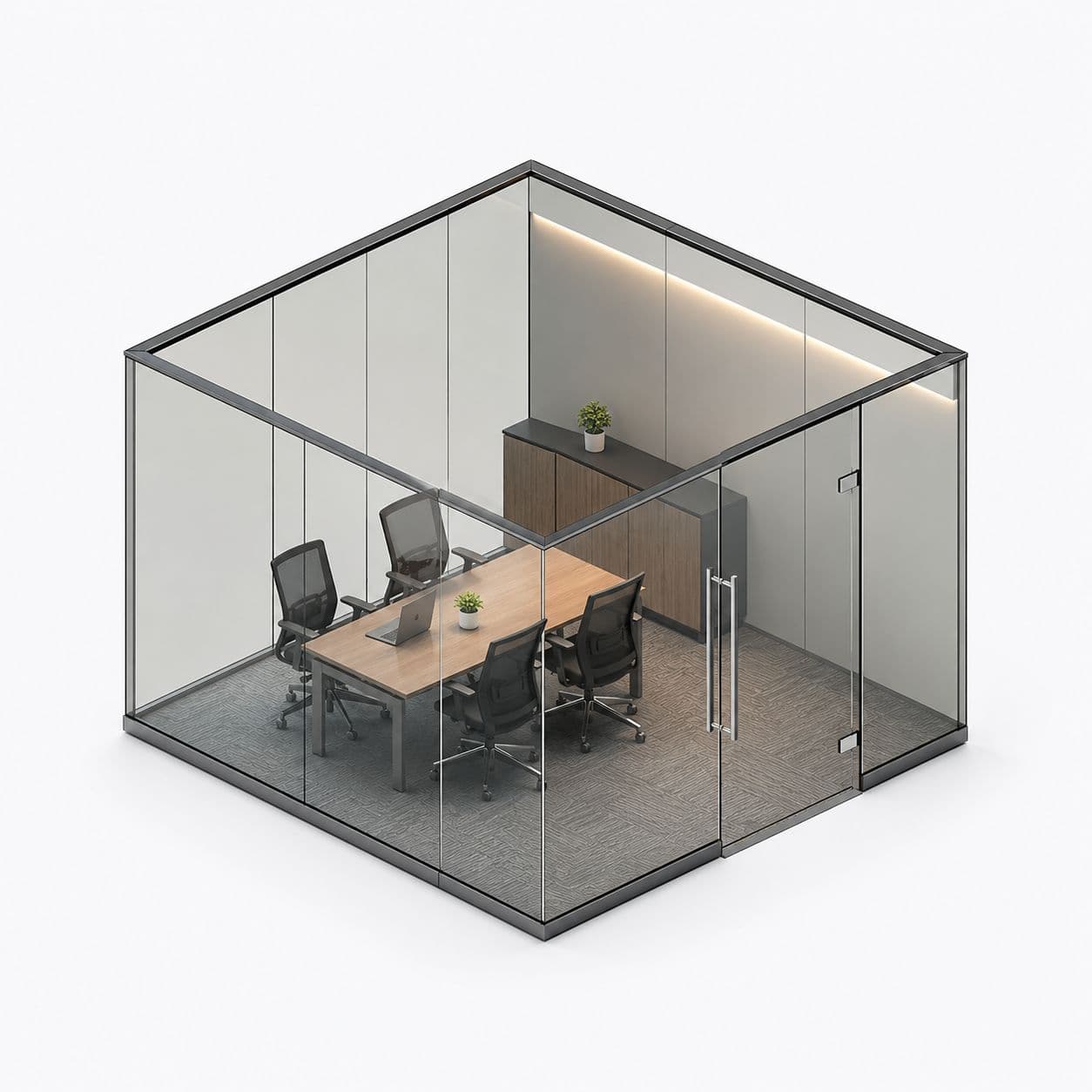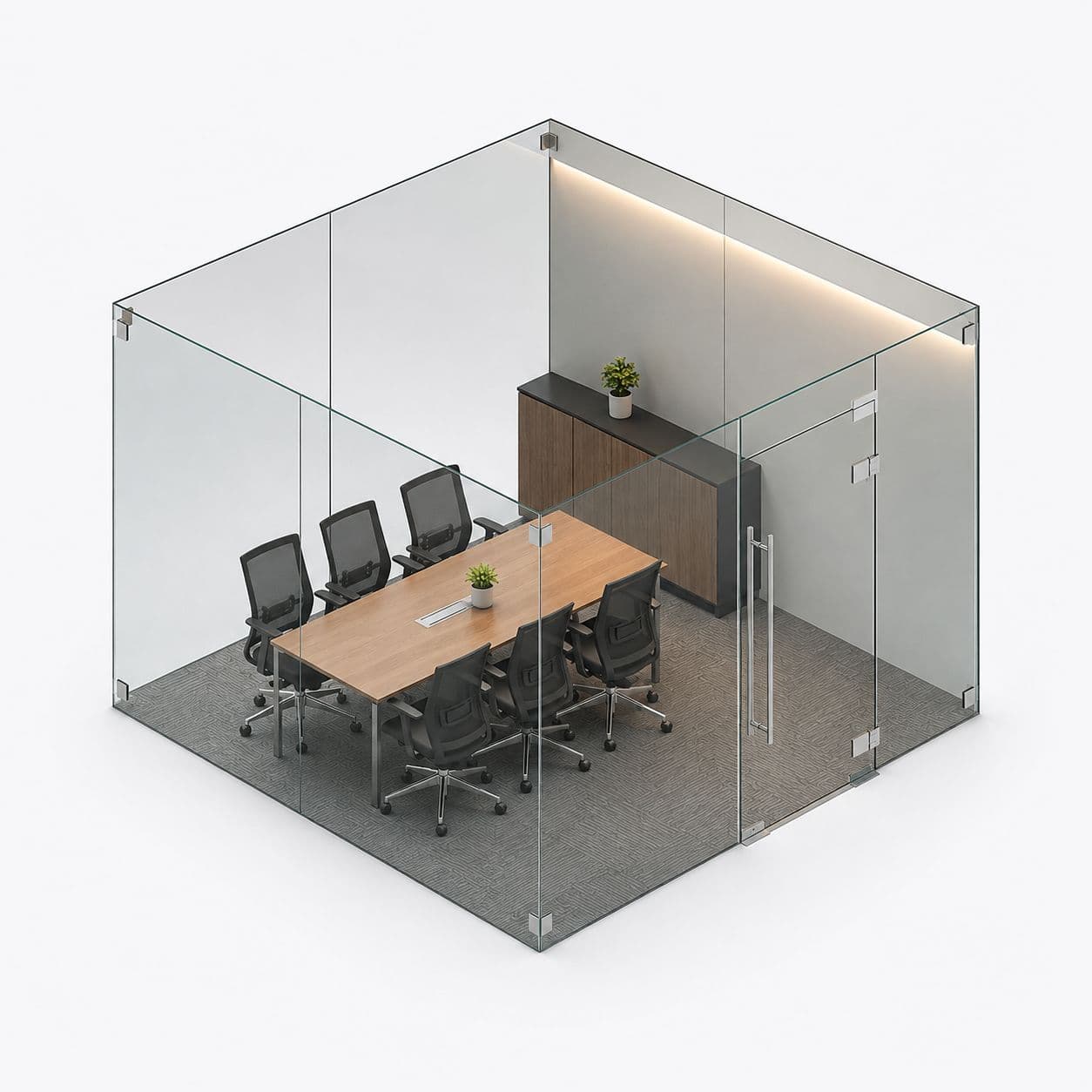
The glazing here is for venues more than for offices: banquet halls, event lawns, farmhouse reception rooms. Those are large spaces used by crowds a few nights a week, and that combination — big spans and public use — puts the specification somewhere quite different from an office fit-out.
Glass a crowd can push against
In a venue the glass is a barrier between people and something, and it will be leaned on, pushed against and occasionally fallen into.\n\nToughened glass is strong but when it fails it goes entirely, which in a crowded room is the wrong behaviour.\n\nLaminated glass holds together when broken because of the interlayer bonding the pieces, so a broken panel stays as a barrier rather than disappearing. In a public room that is the right choice, and it is the single most important specification decision here.
Spans longer than a single panel
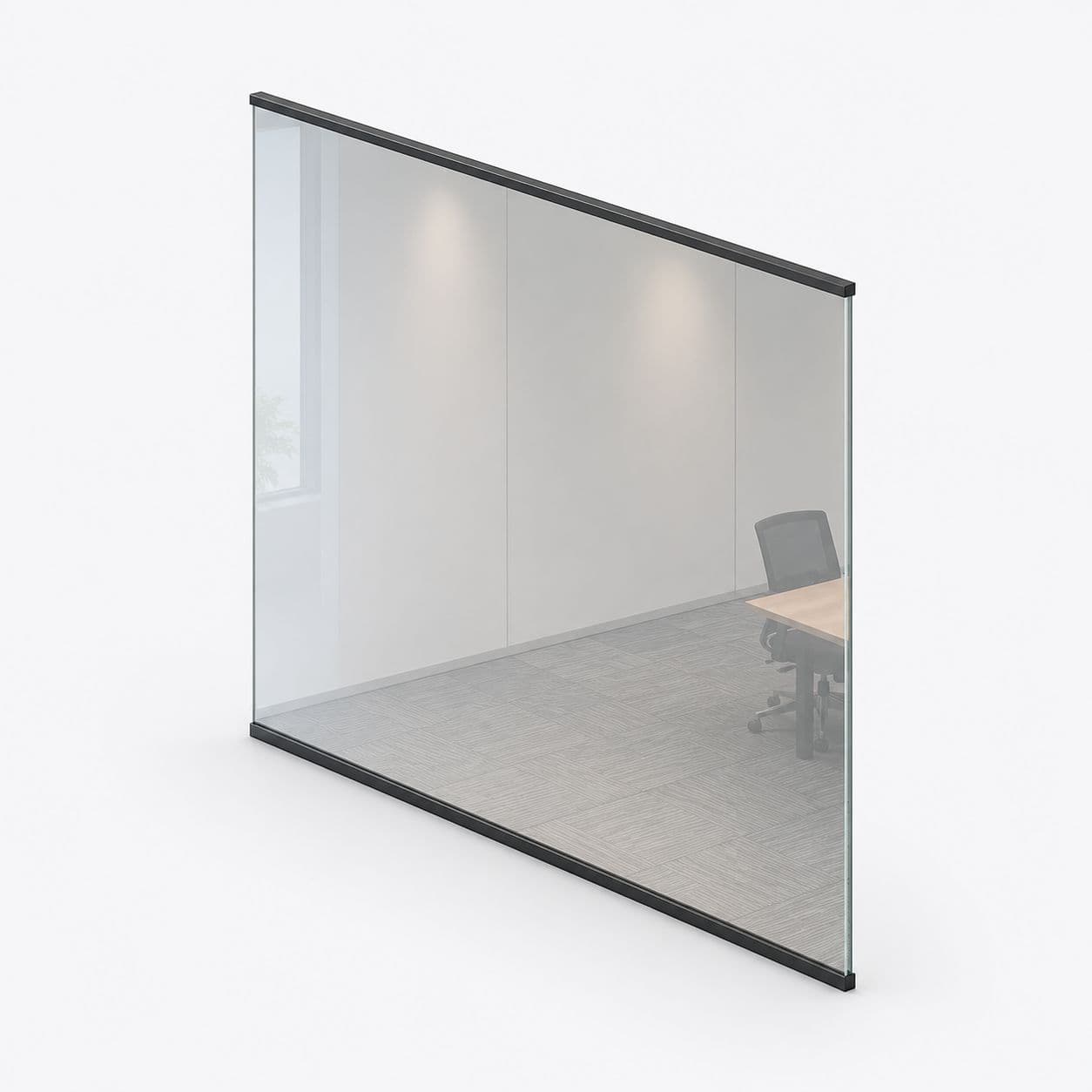
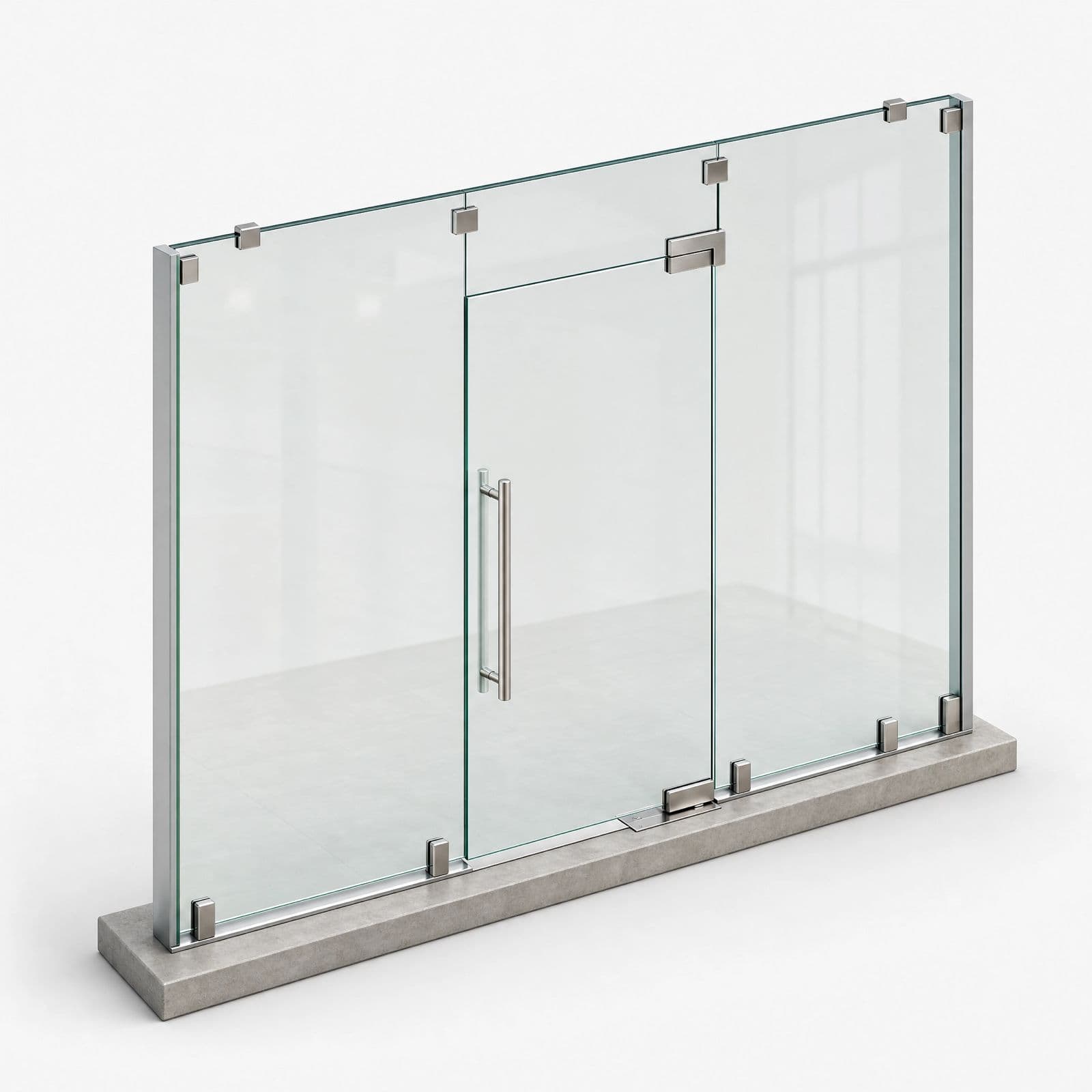
A hall wall can run twenty metres, and no single panel covers that, so the design question is what happens at the joints.\n\nIn an office a joint is a thin silicone line. In a hall at that scale the panels also need support against wind and crowd load, which a silicone joint alone will not give.\n\nSo these runs get glass fins or slim structural mullions at intervals. It is more engineering than a partition and it is what stops a long glazed wall behaving like a sail on an open site.
Glazing that has to be cleaned between events
A venue is turned around quickly between bookings, and glass shows everything from the previous night.\n\nSo the detail that matters is how fast a panel can be cleaned: no ledges at hand height, no open channels at the base collecting spills, and a finish that does not show every mark.\n\nWe would rather specify slightly fewer horizontal elements than a designer might draw, because each one is something the staff have to wipe before every event. It is invisible in a drawing and obvious after six months of operation.
How the job works
- Tell us about the jobSend a few photos, rough sizes and what you need. Use WhatsApp or the form. For a repair, a short video of the door moving helps a lot.
- We call you back in about 2 minutesWe confirm what you need and a time to visit. Where we can, we give you a rough price on the call.
- We come and measureWe measure the opening and check the walls, floor and ceiling around it. Anything made to size is made to these measurements, so they must be right.
- You get a written priceIt lists each item, with GST as its own line. If anything about the job changes, we tell you before we go ahead.
- We fit itYou approve the price and pay the advance. Our own team fits the work, checks that every door and window opens and closes properly, and clears up. Most jobs are done in 3 to 4 days.