


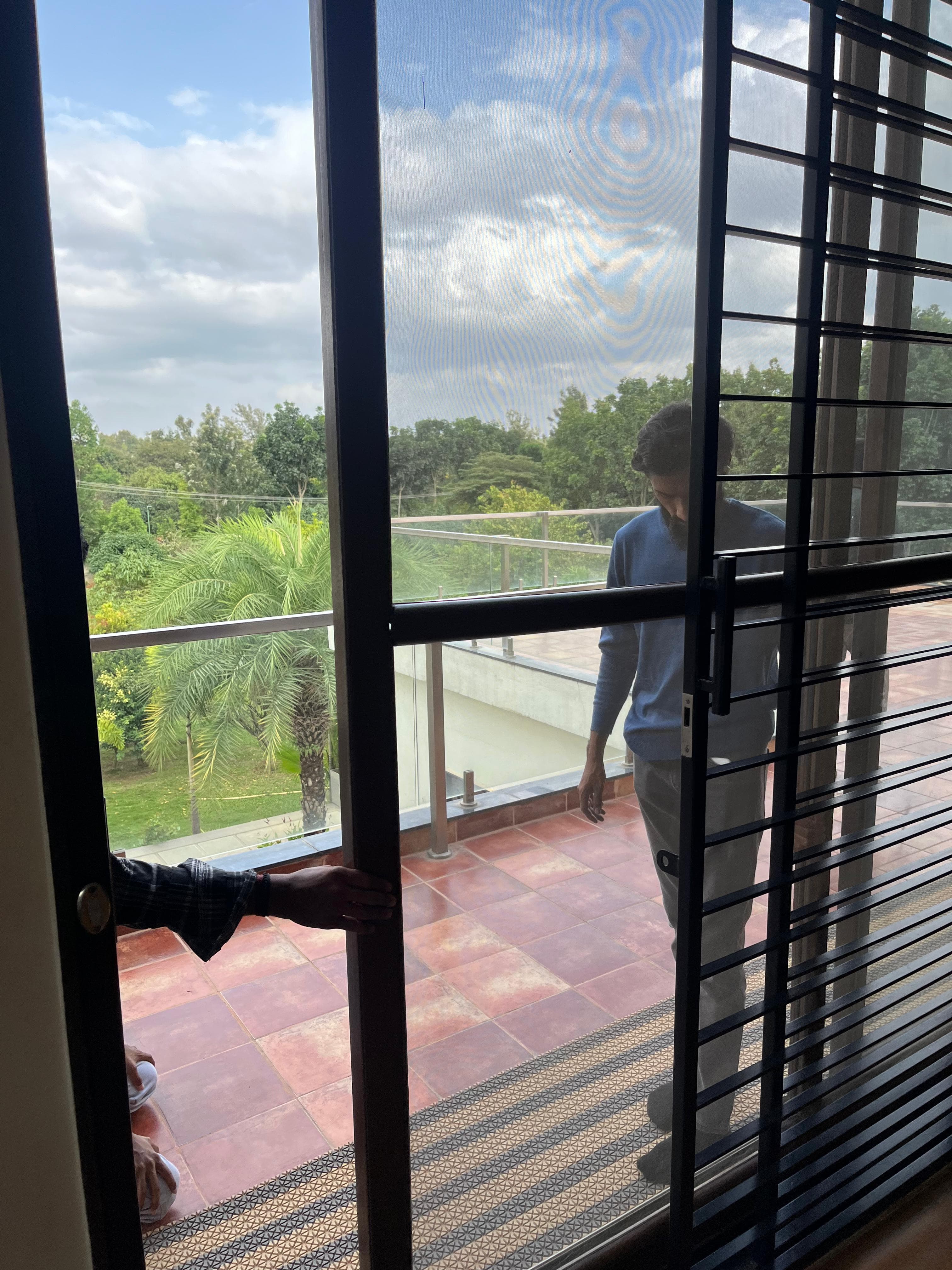
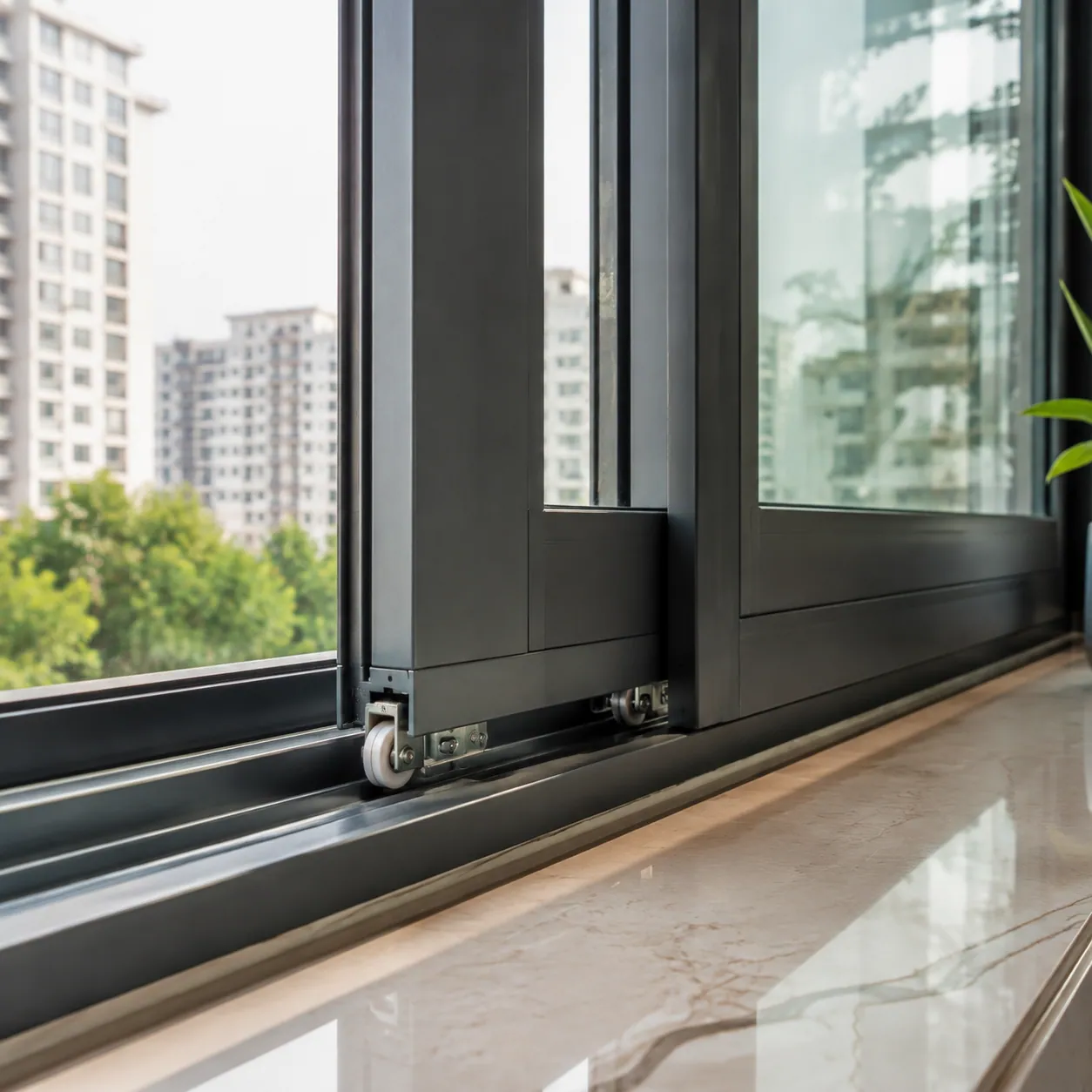
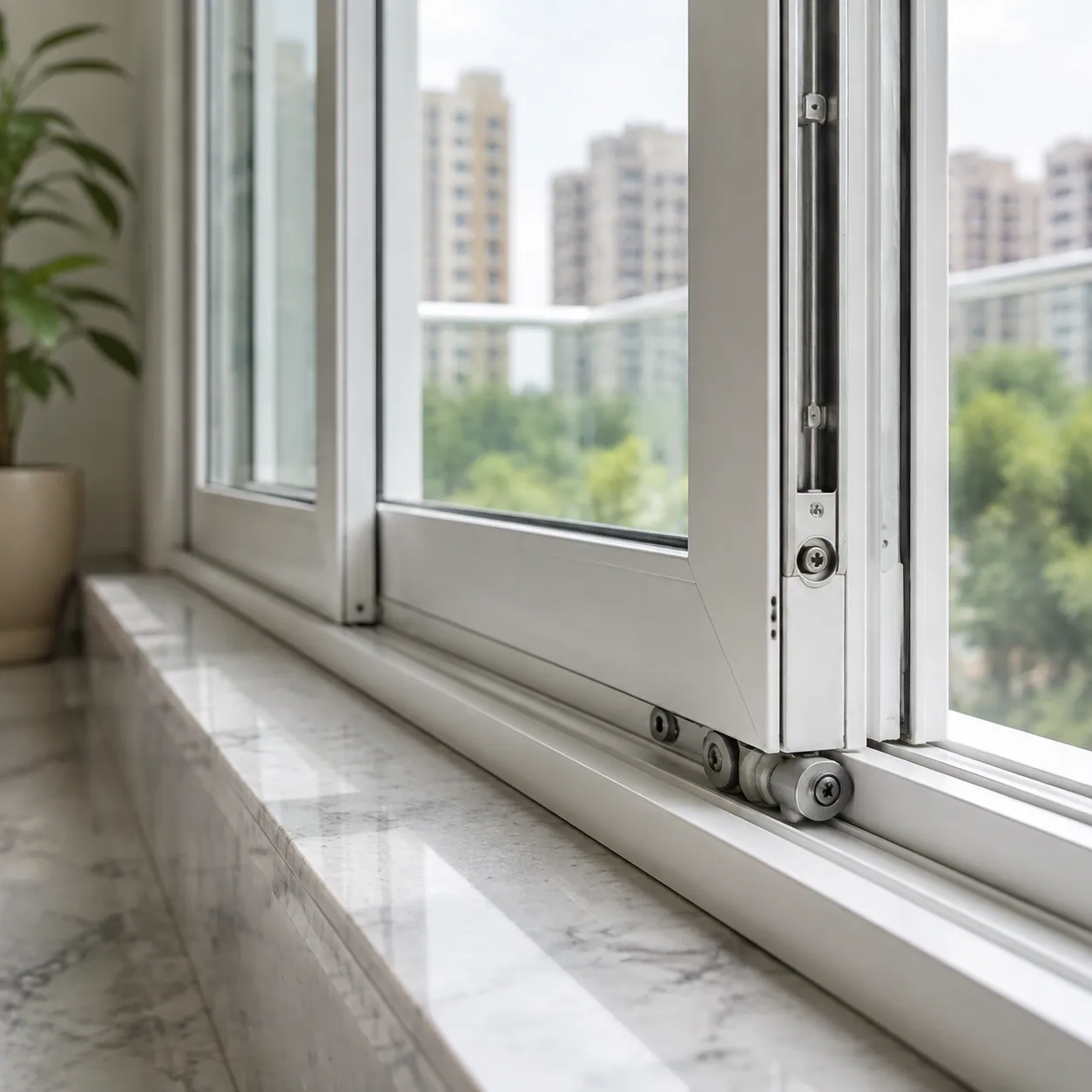
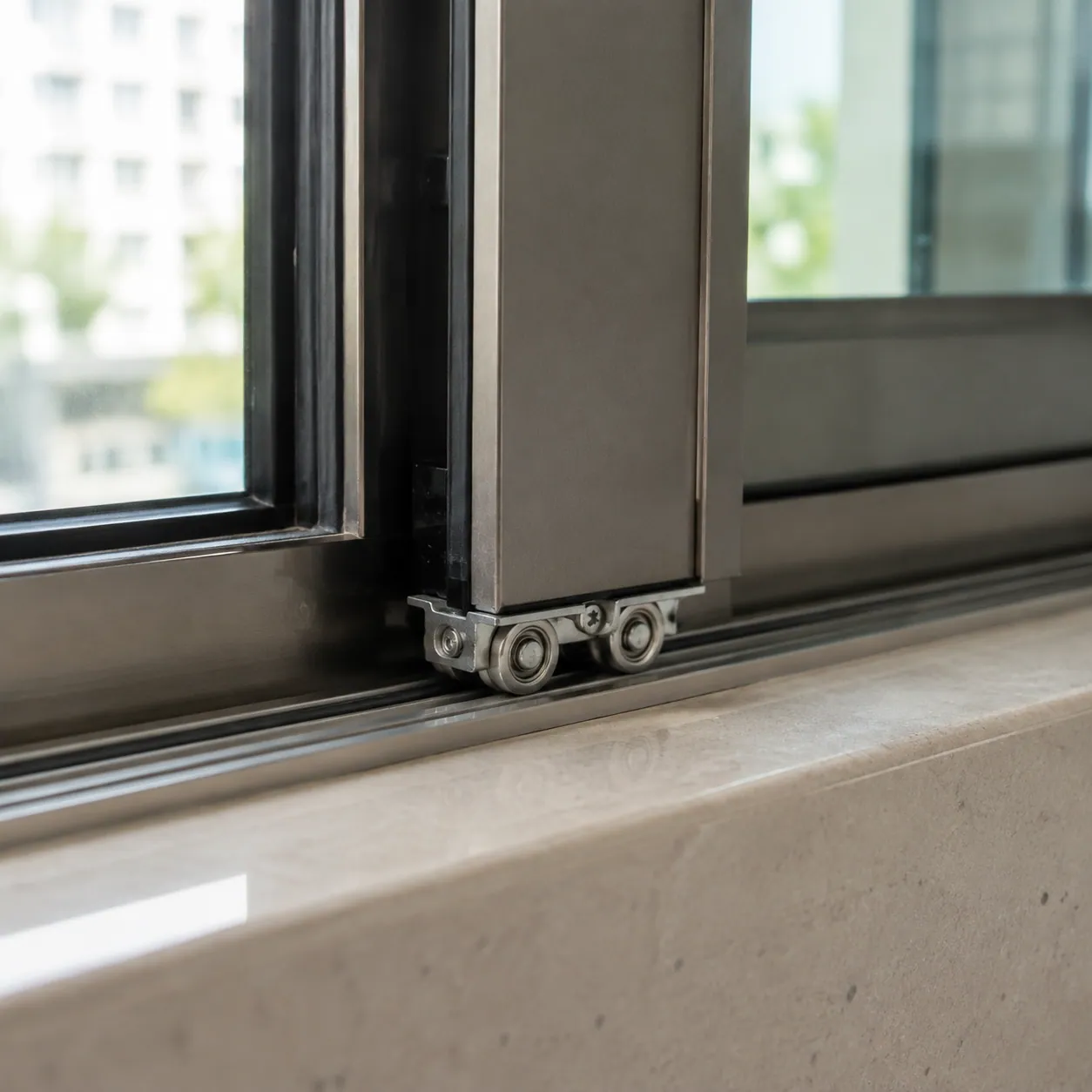
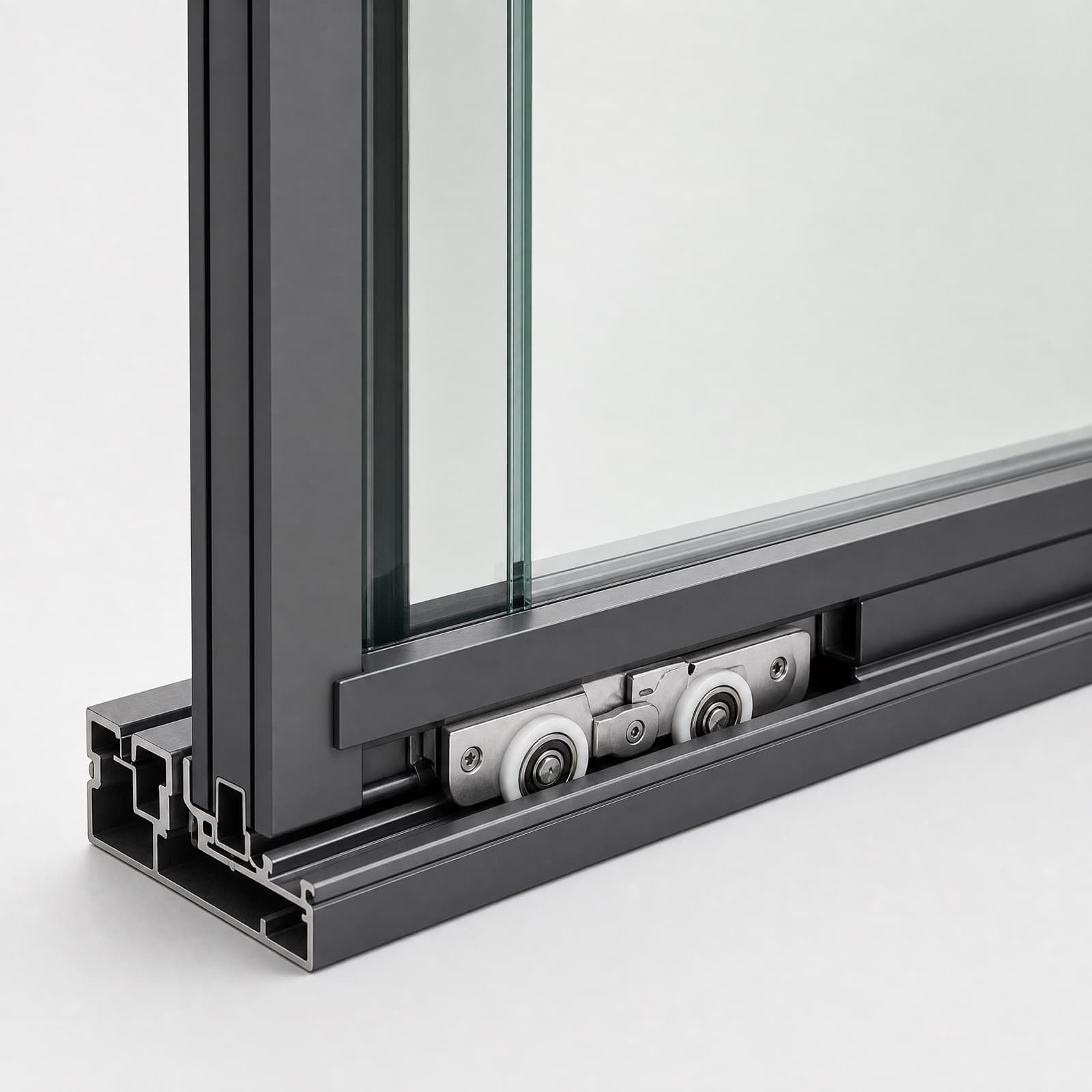
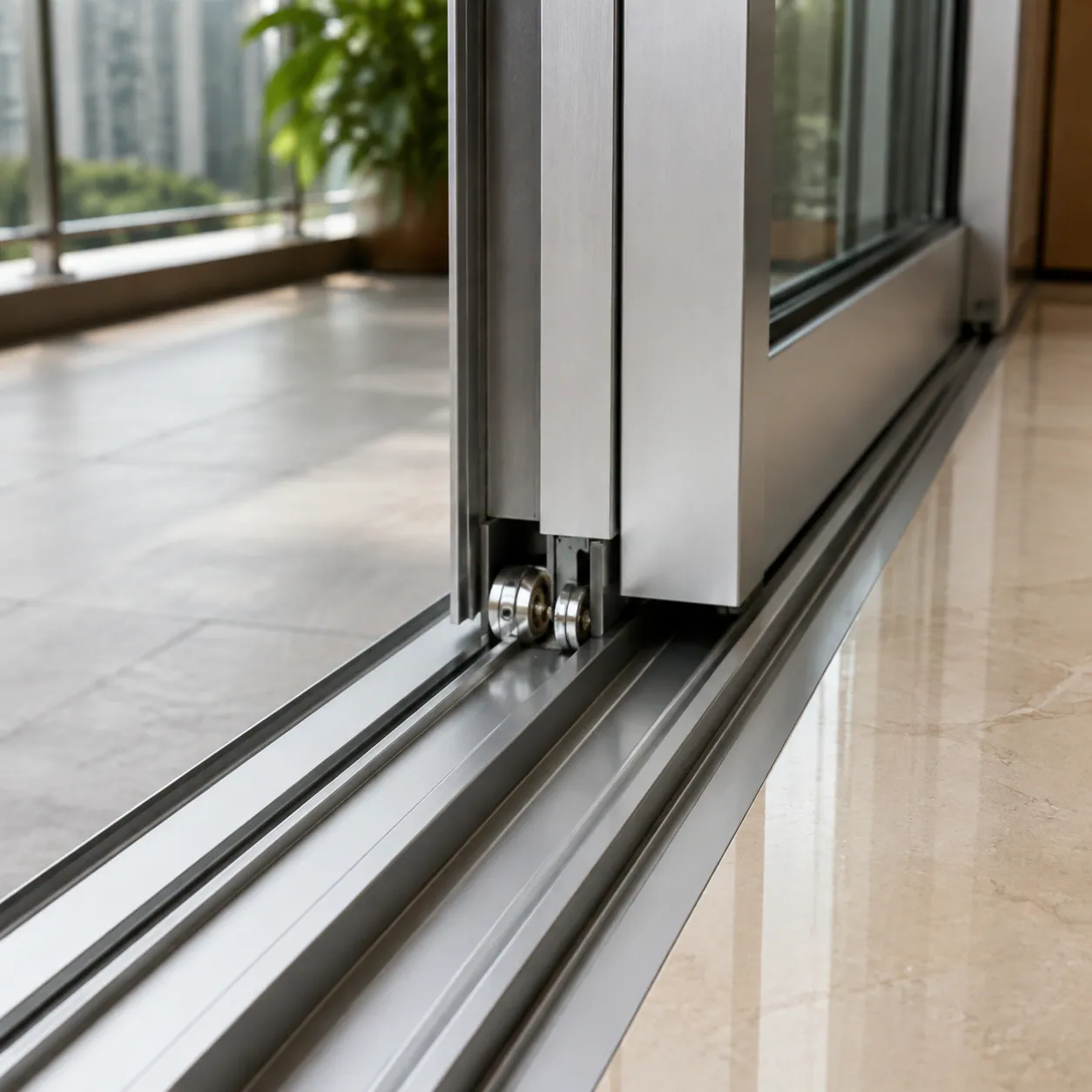
A sliding door or window that has to be lifted, shoved or forced is not broken. It is running on worn rollers. The rollers are two small wheels under each panel, and they carry its whole weight every time it moves. When they wear, the panel drops onto the track and drags. We change the rollers, dress the track and reset the guides, usually in one visit.
Why a sliding door or window stops sliding
Every sliding panel runs on rollers, and every roller has a small bearing inside it. Dust from the road gets into that bearing, and in Bengaluru the two rainy spells wash more grit into the track. The bearing stiffens, then it seizes, and the wheel stops turning and starts sliding. That is the scrape you hear.
Once a roller is flat, the panel sits lower on one side. It scrapes the track, misses its lock, and leaves a gap at the top corner. People push harder, which bends the track edge, and then the panel jumps out of the track altogether.
None of that needs a new door or a new window. It needs a pair of rollers, a dressed track and an hour or so of work.
What we do on the visit
We lift the panel out and look at the rollers, the track and the top guide together. Worn rollers are changed for a pair rated for the weight of your panel. A heavy glass slider and a light mesh door do not take the same wheel.
Then we dress the track. That means filing the worn groove smooth and straightening any bent edge. Skipping this is why new rollers sometimes fail within months. The panel goes back in, we set its height so the lock meets its keeper, and we reset the stoppers so it cannot jump out.
The glass is not touched unless it is loose or cracked.
Glass sliders, aluminium windows, uPVC and wardrobes
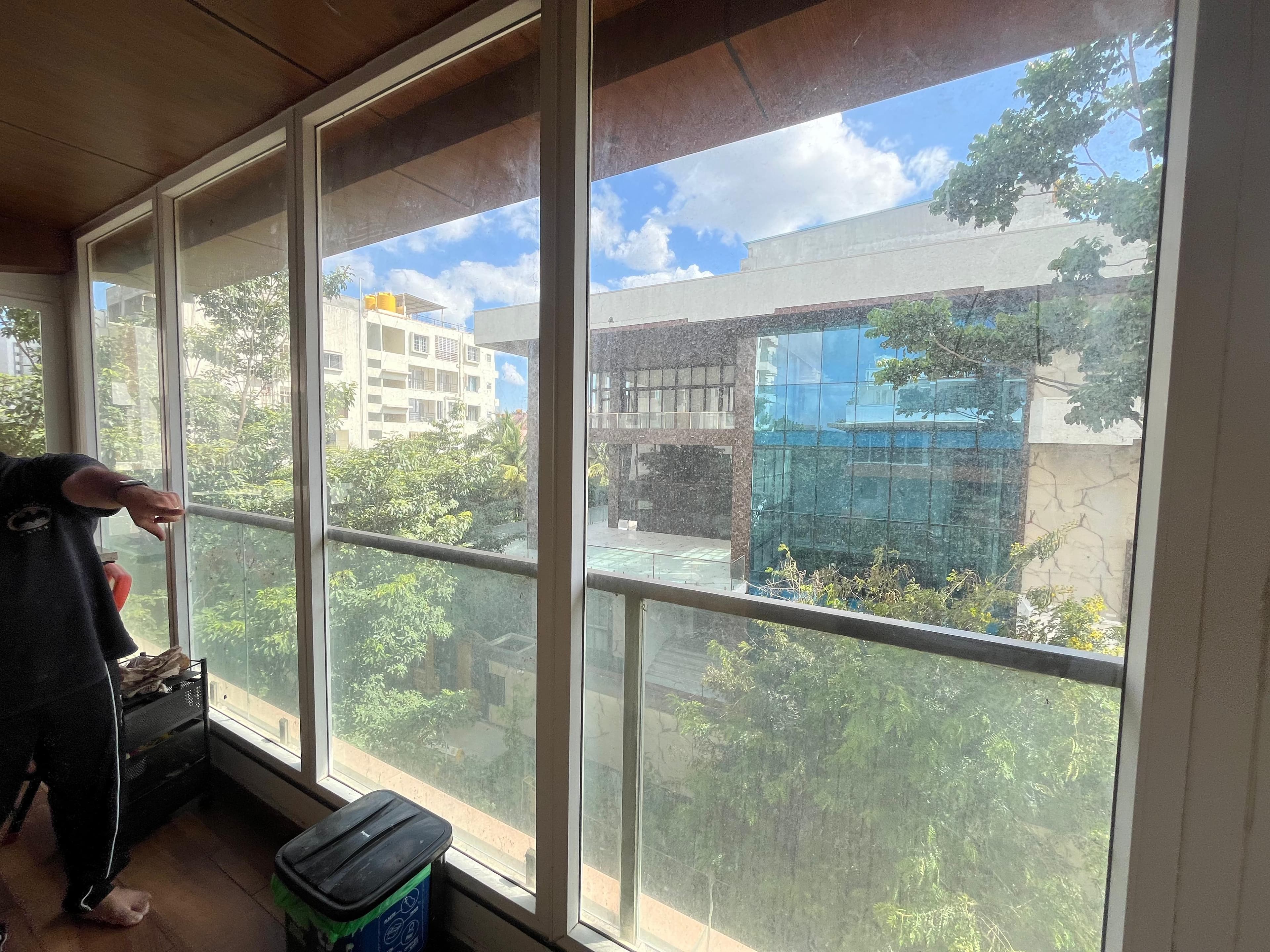
It is the same job on every material, with different parts. A frameless glass slider hangs from rollers at the top, and the bottom guide keeps it straight. An aluminium sliding window runs on small rollers set into the bottom of the shutter. A uPVC slider uses a bogie, a twin-wheel unit matched to its track profile.
A wardrobe shutter runs on the same idea in a smaller channel. So does a kitchen drawer. Several sliders in one flat or one office usually share a single visit, and each one then costs less.
A sliding mesh door that has come off its track is set back on and given new rollers in the same way.
Locks, gaps and rain in the track
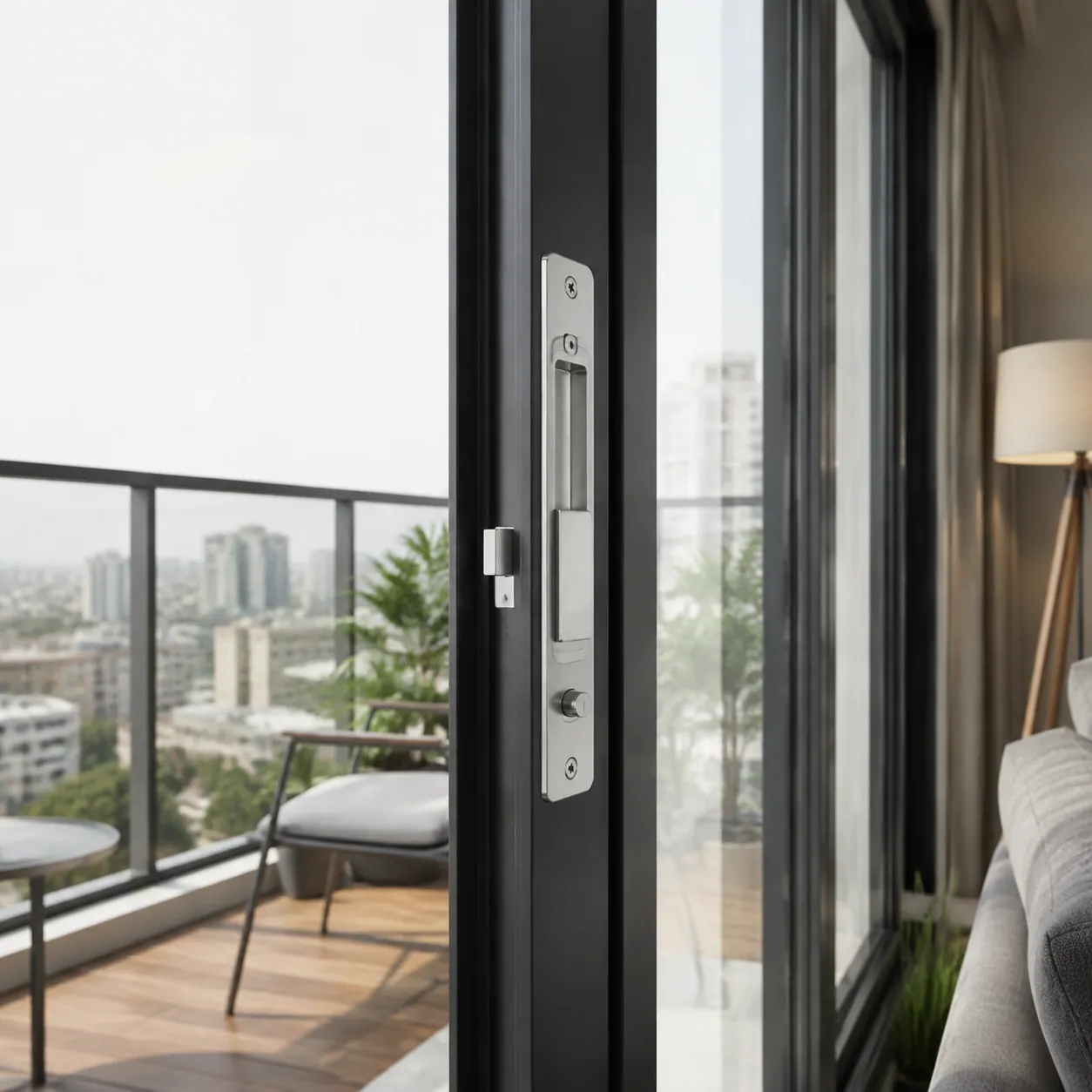
A sliding door that will not lock is nearly always sitting too low, so the hook misses the keeper. Setting the height fixes most of them. A worn hook lock is changed only when the height is right and it still misses.
A gap along the closing edge lets in dust, mosquitoes and the sound of the road. New rollers close most of it. Flat brush strips along that edge are renewed if they are worn.
Water standing in a sliding window track after rain means the drain holes are blocked. We clear them on the same visit, so the rollers stop sitting in water.
What it costs
A pair of rollers is one fixed price, supplied and fitted, and it does not change with the size of the panel. The visit covers travel and the work. If the track only needs cleaning and dressing, and the rollers are sound, the visit is the whole bill.
The prices are on this page, and they are the prices we charge. You see the worn part before we change it. GST is shown as its own line.
How fast we can come in Bengaluru
Our own team works across Bengaluru, Monday to Saturday, 9am to 8pm. In the areas we list, they can usually reach you within 29 minutes, depending on traffic and which team is free. Offices and shops can ask for night or Sunday work.
Rollers for glass, aluminium and uPVC sliders travel with the team, so most sliders are running again on the first visit. An unusual bogie is a day or two. Send a photo of the bottom of the panel and a short video of it moving, and we bring the right pair.
