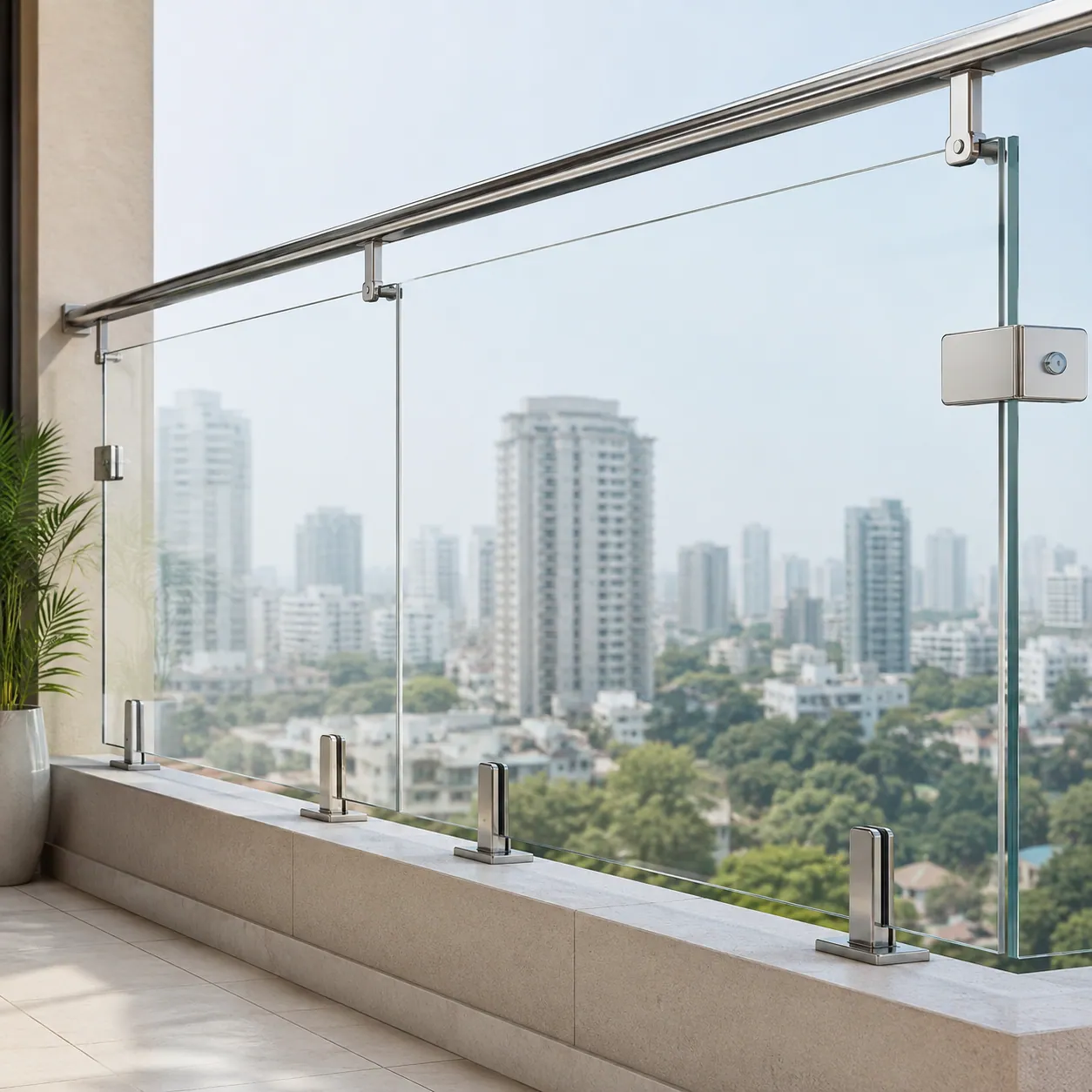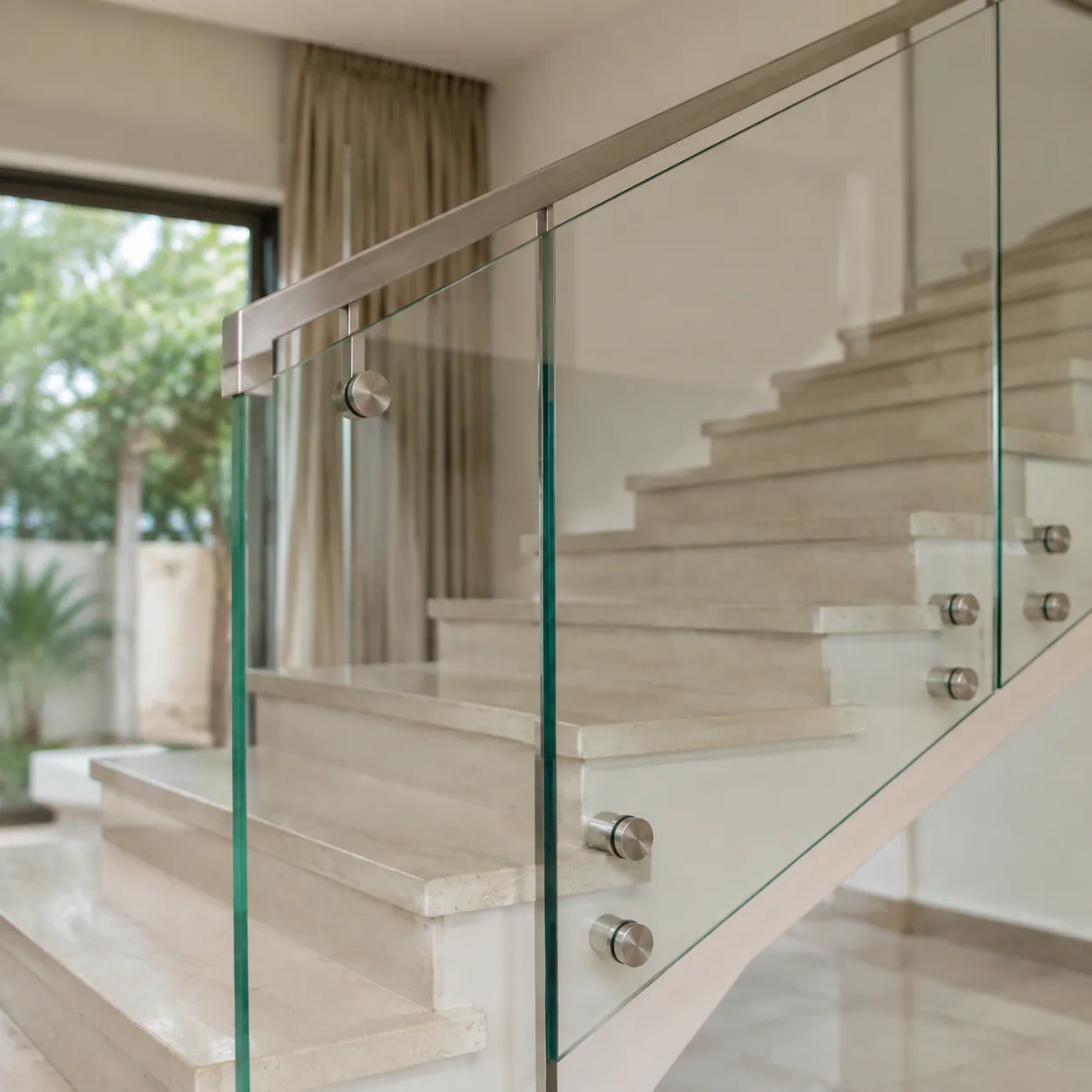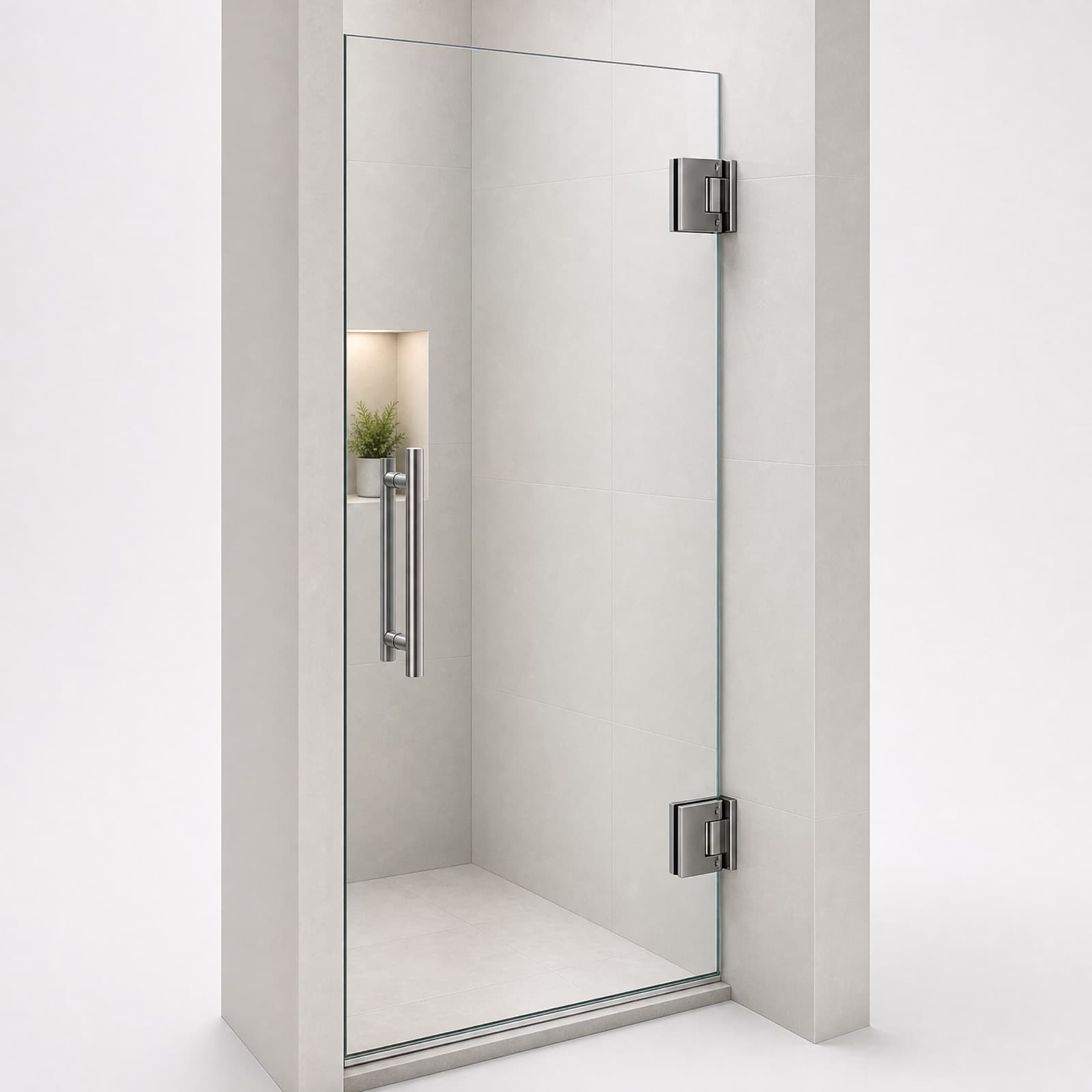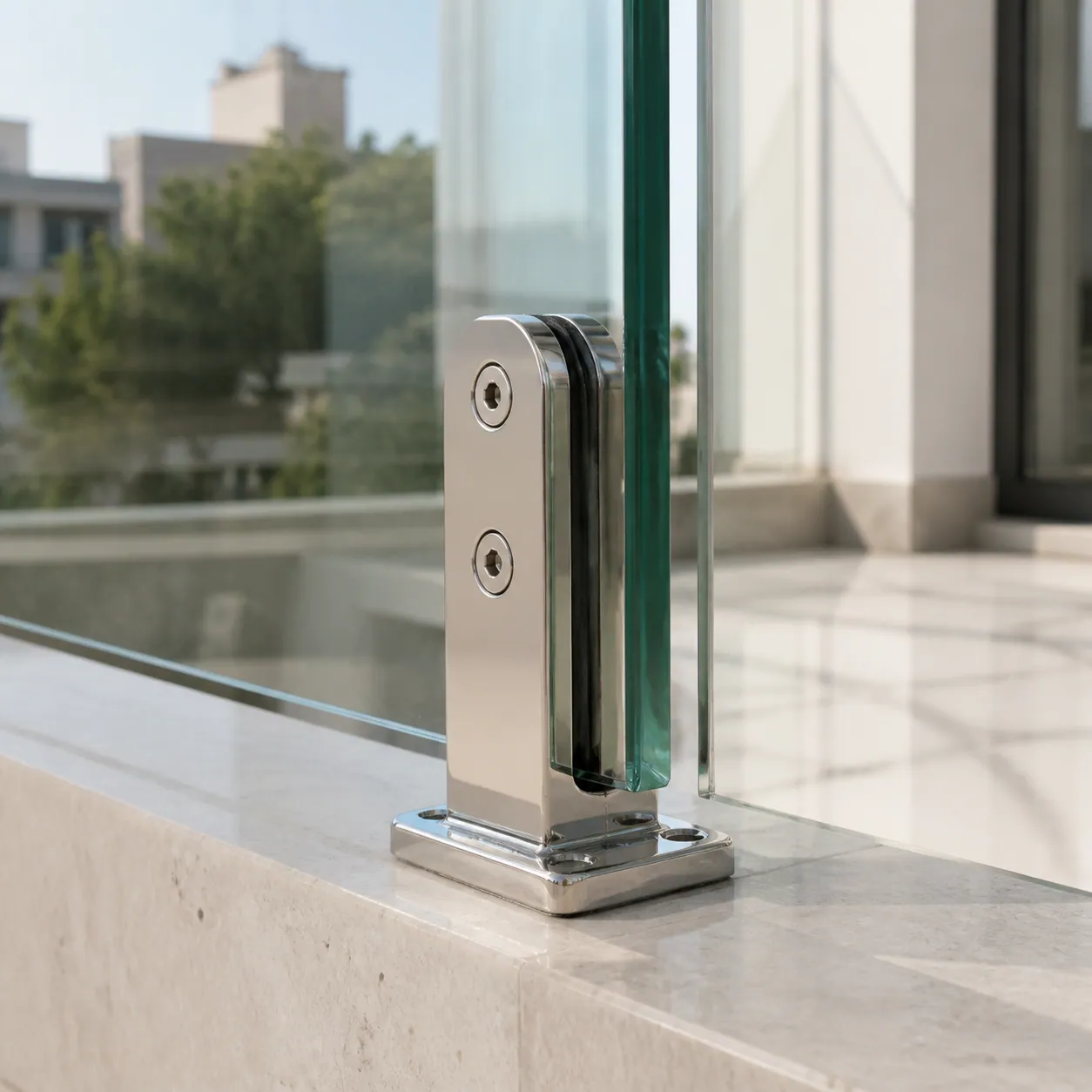
We replace glass railing clamps across Bengaluru. The clamps are the small castings that grip each railing panel to its posts or wall, usually two to four per panel, and every one carries a share of every load the railing takes. They live outdoors in sun and monsoon, and they fail by rust, by cracked castings, and by dead gaskets that let the glass rock in their jaws. A failing clamp is a cheap part in a critical seat. We change them one at a time or run by run, from ₹500 per clamp, fitted with fresh gaskets.
Reading a clamp's condition
A healthy clamp holds its panel silently and shows clean metal. The failures announce themselves to anyone who looks closely.
Rust streaking below a clamp, or bubbling at its edges, means the plating has failed and the casting is corroding, and cast clamps lose strength invisibly once rust is inside.
A hairline across the casting, often at the jaw's corner, is a crack, and a cracked clamp has already failed, it just has not let go yet.
Glass that can be rocked inside the clamp means the gasket has perished, and the clamp is holding a loose grip it was never designed for.
And a clamp visibly rotated or slid from its original seat has been moving under load. Any of these signs on one clamp is a reason to look at all of them.
Why a ₹500 part gets treated so seriously
Railing hardware is safety-critical in a way almost nothing else on this site is. The clamps are what stand between a leaned-on panel and the drop, and they fail as a chain: one dead clamp shifts its load to the survivors, which then loosen and age faster, which is how a railing goes from one bad clamp to a bad run.
So the discipline is barrier-grade. Replacement clamps are stainless or marine-grade rated for railing use, matched to the glass thickness. Gaskets are always new, both because old rubber is dead rubber and because the gasket is what stops metal biting glass.
And the panel is supported the entire time a clamp is off it. A railing panel is never left hanging on fewer fixings than its design assumed, even for minutes.
The replacement, clamp by clamp
The panel is braced. The old clamp comes off, and its fixing point is inspected: post threads, wall anchor or slotted plate, whichever the design uses, because a corroded clamp often hides a tired fixing behind it, and both get renewed together where needed.
The new clamp goes on with fresh gaskets, seated to the panel's original line, and torqued correctly, firm without crushing, since over-tightening on glass trades one failure mode for another.
The finish per clamp is the rock test, no movement of glass within jaw, and the finish per run is the same lean test our railing repair visit ends with. Changing several clamps in one visit shares the travel, which is why full-run refreshes are priced attractively per clamp.
Matching, cost and the run decision
One clamp, supplied and fitted with gaskets, starts at ₹500, and every additional clamp on the same visit stays at the per-clamp rate. Finishes match the run: chrome, brushed and black are all current stock patterns, and older shapes are matched closely enough to disappear at a glance.
The recurring judgment call is one clamp or all of them, and age answers it. Clamps fitted the same year fail on the same schedule, and one rusted casting on a ten-year run speaks for its siblings. Refreshing the run in one visit costs a fraction of piecemeal calls and resets the railing's clock entirely.
Either way, the railing you lean towards the view should be the strongest thing on the balcony. Clamps are where that starts.