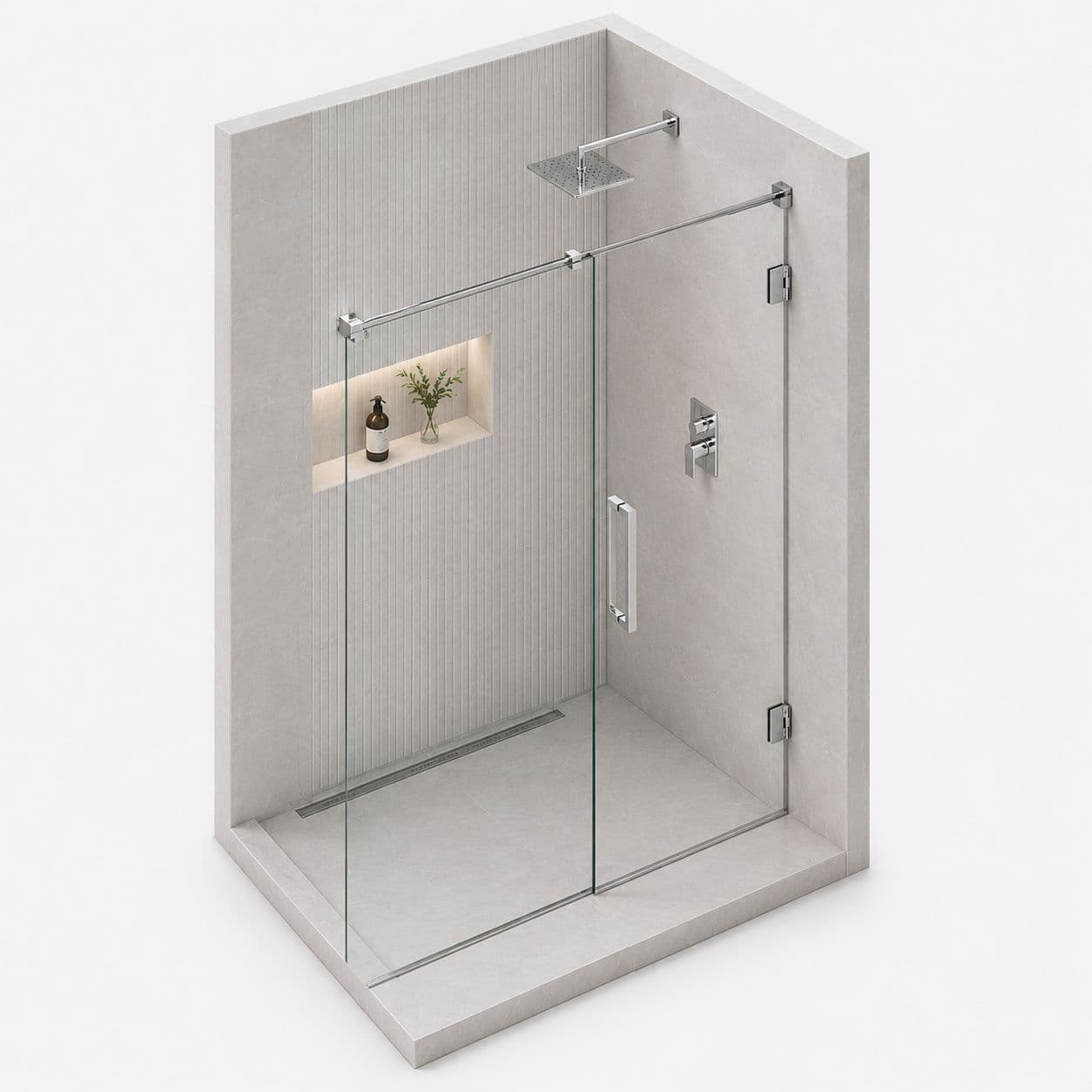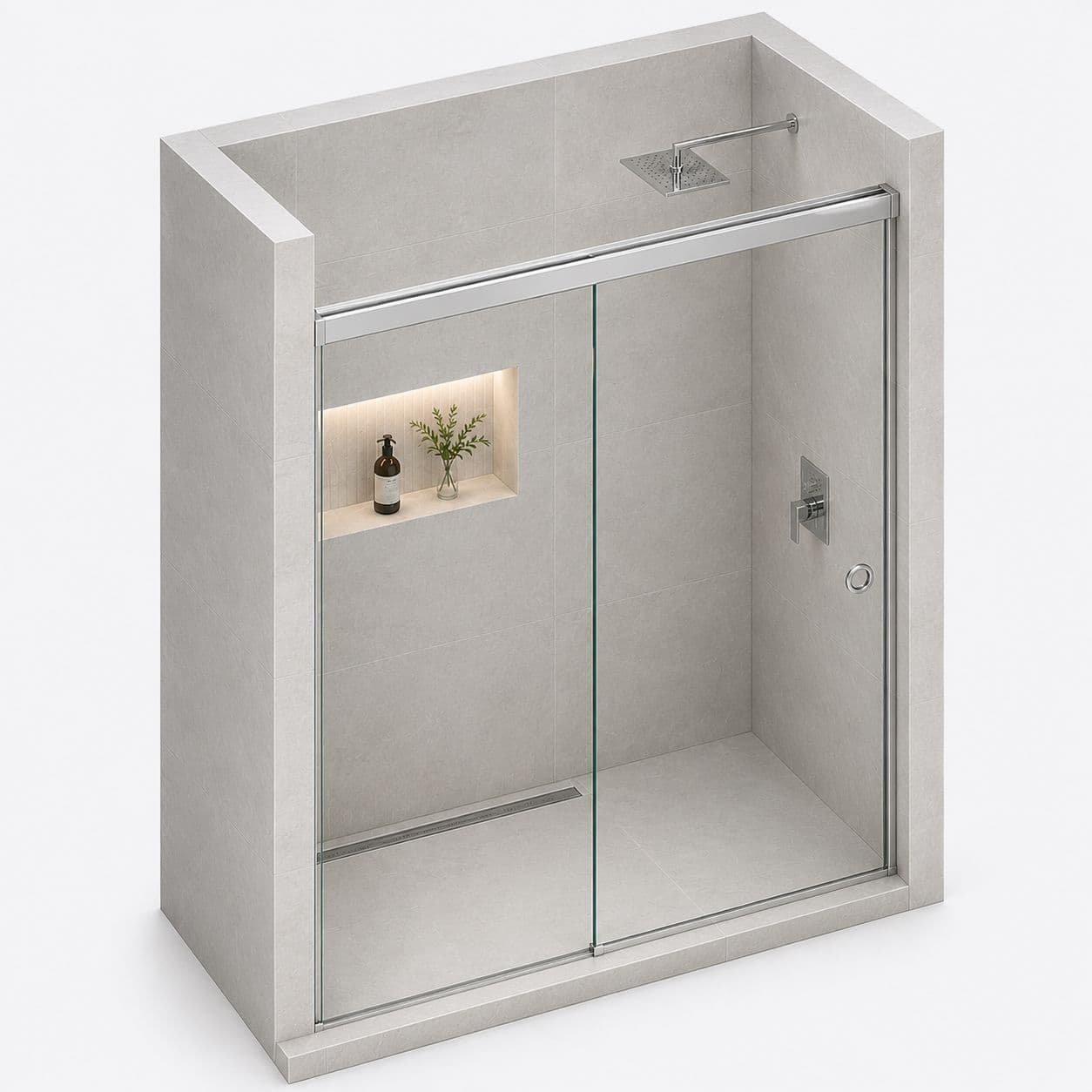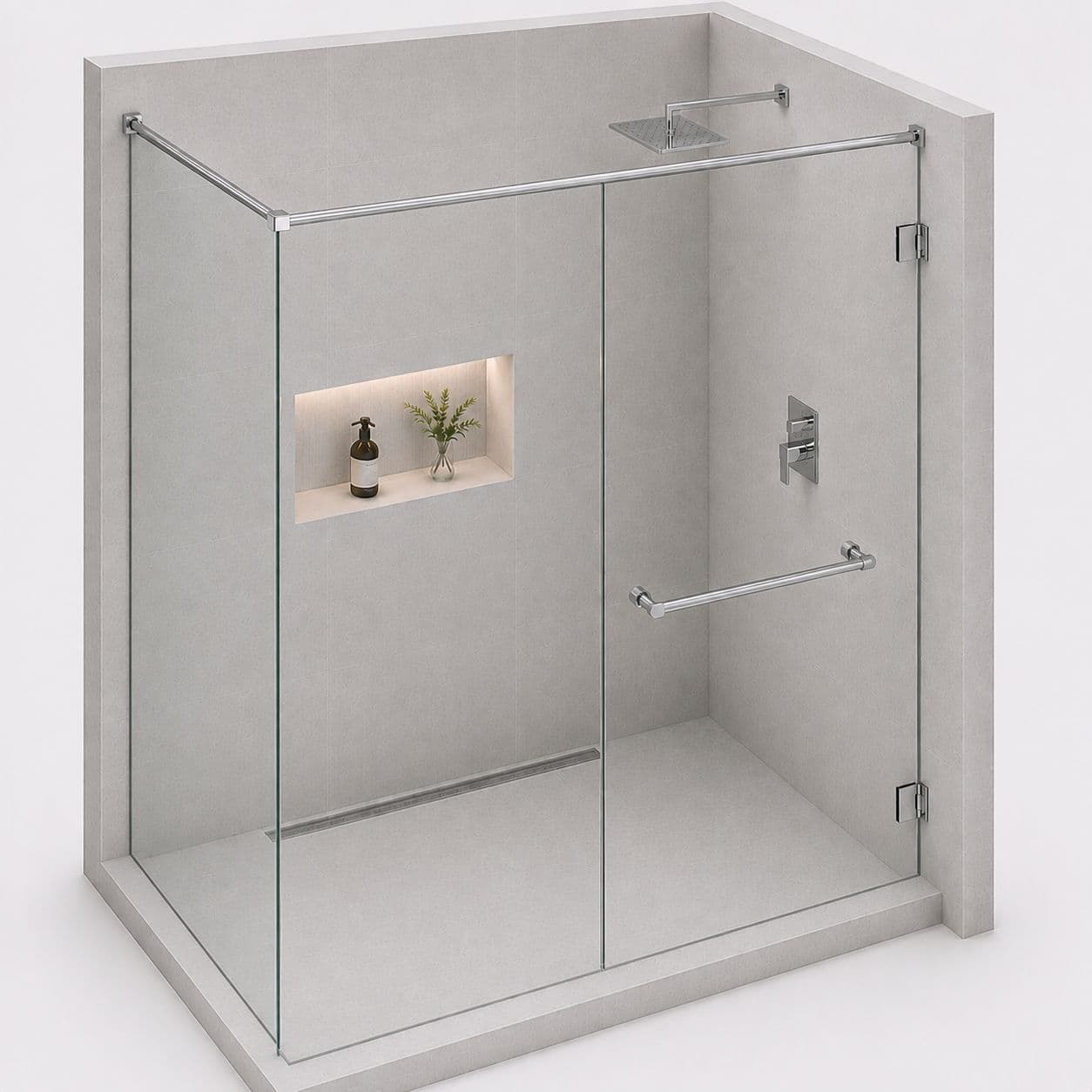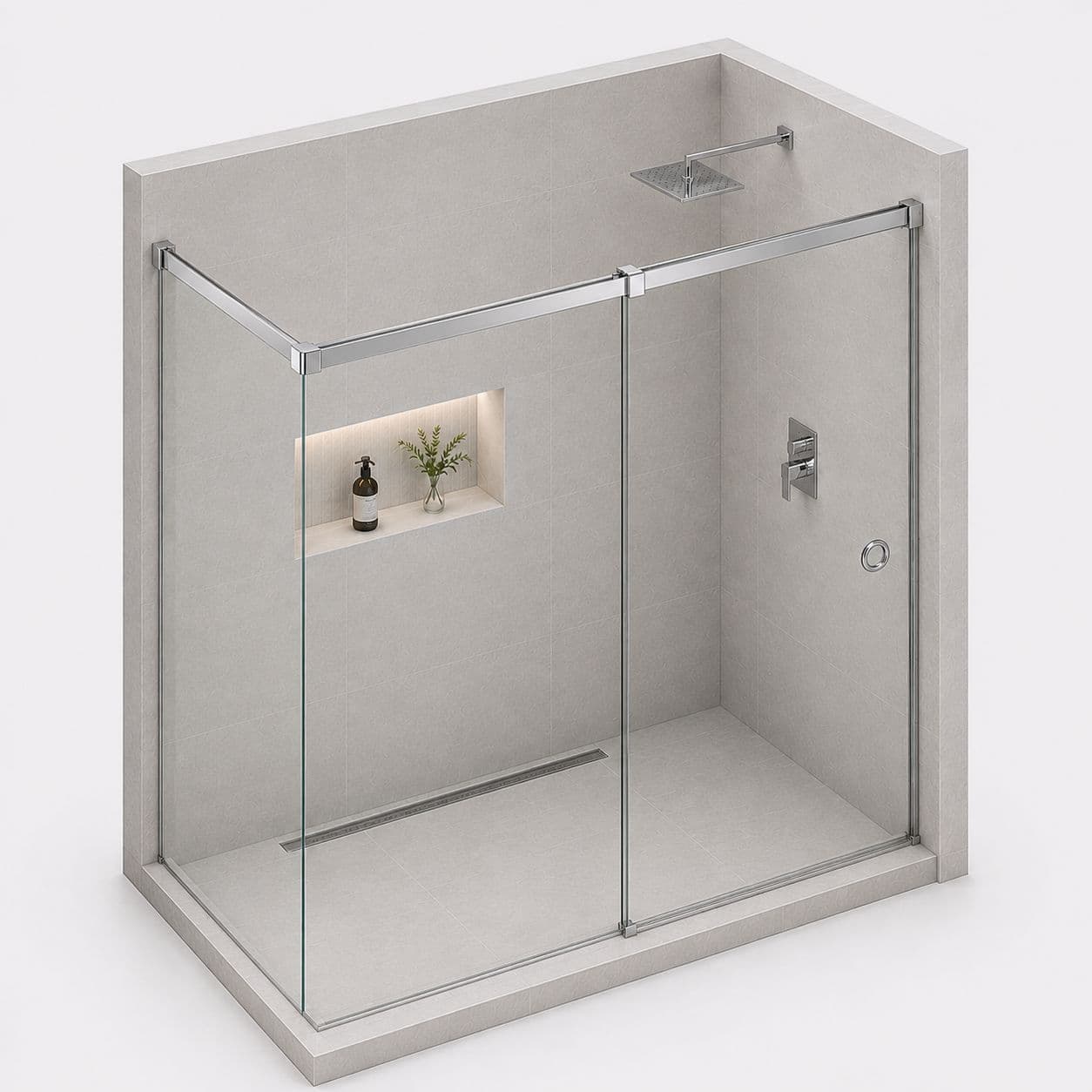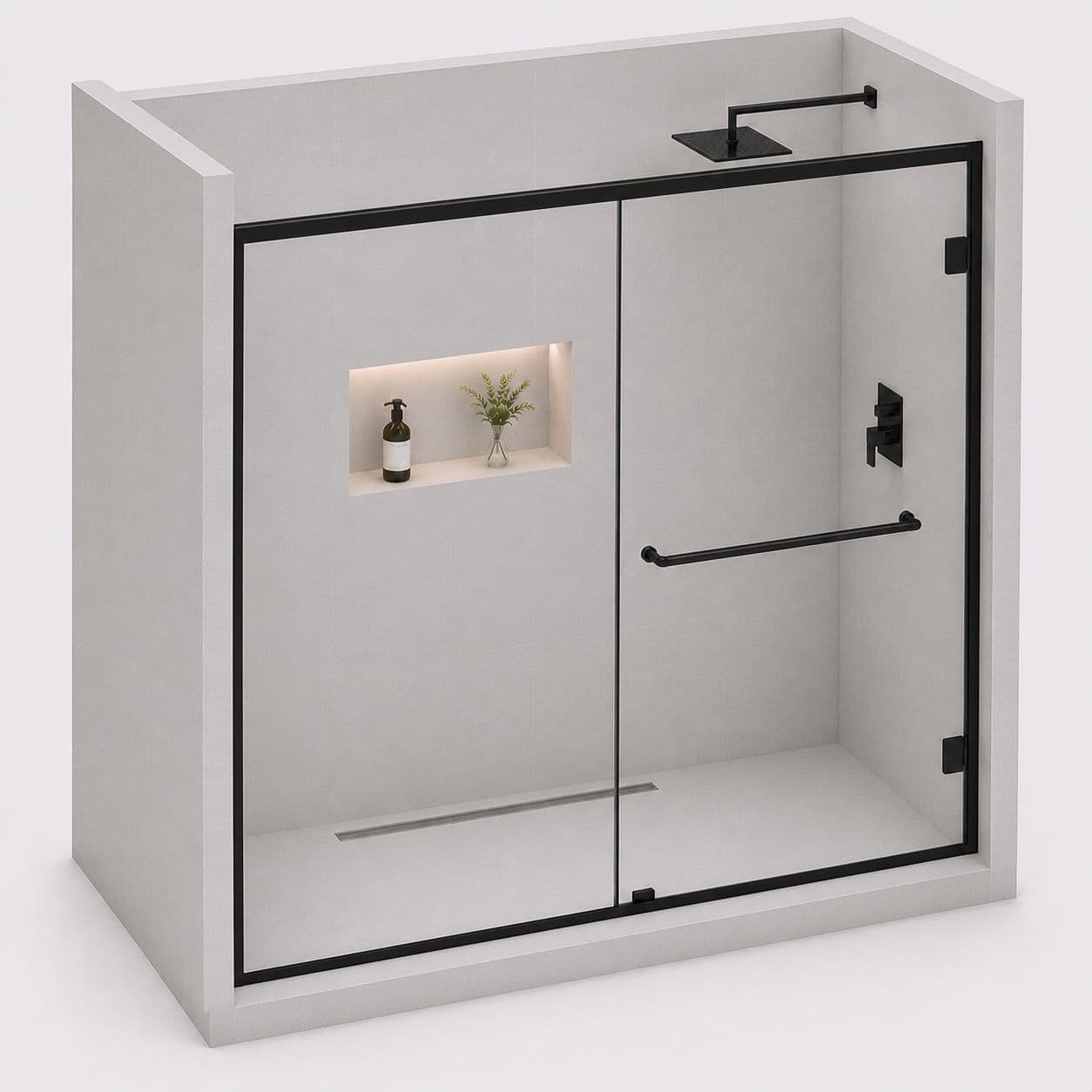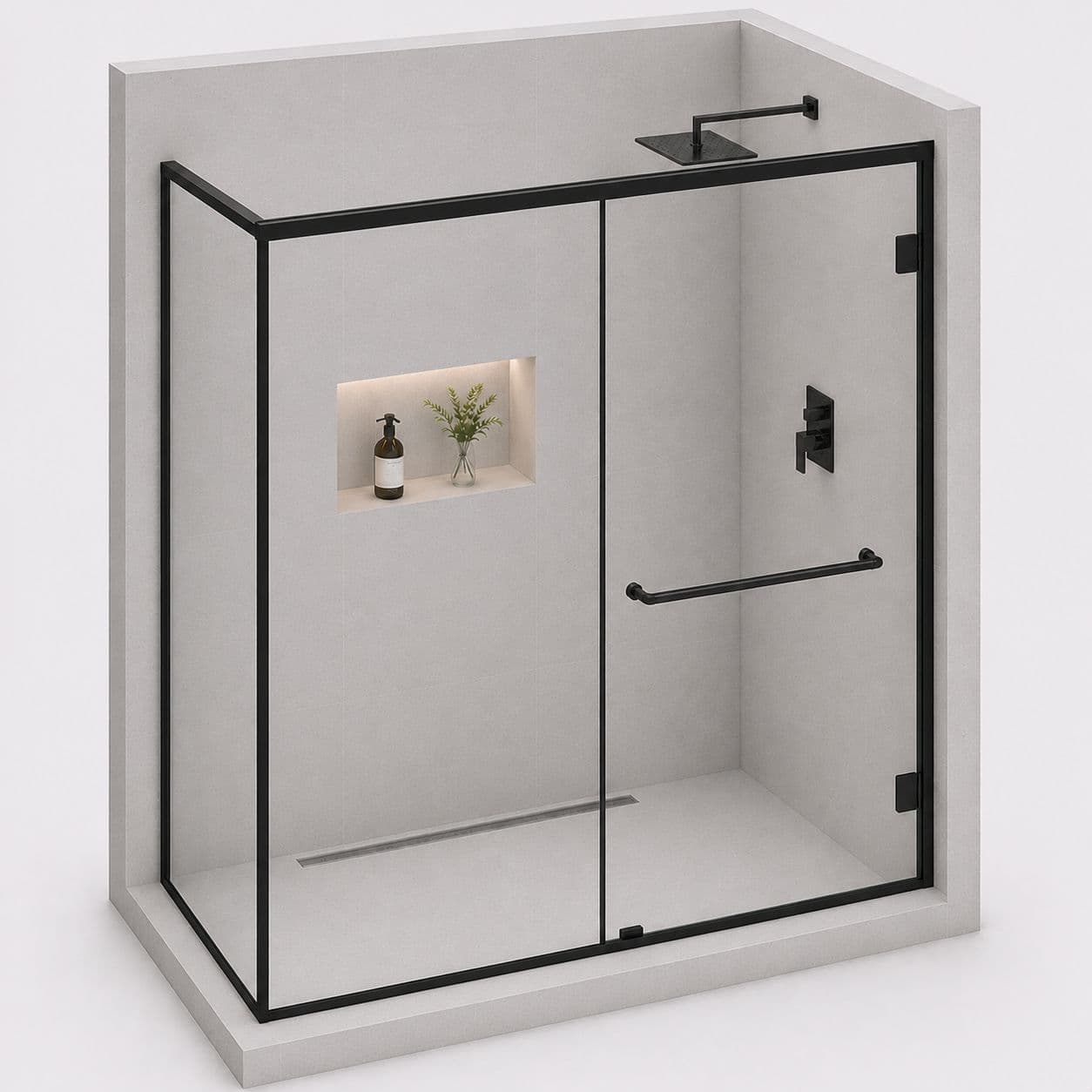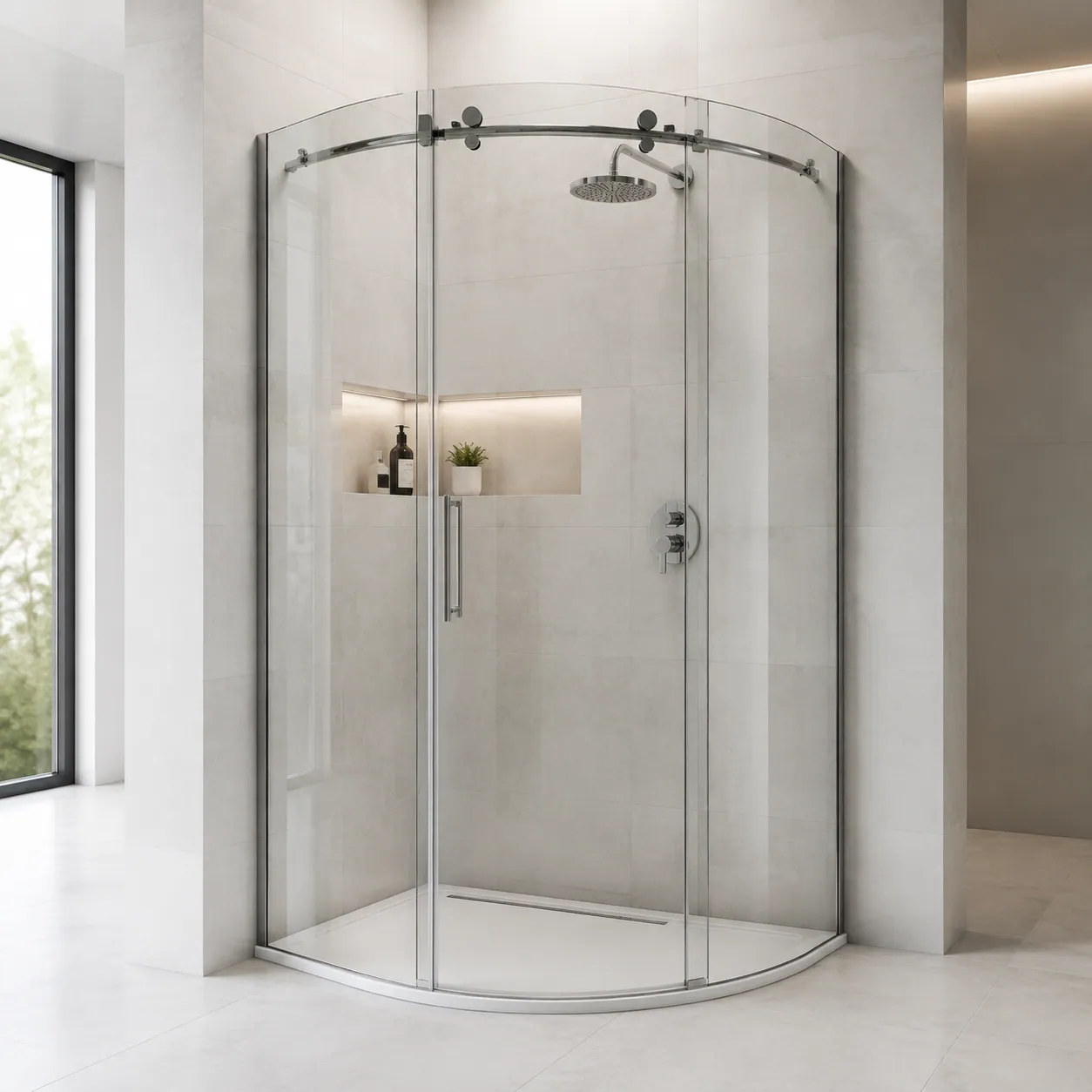
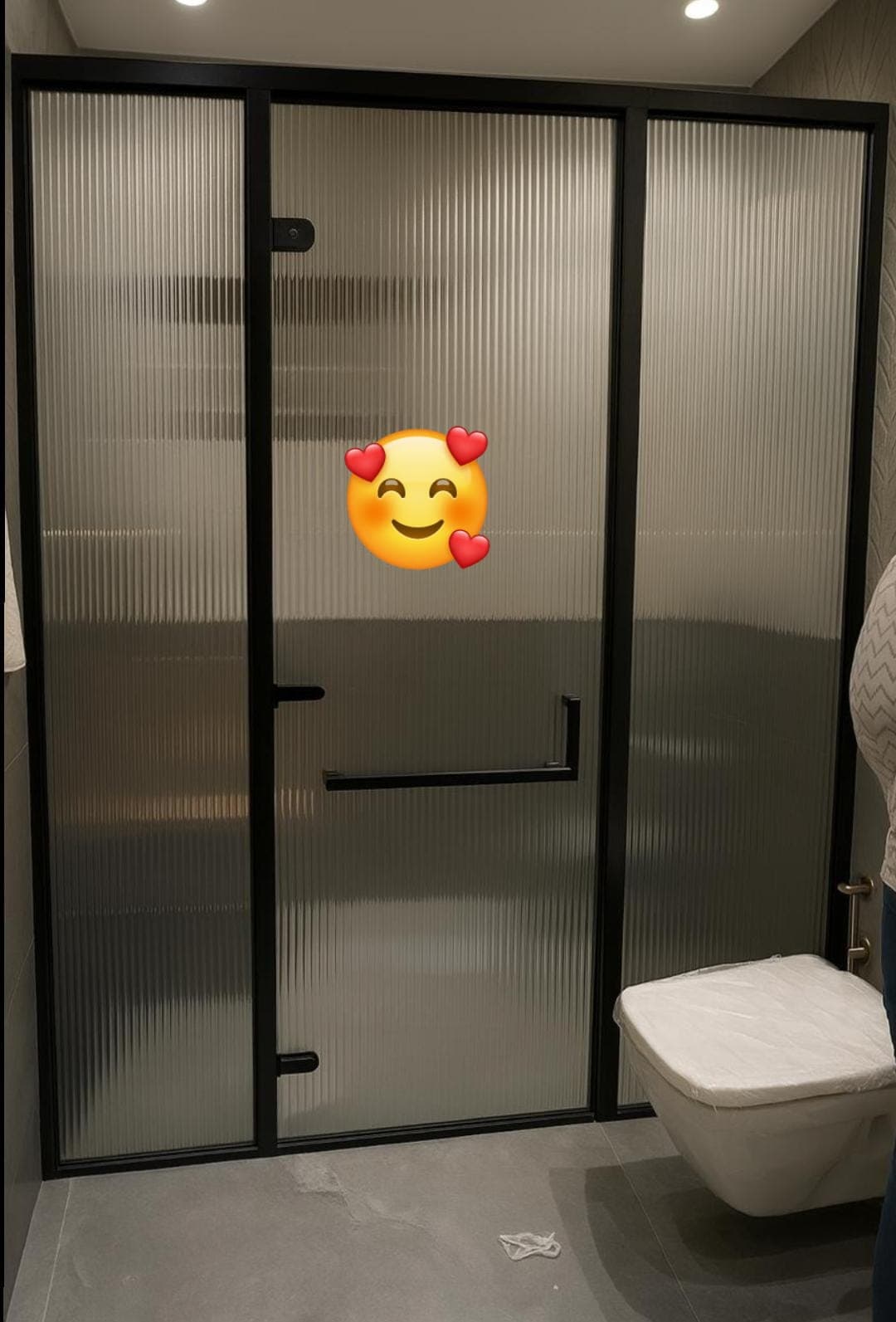
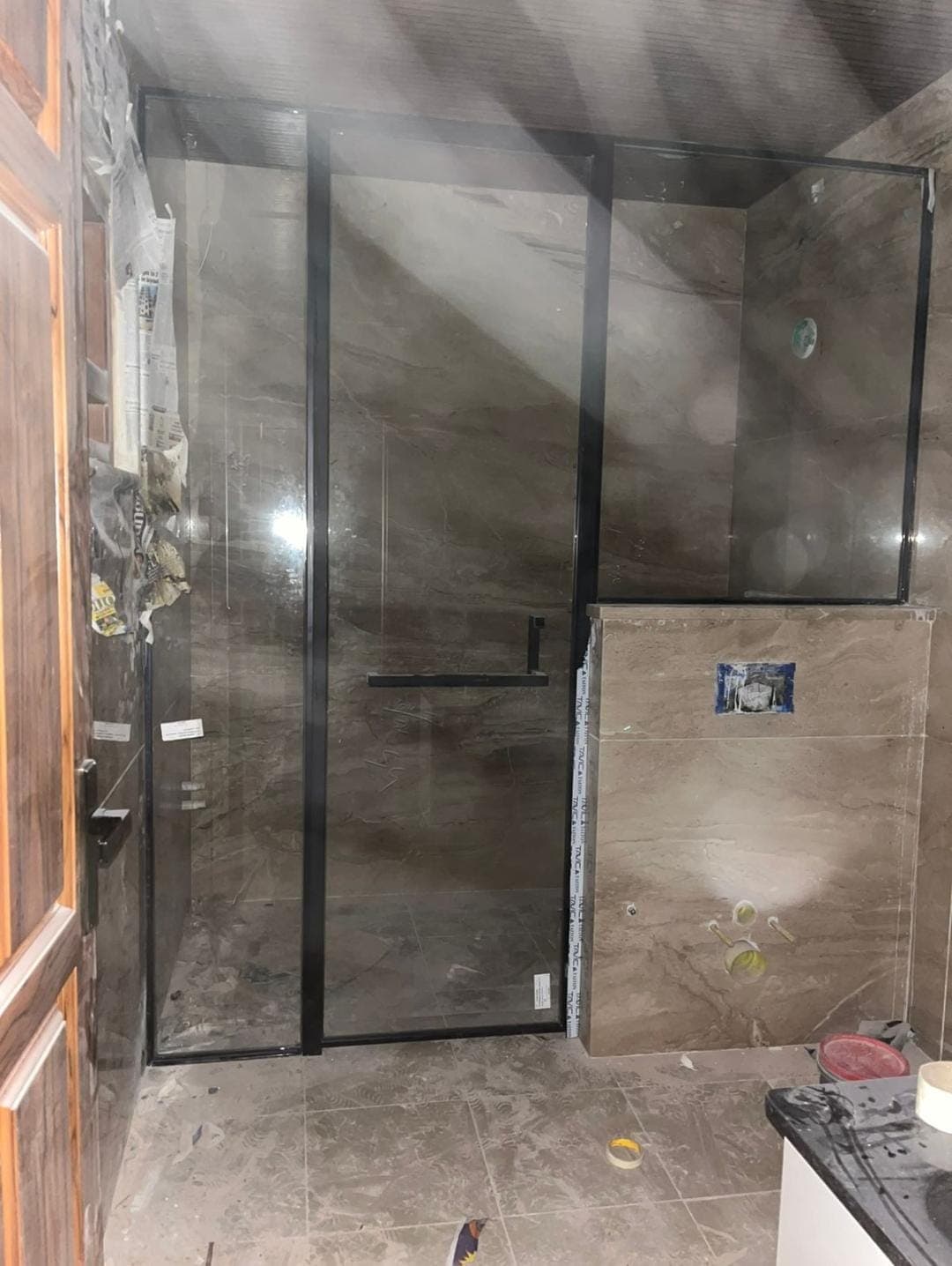
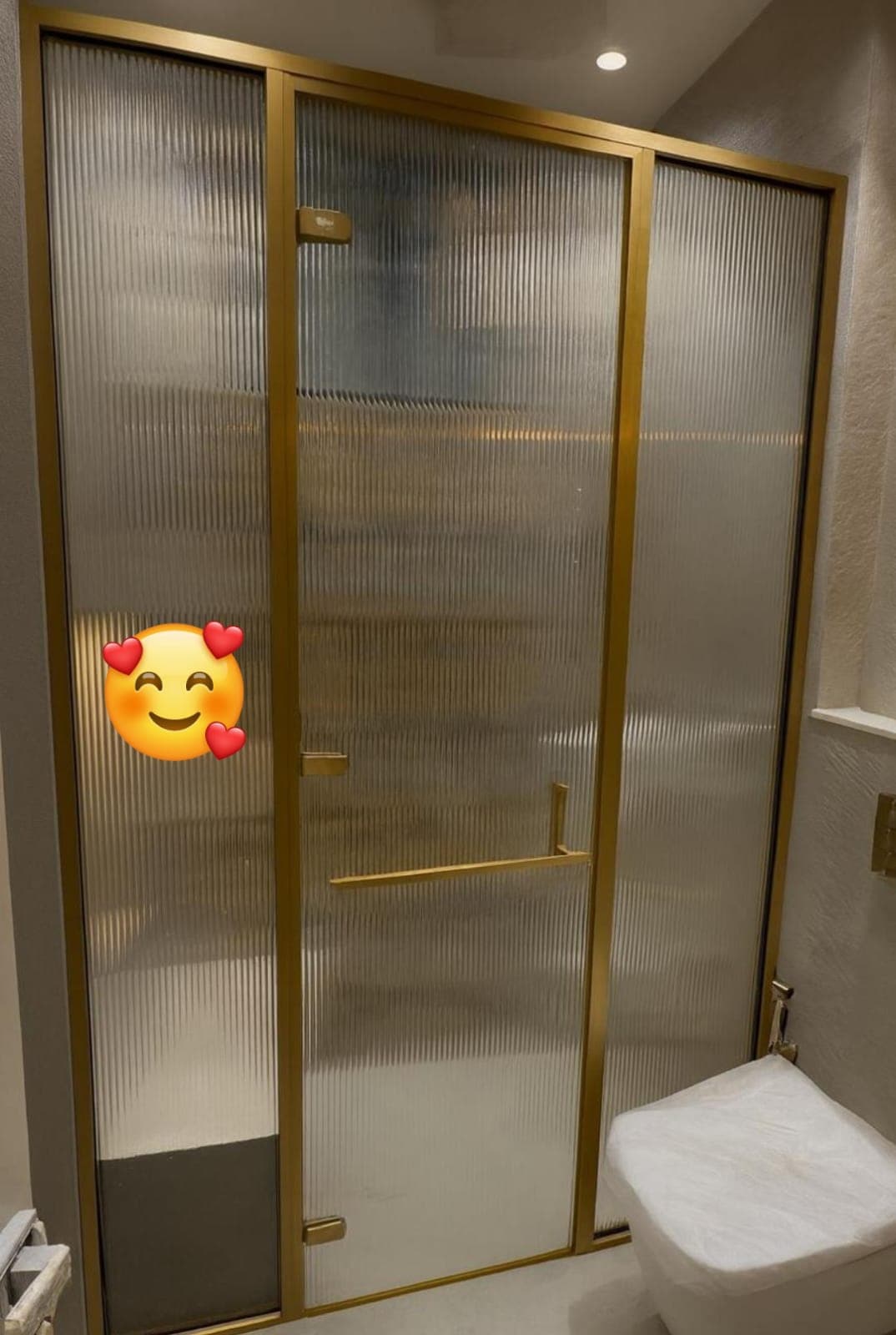
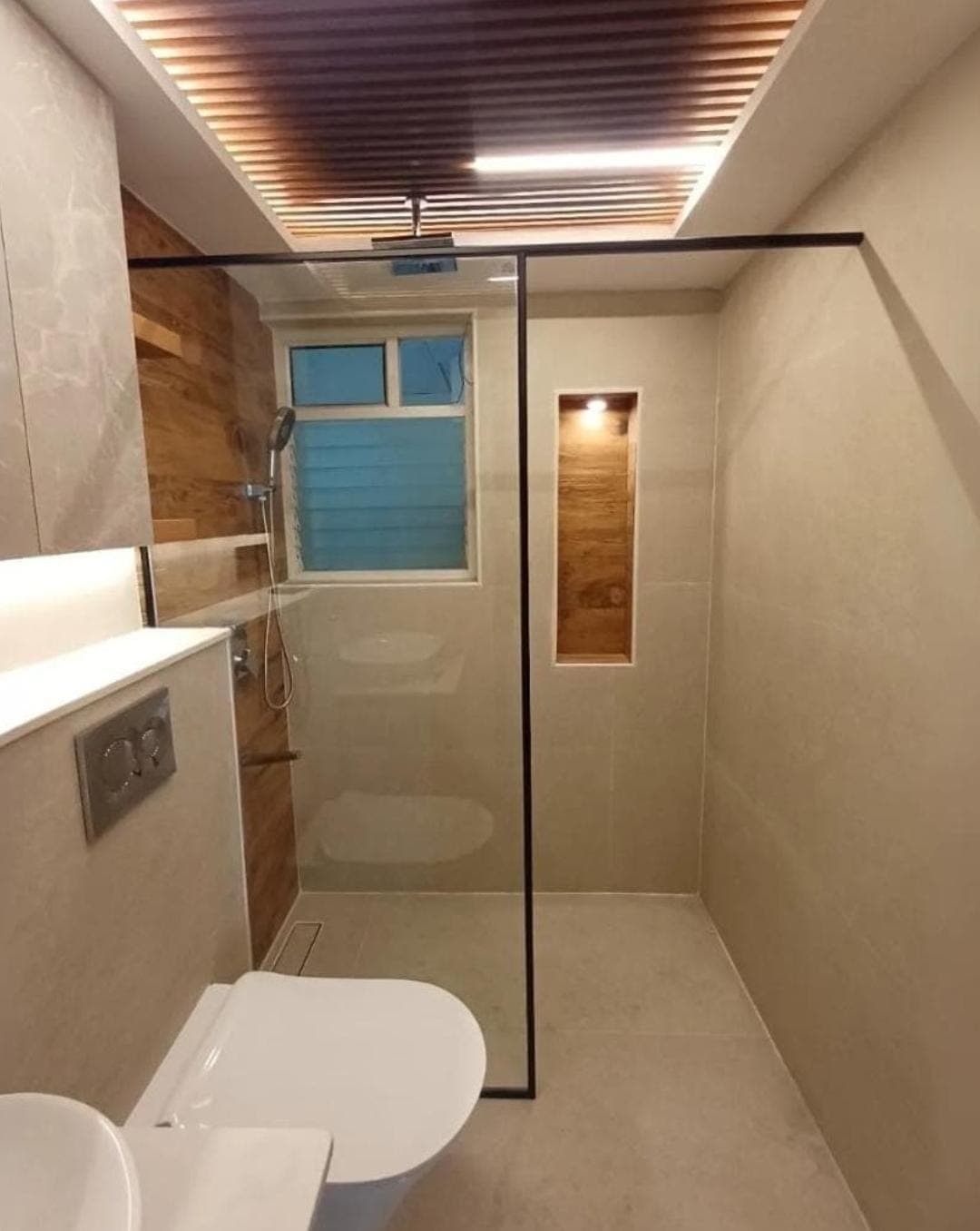
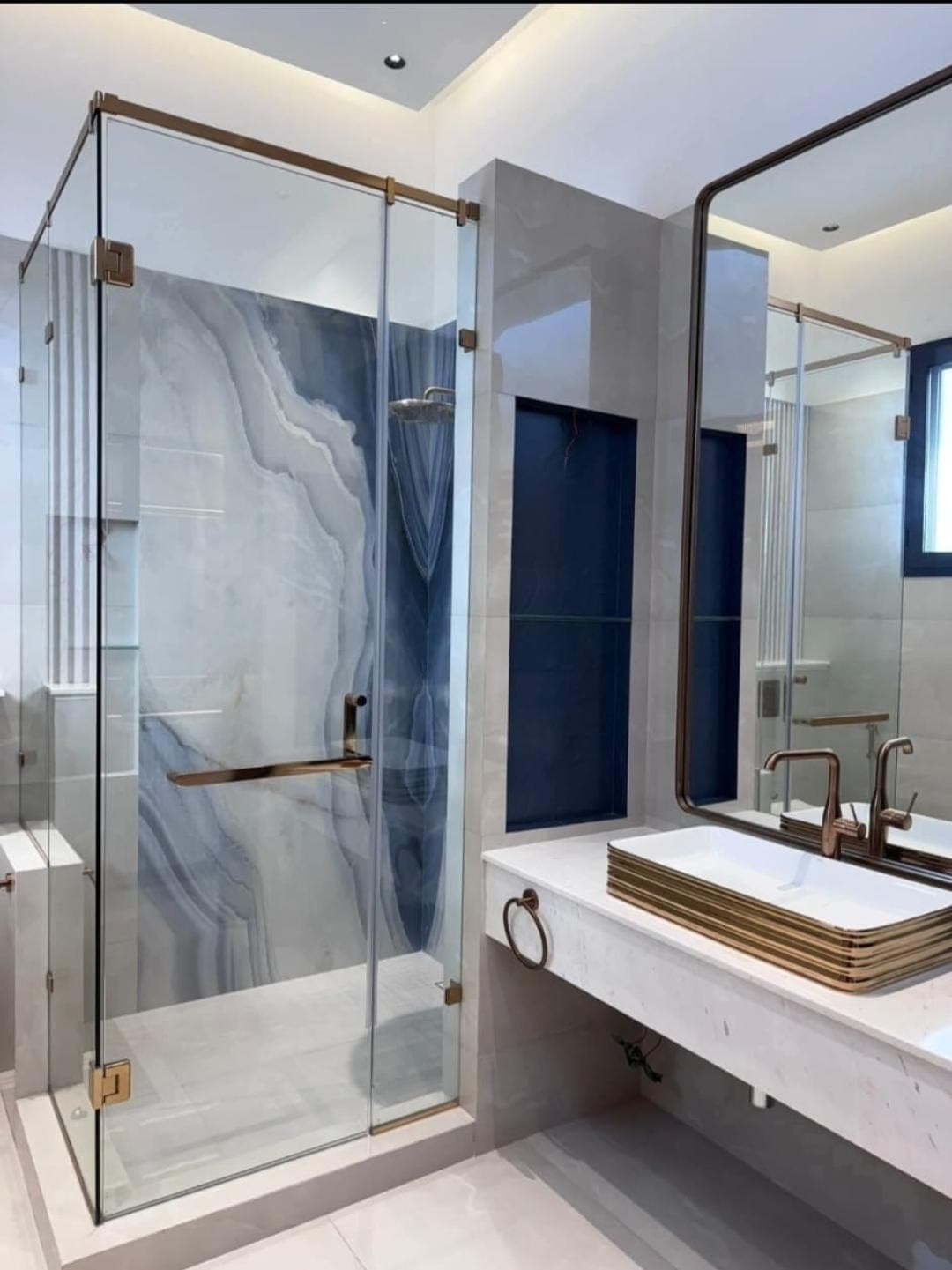
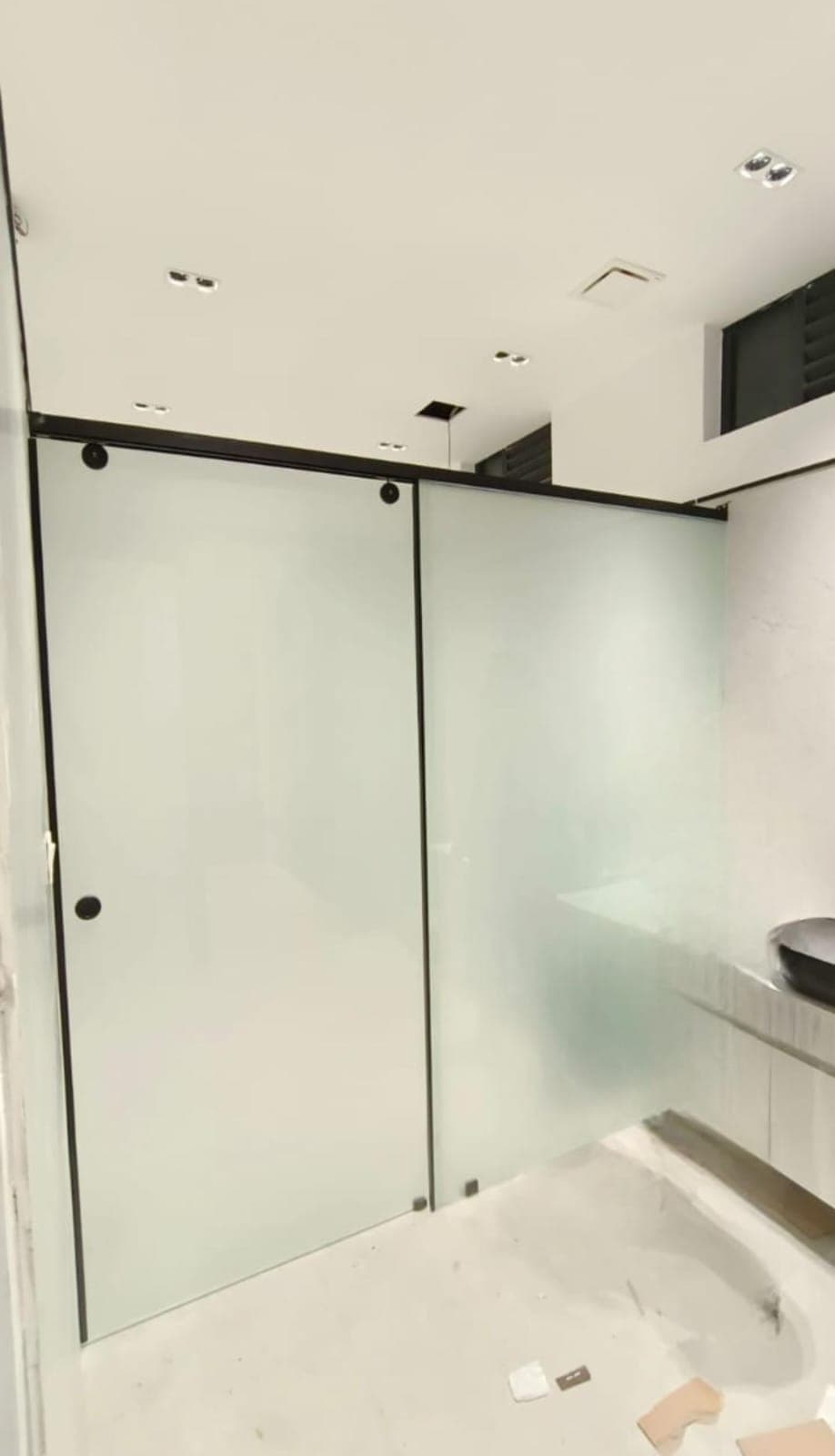
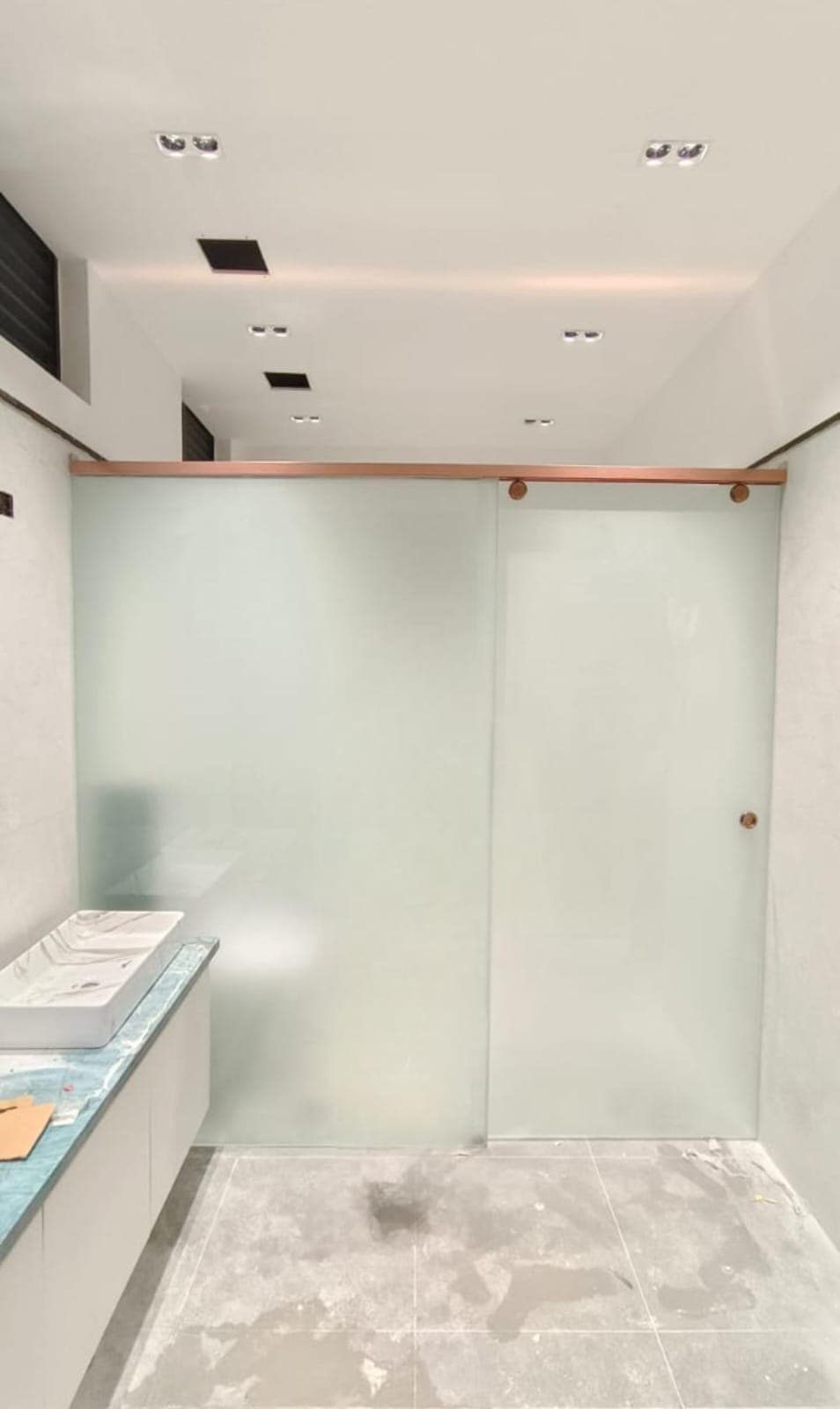
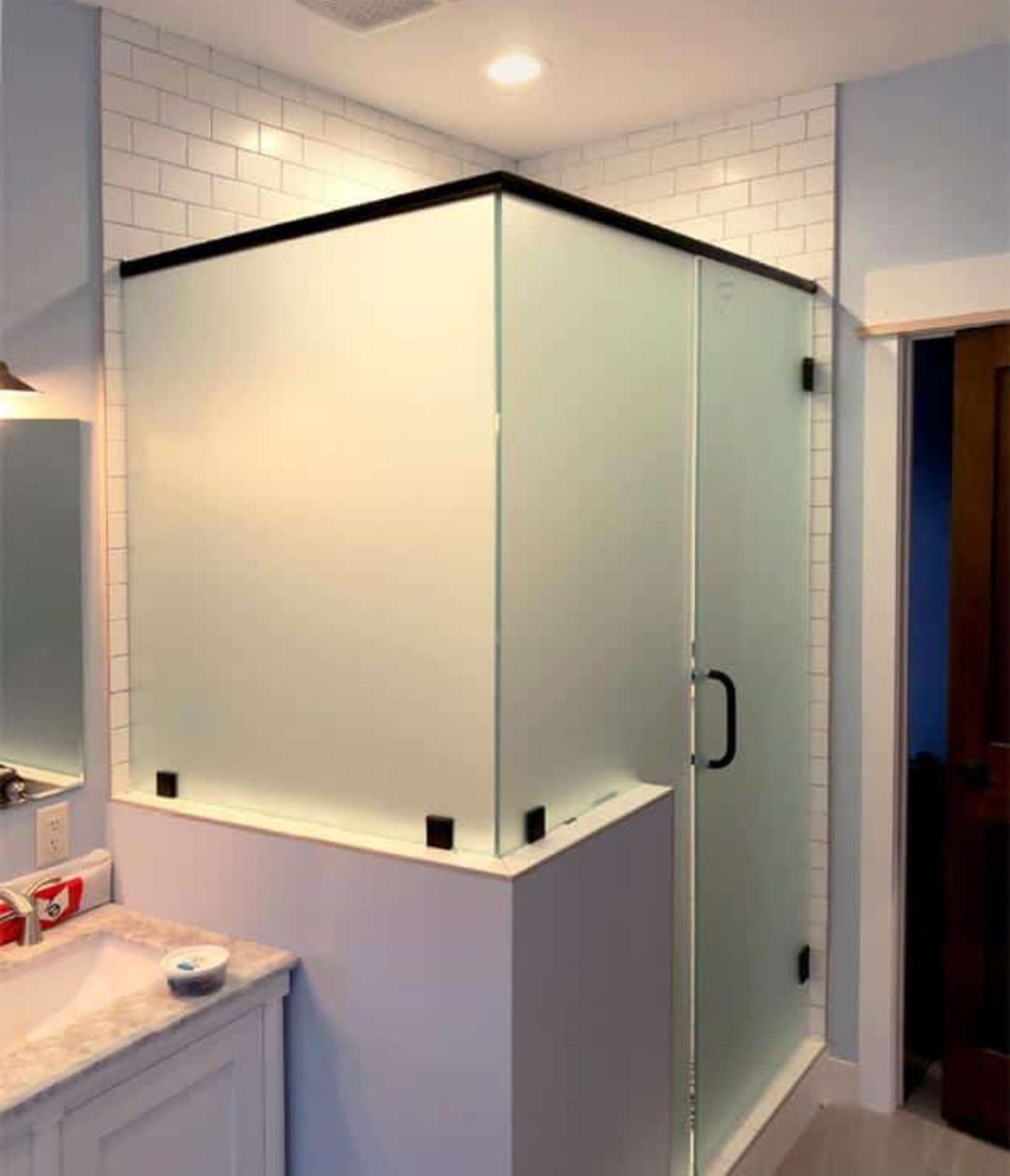
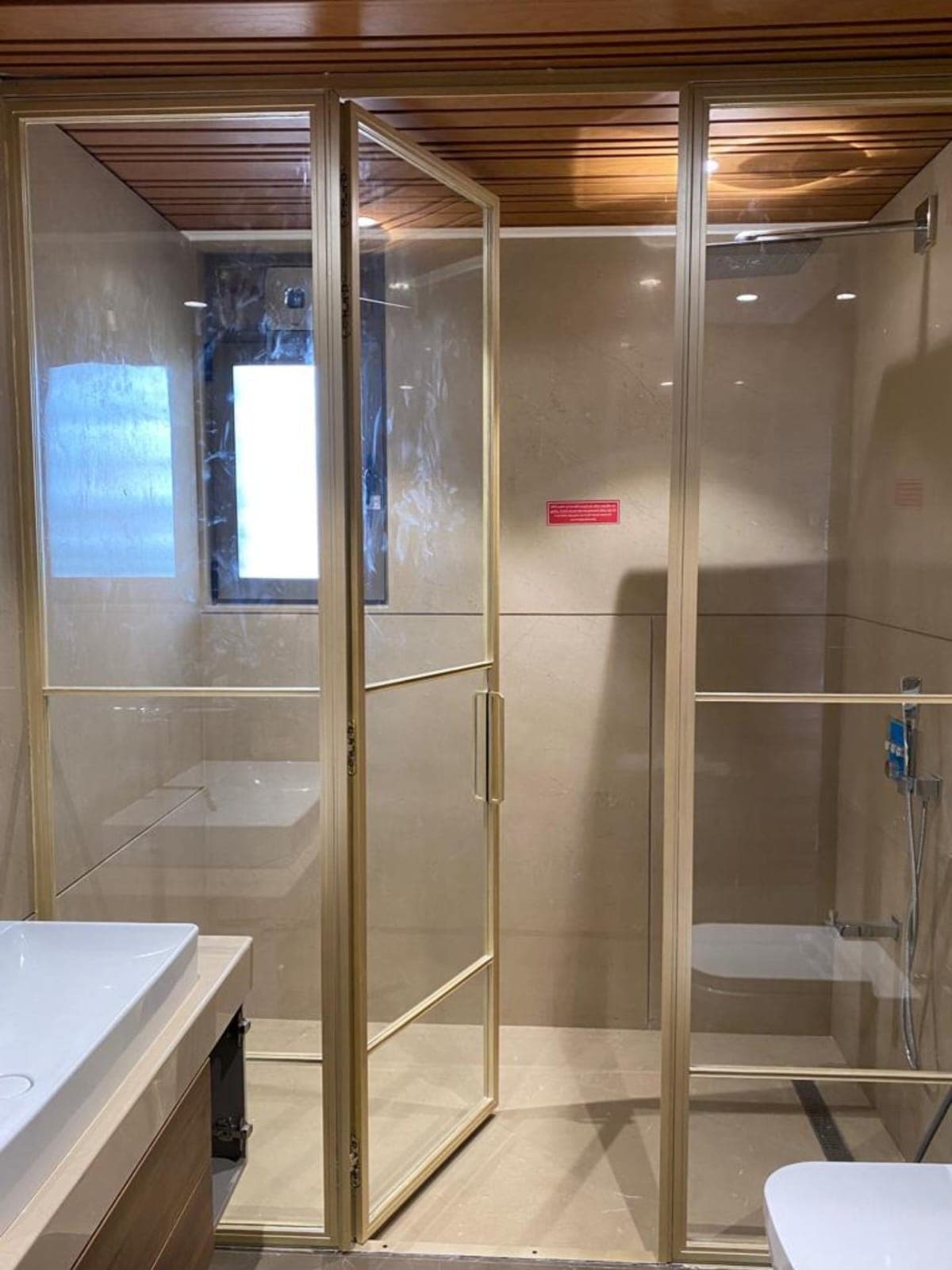
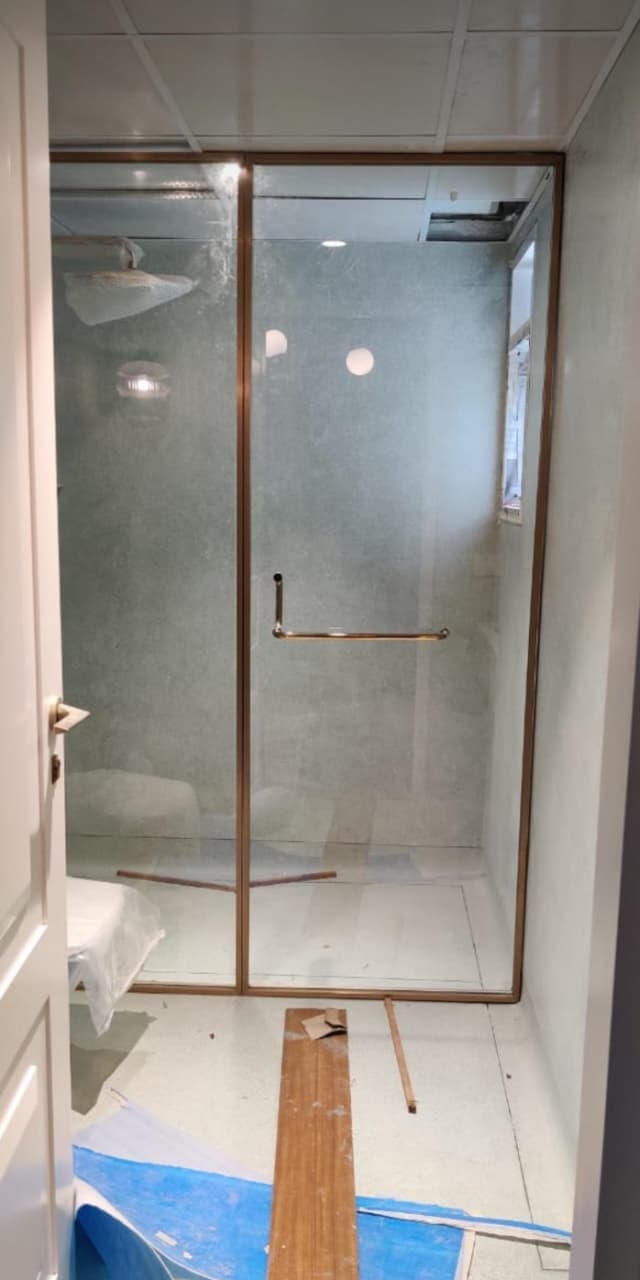
A curved enclosure closes off a corner with a rounded front instead of two straight panels meeting at a right angle. The glass is genuinely bent, not two flat sheets set at an angle. The door slides around the curve on a shaped track at the top, so nothing swings into the bathroom. It is the enclosure for a corner shower in a room where a square cubicle would stick out and catch you as you pass. The glass is toughened, which is safety glass. Prices start at ₹2,010 per sq ft.
How glass is bent, and why it costs what it does
Flat glass is cut to size, drilled, and then heated until it is just soft enough to toughen. Curved glass has one more step, and it is the expensive one.
The cut sheet is laid over a steel mould in the shape you need, and heated until it sags onto the mould under its own weight. Then it is toughened in that shape. The mould has to be made for your radius, so a curved panel is never taken off a shelf.
One panel is made at a time. If it comes out of the oven with a wave in it, it cannot be flattened or trimmed. It is scrapped and the next one is made.
That is why bent toughened glass costs us over three times what flat glass costs, and why this enclosure prices where it does. The fittings, the seals and the day on site are much the same as any other shower.
Why a curve suits a corner shower
A square corner cubicle has two flat fronts meeting at a sharp right angle, and that corner points into the room. In a normal Bengaluru bathroom it is exactly where you walk past on the way to the basin.
A curve takes that corner away. The front sweeps round, so there is no edge to catch a hip or a towel.
It also gives you more usable room inside for the same floor area, because the curve pushes out where a square corner would cut in.
And because the door slides around the curve rather than swinging, nothing at all comes out into the bathroom when you open it. On a small floor plan that combination is hard to beat.
Measuring a curve, and why we template it
A straight enclosure can be measured with a tape in ten minutes. A curve cannot.
We take the two wall lengths, then set out the radius on your floor and check it against the drain, the tray edge and anything the curve has to clear. Then we make a template of the arc.
The template goes to the glass works with the order, and the mould is made from it. This is why we cannot quote a curved enclosure firmly from photographs, and why the measuring visit takes longer than usual.
It also means the floor matters more than usual. A curved panel sits on a curved line, so a floor that is out of level shows up along the whole arc rather than at one end. We check the fall towards the drain before we template anything.
What decides the price
₹2,010 per sq ft is the starting rate. A normal 3 by 3 foot quadrant, which works out at about 40 sq ft of glass, comes to roughly ₹80,400 before GST.
The bent glass is most of it. It costs us over three times flat glass of the same thickness. The curved sliding track and its rollers are made for the radius as well, so they cost more than a straight slider set. And the mould for your curve is a one-off cost on your job.
The radius matters. A tighter curve is harder to bend and has a higher reject rate, so a small quadrant prices higher per square foot than a gentle sweep.
After that: the height of the panels, the fittings finish, and how easy the bathroom is to reach. A curved panel travels upright in a cradle and cannot be turned on its side in a lift, which is a real consideration in a tower.